

April 14, 2019

Letter: Crebilly oral argument to be heard in Pittsburgh

For those who have not already heard, the next court date for oral argument has been changed to Monday, May 6th at 1 p.m. in Pittsburgh.  Yes, Pittsburgh.

The decision to move the court date from Philadelphia to Pittsburgh was appealed by Westtown Township solicitor, Patrick McKenna, and sadly denied, leaving no other alternative.  It seems Philadelphia, Harrisburg and Pittsburgh have a week long, rotating schedule for Commonwealth Court and Crebilly Farm just happened to get bumped to Pittsburgh.  Because all parties involved were not in agreement to move back to Philadelphia (i.e. Toll Brothers and the Robinson family), it will stay in Pittsburgh.

I realize it is a lot to ask people to make the trip to Pittsburgh.  But I’m going to ask you to consider it anyway.  Please attend, if you can spare the time and minor expense. If you have to, you can catch a bus from Philadelphia to Pittsburgh and read an entire best-selling novel… or two. Consider a carpool with your friends!  A court room filled with concerned citizens can send a silent, yet extraordinarily powerful message.  At the very least, please call and beg your friends and family in Pittsburgh to attend.  It is that important.

We all know how powerful a picture can be.  If anyone needs a visual of how Crebilly Farm could end up if this development is approved, please take the time to drive by Greystone Hall off of Greenhill Road near route 322 in West Chester.  Take a good long look at that mess.  I remind everyone that Crebilly Farm is part of the Brandywine Battlefield and our national history.  How will it be when that beautiful landscape is raped and forever destroyed?  Those magnificent trees, decades older than all of us, cut down and gone forever?  The streams contaminated?  Wildlife gone?  The historic view shed gone?  If that doesn’t move you to action, then please try to imagine another thousand cars on our already over-crowded, sweet little country roads.  How much longer will your commute to work be?  What about the welfare of your children in the overcrowded schools?  Consider the cost and need for more police, firefighters, hospitals and grocery stores?  And where will more schools, hospitals and grocery stores be built?  On another beautiful plot of Chester County land?

This is what we are fighting against.  This is why we cannot stop, we must not tire, we must not quit.  We are the stewards of this land.  Each of us living in Chester County has a responsibility to make the effort, in whatever way we can, to help protect what makes this area so special.  And this is why we will continue to fight for a better outcome.  I applaud each of you for your continued efforts and supporting Westtown Township in their brave battle.

If not you, then who?

I look forward to seeing you in Pittsburgh.

Sincerely,

Mindy Rhodes

www.CrebillyFarmFriends.com

About CFLive Staff

See Contributors Page https://chaddsfordlive.com/writers/

Letter: Crebilly oral argument to be heard in Pittsburgh Read More »
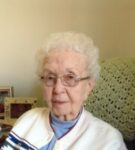
Anna Martelli of Kennett Square

Anna Martelli, 98, of Kennett Square, died Friday, April 12, at Linden Hall. She was the wife of Anthony J. “AJ” Martelli, who died in 2004, and with whom she shared 45 years of marriage. Her first husband, John David Burke passed away in 1953.

Anna Martelli

Born in Northbrook, she was the daughter of the late DelmarShaw and the late Tressa Smith Shaw Oatman.

She was a member of the Toughkenamon Presbyterian Church and a life member of the Kennett Senior Center where she worked in the kitchen and assisted with crafts.

Mrs. Martelli enjoyed sewing, cooking, baking, traveling and being with her family and friends.

She was a homemaker. In her earlier years, she had worked at the NVF Co. and Powell Mushrooms.

She is survived by one son, Peter G. Martelli Sr. and his wife Denise of Toughkenamon; one daughter, Ruth DiBenedetto and her husband Francis of Wilmington; five grandchildren and nine great-grandchildren.

Mrs. Martelli was predeceased by one brother, John Shaw; one sister, Ruth Eaby; one daughter, Barbara DiFilippo and one granddaughter, Angela DiBenedetto Matt.

You are invited to visit with her family and friends from 10 to 11 on Thursday, April 18, at the Kuzo Funeral Home, 250 West State Street, Kennett Square. Her Funeral service will follow at 11. Burial will be in St. Patrick’s Cemetery, Route 82, Kennett Square.

To view her online tribute and to share a memory with her family, please visit www.kuzoandfoulkfh.com

About CFLive Staff

See Contributors Page https://chaddsfordlive.com/writers/

Anna Martelli of Kennett Square Read More »

Rabbinic Reflections: Welcoming affliction

My cousin cried at the table. I did not understand why until my mother explained why she herself cried, too. The Passover seder invites learning, traditions, symbolic foods, and all the things that family gatherings might entail. The seder also invites, though, a recognition of darkness that we tend to undervalue.

Early in the seder, we hold up the dry, flat cracker known as matzah and declare: “This is the bread of affliction. Let all who are hungry come and eat.” Some will actually open their doors to see if someone off the street needs a seat at a seder meal. The emphasis is typically on the existence of this poor person’s bread that can be shared. The declaration, though, goes on to say, “Now we are here, next year we will be in the Land of Israel; now we are slaves, next year we will be free people.” Even as we extend hospitality to anyone who may be hungry, we are supposed to recognize ourselves as slaves.

Thankfully, we do not have to wait until next year to be free. The seder is not that long! In a matter of pages, we go from seeing ourselves as slaves to seeing ourselves among those whom God freed from Egyptian slavery through the miracles of the plagues and the Exodus from Egypt. The trick is first to see ourselves as slaves so that freedom means more to us.

My cousin and my mother felt a kind of slavery the year of that seder when they cried. My cousin was making a significant career change. My mother was making a significant life change. Neither was actually a slave; both were afflicted. The presence of that affliction in their lives changed the seder that year into something that has stayed with me for decades.

The seder is not just a re-enactment, it is not just a ritualized holiday celebration, it is an opportunity to go where we are too often afraid to go. The seder is time for vulnerability, it is a place for bringing our baggage, and it is a process of putting those darker parts of our lives on the table. We achieve spiritual freedom when we can say something about what is holding us back. We can achieve spiritual freedom when we see changes we might have made to end our affliction. But, we will not achieve spiritual freedom if we are enslaved to telling only the positives in our lives, the smiley-face version we all too often post on social media.

Declaring “this is the bread of affliction” is the reminder that suffering is real and belongs in the conversation. As Priya Parker mentions in her book “The Art of Gathering,” if you do not make a place for the darkness, it will find a way in. My cousin and my mother brought their darkness to that seder so long ago. What I remember most from that night, though, is how much happiness there was after dinner. By inviting their afflictions, we all tasted the joy of freedom more deeply. This year, let us welcome our afflictions; next year let us be that much more free.

About Rabbi Jeremy Winaker

Rabbi Jeremy Winaker is the executive director of the Greater Philadelphia Hillel Network, responsible for West Chester University, Haverford, Bryn Mawr, and other area colleges. He is the former head of school at the Albert Einstein Academy in Wilmington and was the senior Jewish educator at the Kristol Hillel Center at the University of Delaware for four years. Rabbi Winaker lives in Delaware with his wife and three children.

Rabbinic Reflections: Welcoming affliction Read More »

Scroll to Top