October 17, 2012

Adopt-a-Pet: Sweetie

Adopt-a-Pet: Sweetie

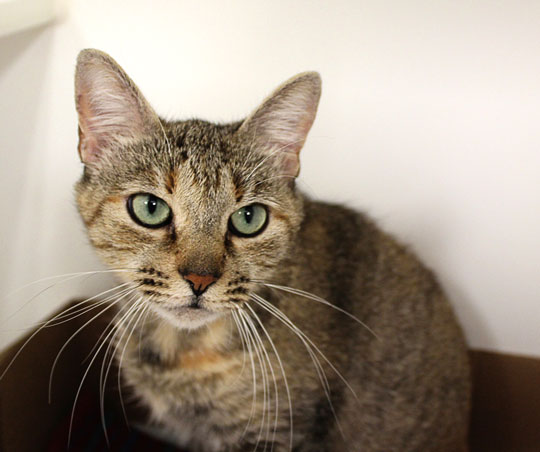
Sweetie is another long-term resident at CCSPCA who is more than ready for her forever home. Sweetie, like many others, came to the shelter in early spring as a pregnant stray. She was placed into a foster home where she could raise her kittens and become acclimated to a home environment. While in foster, Sweetie was losing some fur and was found to have some extensive food allergies. Thankfully, her allergies are now being managed with allergen-free food and she is doing much better. Sweetie loves people and, if you take her home, she will tell you so every day! Sweetie is available for the special adoption fee of $25. If you are able to provide Sweetie or any of our other animals here at the shelter a home, visit the Chester County SPCA at 1212 Phoenixville Pike in West Goshen or call 610-692-6113. Sweetie’s registration number is 96807487. To meet some of our other adoptable animals, visit the shelter or log onto www.ccspca.org. Not quite ready to adopt? Consider becoming a CCSPCA foster parent! Additional information and applications are available online or at the shelter.

About CFLive Staff

See Contributors Page https://chaddsfordlive.com/writers/

Adopt-a-Pet: Sweetie Read More »

Photo of the Week: An Autumn Morning

Photo of the Week: An Autumn Morning

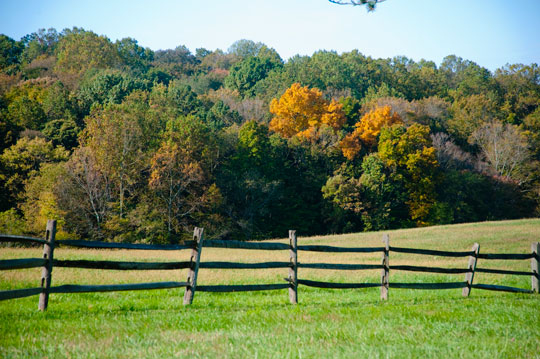
Autumn colors are beginning to come through the green of summer.

About Rich Schwartzman

Rich Schwartzman has been reporting on events in the greater Chadds Ford area since September 2001 when he became the founding editor of The Chadds Ford Post. In April 2009 he became managing editor of ChaddsFordLive. He is also an award-winning photographer.

Photo of the Week: An Autumn Morning Read More »

Mind Matters: What neuroscience teaches us about sex

Wondering what topic I might choose to write about this week, I perused several books on my shelf. I could have chosen one of the easier reads, but, no, I elected to choose the most complex of the lot. “The Archeology of Mind: Neuroevolutionary Origins of Human Emotions,” by Jaak Panksepp and Lucy Biven, is a page turner—all 500 of them—that looks at mammalian neuroscientific research to give us an understanding of the human brain and behavior.

Needless to say, my little column here will not summarize all their findings. However, one of the areas of research I found fascinating was about gender differences of what Panksepp and Biven call the “BrainMind” (and “MindBrain” at times for other reasons). Rather than continue the illusion of duality between thought and neurobiology, Panksepp and Biven hope to connote a unity of both with the term “BrainMind.”

Panksepp and Biven are not the first to discuss how the male and female brain systems are different. They note that, while cognitively similar, male and female brains are different on an affective, emotional level. Simply put, the oxytocin hormonal system of females contributes to care and nurture; the vasopressin hormones in males give rise to aggression and competition.

This may sound like science just giving foundation to the old stereotypical notions of male and female. But there is far more to the research that is counterintuitive. That is, there are biological determinants that precipitate a male brain being in a female body and vice versa.

Why? Because the sexual development of the brain and the body of the fetus do not occur along the same hormonal pathways. How does this occur? Possibly by stress experienced by mothers during pregnancy. Stressors might include exposure to environmental pollutants, emotional duress, or hormonal medical treatments. These stressors could interfere with the usual hormonal processes that set gender in the brain. And it is the brain that determines sexual identity. So indeed an individual who physically appears male may identify as female, and vice versa.

A person who feels like a woman in the body of a male, and a person who feels like a man in a woman’s body is the scientific definition of being transgendered, and it usually refers to the setting of sexual identity in the brain “in utero.”

Panksepp and Biven take the findings of science to inform society. They hope that their work can help convince others to accept human differences beyond hatred and prejudice. They give us the facts of nature: most babies will be born typically male or female, brain identities the same as the physical bodies. Yet it is also a fact of nature that some babies are born with female emotional minds and male bodies, and male emotional minds with female bodies.

May scientific research such as Panksepp’s and Biven’s help society to be more open and tolerant by accepting the facts of nature—that sexual identity has many variables and variations.

* Kayta Curzie Gajdos holds a doctorate in counseling psychology and is in private practice in Chadds Ford, Pennsylvania. She welcomes comments atMindMatters@DrGajdos.com or 610-388-2888. Past columns are posted towww.drgajdos.com.


About Kayta Gajdos

Dr. Kathleen Curzie Gajdos ("Kayta") is a licensed psychologist (Pennsylvania and Delaware) who has worked with individuals, couples, and families with a spectrum of problems. She has experience and training in the fields of alcohol and drug addictions, hypnosis, family therapy, Jungian theory, Gestalt therapy, EMDR, and bereavement. Dr. Gajdos developed a private practice in the Pittsburgh area, and was affiliated with the Family Therapy Institute of Western Psychiatric Institute and Clinic, having written numerous articles for the Family Therapy Newsletter there. She has published in the American Psychological Association Bulletin, the Family Psychologist, and in the Swedenborgian publications, Chrysalis and The Messenger. Dr. Gajdos has taught at the college level, most recently for West Chester University and Wilmington College, and has served as field faculty for Vermont College of Norwich University the Union Institute's Center for Distance Learning, Cincinnati, Ohio. She has also served as consulting psychologist to the Irene Stacy Community MH/MR Center in Western Pennsylvania where she supervised psychologists in training. Currently active in disaster relief, Dr. Gajdos serves with the American Red Cross and participated in Hurricane Katrina relief efforts as a member of teams from the Department of Health and Human Services' Substance Abuse and Mental Health Services Administration.Now living in Chadds Ford, in the Brandywine Valley of eastern Pennsylvania, Dr. Gajdos combines her private practice working with individuals, couples and families, with leading workshops on such topics as grief and healing, the impact of multigenerational grief and trauma shame, the shadow and self, Women Who Run with the Wolves, motherless daughters, and mediation and relaxation. Each year at Temenos Retreat Center in West Chester, PA she leads a griefs of birthing ritual for those who have suffered losses of procreation (abortions, miscarriages, infertility, etc.); she also holds yearly A Day of Re-Collection at Temenos.Dr. Gajdos holds Master's degrees in both philosophy and clinical psychology and received her Ph.D. in counseling at the University of Pittsburgh. Among her professional affiliations, she includes having been a founding member and board member of the C.G. Jung Educational Center of Pittsburgh, as well as being listed in Who's Who of American Women. Currently, she is a member of the American Psychological Association, The Pennsylvania Psychological Association, the Delaware Psychological Association, the American Family Therapy Academy, The Association for Death Education and Counseling, and the Delaware County Mental Health and Mental Retardation Board. Woven into her professional career are Dr. Gajdos' pursuits of dancing, singing, and writing poetry.

Mind Matters: What neuroscience teaches us about sex Read More »

Random-Lee: Local foods, local wines

The first time I visited the Willamette Valley of Oregon was on a business trip about 10 years ago. Some of you might not consider touring wineries and tasting wines all day as “business,” but we were travelling with eight members of our winery staff, trying to broaden their exposure to the whole wide world of wine. At the time, Oregon was the new frontier in American winemaking and everything we saw was fresh and new and exciting.

The thing I remember most, though, was not the wines or the winemakers. It happened on our first night in Portland, in a restaurant on the waterfront. We were tired and hungry and picked up the menus eagerly. And there it was, a full page wine menu, front and center, on the first page, before any mention of food, and it proclaimed proudly: Try an Oregon Wine with Your Dinner Tonight!

We saw it that day, and every other day of our stay in Oregon, and were utterly thrilled to witness such strong support for the local wine industry. And insanely jealous, seeing as how we were from a region where we were more used to hearing things like “Is this real wine?” or “You can’t make wine here in Pennsylvania!”

Two weeks ago I went back to the Willamette Valley and was very curious to see if the enthusiasm for local wines was still out there. Not surprisingly, I can report those menus were not only prevalent everywhere, but the local support for the home industry seems stronger than ever. Matter of fact, it has grown beyond the restaurants to towns, hotels, retail stores — just about everywhere you look. Is it any wonder that the industry is booming and Oregon Pinot Noirs have gained respect worldwide?

Why then was I feeling so sad? Perhaps that old sense of jealousy, knowing that back here, on the east coast, consumers have not yet enthusiastically endorsed the concept of local wines. Local foods, absolutely, Pennsylvania Pride, yes, Buy Fresh, Buy Local, of course, farmer’s markets, well, who doesn’t want the freshest produce, meats and cheeses from our local farms? But local wines, ah, well, maybe.

Now I must pause to praise those forward thinking restaurants in the Brandywine Valley, like Chadds Ford’s own Brandywine Prime and the nearby Blue Pear and Sovana Bistro. To them and others we owe a debt of gratitude for pairing some of the local wines with their menus. But how many more times have we seen great proclamations about “fresh regional/seasonal foods” where the closest “local” wine was a white zin from California, a cabernet from Chile, or an Australian syrah? And it doesn’t help that many of the Pennsylvania Liquor Control Board Wine & Spirit shops hide local wines on bottom shelves in the rear of the store.

The good news is that our local wineries have received incredible support from the local tourism agencies like the Chester County Conference Visitors’ Bureau and the Brandywine CVB, and the number of wineries in the region continues to grow every year – as well as the number of visitors to our wineries. To see real growth though, we need to be adopted by the local people. That would be you.

I’m not here to debate the quality of our regional wines, but rather to challenge you to visit a Brandywine Valley winery and see for yourself. Go out and taste. Take a group of friends for a fun day trip. Give a local wine as a gift with local cheeses or mushrooms. Encourage your favorite restaurants to feature local wines. And let me know what you think.

P.S. If you don’t know the local industry, check out the Brandywine Valley Wine Trail at www.bvwinetrail.com – you might be surprised at how many wineries are nearby and some of the great events they offer…from afternoon concerts on the deck to yoga in the vineyard.

* Lee Miller welcomes responses. Please email them to leemiller229@gmail.com

About Lee Miller

Lee Miller began her writing career with four books about Pennsylvania/east coast wines and the creation of Wine East magazine. She then went on to found the Chaddsford Winery with her husband Eric, where she turned her pen to promotion, advertising, public relations and marketing of their successful business venture for 30 years. Last year Lee co-wrote the new wine book, “The Vintner’s Apprentice” with Eric, and retired from the Chaddsford Winery to pursue other interests. She is currently working on a book about her life in the wine industry and exploring the retirement life. Her goal in writing a column for Chadds Ford Live is to generate dialogue and elicit reader response.


Random-Lee: Local foods, local wines Read More »

ChesCo Dep’t of Emergency Services switches voice alert system

The Chester County Commissioners announced that as of 8 a.m., Tuesday Oct. 16, the Chester County Department of Emergency Services switched fire and emergency medical services voice alert paging to a new system, to meet Federal Communications Commission requirements. The FCC order instructs radio communications devices in certain portions of the Very High Frequency (VHF) band to reduce channel bandwidth from 25 Kilohertz to 12.5 KHz.  This “narrowbanding” process will allow more efficient use of radio spectrum and is required to be completed throughout the nation by Jan. 1, 2013.

The cost of the new system is $3.5 million. Over $500,000 provided by a Federal Assistance to Firefighters grant will help offset the total cost. East Brandywine Fire Company sponsored the grant application on behalf of the Chester County Fire Chief’s Association and the Chester County EMS Council.  Congressman Jim Gerlach supported the award of the grant.

Chester County Commissioners’ Chair Terence Farrell said, “The new paging system is essential to comply with Federal regulations, which have been ordered so that fire and EMS responders are able to receive notice of emergencies efficiently, and that they may continue to respond to emergencies quickly.”

Commissioner Kathi Cozzone added, “Investment in the new paging system keeps Chester County at the forefront of technology and reinforces our priority for a safe community, as outlined in the County’s Strategic Plan.”

Commissioner Ryan Costello said, “We are thankful for the $500,000 grant supported by U.S. Rep. Gerlach. The $3 million remaining cost for the new system is a necessary investment for upgrading our equipment, to ensure our emergency responders are working with reliable technologies for decades to come.”

Chester County’s Department of Emergency Services has been working on this project for more than one year, consulting with the County’s emergency responder community for the design and testing phases of the new system.

Chester County Fire Chief’s Association president Ray Stackhouse said that he appreciated the cooperative approach used on the project where emergency responders were included in the design and testing phases to ensure the system meets operational requirements.

EMS Council President Leo Scaccia commented that it is critical for patient care that medical dispatches are completed quickly and accurately.

The new system was manufactured by Sonik of Vista, California.  ARINC of Annapolis, Maryland served as the program manager and engineering support was provided by ACD Telecom of Lake Mary, Fla.

About CFLive Staff

See Contributors Page https://chaddsfordlive.com/writers/

ChesCo Dep’t of Emergency Services switches voice alert system Read More »

Centennial Juried Exhibition opens at Delaware Art Museum

The Delaware Art Museum is excited to celebrate its 100-year commitment to supporting regional visual artists with the Centennial Juried Exhibition. On view Oct. 20 through Jan. 13, this exhibition commemorates the museum’s past annual exhibitions of painting and crafts — which combined to form the biennial in 1989. Guest-juried by John B. Ravenal, this 97-artist exhibition (featuring 98 individual works of art) honors the tradition of juried exhibitions in Delaware and the surrounding region while identifying the artistic trends that will characterize the region’s future.

“The 1,300 artworks submitted covered a wide range of media, styles, and abilities,” says Ravenal. “There were accomplished senior artists, emerging talents, and probably some Sunday hobbyists. There was painting, sculpture, installation art, video, drawing, photography, crafts, and things that defy categorization. I accepted around one-fifth of the applicants and, for the most part, chose one work from each. I was looking for quality, regardless of the type or approach of the work, thus the selection is eclectic. What ties it together is that each of these works was vital enough to make me, and I think others, be excited to see them in person.”

Between Jan. 1 and March 18, nearly 450 applicants submitted artworks for consideration. To be eligible, artists had to be 18 or older and currently residing either within the State of Delaware or within 100 miles of the Museum. Click here to see the complete list of all 97 exhibiting artists.

About the Juror

John B. Ravenal is the Sydney and Frances Lewis Family Curator of Modern and Contemporary Art at the Virginia Museum of Fine Arts in Richmond. Prior to that, Ravenal was Associate Curator of 20th-century art at the Philadelphia Museum of Art. In Philadelphia he worked with artists Sherrie Levine, Lawrence Weiner, and Rirkrit Tiravanija on commissioned projects and curated a retrospective of paintings and drawings by Sidney Goodman. Since joining the VMFA in 1998, Ravenal’s exhibitions have included Vanitas: Meditations on Life and Death in Contemporary Art; Robert Lazzarini’s first solo museum exhibition; and an exhibition of the work of Virginia-based photographer, Sally Mann. Ravenal earned his MA and MPhil in Art History from Columbia University.

Exhibition-Related Programs

Centennial Juried Exhibition Preview Party 

Friday, October 19 | 5:00 p.m. – 7:00 p.m. 

This exciting opening party features juror John B. Ravenal, Curator Margaret Winslow, and dozens of the artists selected to be a part of the Centennial Juried Exhibition. Hors d’oeuvres and a cash bar will be available. $20 Members, $35 Non-Members. Register at delart.org or call 302.351.8506.

Centennial Juried Exhibition Artist Talks 

Saturdays, October 20, November 10, & December 1 | 1:00 p.m. – 2:00 p.m. 

Join Margaret Winslow, Assistant Curator of Contemporary Art, and nine Centennial Juried Exhibition artists as they explore artistic trends and themes found throughout the exhibition. Free with Museum admission.

  • October 20: The Figure with artists Lisa Bartolozzi, Yikui Gu, and William Kendzierski
  • November 10: Nature with artists Dennis Beach, Brent Crothers, and Bruce Garrity
  • December 1: Everyday Objects with artists Delainey Barclay, Dan Schimmel, and Sabina Tichindeleanu

Regional Concepts: Centennial Juried Exhibition Artist Workshop Series 

Sundays, October 21, November 4, & November 11 | 1:00 p.m. – 5:00 p.m. 

Explore new and traditional drawing and painting concepts with Centennial Juried Exhibition artists Philip Koch, Troy Richards, and Moe Brooker. In addition to presentations by the artists, each workshop, will introduce participants to new techniques and philosophies. $50 Members, $80 Non-Members. Register at delart.org.

About the Delaware Art Museum

The Delaware Art Museum, located at 2301 Kentmere Parkway, Wilmington, DE 19806, is open Wednesday through Saturday 10:00 a.m. – 4:00 p.m. and Sunday noon – 4:00 p.m. Admission fees are charged as follows: Adults (19 – 59) $12, Seniors (60+) $10, Students (with valid ID) $6, Youth (7 – 18) $6, and Children (6 and under) free. Admission to the Museum is free to all visitors on Sundays. The admission fee is waived thanks to generous support from Jessie Ball duPont Fund. For more information, call 302.571.9590 or 866.232.3714 (toll free), or visit the website at delart.org

Founded in 1912, the Delaware Art Museum is best known for its large collection of British Pre-Raphaelite art, works by Wilmington-native Howard Pyle and fellow American illustrators, and urban landscapes by John Sloan and his circle. Visitors can also enjoy the outdoor Copeland Sculpture Garden and a number of exhibitions throughout the year

Centennial Juried Exhibition opens at Delaware Art Museum Read More »

Scroll to Top