The former Kennett Township manager who allegedly embezzled more than $3 million from the township has waived her preliminary hearing.
The hearing for Lisa Moore was scheduled for April 21 in district court. The waiver was submitted April 14 by Moore’s attorney, Julia Alexa Rogers, according to the Pennsylvania eDocket.
The case now moves to the Chester County Court of Common Pleas.
The Chester County District Attorney charged Moore in December 2019, with 115 felonies and 26 misdemeanors following a months-long investigation that began in April 2019 when the supervisors were notified of suspicious transactions in the township’s finances.
Moore was first put on paid administrative leave and then fired May 17, 2019.
Monica Thompson Fragale is a freelance reporter who spent her life dreaming of being in the newspaper business. That dream came true after college when she started working at The Kennett Paper and, years later The Reporter newspaper in Lansdale and other dailies.
She turned to non-profit work after her first daughter was born and spent the next 13 years in that field.
But while you can take the girl out of journalism, you can’t take journalism out of the girl. Offers to freelance sparked the writing bug again started her fingers happily tapping away on the keyboard.
Monica lives with her husband and two children in Kennett Square.
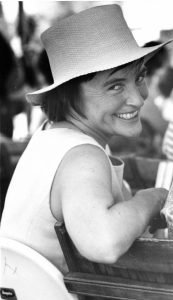
It is with great sadness that the trustees of the Brandywine Conservancy & Museum of Art announce the death of Betsy James Wyeth on April 21. Betsy was a catalyst in the creation and opening of the Brandywine River Museum of Art and was a visionary in the worlds of art and architecture. She was also a published author, art collector and a driving force in the career of her husband, artist Andrew Wyeth—serving as his muse, business manager and chief archivist of his work. Together with Andrew, she was a major benefactor in the fields of art and education.
Betsy James Wyeth, 1968, photographer unknown. Courtesy of the Wyeth Family Archives.
Born in East Aurora, New York, on Sept. 26, 1921, Betsy Merle James was the daughter of the late Merle James and Elizabeth Browning James. The youngest of three daughters, Betsy was a graduate of East Aurora High School in New York and briefly attended Colby Junior College in New London, New Hampshire. Her family vacationed in, and ultimately moved to, Cushing, Maine, where at age 17 she met Andrew Wyeth on July 12, 1939—his twenty-second birthday. The couple was married the following year on May 15, 1940, and moved to Chadds Ford, Pennsylvania. Their marriage spanned nearly seven decades before Andrew’s death in 2009.
Early on in their marriage, Betsy took up the role of Andrew’s business manager. She made a significant contribution to the study of American art. Guided by Josephine Hopper—wife of American realist painter Edward Hopper—she began keeping extensive records that would become the basis for the artist’s forthcoming catalogue raisonné. After the death of her father-in-law, N. C. Wyeth, she compiled and was editor of The Wyeths: The Letters of N. C. Wyeth, 1901-1945, a book that spurred a reassessment of his career. In 1976 she published the first book on her husband’s work, Wyeth at Kuerners, followed by Christina’s World in 1982. She also worked with a young group of filmmakers to produce the award-winning documentary, Andrew Wyeth Self Portrait: Snow Hill, in 1995.
Betsy and Andrew Wyeth founded the Wyeth Endowment for American Art, the precursor to the Wyeth Foundation for American Art, in 1968. It is now the third-largest funder of exhibitions, publications and fellowships devoted to the study of American Art. Through its generosity were made possible major projects such as the research for, and publication of N. C. Wyeth: Catalogue Raisonné of Paintings.
In the late 1960s, Betsy was a powerful force behind the creation of the Brandywine River Museum of Art in Chadds Ford, Pennsylvania. She encouraged George A. “Frolic” Weymouth, one of the founders of the Brandywine Conservancy in 1969, to purchase, renovate and transform a 19th-century gristmill along the Brandywine River into an art museum, and promised to lend works by all three generations of Wyeth artists—N. C., Andrew and Jamie, and other family artists such as Carolyn and Henriette Wyeth, Peter Hurd and John McCoy. The Museum opened to much success in 1971 and has since become internationally recognized for its collection of American art, most notably by the Wyeth family. Over the years, Andrew and Betsy Wyeth would donate many important paintings both to the Brandywine and the Farnsworth Art Museum in Rockland, Maine. Following Andrew Wyeth’s death in 2009, Betsy generously gifted her husband’s studio to the Brandywine River Museum of Art. Now a National Historic Landmark, the Andrew Wyeth Studio is open to the public seasonally for tours.
In addition to managing the business side of Andrew Wyeth’s career, Betsy had a passion for historic houses and architecture. With her keen eye and talent for design, Betsy excelled at restoring old buildings, including an old mill complex on the Brandywine River that she converted into the couple’s Pennsylvania home and studio. She was continually drawn to the Maine coast, where she and Andrew had spent much of their childhoods, and over decades they bought three islands—Southern, Allen and Benner. To Betsy, these islands served as a blank canvas where she could realize her creative potential and her dedication to preserving historic New England architecture. Her carefully curated interiors and groupings of buildings are depicted in many of Andrew Wyeth’s paintings and watercolors and were featured in magazines such as Architectural Digest.
A muse for her husband, Betsy is represented in several works by Andrew Wyeth, sometimes embodied only by a highly personal object or setting that reminded her husband of her presence. A candid and astute partner, Betsy played an important role in his career. As Andrew Wyeth commented in 1966 to his biographer, Richard Meryman, “Betsy galvanized me at the time I needed it,” adding “She’s made me into a painter that I would not have been otherwise. . . . she made me see more clearly what I wanted.”
Along with her interests in architecture and design, Betsy was an avid collector of art, especially of folk art, and she was highly knowledgeable on Pennsylvania antiques. She was also heavily involved in the two communities in which she lived. Betsy was a founding member of the Chadds Ford Historical Society, inspired the creation of the Island Institute in Maine, and financed the launch of its Island Journal publication. In 1987 Betsy Wyeth founded Up East Incorporated, which supports environmental and ecological research, preservation and education in mid-coast Maine. Through her work with Up East Inc., Allen Island has transformed into a living-learning laboratory and working waterfront. In partnership with Colby College, students and researchers now study ecology, chemistry, and cultural geography on the island.
Betsy James Wyeth is survived by her sons, Nicholas Wyeth and his wife, Lee, of Elkton, Md. and Cushing, Maine, and James “Jamie” Browning Wyeth, of Wilmington, Del. and Tenants Harbor, Maine; her granddaughter, Victoria Browning Wyeth, of Philadelphia; as well as several nieces and nephews including Amy Cook Morey of the Wyeth Study Center in Rockland, Maine.
As soon as it re-opens to the public, the Brandywine River Museum of Art is planning to honor the life of Betsy Wyeth with a memorial tribute of 18 Andrew Wyeth works, depicting his wife and muse, created over the decades.
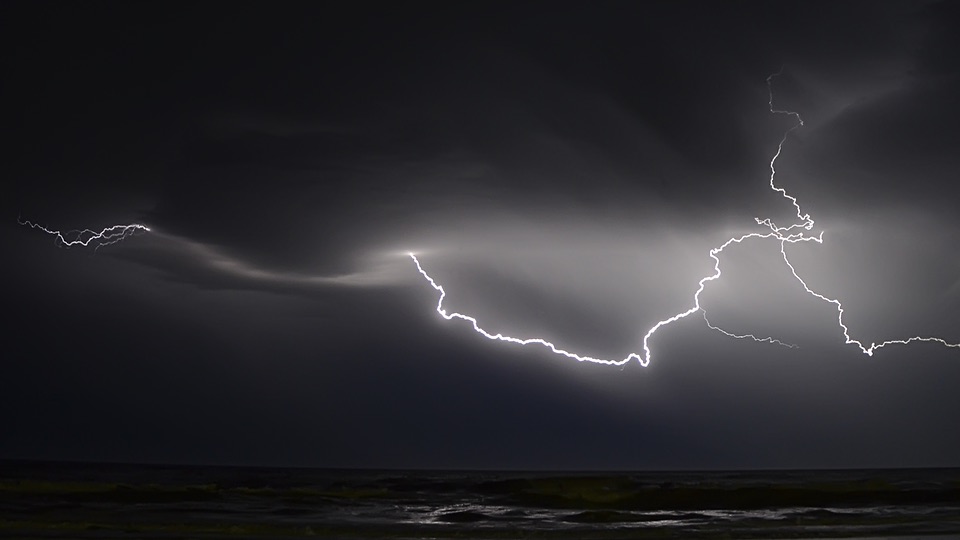
The National Weather Service has issued severe thunderstorm watch until 5 p.m. today, Tuesday, April 21 for the five counties in southeastern Pennsylvania including Bucks, Chester Delaware, Montgomery and Philadelphia. Wind gusts may reach 60 m.p.h.
Protecting yourself from immediate threats to life and safety shall take priority. Whenever possible, as long as it does not cause greater harm, all COVID-19 protective action guidance should be followed.
For your protection move to an interior room on the lowest floor of a building.
Some things need to be addressed regardless of a pandemic. One such matter is the 2020-2021 budget for the Unionville-Chadds Ford School District. Despite uncertainties about the budget because of COVID-19, the board is still expected to vote on the spending bill in June. A budget hearing is scheduled for May 4.
In November, before the pandemic struck and shut down schools and in-person public meetings, the board a proposed preliminary budget of just less than $103 million. That figure reflects an estimated $9.1 million fund balance from this year’s budget plus $93.7 million in estimated revenue for the coming year.
Proposed millage rates at that time were 30.47 mils for Chester County property owners and 27.73 mils for Chadds Ford Township property owners. Chadds Ford is the only Delaware County municipality in the U-CF district.
“Lots of things are in motion, but lots of things still aren’t fully understood,” said Director Rashi Akki, of the board’s finance committee, during the board’s April 20 meeting, “but we continue to stay ahead of our overall estimates of the budget.”
According to district Business Manager Bob Cochran, the May 4 hearing is to present the budget in detail to the general public and that the goal is not to increase the millage rates this time.
“The May 4 meeting is intended for the board to openly discuss in that public forum … the various budget options and scenarios that are out there and to hear from the public any concerns that they have,” Cochran said.
There could be a second meeting on May 6, depending on what transpires during the May 4 hearing, he added. From that, a proposed final budget will be presented to the board on May 11. But things could still change after that.
“That does not lock anything into place, other than it starts the timeline,” Cochran said. “The board has to adopt that proposed final budget at least 30 days before they adopt a final budget.”
A vote on the final budget is scheduled for June 15.
Rich Schwartzman has been reporting on events in the greater Chadds Ford area since September 2001 when he became the founding editor of The Chadds Ford Post. In April 2009 he became managing editor of ChaddsFordLive. He is also an award-winning photographer.
When Pennsylvania Gov. Tom Wolf extended the state’s lock-down until May 8, he also said the case numbers for COVID-19 have stabilized and “we have prevented the patient surges that we’ve all been concerned about and that we’ve seen in other places.”
Wolf said Monday that “We are taking small steps toward regaining a degree of normalcy in Pennsylvania.”
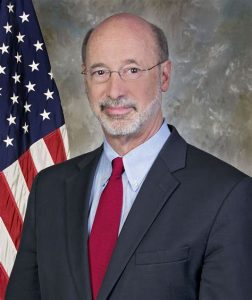
Gov. Tom Wolf
Among those small steps are allowing curbside pickup a state stores and auto sales will be allowed to take place online. Limited construction may resume after the first week of May.
The date, May 8, represents 49 days of the shutdown he ordered on March 19, which keeps 12.8 million people at home except for shopping for essential goods and services and for those people in businesses the governor deemed necessary when he ordered the lock-down.
It’s that “essential” designation that has frustrated people, including state legislators.
State Rep Stephen Barrar, R-160, parts of Delaware and Chester counties, is among them. He said it’s all about the governor’s interpretation of Title 35 of the state’s Emergency Management Code.
“A lot of us have complained about his interpretation of that but, most of what we’ve complained about is how he came up with what is essential and what isn’t an essential business.”
Under the governor’s order, medical marijuana dispensaries are allowed to stay open, but physical therapists couldn’t until they were included in a recently passed emergency telemedical bill. Dentists’ offices, too, can’t open except for emergency procedures.
Barrar went on to say that there are 20 car dealerships in the state that have been allowed to stay open while several thousand remain closed.
Stephen E.Barrar
The legislature could repeal the governor’s disaster declaration, but there’s the problem. “[The governor] could, 15 minutes after we vote to repeal the declaration, sign another one. The other thing we could be seriously jeopardizing is any federal aid if we were to do that. Our hands are pretty well tied,” Barrar said.
Court rulings have made some changes, though. Barrar mentioned that gun shops took the order to court and were given the OK to sell weapons and supplies, but their gun ranges can’t be open. Some home builders — such as Toll Bros. — were given waivers but others not, he added.
“So, we’ve seen a mixed bag of court rulings. We’ve seen a mixed bag of interpretation coming from the governor’s office. But we’ve seen no science behind what he’s doing,” Barrar said.
“There are so many contradictions in the law,” he said, adding that research should have been done to what businesses could remain open safely, looking at such things as whether the employees have personal protection equipment and the businesses adhere to CDC and OSHA recommendations.
He said HB 613, which passed in the House and the Senate on party lines, did just that, but Wolf vetoed the bill last week.
He said what he and others are fighting for is the survival of small businesses. Barrar cited the difficulties and frustrations of the owners of those businesses and specifically mentioned Mike Majewski, owner of Brandywine Prime in Chadds Ford, who bought several thousand dollars’ worth of wine for the restaurant the day before the governor ordered all restaurants to close.
The representative understands the business side of things from his own past. Barrar owned and operated a garden supply center before going into politics. He said he would have to buy all his merchandise in January and February of the year and pay for it all upfront. Had he faced a shutdown such as the one ordered by Wolf, he couldn’t have survived financially.
“I would have had to file for bankruptcy. I’d have all that material sitting on my lot and not be allowed to sell it,” he explained. “We want to see the state opened and get people back to work safely.”
Rich Schwartzman has been reporting on events in the greater Chadds Ford area since September 2001 when he became the founding editor of The Chadds Ford Post. In April 2009 he became managing editor of ChaddsFordLive. He is also an award-winning photographer.
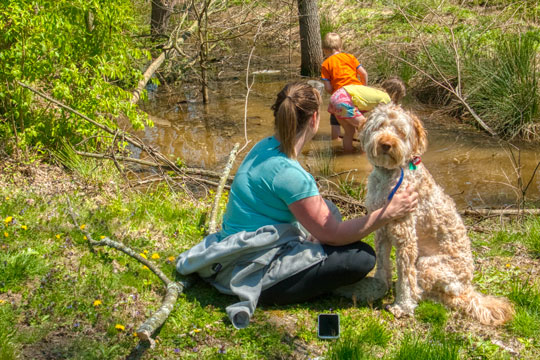
Young members of the Hufnal family of Kennett Square look for tadpoles in a stream at Anson Nixon Park on a sunny afternoon. While mom keeps an eye on the kids, Bullen keeps an eye out for strangers.
Rich Schwartzman has been reporting on events in the greater Chadds Ford area since September 2001 when he became the founding editor of The Chadds Ford Post. In April 2009 he became managing editor of ChaddsFordLive. He is also an award-winning photographer.