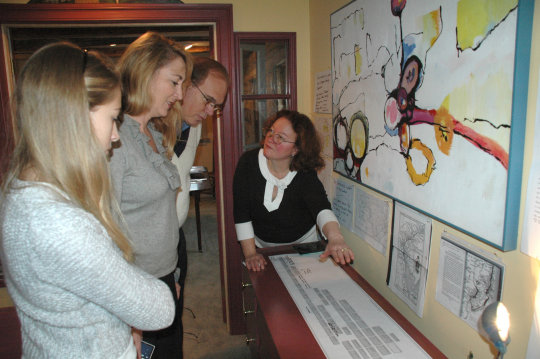
Some people buy homes for shelter, others for investments or tax write offs. Sometimes there is serendipity in the purchase. Such was the case for Francena Chalfont of Chadds Ford. The home she bought in 1997, she learned, dates back eight generations within her family.
Chalfont said evidence shows the house on Ridge Road was once a Swedish-owned trading post that became home to the first Chalfonts who came to America in 1699 during William Penn’s second trip.
“[Lineage] became more important to me when I found out I was living in an ancestor’s home,” she said while preparing for a 310-year anniversary party for 30 family members Dec 13.
Chalfont said she and her former husband bought the house in 1997 to save on capital gains taxes after selling a house in Spokane, Wash.
She and her ex husband wound up moving to New York, but she still wanted a home in this area. Her brother was doing renovations on the N.C. Wyeth home, and she asked him to find “a fixer-upper” for tax purposes.
Ten months later is when she learned it was not a Victorian farmhouse, but an old log cabin that needed to be gutted. The plumbing, electricity and walls all had to be redone.
Then her husband at the time got a job offer to conduct an orchestra in Europe. Thinking she wouldn’t need the house, she called a realtor to sell it.
Chalfont said the realtor told her she really had nothing to sell but history and land because everything had been ripped out. The realtor advised her to find out how old the house was so it could be sold as an historic structure.
Three months into her researching, Chalfont learned that a fire that burned down the old Chester County Courthouse also destroyed deeds so she would have to find old land grants.
“That’s how I learned I had my own ancestors’ house,” she said. “ There was the land grant to John Chalfont, my eighth back great grandfather.”
That discovery came in 1999. But, there were others to come.
Chalfont thought that since the land grant was dated 1701, that that was when John Chalfont built the house – after he had lived on the property for two years as a squatter.
As part of her continued research into the structure, Chalfont took a plug from one of the logs used in the construction of the original part of the home. That original part was a two-story log structure that she wanted to renovate.
Carbon dating the log plug showed that the log stopped giving off carbon dioxide in 1660, meaning that was probably when the log was cut down.
She said there were other inconsistencies with the house and land grant information, in that the original structure was not of British design. Chalfont said people were telling her it appeared to be of Finnish or Swedish design.
Chalfont got in touch with the Swedish American Society and they feel, she said, that the original two-story log structure was an old Swedish design and was most likely used as a trading post for European settlers and the local Indians.
She said the northern boundary of Rockland Manor comes to a point right at the property. Rockland Manor was an income-producing property belonging to the William Penn family.
Chalfont said she learned Ridge Road, formerly named the Old Road, was a trading route at the tip of Rockland Manor and the trading post was roughly equidistant between two Indian villages, one near what is now Naaman’s Creek Road and the other being the Weymouth property at Big Bend.
Also, according to Stephen Craig, of the Swedish American Society, the original part of the house had a storage area larger than what would be normal for just a home, and that there were both first and second floor doorways, also unusual for a just a home.
“The house is larger for a normal house of the time, but the right size for a trading post,” she said.
The property stayed in the Chalfont family until sometime before March 1, 1767 when it was sold to Isaac Bullock. It stayed in the Bullock family until June 1881, according to Chalfont’s research.
Chalfont hosted a family gathering Sunday, Dec. 13. She was planning for 30 relatives, some from as far away as Hawaii. One who lives a little closer is Vern Chalfont, from Atlanta Ga.
The discoveries are significant for him as well as for Francine Chalfont.
“We’ve done our research on the family history so we know our family line right back to the original immigrant, even back to England. So the fact that this is a house that he moved into brings home the heritage. Being here you feel a lot more part of what is now the United States,” Vern Chalfont said. “[But] the fact that our family started here in 1699 doesn’t make us any more American than somebody that started here in 1999.”
Rich Schwartzman has been reporting on events in the greater Chadds Ford area since September 2001 when he became the founding editor of The Chadds Ford Post. In April 2009 he became managing editor of ChaddsFordLive. He is also an award-winning photographer.
Pennsbury Township supervisors crossed the final T and
dotted the last I and passed the 2010 township budget during their Dec.16
meeting.
The spending plan for next year is balanced with income and
expenses totaling $1,236,819.
There are three township taxes residents will contend with,
one being the new open space tax of 0.79 mills that was authorized by
referendum in November. A mill is a tax of $1 for every $1,000 of assessed
property value.
There is also a 0.7 mill property tax and a 0.312 earned
income tax for the general fund.
According to Supervisors’ Chairman Charles “Scotty”
Scottoline, the new open space tax will generate roughly the same amount of
income for open space preservation as the two taxes the new one replaces.
After approving the budget, supervisors passed the required
ordinances and resolutions to enact the taxes. None of the taxes have sunset
clauses and will remain in effect until changed by ordinance or resolution.
Other business
Supervisors approved a new Act 537 Plan update. The sewage
plan will be sent to the Pennsylvania Department of Environmental Protection
for its approval.
In follow up to accepting that plan, supervisors approved
planning modules for Pennsbury Village Associates and Penn’s Village. Both of
the proposed developments will use the planned sewage facility.
• Scottoline thanked fellow supervisor Karen Wood for her 13
years of service to the township. She was on the Planning Commission before
becoming a supervisor. The December meeting was her last as a supervisor. Wood
did not run for reelection in November. Aaron McIntyre who ran unopposed for
the seat will replace her beginning next month.
• The January meeting will be 7 p.m. Monday, Jan. 4 as
required by law. All Townships of the Second Class are required to meet the
first Monday after the New Year to reorganize.
Rich Schwartzman has been reporting on events in the greater Chadds Ford area since September 2001 when he became the founding editor of The Chadds Ford Post. In April 2009 he became managing editor of ChaddsFordLive. He is also an award-winning photographer.
Chadds Ford Township – and other Delaware County homeowners
– will see an increase in their county property taxes beginning next year.
County council voted unanimously Dec. 15 to pass a 7.4 percent property tax
increase as part of a $308.6 million budget for 2010.
The budget is $5.6 million more than that for 2009, while
the tax increase to 5.182 mills is expected to bring the average homeowner’s
tax to $680. A mill is a tax of $1
for every $1,000 of assessed value. A property assessed at $100,000 would be
taxed $518.20.
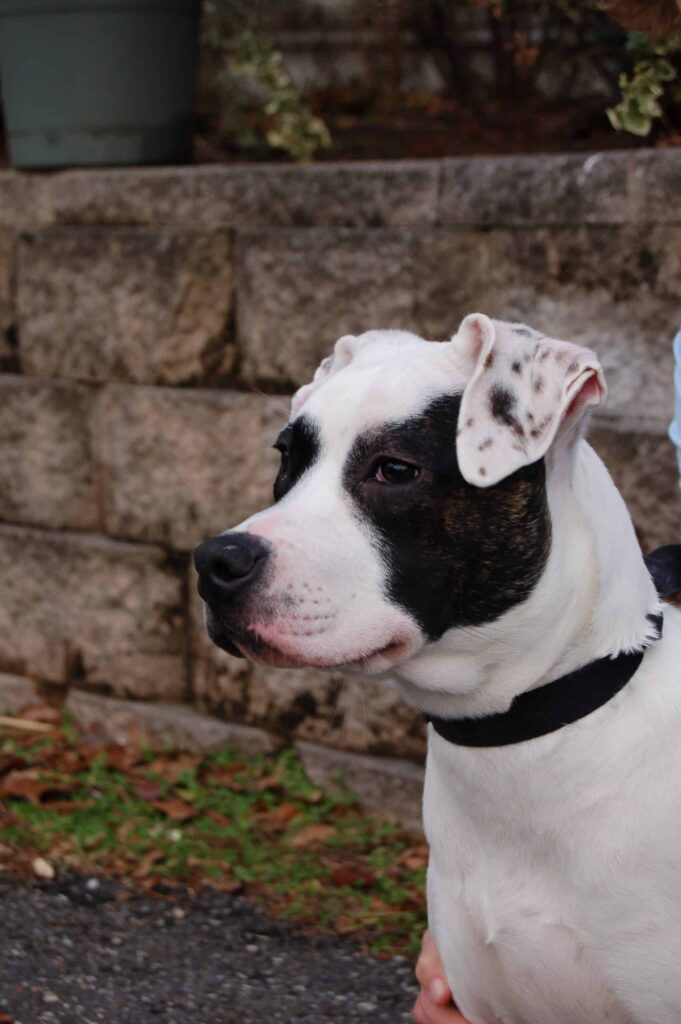
Lexi
is a 6-month old female pit bull
that is available for adoption through the Chester County SPCA. She came to the shelter with
her friend Carmel on Nov. 12 because their owner was moving and could not take
them. Lexi is a very sweet lovable
little girl who is deaf and will need a little extra TLC and training. Lexi is
looking for a responsible care giver who
will give her the love and attention she needs. If you are able to provide that
home, visit the Chester County SPCA at 1212 Phoenixville Pike in West Goshen or
call 610-692-6113. Lexi’s registration number is 96797576. To look at some of
the other animals available for adoption, visit the shelter or log onto www.ccspca.org.
Local author, A.P. Morris,
is releasing a non-fiction book, They’re Not Gone, to coincide with the holiday
season.
They’re Not Gone shares stories of 13 people whose loved ones
passed away and their eventual ‘reconnection’ through the assistance of local psychic
medium, Ricky Wood. Each story contains ‘evidence’ that their spirits are still
very much alive. Wood delivers
specifics from names and dates to mannerisms and jokes to verify the spirit who
is communicating.
“I wanted to share my
story to give others hope, especially during the holiday season when missing
them can be even more difficult. I
am now 100% positive that our loved ones don’t vanish with death, they are
still very much alive,” Morris said.
A.P. Morris’s story in the
book tells of the loss of her brother to suicide when she was just 16 years
old. After hearing from him
through psychic medium Ricky Wood, her life was transformed. Ricky Wood referred to a nickname of
her brother’s that she had never told a soul about, allowing her to know
definitively that he was still ‘alive.’
“I spent so many holiday seasons sad and depressed because I
missed my brother so desperately.
If I’d only known that he wasn’t just gone, I think it may have been a
whole lot easier for me,” A.P. Morris, author, said.
Each story offers a
different type of love, loss, and lesson. Whether you’ve lost a child, spouse,
parent, or great friend, there is a relationship that everyone can relate
with. Following each story, there
is a question and answer section where the reader gets to learn more about
Ricky’s beliefs based on his years of experience working as a psychic medium.
“I’m very excited to have
the opportunity to share some amazing true life stories. The information contained in this book
could change so many people’s lives.
I know – it changed mine,” Morris said.
A.P. Morris feels that it
was easier for her to believe in the continued existence of our spirits after
she received ‘proof.’ Her hope is
that by sharing these stories it will bring peace to those who need it,
especially during this holiday season.
Meet the
author Tuesday Dec. 22, from noon to 4pm at
Spring Run Natural Foods, 909 E Baltimore
Pike, Kennett Square, PA 19348.
*A portion of the proceeds
will be donated to a non-profit organization Urban Compass located in Southern California. Urban Compass was formed in partnership
with local schools to combat poverty and violence and make a difference in
children’s lives by providing tutoring support, enrichment activities, and
field trips to keep the children engaged in a positive learning experience and
off the streets.
“It was a dark and stormy night,” says the clichéd first
line of Snoopy’s novel in the Peanuts cartoon. That also seems to be the first
line of some of my clients recently when they arrive anytime after 4 pm. We are
at the darkest point of the year right now as we lumber towards the solstice.
Night comes early and the dark seems thick and low.
So it is also the time when we push against the dark with
celebrations of light, whether Hanukkah or Christmas or other feasts. There is
a tension here between the opposites of light and dark that is best not to
avoid.
As has been eloquently stated, “The beauty that will save
the world is the love that shares the pain,” according to Cardinal Carlo Maria
Martini, former Archbishop of Milan.
Last night I walked in beauty with Longwood Garden’s lights
beckoning: A beauty of a bittersweet brokenness –The world is still not what it
“should” be. Children are hurting; wars go on; our planet is in environmental
crisis; grief and suffering are woven into the tapestry of our lives. And yet
there is beauty that for a moment helps us transcend this strife. Remember in
Dr. Zhivago when Zhivago and his family were hurled into a freight train full
of strangers? The stench of people’s bodily functions in that cramped space was
overwhelming; yet, when he gazed out a crack in the wall, Zhivago beheld the
beauty of a snowy landscape and he took heart.
This season of sometimes superficial celebration can be
especially difficult for individuals and families who are grieving the loss of
a loved one. There are others whose pain is from the past, remembering
childhood Christmases being marred by conflict and abuse. There are others who
are stressed with lack of money or loss of a job. We are all bombarded by the
advertising hype and the cultural mythology of a sentimental ideal of how
Christmas “should” look. The perfect decorations, the right gifts, the proper
attire.
Letting go of the should and expectations – ours or somebody
else’s – may allow us to take in a glimpse of beauty wherever and whenever we
can. It may be finding beauty in the smile of a friend, or in sighting a
cardinal on a tree branch, or red winter berries framed against a grey sky. It
may even be in the midst of spectacular Christmas decorations of a Longwood
that we transcend some grief for a moment.
Yes, there are practical things I can suggest to those who
struggle through this time of year.
Some of those pragmatic suggestions include lighting a
candle for the loved ones you are grieving; setting a place at the holiday
table for friends and family who have died; creating your own traditions that
break away from traumatic memories; changing your traditions completely the
first year after a loved one dies. Don’t attempt to make it just like it was
because it never will be just like it was.
But beyond the common sense suggestions, we all need to
remember to take heart, as Zhivago did, in discovering glimpses of beauty that
are all around us.
I started by borrowing from Snoopy, so now I’ll take a verse
from the musician/poet Leonard Cohen: “Ring the bells that still can ring.
Forget your perfect offering. There is a crack in everything. That’s how the
light gets in.”
By meeting the dark with eyes open, we await the light and
find the beauty that sustains us.
• Kayta Curzie Gajdos holds a doctorate in
counseling psychology and is in private practice in Chadds Ford, Pennsylvania.
She welcomes comments at MindMatters@DrGajdos.com or
610-388-2888. Past columns are posted to www.drgajdos.com.
Dr. Kathleen Curzie Gajdos ("Kayta") is a licensed psychologist (Pennsylvania and Delaware) who has worked with individuals, couples, and families with a spectrum of problems. She has experience and training in the fields of alcohol and drug addictions, hypnosis, family therapy, Jungian theory, Gestalt therapy, EMDR, and bereavement. Dr. Gajdos developed a private practice in the Pittsburgh area, and was affiliated with the Family Therapy Institute of Western Psychiatric Institute and Clinic, having written numerous articles for the Family Therapy Newsletter there. She has published in the American Psychological Association Bulletin, the Family Psychologist, and in the Swedenborgian publications, Chrysalis and The Messenger. Dr. Gajdos has taught at the college level, most recently for West Chester University and Wilmington College, and has served as field faculty for Vermont College of Norwich University the Union Institute's Center for Distance Learning, Cincinnati, Ohio. She has also served as consulting psychologist to the Irene Stacy Community MH/MR Center in Western Pennsylvania where she supervised psychologists in training. Currently active in disaster relief, Dr. Gajdos serves with the American Red Cross and participated in Hurricane Katrina relief efforts as a member of teams from the Department of Health and Human Services' Substance Abuse and Mental Health Services Administration.Now living in Chadds Ford, in the Brandywine Valley of eastern Pennsylvania, Dr. Gajdos combines her private practice working with individuals, couples and families, with leading workshops on such topics as grief and healing, the impact of multigenerational grief and trauma shame, the shadow and self, Women Who Run with the Wolves, motherless daughters, and mediation and relaxation. Each year at Temenos Retreat Center in West Chester, PA she leads a griefs of birthing ritual for those who have suffered losses of procreation (abortions, miscarriages, infertility, etc.); she also holds yearly A Day of Re-Collection at Temenos.Dr. Gajdos holds Master's degrees in both philosophy and clinical psychology and received her Ph.D. in counseling at the University of Pittsburgh. Among her professional affiliations, she includes having been a founding member and board member of the C.G. Jung Educational Center of Pittsburgh, as well as being listed in Who's Who of American Women. Currently, she is a member of the American Psychological Association, The Pennsylvania Psychological Association, the Delaware Psychological Association, the American Family Therapy Academy, The Association for Death Education and Counseling, and the Delaware County Mental Health and Mental Retardation Board. Woven into her professional career are Dr. Gajdos' pursuits of dancing, singing, and writing poetry.
It’s the holiday
season – but today I’m feeling a little sad.
Weather
permitting, Thursday, Dec. 17 is the day Sanderson Hall, a dormitory, built in
1969 at West Chester University and named for Chadds Ford resident and
historian Christian C. Sanderson, is slated for demolition as part of a $300
million project that would replace eight dormitories built in the ’60s and ’70s
with six new residence halls.
Sanderson
graduated from, then, West Chester Normal School, class of ’01…that’s 1901.
When Sanderson
was a student, he lived in Old Main. The magnificent serpentine Victorian was
then only 26 years-old and the principle building at West Chester Normal.
Seventy years
later, my roomy Nancy and I moved into Old Main in our freshman year. By that
time, the stately old girl of High Street was 96 years old. The common areas
and classrooms were on the first floor and the dorm rooms on the upper floors.
It was a good
place to live our first year away from home. The rooms had large windows going
up to the ceiling. We even had tiny individual clothes closets. You could move
the matching twin beds and old dressers anywhere you wanted. And there was an
old table in the middle of the room for studying.
Yes, the building
was old and the “community” bathroom at the end of one hall had antiquated
plumbing, but it had great character and warmth.
Of course when
we had fire drills at 2 a.m., the fire marshal always said because of the
building’s age, the girls in the top floors would never get out.
The next year,
Nancy and I were lucky enough to pull a room in Ramsey Hall. It was exciting
and state of the art. We were only the third year of girls to live there.
Everything was bright, shiny and new.
The walls were
cinderblock with basic boxy armoires, dressers, desks and shelves, built into
the sides of the rooms. But with our cheery bedspreads, favorite stuffed
animals (yes guys, college girls have stuffed animals), green throw rug,
curtains and posters, it seemed more like home again and we loved it.
My next year in
Goshen Hall, in its fourth year, was the same way.
During my senior
year, Old Main, at age 100, was torn down. It hurt to see the elegant
serpentine go, only to be replaced with a classroom building called New Main
that looked like… well… a concrete box.
Two professors
preserved the beautiful entranceway to Old Main which now graces an entrance to
the new Quad, just south of its original position.
As you may have
noticed I have not mentioned Sanderson Hall yet. It was not completed until my
junior year…40 years ago.
And now it’s
considered out-dated and is being torn down.
The students at
West Chester U. call it “Sanderslum.”
Ouch – that
really hurts!
But here’s a
point to ponder…who turned it into a slum anyway. Hmmm?
And why is it
that Nancy and I and a lot of other good people, including my sister two years
later, could live in a 96 year old building and love and respect every inch of
it?
Progress?
I guess like Old
Main I’m showing my age, so I’ll just go sit in my Boston rocker and sip some
tea.
Sally Denk Hoey, is a Gemini - one part music and one part history. She holds a masters degree cum laude from the School of Music at West Chester University. She taught 14 years in both public and private school. Her CD "Bard of the Brandywine" was critically received during her almost 30 years as a folk singer. She currently cantors masses at St Agnes Church in West Chester where she also performs with the select Motet Choir. A recognized historian, Sally serves as a judge-captain for the south-east Pennsylvania regionals of the National History Day Competition. She has served as president of the Brandywine Battlefield Park Associates as well as the Sanderson Museum in Chadds Ford where she now curates the violin collection. Sally re-enacted with the 43rd Regiment of Foot and the 2nd Pennsylvania Regiment for 19 years where she interpreted the role of a campfollower at encampments in Valley Forge, Williamsburg, Va., Monmouth, N.J. and Lexington and Concord, Mass. Sally is married to her college classmate, Thomas Hoey, otherwise known as "Mr. Sousa.”
Packages left at a residence on Southpoint Road in Chadds
Ford Township were taken while the victim was away from home, according to
state police report. Police confirmed with UPS that two packages were dropped
off at the residence ay 9:08 a.m. on Dec. 14. A friend of the homeowner also
confirmed seeing the packages, but the parcels were gone when the victim
returned home from work.
• State police report a one-car accident on Smithbridge Road
near Ridge Road in Chadds Ford Township about 7:40 a.m. on Dec. 12. According
to the report, the 1985 Mercedez Benz driven by Julietta Zavala-Hernandez, 24,
of Wilmington was eastbound on Smithbridge Road when it hit a patch of ice. The
vehicle left the roadway and hit a tree when driver lost control of the car.
Neither the driver, nor her 23-year-old passenger were injured, the report said.
It’s been an interesting and an exciting year, but
interesting and exciting don’t necessarily mean good.
During the year, jobs have been lost and retirement funds
have dwindled, nationally and locally. Nationally, the federal government has
committed trillions of dollars to corporate bailouts in both the financial and
automotive industries, actions that will slow rather than quicken economic recovery
– all at the expense of the taxpayer.
Locally, 2009 saw the demise of the Chadds Ford Post but the
launch of ChaddsFordlive.com. Many still mourn the loss of the first while the
second continues to grow.
There have been other additions to the local business
community, such as Sophisticated Ladies and Sinful Snacks, as mentioned in a
previous editorial. That entrepreneurial spirit bodes well. Yet, there have
been other reactions as well.
Kevin Cattie, who opened the Cattie Shack in January sold
the convenience store and market in early fall and another business in Chadds
Ford village – a long time business, one that doesn’t want to be named yet – is
thinking about leaving the township for a municipality that is friendlier
toward businesses.
Much of the trouble centers around the township’s sign
ordinance, an ordinance that business owners see as restrictive, especially in
bad economic times and more so for new businesses just starting up.
Members of the Chadds Ford Business Association addressed
the issue with Chadds Ford Township supervisors earlier this year. They made a
proposal to allow for more temporary signage. Supervisors agreed to amend the
code on a trial basis– and with appropriate fees, of course.
While association members have not been as vocal as they
were earlier in the year, there is still a feeling of malaise within the
business community. Owners seem more somber than buoyed with a sense of
positivity.
We can’t say for certain that the sign laws are to blame, or
to what extent they are to blame. Yet, consider the Barn Shoppes. How many
stores used to be there? How many are open now, two? Even before the current
economic downturn, businesses were leaving because they couldn’t improve their
signage and visibility.
Chadds Ford isn’t the only township that’s a stickler for
business sign restrictions. Birmingham and Pennsbury are just as tight.
No one wants excessively loud or garish signage to be the
routine in small municipalities that are 90 to 95 percent residential, but a
healthy business climate is good for even bedroom communities. Businesses add
to the culture as well as the tax base.
As Chadds Ford Township Supervisors’ Chairman George Thorpe
said a few weeks ago, there’s nothing a township can do to combat a negative
national environment but, as he and the other township supervisors did earlier
this year, local authorities can–and should–listen to businesses.
We think the local business climate can be better, but local
businesses must take the lead to make that happen. Follow the CFBA example in
talking to supervisors, getting them to understand that signs pointing to
businesses that are open to customers is more of a “welcome to the community”
sign than one that says “Space for rent.”