March 11, 2015

Rebecca Lynn Carter of West Chester

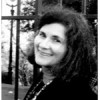
Rebecca Lynn Carter, 44, of West Chester, died Monday, March 9, at her home.

Born in Washington, DC, she was a daughter of David B. Carter of West Chester and Elizabeth M. (Roessler) of Allentown.

She was a 1998 graduate of Allentown High School; she graduated from Muhlenberg College with a bachelor’s degree in psychology in 1994 and she earned her Master’s in Psychology at Chestnut Hill College in 1999.

Rebecca was executive director of PA Foundations Online in West Chester from 2009 to 2014. 
She worked as a consultant to numerous not-for-profits in Chester County. Previously she worked at Kids Peace in Lehigh Valley for over 14 years.

She enjoyed geo cashing, crossword puzzles, was secretary for The Chester County Thresholds Organization and had a deep love for animals.

Survivors include in addition to her parents, and her step mother, Constance Carter, two brothers, John A. Carter of Portland, Ore. and Andrew Carter of Tulsa, Okla.; three sisters, Amanda Bowersox of Allentown, Kristin Carter of Tenn., and Deborah Carter of Boyertown, and five nieces, Ashley, Olivia, Jean, Brooke and Erin.

A memorial service in celebration of Rebecca’s life will be held at a later date at Kennett Friends Meeting 125 W Sickle St, Kennett Square, PA 19348. Interment will be held privately. Contributions in her memory may be made to Thresholds of Chester County, P.O Box 1703, West Chester, PA, 19380.

Arrangements are being handled by the Kuzo & Grieco Funeral Home (610-444-4116) of Kennett Square.

To view her online tribute or to share a memory with her family, please visit www.griecocares.com


About CFLive Staff

See Contributors Page https://chaddsfordlive.com/writers/

Rebecca Lynn Carter of West Chester Read More »

Boos, heckles and cheers in Concord

The vocal opposition to the proposed development of 230 acres of Woodlawn Trustees property along Beaver Valley was amplified during the Concord Township Board of Supervisors’ meeting Tuesday night.

In addition to their own consultants who rebutted the applicants’ consultants, the roughly 300-plus audience members waved signs and placards and cheered their own champions while booing and heckling those who spoke on behalf of the developers. The attorney for the opposition, Marc Jonas, twice had to tell the crowd to be civil.

At one point, Supervisors’ Chairman Dominic Pileggi told the crowd, “Don’t act like a mob. You’ll have plenty of time to boo us later.”

The plan for the property had been reviewed during multiple meetings with the Planning Commission, but Tuesday was the first night for the supervisors to hear officially the plan for the Vineyard Commons project, which calls for clustering 160 new homes over three zones. The equitable owners are developers Eastern States Development Co. Inc. and McKee Concord Homes LP.

The applicants are seeking preliminary plan approval from the supervisors.

No decision was made during the meeting, but a vote could come next week. Pileggi told the audience that the board would have another meeting Wednesday, March 18, at Garnet Valley Middle School.

Along with the 160 new homes, four historically significant structures would be preserved and more than 95 acres of open space would be provided, according to the applicants’ attorney John Jaros.

Jaros recounted the history of the application, from an initial plan that would have needed a zoning change, through several incarnations leading to the current plan that Jaros said can be built by right because no zoning changes are needed. He said township code allows clustering, and the proposed density, in that R2D zoning district.

Jaros was booed and heckled while he read sections of the township code and while telling the board that the application had received clearance letters from county, state and federal commissions, stating they had no objections to the plan.

The consultants who spoke on behalf of the applicants were also booed during their presentations.

Jonas — representing Jack Michel, Diana McCarthy and Eileen Mutschler — had to tell the audience not to degrade the meeting by yelling.

After Jaros finished with his presentation, Jonas began his saying, “The plan is woefully deficient. There are 52 violations of code and 43 items being deferred that should not be. You should not approve a plan with so many unresolved issues and deficiencies.”

Land planner Ken Amey told the board that at least 70 of the proposed lots have steep and very steep slopes and that it’s “impossible” to build on them, adding “no notable trees will survive the re-grading of the lots.”

Another land planner, Robert Blue, echoed Amey, saying all the lots would be clear-cut.

“Any tree out there will no longer be there,” he said.

Stormwater runoff is another issue. Engineer Michele Adams said the development would ruin the natural forest that absorbs almost all rainfall and that 25 acres of impervious cover would lead to more than 30 million gallons of runoff per year. If that runoff is not controlled, she said, there would be more flooding and impaired water quality.

Adams said one of the specific problems with the plan is that some of the proposed retention basins are shown as being on hydric soil, ground that is already fully or seasonally saturated with water.

One of the issues for Supervisor John Gillespie is traffic, specifically on Beaver Valley Road and its intersection with Route 202. He said the road can’t handle traffic now and that it would only get worse without improvements.

The applicant’s traffic engineer, Matt Hammond, said improvements can be made — either lengthening current turn lanes or widening Beaver Valley Road — but they should be done so in cooperation with PennDOT.

However, traffic engineer Jeff L’Amoreaux, speaking for the opposition, said Hammond’s traffic impact study is insufficient because it doesn’t factor in traffic from the not-yet-opened Wegmans, nor has it been presented to PennDOT.

“The traffic impact study is unique…All the impact studies I’ve reviewed, or authored, always have the statement that says ‘safe and efficient ingress and egress will be afforded to the public as a result of this development.’ The traffic impact study submitted to the township does not say that because [Hammond] can’t say that because he doesn’t know what the answer is because he hasn’t spoken with PennDOT,” L’Amoreaux said.

He also said added traffic congestion encourage motorists to cut through other residential streets in the area, creating more problems on those roads.

About Rich Schwartzman

Rich Schwartzman has been reporting on events in the greater Chadds Ford area since September 2001 when he became the founding editor of The Chadds Ford Post. In April 2009 he became managing editor of ChaddsFordLive. He is also an award-winning photographer.

Boos, heckles and cheers in Concord Read More »

Adopt-a-Pet: Rusty

Adopt-a-Pet: Rusty

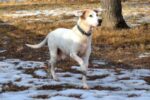
Rusty is an 8-year-old hound mix that arrived at the Chester County SPCA on Jan. 27.

I came in as a stray, and while my past has secret adventures, I am looking to start new adventures with a great family. I am 8 years old, but I have been told that 8 is the new 4. I still have plenty of energy to go outside and run, play, and go for walks. My speckled ears are one of my most adoring features. Please consider taking me home to share my next adventures with me.


About CFLive Staff

See Contributors Page https://chaddsfordlive.com/writers/

Adopt-a-Pet: Rusty Read More »

Photo of the Week: The Last Hurrah

The Last Hurrah

A sunny day after a good snowfall can make for a winter wonderland, but the consensus in the greater Chadds Ford area is that it’s time for this winter to go away.

About Rich Schwartzman

Rich Schwartzman has been reporting on events in the greater Chadds Ford area since September 2001 when he became the founding editor of The Chadds Ford Post. In April 2009 he became managing editor of ChaddsFordLive. He is also an award-winning photographer.

Photo of the Week: The Last Hurrah Read More »

Police Log March 12: DUIs and accidents

PSP Logo• State police from Troop K, Media barracks, said a blue Toshiba laptop computer was found in the vicinity of Concord and Matson roads on Feb. 28. The computer was being held at the barracks until the owner could be found.

• An 18-year-old boy from West Chester was arrested and charged with DUI following a traffic stop on Ridge Road at Pheasant Lane in Chadds Ford on Feb. 28, a police report said.

• Daniel Joseph Wachter, 25, of Eddystone, was arrested for DUI on Feb. 27, according to a police report. Police said the accused was driving under the influence of alcohol and a controlled substance. The traffic stop was made at Route 322 and Station Road in Concord Township.

• At 3:11 a.m. on March 1, Alexander Dale Sankey, 20, of Delran, N.J. was arrested for DUI at the intersection of Routes 1 and 202, state police said.

• State police said they arrested Joseph Andrew Kelly, 34, of Newark, for DUI following a traffic stop on Route 202 at Springwater Plaza in Chadds Ford Township.

• Two teenagers, a 16-year-old girl from Garnet Valley, and a 19-year-old boy from Newark were involved in a traffic accident at Concord and Brinton Lake Roads at 8:30 p.m. on Feb. 28. No injuries were reported, but both vehicles had to be towed.

• State police said Zachary O. Jacobs, 22, reportedly of Chadds Ford, received a minor injury when the car he was driving spun on ice, left the roadway and then hit a trash can and a tree. The accident happened 11:09 p.m. on March 4 on Garnet Mine Road in Concord Township. Jacobs was cited for driving at an unsafe speed, the police report said.

• No injuries were reported in a one-vehicle accident on Webb Road in Chadds Ford Township. Police said Ryan T. Dosen, 35, of Kennett Square, was driving on Webb at 9:30 a.m. on March 3 when his vehicle hit a patch of ice, left the road and then hit a tree.

• On Monday, March 9, state police from the Avondale barracks responded to a two-vehicle crash on Unionville Road, north of Chalfont Road in East Marborough Township at 4:43 p.m. Police said Charles D. Farace, 79, of Coatesville, was traveling north when his 2013 Honda CRV veered into the southbound lane, striking a 2010 Dodge Caliber driven by a 44-year-old Kennett Square man. Farace, who sustained minor injury, was cited; the other driver was not hurt, police said, adding that both were wearing seatbelts.

• A 17-year-old man was cited when he was unable to stop his Volkswagen Jetta as he was approaching the intersection of Folly Hill Road and Lenape-Unionville Road. The car went through the intersection and into a ditch. No injuries were reported. The one-car accident happened shortly after 9 a.m. on March 4.

• State police from Troop J, Avondale barracks, said a Nottingham woman was cited following a traffic accident on Route 52 south of Route 926 in Pennsbury Township on March 2. Jacquelyn M. Gavin, 36, was cited after her truck left the road for “unknown reasons.” The Chevy Silverado crossed the traffic lane and struck another vehicle.

• State police from the Embreeville barracks responded to a one-vehicle crash on Unionville Wawaset Road, east of Indian Hannah Road, in Newlin Township on Tuesday, March 3, at 6:59 p.m. Police said Lauren A. Kennedy, 19, of Kennett Square, was traveling east when she lost control of her 2013 Chevrolet Equinox and struck a fence. Kennedy and her 14-year-old passenger, both of whom were wearing seatbelts, sustained injury of unknown severity; Kennedy was cited, police said.

• State police from the Avondale barracks said Evita V. Leach, 27, of Coatesville, was traveling north on Doe Run Road in Newlin Township on Tuesday, March 3 at 9:26 p.m. when she lost control of her 2006 Chrysler 300, left the west side of the road and struck a concrete drainage wall. Leach, who sustained minor injury and was wearing a seatbelt, was cited for failing to drive at a safe speed, police said.

• Traffic stops led to three recent DUI arrests, said Kennett Square Police. Marcus Miller, 26, Kennett Square, was pulled over in the 400 block of East South Street on Monday, Feb. 23.  Robert Saladino, 61, of Kennett Square, was arrested on Sunday, Feb. 15,  at 7:14 p.m. in the 500 block of North Mill Road, and Cesar Aguilar-Castaneda, 22, of Kennedy Square, was detained on Tuesday, March 3, at 4:11 p.m. in the 200 block of Birch Street.

• Kennett Square Police cited two 18-year-olds — Alexander Hill of Kennett Square and Dalton Emerick of West Chester — for underage drinking after the vehicle in which they were passengers was stopped on Wednesday, Feb. 18, at 11:49 p.m. in the 500 block of West State Street.

• On Monday, Feb. 23, at 5:15 p.m., a borough resident told police that the IRS had rejected the electronic filing of a tax return because the Social Security number had already been used for another return. Kennett Square Police said they are investigating the possible identity theft, which is a state offense, and federal officials are probing the filing of a false return, which comes under their jurisdiction.

• A customer who left a phone on the counter of a Kennett Square business in the 500 block of West Cypress Street around 4 p.m. on Saturday, Feb. 14, got the phone back, but borough police are still trying to identify the man who stole it. Police said store personnel recognized the suspected thief in surveillance video as a regular patron. When the suspect showed up again the next day, an employee asked for the phone, got it, and returned it to its owner without obtaining the alleged thief’s name, police said, adding that an investigation is continuing.

About CFLive Staff

See Contributors Page https://chaddsfordlive.com/writers/

Police Log March 12: DUIs and accidents Read More »

Around Town March 12

• The Brandywine Battlefield Park is open for a new season. The park will be open Friday through Sunday during March, Thursday through Sunday in April, and Wednesday through Sunday beginning in May. Park hours will be 9 a.m. to 4 p.m. on weekdays and Saturday, noon to 4 p.m. on Sundays.

• Charlie Zahm and Tad Marks will be performing 3 p.m., Sunday, March 15 at St. Michael Lutheran Church. Zahm is one of the most popular singers on the Celtic festival circuit and has performed often at Chadds Ford Days. The performance will feature songs of Ireland, Scotland and the sea. The suggested donation is $5 per adult and $2 per child under 12.

• The Chadds Ford Republican Party is holding a St. Patrick’s Day party for its supervisor candidates Samantha Reiner and Noelle Barbone from 6-8 p.m. on March 17 at Brandywine Catering. Donations are $100 per person, $175 per couple. Also attending will be Carolyn Daniels, Jihn Murpht amd Lorraine Ramunno, candidates for Unionville-Chadds Ford School Board. For more information, send e-mail to Mary Kot at mary@marykot.com

• Artist Karl Kuerner and the Brandywine River Museum of Art are teaming up for art classes at the Kuerner Farm. Kuerner will be teaching the classes, held Tuesdays, March 17 to May 5, 11 a.m. to 1 p.m. and Saturdays, March 21 to May 9, 11 a.m. to 1 p.m. The farm was a source of inspiration for Andrew Wyeth for more than 70 years, and a featured property on the National Register of Historic Places. As the grandson of two of Andrew Wyeth’s best-known subjects and a student of Carolyn Wyeth, Karl’s personal experiences with the farm provide special insight into the property and its rich history. Register online at www.brandywine.org or call 610.388.8326. Cost is $250 per person, $200 for Brandywine members.

• The 66th annual Art Sale and Show at Chadds Ford Elementary School is Friday and Saturday, March 20 and 21. The Friday night adults-only reception starts at 7 p.m. Family-friendly events on Saturday begin at 10 a.m.

• The Christian C. Sanderson Museum will hold a “Wine & Sign” on Friday, March 27 from 5 p.m. to 8 p.m. where guests can sample wine from Galer Estate Vineyard & Winery, while visiting with regional authors Bruce Mowday, Gene Pisasale, and Kevin Ferris, as well as artists Annette Alessi, Christine Burke, Lele Galer and others. Autographed books, signed prints, and original paintings will be available for purchase. There will be live music by Chadds Ford’s Skip Barthold and refreshments sponsored by Kennett Design.

• The Chester County Health Department is holding a photo contest for students in grades 9-12. Participants should submit one photo that represents a change the student, family or friends have made for a positive impact on their health. Submission deadline is March 27. The winners will be announced on April 10. First prize is $100. For photo contest details, go to www.chesco.org/health/contest

• The Unionville High School boys lacrosse team is hosting an Applebee’s Flapjack Fundraiser from 8-10 a.m. on Sunday, March 22 at the Applebee’s at 815 E Baltimore Pike, Kennett Square 19348. The breakfast includes all-you-can-eat pancakes, sausage, orange juice and coffee. Tickets are $7 and available at the door.

• The Chester County Department of Community Development has prepared the 2014 Consolidated Annual Performance and Evaluation Report for public review. The CAPER documents the progress Chester County has made in carrying out the housing and community development goals and objectives outlined in the Consolidated Plan and the 2014 Action Plan through the use of federal entitlement funding allocated by the U.S. Department of Housing and Urban Development. To view the document, visit http://www.chesco.org/DocumentCenter/View/24608. Written comments will be accepted until 4 p.m. on March 23 and should be directed to ccdcd@chesco.org

• Winterthur Museum, Garden & Library’s recent conservation program—which cut energy use 20 percent — has led to its receiving the prestigious Corporate Energy Manager of the Year Award from the Greater Philadelphia Chapter of the Association of Energy Engineers. Winterthur’s conservation program also reduces fluctuations in temperature and humidity, which improves the comfort of its visitors and the longevity of the 85,000 objects in 175 period-room displays. The project, which included infrastructure changes   behind the scenes, was funded by a 2012 Sustaining Cultural Heritage Collections grant from the National Endowment for the Humanities.


About CFLive Staff

See Contributors Page https://chaddsfordlive.com/writers/
Around Town March 12 Read More »

Teens urged to snap ‘picture of health’

Aiming to create the picture of health, the Chester County Health Department is sponsoring the 5th Annual Healthy Photo Contest to promote National Public Health Week.

Screen Shot 2015-03-12 at 9.47.54 AMAny high school student from ninth through 12th grade in the county is eligible to enter a photo depicting a healthy lifestyle theme, such as eating nutritious foods, avoiding tobacco, driving safely, using walking/biking trails or stopping the spread of germs. Contestants are encouraged to be creative and artistic, a county press release said.

The first-prize winner will receive a $100 Visa gift card; second place, a $50 card; and third place, a $25 card. To participate, send one original photo to cchd@chesco.org in jpg or png format, with a print-size equivalent or higher than 8×10 inches and a size between one and four MBs.

Contestants should include the following information: title of the photo; description in 50 words or less, explaining how it relates to being healthy; first and last name, address, and phone number; school name; and grade level. For more information, visit http://www.chesco.org/index.aspx?NID=2284.

The deadline for submissions is Friday, March 27. The winning photos will be announced on Friday, April 10. They will be displayed on the Health Department website and may be used in future public health campaigns.


About CFLive Staff

See Contributors Page https://chaddsfordlive.com/writers/

Teens urged to snap ‘picture of health’ Read More »

The Rabbi’s Study: Getting to Carnegie Hall

Last Monday, I used my day off to travel to New York City. As I walked up the stairs out of the subway and enjoyed my first glimpse of the New York skyline against the gray winter sky I was reminded of the old joke: One man stops another on the streets of New York and asks, “Excuse me, sir, how do you get to Carnegie Hall?”

As we all know, the surprised New Yorker pauses for a moment, claps his interrogator on the back and exclaims “Practice, my boy, practice!”

“Practice.” As with most jokes (even jokes that are much funnier and much more current than this one) the humor comes from a combination of surprise and the absurdity of the suggestion that, instead of walking several blocks to reach the renowned concert hall, the hapless tourist would consider returning home and embarking upon a lifetime of discipline and hard work to achieve the level of musical proficiency that could lead to an invitation to play the famous stage of Carnegie Hall.

Here’s the strange way that the rabbinic mind works, though. As I walked through Central Park, I realized that, given the right circumstances, I might have offered the same response and I would have been completely serious.

Over the last several years, our synagogue has been steadfastly working to achieve a range of institutional goals. We hope to make our community more warm and more welcoming. We work to invite more congregants into active engagement with our religious school, our auxiliaries and our Tikkun Olam or social justice projects. And, in order to become the community that we aspire to be, we strive to enable a greater percentage of our membership find meaning within our communal prayer life.

All of these goals are worthy and we’re making headway in achieving each of them. Nevertheless, deepening the ritual life of our community remains the most elusive. As I ambled across the Upper West Side, it occurred to me that maybe we think about our ritual life too much like a show at Carnegie Hall and not enough as a practice.

Over my years here, we have invited a capella groups to lead services and we have added instrumental music. We have followed services with speakers and we have preceded services with wine and cheese. We have staged plays and we have played games. Attendance has increased as a result of all of this programming. Nevertheless, after each program has run its course, our numbers return to our regular service-goers plus a few people who come (usually) to observe a life cycle event like a Bar or Bat Mitzvah or to say a prayer in memory of a loved one.

And this makes sense. Attracting people with programming is not the same as deepening our relationship with prayer. It trains us to come to the synagogue to sit in an audience and to be entertained or educated. When the programming stops or loses its novelty, the “audience” dwindles. There’s a reason why Carnegie Hall hosts such a wide array of different performers and types of performances. The people who run a concert hall know that once the entertainment grows stale, the crowds diminish.

Practice is different. Practice has kept our tradition relevant for thousands of years, even though the words of our prayer service repeat themselves every day, every week and every year. Practice isn’t about being entertained; it’s about creating a structure for ourselves and our community that enables us to transform ourselves and the way that we see the world around us.

Different people experience practice differently. For instance the practice of observing the Sabbath is shaped for some by the insights that are inspired by the words of our liturgy. For others, it is time out of the week set aside to pause and to think about life in a broader context. And there are those for whom it is time when they enjoy divine permission to deepen their relationships with their family and with other members of the community whom they love. But in each case, practice means making the decision to act in ways that differentiate the seventh day of each week from the six days which preceded it.

After my afternoon in New York, I know exactly how I will respond when a congregant, a synagogue officer or another member of a focus group ask me, “Rabbi, we all want more people to attend services, but how can we get from where we are now to where we want to be?”

“Practice,” I will respond, “practice.”

About Rabbi Eric M. Rosin

Rabbi Eric Rosin began his professional career as an attorney in Los Angeles serving the entertainment industry, but discovered he needed to be doing something he was passionate about. He left the practice of law and began studying for ordination at the Ziegler School of Rabbinic Studies in Los Angeles. After ordination, Rabbi Rosin served for two years as the assistant rabbi of Temple Beth-El in Richmond, Va., then assumed the pulpit at Kesher Israel Congregation in West Chester, Pa. in 2004.

The Rabbi’s Study: Getting to Carnegie Hall Read More »

Mind Matters: Being mortal

None of us know when we will die, but we can’t deny that it is inevitable. Even tax evaders can’t avoid mortality. Atul Gawande, M.D., in his book, “Being Mortal: Medicine and What Matters in the End,” invites us to reflect on the process of aging and death.

Death can be instantaneous, sudden, but usually it isn’t. More than likely, we face the aging of our elders, our parents and then come to the brink of our own mortality in a process over time, rather than in a nanosecond.

When I was 50, I took care of my parents in their dying. Now I am almost 70 and wonder about my own end of life issues as I work with people older than I. Some are residents in assisted living; others are still living independently. Yet we all want the same thing: autonomy in our decision-making, and a sense of aliveness to continue.

Gawande articulates in his writing what I have observed first hand working with an aging population, particularly residents in assisted living. These folks have enough capital to afford such a safe and comfortable place, and even at that, the situation is far from optimal.

Yes, in general, the nursing staff is caring, competent and compassionate. Yet the operative words here are “nursing” and “staff.” Nursing implies a medical model where the hallmark activity is the dispensing of medicines in a timely manner. “Staff” conveys the regimentation necessary to maintain institutional structure. Sure, we all need structure. However, often times the institution supersedes the uniqueness and importance of the individual.

Gawande describes how the typical “nursing home” operates: “efficiency … [demands] that the nursing aide staff have the residents ready for the activity coordination staff, who … [keep] them out of the rooms for the cleaning staff, et cetera.” (p. 143)

In his research, however, Gawande found an alternate model of care, called the “Green House” where control no longer resided with facility managers but with the “frontline caregivers.”

These caregivers would focus on just a few residents and are thereby able to have more contact with the residents, becoming more like companions. My hunch is that the stereotypical assisted living model could incorporate the Green House idea simply by increasing the ratio of aides to residents.

Perhaps the most compelling message Gawande purveys is that medicine does not have all the answers, especially when it comes to aging and death. Sometimes the medical model attempts to prolong life to the detriment of living a life. And in the interest of “patient safety,” elderly residents are constrained and restricted from making choices.

I remember one woman resident of a facility who loved to go outside and walk. Given her dementia, she was considered an “elopement” risk. Eventually, she was confined to the locked unit — windowless, airless, but it had a TV. So there she sat with others like her. Was she safe? Yes, but to what end?

Unfortunately, the facility where she lived had no outdoor gated walks where she could be outside, yet contained. When I would walk through her unit and call her name she would always look up and give a big smile and say “Hello, dearie!” Was her will to run waning due to her dementia or to the medications that blunted her? To keep her “safe?” We know, with the medical model, how to keep people “safe” but we don’t know with that model how to let them really live.

Gawande invites us to rethink how we treat our elderly—who, if we’re “lucky”—will eventually be ourselves.

* Kayta Curzie Gajdos holds a doctorate in counseling psychology and is in private practice in Chadds Ford, Pennsylvania. She welcomes comments atMindMatters@DrGajdos.com or 610-388-2888. Past columns are posted towww.drgajdos.com.


About Kayta Gajdos

Dr. Kathleen Curzie Gajdos ("Kayta") is a licensed psychologist (Pennsylvania and Delaware) who has worked with individuals, couples, and families with a spectrum of problems. She has experience and training in the fields of alcohol and drug addictions, hypnosis, family therapy, Jungian theory, Gestalt therapy, EMDR, and bereavement. Dr. Gajdos developed a private practice in the Pittsburgh area, and was affiliated with the Family Therapy Institute of Western Psychiatric Institute and Clinic, having written numerous articles for the Family Therapy Newsletter there. She has published in the American Psychological Association Bulletin, the Family Psychologist, and in the Swedenborgian publications, Chrysalis and The Messenger. Dr. Gajdos has taught at the college level, most recently for West Chester University and Wilmington College, and has served as field faculty for Vermont College of Norwich University the Union Institute's Center for Distance Learning, Cincinnati, Ohio. She has also served as consulting psychologist to the Irene Stacy Community MH/MR Center in Western Pennsylvania where she supervised psychologists in training. Currently active in disaster relief, Dr. Gajdos serves with the American Red Cross and participated in Hurricane Katrina relief efforts as a member of teams from the Department of Health and Human Services' Substance Abuse and Mental Health Services Administration.Now living in Chadds Ford, in the Brandywine Valley of eastern Pennsylvania, Dr. Gajdos combines her private practice working with individuals, couples and families, with leading workshops on such topics as grief and healing, the impact of multigenerational grief and trauma shame, the shadow and self, Women Who Run with the Wolves, motherless daughters, and mediation and relaxation. Each year at Temenos Retreat Center in West Chester, PA she leads a griefs of birthing ritual for those who have suffered losses of procreation (abortions, miscarriages, infertility, etc.); she also holds yearly A Day of Re-Collection at Temenos.Dr. Gajdos holds Master's degrees in both philosophy and clinical psychology and received her Ph.D. in counseling at the University of Pittsburgh. Among her professional affiliations, she includes having been a founding member and board member of the C.G. Jung Educational Center of Pittsburgh, as well as being listed in Who's Who of American Women. Currently, she is a member of the American Psychological Association, The Pennsylvania Psychological Association, the Delaware Psychological Association, the American Family Therapy Academy, The Association for Death Education and Counseling, and the Delaware County Mental Health and Mental Retardation Board. Woven into her professional career are Dr. Gajdos' pursuits of dancing, singing, and writing poetry.

Mind Matters: Being mortal Read More »

Scroll to Top