
September 15, 2019

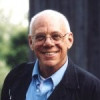
William J. Reinert of Chadds Ford

William J Reinert, 74 of Chadds Ford, PA and formerly of Mantoloking, NJ, passed away on September 9, 2019. He was a graduate of the Sanford School and St. Joseph’s University in Philadelphia. He played varsity basketball while briefly attending the University of Delaware.

Bill began his career as an assistant on the corporate bond trading desk at Stone & Webster in New York and soon became a salesman, a natural for a man who loved to socialize and connect with people. In 1976 while employed at Loeb Rhoades & Co, a headhunter and friend of Bill’s, sent a young woman for a job interview on the trading desk and Bill found his way into the heart of recent UNC graduate, Betsy Potter. Talking about Tarheel basketball, Bill formed an instant connection with Betsy & her friends (who he called the “Y’alls”). They married in Duke Gardens with friends and family coming from far and wide to see the confirmed bachelor tie the knot. To the day he died he described his wedding day as “the day Duke lost to Kentucky”.

An avid lover of basketball, he played every summer in the courts up the street from his family home in Pt. Pleasant Beach, NJ. He served as a beach cop many summers and listened to Frankie Valli at Jenkinson’s Pavilion. He was proud of his New Jersey roots.

Second only to basketball was his love and unfailing, though sometimes painful devotion, to the Baltimore Orioles. He and Rob made the pilgrimage to Cooperstown to see his uncontested hero, Cal Ripken, inducted into the Hall of Fame. He was always looking forward to the next pennant race.

Bill and Betsy moved to Wilmington 30 years ago to raise their children, Casey & Rob. Bill, a lifelong commuter, loved chauffeuring Casey to kindergarten on his way to Alex Brown in Wilmington. He and Rob shared so many moments attending car & air shows and hunting in the Catskills. His children were everything to him.

Bill was not acquisitive of material things; instead he is survived by a collection of wonderful friends that he stayed in contact with until his final day. He made us all feel special – a gentleman and a truly kind person who shall be missed.

For online condolences, please visit www.chandlerfuneralhome.com

About CFLive Staff

See Contributors Page https://chaddsfordlive.com/writers/

William J. Reinert of Chadds Ford Read More »
Chadds Ford Days back with a bang

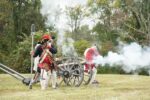
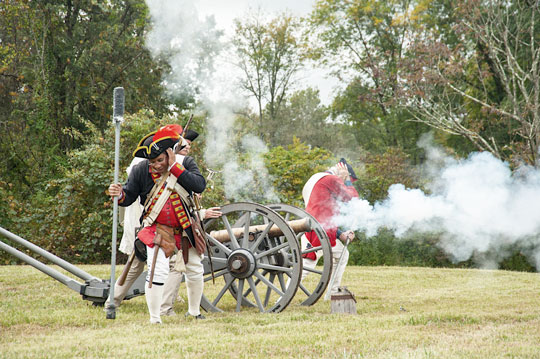
1- Re-enactor from the 2nd Pennsylvania Regiment fire off a cannon volley during a Chadds Ford Days demonstration.

It might not have been the sunniest of days but, after a year hiatus, Chadds Ford Days came back with a bang and a boom Saturday. And according to Chadds Ford Historical Society President Phyllis Recca, “Today’s Chadds Ford Days was a huge success.”

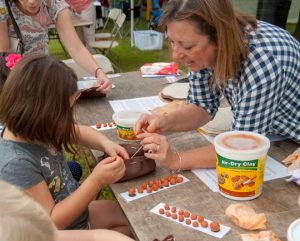
Lora Englehart teaches kids how to make marbles and sew bags to hold the marbles.

Based on casual observations and comments, day one of the two-day fundraiser saw a better attendance and more energy than in previous years.

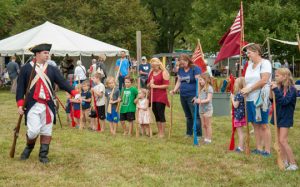
After the big kids play with the big guns, youngsters get their chance to learn some colonial military drills from Andrew Outten, education director from the Brandywine Battlefield Park.

“One person who has been attending for the last 30 years said it was the best ever and really appreciated our return to a colonial theme,” Recca added. “Numerous new attractions were packed including the historic lectures tent, kids candle and marble making along with musket drills. We hope everyone can come by on Sunday and enjoy a wide array of colonial activities while relaxing to some great bluegrass music.”

Two changes from previous years was a larger area for colonial demonstrators and a move back one week so there would be no competition from other events, such as the Mushroom Festival in Kennett Square.

There was the return of Scott Gold, who makes bowls by hand as they were made in the colonial period. There was a blacksmith demonstration, a colonial peddler explaining the variety of his work from trading with settlers and natives to bringing news from the big city and even Europe. There were re-enactors giving musket and cannon demonstrations and even the kids got a chance to do some colonial military drills.

The kids also had the chance to make marbles and marble bags, play in a hay maze and launch water-soaked sponge balls.

Chadds Ford Days contunes today, Sunday, Sept. 15 from 10 a.m. to 5 p.m. at the Chadds Ford Historical Society on Creek Road in Chadds Ford Township.


About Rich Schwartzman

Rich Schwartzman has been reporting on events in the greater Chadds Ford area since September 2001 when he became the founding editor of The Chadds Ford Post. In April 2009 he became managing editor of ChaddsFordLive. He is also an award-winning photographer.

Chadds Ford Days back with a bang Read More »

Rabbinic Reflections: God’s body and soul

Friday the 13th had a full moon. What a great reminder that we are not in control; two eerie signs, especially for the superstitious, that the natural world itself has a dark side. This particular full moon marks the middle of the Hebrew month of Elul, the month of preparation for the Jewish High Holy Days. In two more weeks, as the moon wanes to nothing, Rosh HaShanah, the Jewish New Year, will begin. This year, more than ever, I am struck by the focus of the language of the machzor, the High Holy Day prayer book.

The focus of our prayers as we face God’s judgment appears to be on the soul’s divine purity. As we seek forgiveness, acknowledging the sins of our physical misdeeds, the prayers refer time and again to our soul being God’s. We say, “haneshama lakh[the soul is Yours].” We spend the holy days trying to cleanse ourselves by getting in touch with our souls and their divine purity. We literally beat our hearts (softly with our fists) for alphabetical lists of sins. The theme that emerges throughout is that our connection to God depends on reconnecting with our souls.

The contemporary world encourages us to let go of our bodies and to improve our souls. We live with a mind-body duality where our bodies are problematic. Some see our material bodies as the cause or origin of our sins with the soul, by contrast, as an ephemeral spirit trapped inside the body. In this dualism, we are supposed to help our soul rise above its bodily container. While we can attribute the problem of this mindset to Cartesian philosophy, it is we who must decide how true it is for each of us.

The High Holy Day liturgy, especially the confessional passages, has a subtle focus also on the body. Haneshama lakh[the soul is Yours], while serving as a title and familiar call out about the soul, actually continues with the words v’ha’goof poh’ah’lakh [and the body is Your act]. Our body is as much God’s as the soul. It has divine intent in its formation. We do well to beat our hearts with our fists because our bodies can be forces for good.

We are, body and soul, called to improve ourselves. Neither meditation nor a gym workout alone will honor all that we are designed to be. Additional learning and additional dieting are likewise insufficient. Even together these approaches to better living do not respond adequately to the charge of the High Holy Days. We need a holistic approach in which we recognize that it all matters.

Shortly after Haneshama lakhis a poem calledKi Hiney Ka’chomer[Like this clay] which guides this approach. In the imagery of the poem, we are like clay in the hands of The Potter; stone, in the hands of The Mason; iron, in the hands of The Smith; and more. In each case, we matter. We are fully existing materially and spiritually; we just need shaping and refining. Our body and our soul are God’s.

By recognizing body and soul as jointly who we are, we can better achieve self-improvement in all the ways the liturgy encourages us. By recognizing body and soul as God’s rather than ours, we can let go of that which drives us to misdeeds and we can open ourselves up to what we can be. We can accept who we are so that we can become even better representations of ourselves. Our lives and deeds shape us as God designs. We do not need to be in control of either body or soul to be better; we simply need to be, to be in connection and to be God’s body and soul.

About Rabbi Jeremy Winaker

Rabbi Jeremy Winaker is the executive director of the Greater Philadelphia Hillel Network, responsible for West Chester University, Haverford, Bryn Mawr, and other area colleges. He is the former head of school at the Albert Einstein Academy in Wilmington and was the senior Jewish educator at the Kristol Hillel Center at the University of Delaware for four years. Rabbi Winaker lives in Delaware with his wife and three children.

Rabbinic Reflections: God’s body and soul Read More »

Blogging Along the Brandywine: ‘It might have been’

Many people of a certain age are familiar with the facts of the evening of Sept. 20, 1973. A single-engine Beechcraft E18S took off from the Natchitoches Regional Airport in La., failed to clear a tree at the end of the runway and crashed, killing all six aboard.

The Jim Croce grave at Haym Salomon Memorial Gardens in Chester County.

One of them was famed singer-songwriter, Jim Croce. He was 30 years old.  His album “You Don’t Mess Around With Jim” featuring “Time in a Bottle,” had reached the Top 20. A later single, “Bad, Bad Leroy Brown” would go gold.

That September, I was 24, in my third-year teaching, never dreaming that in the next year an effervescent young teacher would join our faculty bringing the story full circle.

Our high school had a lot of rough kids who didn’t want to be there — the kind that made me wonder why I had chosen teaching as a profession. But Judy Coffin was the consummate high school English teacher, the kind they make movies about — pretty, energetic, funny, a bit of a hippy and confident. The kids picked up on it and loved her.

One day in the faculty lunchroom, over a conversation on Croce’s death, she said, “I have Jim Croce’s Ovation guitar.”

Judy lived near Glenmoore, in northern Chester County. Her neighbors down the road had been Jim Croce, his wife Ingrid and infant son Adrian, who had moved to Lyndell to escape their frustration with the New York music scene.

As Judy reminisced last week, “A major highlight was the frequent weekend gatherings of several musicians at their little house … and the people who liked to make music, be with them or to just be there. The house was stuffed with happy people and plenty of food.”

It was at one of these parties that Jim and Ingrid introduced Judy to Maury Muehleisen.

Maury was classically trained on piano and guitar. It was his high crystal-clear melodies on his Martin D-35 guitar that were the perfect complement to Jim’s strumming and street-wise lyrics.

As Ingrid wrote about Judy on her web page, “She was one of my best friends … Maury moved in and started writing songs for Judy and never stopped. She was his muse!“

And Maury in turn was Jim’s muse.

“… Jim and Maury were very different, in their music and the things that inspired them,” Coffin said. “Jim’s music was rooted in folksy blues and basic rhythms and chords which did evolve the longer he played with Maury, whose enchanting chords and lyrical style were original to him.

“They both were profuse writers and composers. As time passed, they developed an affinity with each other’s styles and they both grew musically because of it”.

Maury was only 24 when he perished in the crash the night of Sept. 20, 1973.

My husband and I visited Jim Croce’s grave last week at the Haym Salomon Memorial Gardens just off Phoenixville Pike near Frazer. It’s on top of a quiet hill under a tall pine tree.

His bronze marker is framed with the tiny stones placed on graves in Jewish cemeteries to mark a visitation. We left 2 guitar picks and 2 dimes in homage to his song “Operator”.

When I think of talented young lives cut short, I remember the poet John Greenleaf Whittier, who in 1856 wrote:

For all sad words of tongue and pen,
The saddest are these, ‘It might have been’.


About Sally Denk Hoey

Sally Denk Hoey, is a Gemini - one part music and one part history. She holds a masters degree cum laude from the School of Music at West Chester University. She taught 14 years in both public and private school. Her CD "Bard of the Brandywine" was critically received during her almost 30 years as a folk singer. She currently cantors masses at St Agnes Church in West Chester where she also performs with the select Motet Choir. A recognized historian, Sally serves as a judge-captain for the south-east Pennsylvania regionals of the National History Day Competition. She has served as president of the Brandywine Battlefield Park Associates as well as the Sanderson Museum in Chadds Ford where she now curates the violin collection. Sally re-enacted with the 43rd Regiment of Foot and the 2nd Pennsylvania Regiment for 19 years where she interpreted the role of a campfollower at encampments in Valley Forge, Williamsburg, Va., Monmouth, N.J. and Lexington and Concord, Mass. Sally is married to her college classmate, Thomas Hoey, otherwise known as "Mr. Sousa.”

Blogging Along the Brandywine: ‘It might have been’ Read More »

Scroll to Top