

July 6, 2019

Loretta F. Battaglia of Landenberg

Loretta F. Battaglia, 84, of Landenberg, died Monday, July 1. She was the wife of Frank A. Battaglia, who died in 2004, and with whom she shared 30 years of marriage.
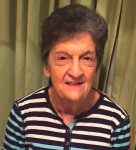
Loretta F. Battaglia

Born in West Chester, she was the daughter of the late Pietro Ferranto and the late Anna Rita Macellaro Ferranto. Loretta grew up in Kennett Square and was a lifelong parishioner of St. Patrick’s Church.

She and her husband Frank were successful accountants in Kennett Square for more than 40 years. They were dedicated to their clients and well known in the borough.  Through the success of their business, they were able to support many local groups and charities that are so strong in the community today. Through the years, their memberships led them to travel and enjoy their time together.

Family traditions were most memorable with 3 generations of nieces and nephews gathering for over 30 years at her home for Thanksgiving. Loretta was very giving and always made sure no one was left out. Loretta enjoyed spending time with friends playing cards, gardening and going to their beach house in Lewes, Delaware.  One of her favorite past time was watching the Philadelphia Phillies.

Loretta was predeceased by one brother, Louis Ferranto; two sisters, Frances Ferranto and Anna Marie “Dolly” Brooks and by one nephew, Robert Ferranto Jr. She is survived by one brother, Robert Ferranto of Avondale. her beloved nieces and nephews: LouAnne Basciani Toto, Linda Brooks Wanex, Leslie Brooks Bernens, Peter Ferranto, Gale Ferranto, Jennifer Ferranto and their children and grandchildren.

You are invited to visit with her family and friends from 10 a.m. to noon on Tuesday, July 9, at St. Gabriel of the Sorrowful Mother Church, 8910 Gap Newport Pike (Route 41), Avondale. Her funeral mass will follow at noon. Burial will be in St. Patrick’s Cemetery, Route 82, Kennett Square.

In lieu of flowers, a contribution may be made to St. Jude Children’s Research Hospital, 501 St. Jude Place, Memphis, TN 38105.

To view her online tribute and to share a memory with her family, please visit www.kuzoandfoulkfh.com

Arrangement by the Kuzo Funeral Home, Kennett Square.

About CFLive Staff

See Contributors Page https://chaddsfordlive.com/writers/

Loretta F. Battaglia of Landenberg Read More »
Mind Matters: Do you fear others?

Ever get on a subway? Or any mode of public transit, especially in a city? Recently, I rode the T, the subway system of Boston and wondered about how we conjure up the “fear of others.”

Encapsulated in a tunneled tube, people mostly are respectful of this anonymous intimacy of bodies without intrusion into another’s tiny piece of personal space. Jostled next to one another, people read books, listen to their headphones, transporting themselves to other realms. It would be ludicrous in this situation to fear the other for the way they look or how they are dressed or for what color their skin is or for what language they speak. Of course, there are people to watch out for, but hypervigilance and being paranoid of everyone destroys discernment and good judgment for when a real threat arises. If everything you perceive is red (read dangerous), then the red flag of your internal warning system or the metaphorical red light of a “stop!” is not seen or heeded.

So how do we come to a “fear of others”? Brian Resnick (Vox, Jan. 30, 2017) addresses this in his essay “Seven Lessons from Psychology That Explain the Irrational Fear of Outsiders.” Fear is an emotion that is easily manipulated by politicians so it behooves us to recognize the psychological underpinnings of how we get set up to fear others. Our prehistoric roots reside in our reptilian brain that quietly categorizes “us” versus “them” mentality. Unless we are acutely aware, we are easily triggered into buying into the artificial separation of “us” versus “them.” Next step is that if our behavior is shaped to fear outsiders then we also dehumanize them. If this fear is fomented by hateful rhetoric, we exaggerate the threat. We latch onto singular anecdotes that exacerbate the fear rather than factual data that would give us evidence to the contrary.

The good news, says Resnick, is that it is possible to teach people “to turn fear into something more positive.” Because “negative reaction to refugees is more emotional than rational,” psychological research has found that statistical evidence cannot sway such emotion. However, if negative emotions (“refugees are dangerous”) can be overridden with positive emotions (“refugees are human beings who need help”), it is possible to change people’s fear reactions. “Us” and “them” are, after all, arbitrary artifices, no more real than saying a resident in Pennsylvania is more human than that “other” resident in Delaware.


About Kayta Gajdos

Dr. Kathleen Curzie Gajdos ("Kayta") is a licensed psychologist (Pennsylvania and Delaware) who has worked with individuals, couples, and families with a spectrum of problems. She has experience and training in the fields of alcohol and drug addictions, hypnosis, family therapy, Jungian theory, Gestalt therapy, EMDR, and bereavement. Dr. Gajdos developed a private practice in the Pittsburgh area, and was affiliated with the Family Therapy Institute of Western Psychiatric Institute and Clinic, having written numerous articles for the Family Therapy Newsletter there. She has published in the American Psychological Association Bulletin, the Family Psychologist, and in the Swedenborgian publications, Chrysalis and The Messenger. Dr. Gajdos has taught at the college level, most recently for West Chester University and Wilmington College, and has served as field faculty for Vermont College of Norwich University the Union Institute's Center for Distance Learning, Cincinnati, Ohio. She has also served as consulting psychologist to the Irene Stacy Community MH/MR Center in Western Pennsylvania where she supervised psychologists in training. Currently active in disaster relief, Dr. Gajdos serves with the American Red Cross and participated in Hurricane Katrina relief efforts as a member of teams from the Department of Health and Human Services' Substance Abuse and Mental Health Services Administration.Now living in Chadds Ford, in the Brandywine Valley of eastern Pennsylvania, Dr. Gajdos combines her private practice working with individuals, couples and families, with leading workshops on such topics as grief and healing, the impact of multigenerational grief and trauma shame, the shadow and self, Women Who Run with the Wolves, motherless daughters, and mediation and relaxation. Each year at Temenos Retreat Center in West Chester, PA she leads a griefs of birthing ritual for those who have suffered losses of procreation (abortions, miscarriages, infertility, etc.); she also holds yearly A Day of Re-Collection at Temenos.Dr. Gajdos holds Master's degrees in both philosophy and clinical psychology and received her Ph.D. in counseling at the University of Pittsburgh. Among her professional affiliations, she includes having been a founding member and board member of the C.G. Jung Educational Center of Pittsburgh, as well as being listed in Who's Who of American Women. Currently, she is a member of the American Psychological Association, The Pennsylvania Psychological Association, the Delaware Psychological Association, the American Family Therapy Academy, The Association for Death Education and Counseling, and the Delaware County Mental Health and Mental Retardation Board. Woven into her professional career are Dr. Gajdos' pursuits of dancing, singing, and writing poetry.

Mind Matters: Do you fear others? Read More »

Scroll to Top