
December 8, 2018

Carlos“Cap” Weil Jr.

Carlos“Cap” Weil Jr. died peacefully on Dec. 1, in Chester County at the age of 78. Born in Philadelphia and raised in Upper Darby, Cap attended The Haverford School where he was both a scholar and an athlete. He continued his studies at Bucknell University where he received a bachelor’s degree in chemistry.
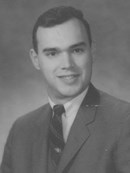
 Aftergraduation Cap spent two years in the Army as part of the Chemical Corp. Afterleaving the service, he spent some time playing semi-professional soccer. Cap’s entire career was spent working for Atlas Chemical which later became a part ofICI. His job gave him amazing opportunities to travel the world and even tolive abroad in England. He loved to tell stories of his adventures, especially about his work in Central and South America. He was a citizen of the world andrelished the time he got to spend immersed in other cultures.

 never met a “stranger” and he made the world a better place because of his inquisitive and friendly nature. At home, Cap stayed busy with his family and a full plate of volunteer activities. He was a leader of the Explorer Scouts,taught rock climbing and refereed youth soccer games. He was a marvelous chef and read cookbooks like they were novels. He was always dreaming up newculinary delights for friends and family. In retirement, he filled his daysserving on the boards of numerous local organizations.

 He was the board president of the Chadds Ford Historical Society and the BayardTaylor Memorial Library, supporter of the Tick Tock Early Learning Center and an organizer of annual community events like Chadds Ford Days and PumpkinCarve.

 was everything to Cap and he spent life as a devoted son, brother, husband and father. In the last 20 years of his life, he especially enjoyed being “Pop Pop”to his five adoring grandchildren. He is survived by: his beloved wife Sally of53 years, son Carlos Weil III (Harris) of Cedarburg, Wisc., son James Weil (Julie)of Jupiter, Fla., son Michael Weil (Thursa) of Wellington, Fla., fivegrandchildren Emily, Peter, Betsy, Olivia and Ian Weil and his sister Janet VanCleave of Houston, Texas. He is preceded in death by his parents Carlos WeilSr. and Olive Loudenschlager Weil.

 You are invited to visit with family and friends of Carlos on Saturday, Jan, 12, from11 to 11:30 a.m. at Unionville Presbyterian Church, 815 Wollaston Road, KennettSquare PA 19348. Services for Carlos will begin at 11:30. In lieu of flowers, the family asks that donations be made in Cap’s honor to two organizations close to his heart: Chadds Ford Historical Society (www.chaddsfordhistory.org) and the Tick Tock Early Learning Center (www.ticktockelc.org). Arrangements by Kuzo & Grieco Funeral Home.

About CFLive Staff

See Contributors Page https://chaddsfordlive.com/writers/

Carlos“Cap” Weil Jr. Read More »

Deputies cross paths years after naval service

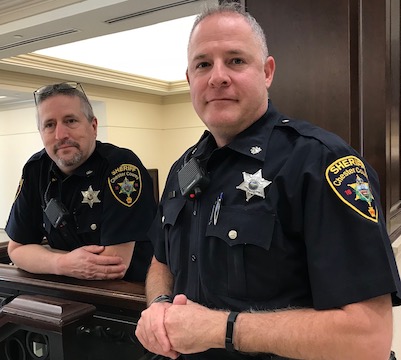
Deputy Sheriff Howard ‘Larry’ Sipple (left) and Deputy Sheriff Keith Neiswender learned that they shared more than a start date with the Chester County Sheriff’s Office.<br />
Two Chester County deputy sheriffs recently upended the “six degrees of separation” concept.

In 1990, playwright John Guare popularized the theory in a play of the same name. The premise: Any two people could be connected through a chain of up to six “friend of a friend” introductions. For Deputy Sheriff Keith Neiswender and Deputy Sheriff Howard “Larry” Sipple, the number happened to be much smaller; however, it took a vehicle decal to determine that.

Both men met each other earlier this year when they joined the Chester County Sheriff’s Office at the same time, the culmination of a somewhat circuitous journey to West Chester. Neiswender had been working for the Berks County Sheriff’s Office, and Sipple had been employed by the Caln Township Police Department. But it was their earlier military service that prompted a startling discovery: In 1991 and 1992, they both served on the USS America.

A custom-made Navy decal prompted a revelation that two Chester County deputy sheriffs had crossed paths previously.

The revelation took a couple of weeks to surface. After being hired as deputies, the pair got to know each other during 13 weeks of field training. During that time, they maintained the same schedules and often ran into each other in the parking garage. One day, Sipple did a double-take when he saw “VF-102” on the side of Neiswender’s Jeep.

Sipple said he knew immediately that Neiswender had served on the USS America because the VF-102 squadron was a sister squadron to his own, the VF-33. When he shared that information with Neiswender, he learned that they had both been deployed to the aircraft carrier during its 1991-1992 cruise.

“It was just one of those small-world moments,” Sipple recalled.

Neiswender, who had the decal custom-made, said he never imagined the connection it would forge. “I was stunned,” he said.

The conversation with Sipple marked the first one prompted by the logo, said Neiswender, but he’s had countless chats with others over the years about his military service.

“I’ve never met anyone before who served on the boat at the same time I did,” he said.

Neither deputy can remember interacting directly on the warship; however, that’s not surprising given the USS America’s average population of 5,000. Envision a mega Carnival or Norwegian liner and subtract the amenities to get an idea of the USS America’s size and scope, Sipple said.

During the deputies’ deployment, the USS America was focused on the Persian Gulf during the onset of Desert Storm. Sipple was responsible for working to test equipment for the F14 Tomcat and several other aircraft that operated on the ship. Neiswender was assigned to ensuring that the aircraft was loaded with the appropriate firepower.

“Several guys in my shop worked in his squadron,” said Sipple.

The epiphany about the deputies’ Navy connection came at a time when colleagues in the Sheriff’s Office were experiencing some trouble telling them apart.

“We were hired at the same time and have the same general appearance: height, weight and short grey hair,” Sipple said. Compounding the difficulty: A change in personnel delayed the delivery of their nametags, which would have short-circuited the confusion.

When the IDs finally arrived, the pair flirted briefly with switching them to continue confounding their co-workers, but their less-prankish sides prevailed.

“We both agreed we couldn’t do it,” said Neiswender.

The temptation remains, however. “Some people still call us by the wrong name as a joke,” said Neiswender. “So, in those cases, we haven’t ruled out messing with them at some point” by trading tags.

“Both of these deputies are extraordinary people and very talented. Each of them individually is a great addition to the sheriff’s office, and the serendipity of the circumstances is heartwarming,” said Chester County Sheriff Carolyn Bunny Welsh.  “It certainly has created an amazing synergy between them; they are a great team.”

Deputies cross paths years after naval service Read More »

Mind Matters: The pain of suicide

“There is no silver bullet to understand why [suicide and self-harm occur]. Suicide and self-harm are idiosyncratic to the individual, unique to a person’s response to stress,” according to Jack Klott, a prominent suicidologist.

However, bullets are one of the main causes of suicides in the United States. At a recent meeting in Boston, Klott highlighted the most recent research findings and reported that white males have the highest rates of suicide and that 90 percent of the time the act is carried out with a firearm. And the group that has the lowest suicide rate? African American women 65 years and older. Why is there such disparity between white males and older African American females? Klott notes that African American women, when asked what they did in a time of crisis, responded saying, “I try to figure a way out — I keep trying until I find what works.” This is the foundation of resilience, along with social connection and a sense of purpose.

Klott also reminds us that, while white women got the vote in 1920, African Americans’ empowerment began with the Civil Rights Act of 1957 and, especially, with the Voting Rights Act of 1965. Is the upside of this situation that African Americans are enduring and hopeful for change? It certainly indicates their lack of entitlement for what should have been intrinsically theirs.

Meanwhile, white males have pretty much always had a sense of entitlement. Klott refers to the Jungian analyst, James Hillman, as to how this sense of entitlement may tie in with rates of suicide among white males. What happens when what you thought you had — entitlement, control, power, immunity to anything bad happening — is lost? Might such sense of loss of place in the universe lead to suicide (or in some cases, homicide, and then suicide)?

Klott believes that one practical antidote to suicide is gun safety. He discussed a program supported by the NRA that provided thumb sensor locks on guns. Where there is access to guns in the house, the suicide risk rises. Gun control and gun safety are part of the solution, he says. We also need to find antidotes to the four pillars of suicide: hopelessness, isolation, self-hate, and inability to cope.

Suicide is incongruent to our neurological wiring. An individual commits suicide as a protection against great pain, notes Klott. Healing this pain might include building resilience, making connections, finding reasons for living, engendering hope for the future.

Despite all our best efforts as parents, as therapists, as friends, as family, another’s choice of suicide is ultimately beyond our control. Nevertheless, we can have hope for a future where it is exceedingly rare and do what we can to prevent it from happening.

For more information, note the following:

  • Klott, Jack, Suicide and Psychological Pain: Prevention that Works(2012).
  • Hillman, James, Suicide and the Soul(1998).

About Kayta Gajdos

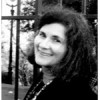
Dr. Kathleen Curzie Gajdos ("Kayta") is a licensed psychologist (Pennsylvania and Delaware) who has worked with individuals, couples, and families with a spectrum of problems. She has experience and training in the fields of alcohol and drug addictions, hypnosis, family therapy, Jungian theory, Gestalt therapy, EMDR, and bereavement. Dr. Gajdos developed a private practice in the Pittsburgh area, and was affiliated with the Family Therapy Institute of Western Psychiatric Institute and Clinic, having written numerous articles for the Family Therapy Newsletter there. She has published in the American Psychological Association Bulletin, the Family Psychologist, and in the Swedenborgian publications, Chrysalis and The Messenger. Dr. Gajdos has taught at the college level, most recently for West Chester University and Wilmington College, and has served as field faculty for Vermont College of Norwich University the Union Institute's Center for Distance Learning, Cincinnati, Ohio. She has also served as consulting psychologist to the Irene Stacy Community MH/MR Center in Western Pennsylvania where she supervised psychologists in training. Currently active in disaster relief, Dr. Gajdos serves with the American Red Cross and participated in Hurricane Katrina relief efforts as a member of teams from the Department of Health and Human Services' Substance Abuse and Mental Health Services Administration.Now living in Chadds Ford, in the Brandywine Valley of eastern Pennsylvania, Dr. Gajdos combines her private practice working with individuals, couples and families, with leading workshops on such topics as grief and healing, the impact of multigenerational grief and trauma shame, the shadow and self, Women Who Run with the Wolves, motherless daughters, and mediation and relaxation. Each year at Temenos Retreat Center in West Chester, PA she leads a griefs of birthing ritual for those who have suffered losses of procreation (abortions, miscarriages, infertility, etc.); she also holds yearly A Day of Re-Collection at Temenos.Dr. Gajdos holds Master's degrees in both philosophy and clinical psychology and received her Ph.D. in counseling at the University of Pittsburgh. Among her professional affiliations, she includes having been a founding member and board member of the C.G. Jung Educational Center of Pittsburgh, as well as being listed in Who's Who of American Women. Currently, she is a member of the American Psychological Association, The Pennsylvania Psychological Association, the Delaware Psychological Association, the American Family Therapy Academy, The Association for Death Education and Counseling, and the Delaware County Mental Health and Mental Retardation Board. Woven into her professional career are Dr. Gajdos' pursuits of dancing, singing, and writing poetry.

Mind Matters: The pain of suicide Read More »

Scroll to Top