

October 28, 2017

Ridge Road saga continues

It could take almost another month before the next shoe drops in the ongoing drama of The Shops at Ridge Road in Concord Township. In the interim, Chadds Ford Township residents remain concerned and apprehensive. There’s even a movement afoot to generate a crowd-funding account to cover legal fees should residents choose to fight a potential decision that goes against their wishes.

At issue are road widening features that are part of the project. They include widening Ridge Road from two to six lanes from the intersection with Route 202 to the boundary with Chadds Ford, and for the shopping center’s main entrance to be on Ridge Road.

Frank Murphy, the Chadds Ford Township supervisors’ chairman, said last week that widening Ridge Road to six lanes is akin to “taking the intersection of Routes 1 and 202 and moving it to Ridge Road.”

When Concord Township approved the project for the empty 22-plus-acre lot on the southwest corner of Ridge and 202 in 2008 and then reaffirmed it in 2014, there was a condition — Condition 19 — that said Chadds Ford had to sign off on those improvements. Murphy said in January that he wouldn’t sign off until residents’ concerns over increased traffic were satisfactorily addressed.

In March of this year, attorney John Jaros asked Concord Township to remove Condition 19 from the approval. Township Council refused. Jaros, in May, then filed against Concord on behalf of Ridge Road Development — the subsidiary of Pettinaro Construction that wants to build the shopping center.

Concord responded saying that Chadds Ford was an “indispensable party” and had to be brought into the suit. Chadds Ford responded saying PennDOT was an indispensable party. Judge Spiro Angeles dismissed the complaint. Jaros then filed a second complaint on Sept. 29.

Chadds Ford Township was co-applicant for the Highway Occupancy Permit that showed the road changes. Jaros has argued that means it tacitly accepted the changes.

Concord would have had 20 days to respond to that second complaint after being served notice, but township solicitor Hugh Donaghue said he requested and received an extension of time to respond. He didn’t have the exact date in front of him during the brief telephone interview but said he thinks Concord has until the latter half of November. He doesn’t yet know how he’ll be responding, he said, because Concord Township Council had not given him any instructions.

While that response is pending, residents of the Ridings are considering options. Karen Johnson, president of the Ridings Homeowners Association, sent an email to neighbors and other HOAs in the township to see what interest residents might have in setting up a Go-Fund-Me account to cover possible legal fees should the residents want to hire an attorney if Condition 19 is removed from the approval.

Johnson said she is looking to include residents from other developments because they could be affected by traffic as well.

“There are many people in The Ridings that are interested in doing this, but I feel, as a resident and HOA president, this effects not just The Ridings. I don’t think it’s just our fight and don’t agree with being the only community to fund it,” she said.

Johnson said in a telephone interview that she wants to set up a meeting with PennDOT representatives so she can express her concerns directly.
About Rich Schwartzman

Rich Schwartzman has been reporting on events in the greater Chadds Ford area since September 2001 when he became the founding editor of The Chadds Ford Post. In April 2009 he became managing editor of ChaddsFordLive. He is also an award-winning photographer.

Ridge Road saga continues Read More »
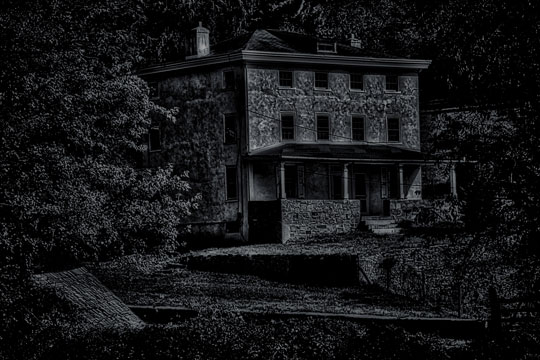
Photo of the Week: A Howling Holiday

Photo of the Week: A Howling Holiday

From the classic Lon Chaney film, The Wolfman:

“Even a man who is pure of heart, and says his prayers by night, can become a wolf when the wolfbane blooms and the autumn moon is bright.”

Happy Halloween

About Rich Schwartzman

Rich Schwartzman has been reporting on events in the greater Chadds Ford area since September 2001 when he became the founding editor of The Chadds Ford Post. In April 2009 he became managing editor of ChaddsFordLive. He is also an award-winning photographer.

Photo of the Week: A Howling Holiday Read More »

Mind Matters: Awake or asleep

In 1967, just seven months before his assassination, Martin Luther King, Jr., delivered an historic address to the American Psychological Association Convention. At that time, MLK pointedly urged social scientists to confront “race-based problems plaguing the country.” On the 50th anniversary of this keynote, the APA Monitor on Psychology published the reflections of notable psychologists regarding MLK’s remarks. Here are two.

APA president-elect Jessica Henderson Daniel, notes how “Dr. Martin Luther King’s … speech remains relevant today because race and ethnicity continue to matter in the United States. He advocated for research that would produce more understanding for blacks and whites.”

Noting how “social science knowledge is not being used as effectively as it should,” because, says psychologist Beverly Daniel Tatum, “we still don’t want to talk about race. You can’t solve a problem if you can’t talk about it.” So indeed, for her, Dr. King’s words still resonate.

These researchers, as well as others, interviewed assert that change is possible but that it takes action, attention, and effort.

The field of psychology touches every facet of life because we, as human beings, affect and are affected by our milieu. Hence, the issues of social justice and discrimination are very much a part of a psychological study. As a matter of fact, they are integral to our understanding of perception and bias, both explicit and implicit.

In the Glossary of Psychological Terms, by Richard Gerrig and Philip Zimbardo, the “belief bias effect is a situation that occurs when a person’s prior knowledge, attitudes or values distort the reasoning process by influencing the person to accept invalid arguments.” In other words, in the face of facts, bias has us asleep at the wheel of sound judgment.

The Kirwan Institute of Ohio State University notes that implicit bias, “also known as implicit social cognition … refers to the attitudes or stereotypes that affect our understanding, actions, and decisions in an unconscious manner.” Not only do psychologists study how and why we perceive and act as we do, psychologists also study how we can gain the skills and tools to understand both personal and cultural/institutional biases and to change both behaviors and attitudes.

Even our attitude towards sleep is not without subjectivity. In an APA report on “The Power of Restorative Sleep,” Michael Grandner, Ph.D., director of sleep research at the University of Arizona, says “meeting the biological need for sleep is driven by choices, beliefs, attitudes, opportunities — all of the things health psychologists have been talking about for ages.” Perhaps sleep, like implicit bias, has been given short shrift over the years.

Researchers are discovering that sleep is restorative to brain function and perhaps good sleep habits over the years can protect people from bodily inflammation that leads to diseases such as diabetes, obesity, heart problems, and neuro-degenerative disorders.

While quantity is important: at least six hours, preferably seven to eight hours each night, over eight hours may be detrimental for reasons that researchers continue to ponder. However, quality of sleep is also important. Is there time for deep sleep? Uninterrupted by sleep apnea, for example (both yours or theirs!)?

Bryce Mander, Ph.D., of UC Berkeley, notes that disrupting sleep disrupts function everywhere in the body (including the brain, of course!). So the hope is that improving sleep might also improve everything.

Sleep may not fix our implicit biases, but it may help us think more clearly. We can all sleep on that—then may we all wake up.

See
• APA Monitor on Psychology, September and October, 2017
• KirwanInstitute.org
• APA.org

* Kayta Curzie Gajdos holds a doctorate in counseling psychology and is in private practice in Belmont, Massachusetts. She welcomes comments at MindMatters@DrGajdos.com or (610)388-2888. Past columns are posted to www.drgajdos.com. See book.quietwisdom-loudtimes.com for information about her book,”Quiet Wisdom in Loud Times: The Rise of the Wounded Feminine.”

** ** The opinions expressed are those of the author and do not necessarily reflect those of the ownership or management of Chadds Ford Live. We welcome opposing viewpoints. Readers may comment in the comments section or they may submit a Letter to the Editor to editor@chaddsfordlive.com

About Kayta Gajdos

Dr. Kathleen Curzie Gajdos ("Kayta") is a licensed psychologist (Pennsylvania and Delaware) who has worked with individuals, couples, and families with a spectrum of problems. She has experience and training in the fields of alcohol and drug addictions, hypnosis, family therapy, Jungian theory, Gestalt therapy, EMDR, and bereavement. Dr. Gajdos developed a private practice in the Pittsburgh area, and was affiliated with the Family Therapy Institute of Western Psychiatric Institute and Clinic, having written numerous articles for the Family Therapy Newsletter there. She has published in the American Psychological Association Bulletin, the Family Psychologist, and in the Swedenborgian publications, Chrysalis and The Messenger. Dr. Gajdos has taught at the college level, most recently for West Chester University and Wilmington College, and has served as field faculty for Vermont College of Norwich University the Union Institute's Center for Distance Learning, Cincinnati, Ohio. She has also served as consulting psychologist to the Irene Stacy Community MH/MR Center in Western Pennsylvania where she supervised psychologists in training. Currently active in disaster relief, Dr. Gajdos serves with the American Red Cross and participated in Hurricane Katrina relief efforts as a member of teams from the Department of Health and Human Services' Substance Abuse and Mental Health Services Administration.Now living in Chadds Ford, in the Brandywine Valley of eastern Pennsylvania, Dr. Gajdos combines her private practice working with individuals, couples and families, with leading workshops on such topics as grief and healing, the impact of multigenerational grief and trauma shame, the shadow and self, Women Who Run with the Wolves, motherless daughters, and mediation and relaxation. Each year at Temenos Retreat Center in West Chester, PA she leads a griefs of birthing ritual for those who have suffered losses of procreation (abortions, miscarriages, infertility, etc.); she also holds yearly A Day of Re-Collection at Temenos.Dr. Gajdos holds Master's degrees in both philosophy and clinical psychology and received her Ph.D. in counseling at the University of Pittsburgh. Among her professional affiliations, she includes having been a founding member and board member of the C.G. Jung Educational Center of Pittsburgh, as well as being listed in Who's Who of American Women. Currently, she is a member of the American Psychological Association, The Pennsylvania Psychological Association, the Delaware Psychological Association, the American Family Therapy Academy, The Association for Death Education and Counseling, and the Delaware County Mental Health and Mental Retardation Board. Woven into her professional career are Dr. Gajdos' pursuits of dancing, singing, and writing poetry.

Mind Matters: Awake or asleep Read More »

Scroll to Top