
February 22, 2012

When spring really begins

People have different triggers,
especially when it comes to realizing that spring is upon us or at least near.
For some, it’s the first crocus or maybe it’s Ground Hogs’ Day. (Is that the
only thing people have to look forward to in Punxatawny?)

For others, mid February is the
time to start thinking spring and it has nothing to do with chocolate, roses or
Valentine’s Day. Rather, it has everything to do to with wood, leather and
horsehide. It’s spring training for the upcoming baseball season.

It doesn’t matter which team
one roots for or even what league or level of play. The love of Little League
and high school action can be just as important as the big leagues. And it all
starts with pitchers and catcher reporting to camp. It’s like getting to first
base.

The first few images from
Clearwater, Fla., where the Phillies train, can bring a rush of emotion. Last
year Phillies’ fans were giddy with the reacquisition of pitcher Cliff Lee.
This year we recall the playoff game he blew or we remember the image of Ryan
Howard falling to the ground with a ruptured Achilles tendon to end the team’s
World Series bid.

But spring is a rebirth of life
and so is spring training. That failure was last year and hope springs eternal.
This is a new season.

A week after pitchers and
catchers report to camp, the rest of the squad shows up. Now we have runners on
first and second.

There are people who don’t like
baseball. It doesn’t matter why. Many think the game is boring. They just don’t
get the game. True, it’s not as ballet-like as basketball, or not as
hard-hitting as hockey or football. And there are many times when a baseball
game does seem to drag. But for a long time, baseball was the great American
pastime.

A week after the position
players arrive at camp, the preseason games start. Bases loaded.

There is optimism when the
other sports begin their preseason workouts, but there’s something different
about baseball. Maybe it’s because the major part of the baseball season is
played in nicer weather, the warmth of spring, summer and, if the team does
well enough to get into postseason play, early autumn. We can listen to games
while at the beach or having a backyard barbecue.

And Phillies fans have had it
good the last few years. The team has won the National League East Division
five years running and there’s no reason not to think they can’t do it again
this year. Perhaps that’s merely the optimism of spring or perhaps it’s faith
in the best starting pitching rotation in the majors.

Once those preseason games are
done, the real season starts and the team comes home. That’s what you’re
supposed to do in baseball.

About CFLive Staff

See Contributors Page https://chaddsfordlive.com/writers/

When spring really begins Read More »
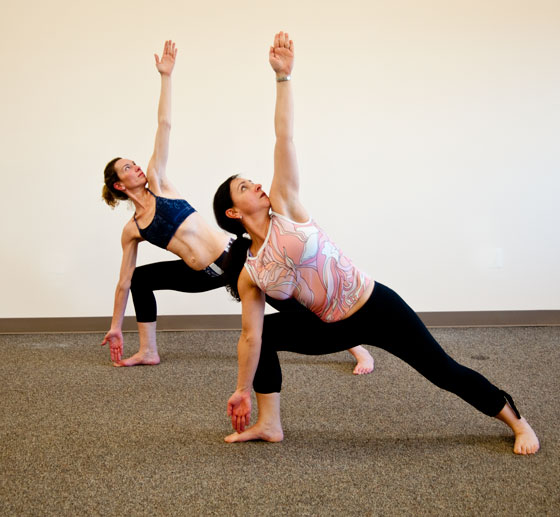
Bikram Yoga opens in Chadds Ford

Bikram Yoga opens in Chadds Ford

It would seem that there is a
large market for yoga in the greater Chadds Ford area. Bikram Yoga opened on
Route 202 in Chadds Ford Township on Feb. 4 and, according to Megan van Riet
and Heather Dunghe who run the studio, there are already 600 students attending
the more than 20 classes per week.

While there are other studios
in the area and the Kennett YMCA offers free classes to its members, van Riet
said there’s a good reason for people to try Bikram Yoga, a form named after
its founder, Bikram Choudhury.

“It’s the training that we
have. It’s the heat and for the series. The series is nowhere else. It’s
copyrighted,” van Riet said.

Every Bikram instructor is
required to undergo 1,500 hours of instruction under Choudhury. The studio is
heated to 105 degrees and a humidity of 40 percent is maintained.

“We teach a very specific
series that’s designed to give results,” said Dunghe.

That series is made up of 26
specific yoga postures and two breathing exercises.

“They touch every single part
of the body from the inside out, bones to skin, finger tips to toes,” van Riet
said. “[The postures] address the most common problems that we all have and
that are safest for most of us.”

There are no headstand postures
taught and the studio has a ballet bar for students with balance problems. The
series of postures is also stationary. Van Reit said that makes things safer
for students.

Among the common ailments that
Bikram Yoga can address, she said, are mood disorders, diabetes, heart disease,
asthma and hypertension.

The heated room is also seen as
part of a safer practice because it relaxes the muscles and burns calories.

“You can stretch farther and is
a great calorie-burner. A lot of people come for weight control,” van Riet
said.

The rare contra-indicator for
Bikram Yoga is medication, but there is a work around.

“Occasionally we get someone
who comes to us who is on a lot of medication where they might experience
dizziness, light-headedness because they’re on a lot of blood pressure
medication. We do have students who have [previously] had heart attacks, open
heart surgery, that kind of thing. In that case we usually put them by a door,
by a window and they know to sit down if they don’t feel well. They tell us
when their medication has been adjusted. They are some of the most committed
practitioners,” van Riet said.

She added that her husband had
heart surgery, and has since lost 85 pounds doing yoga.

Van Riet acknowledged that
people with high blood pressure are often told to avoid excess heat, such as in
saunas and steam rooms, but said the heated temperature in the studio is less
than that of a steam room or sauna.

“It’s good for high blood
pressure, but we always tell students to listen to [their] body first and our
instruction second,” she said, adding that students sign waivers and the
instructors never tell students to do anything that the students’ doctors have
said they shouldn’t do.

Classes are 90 minutes long and
are designed for beginners, though some of the students have been long-time
practitioners. Each class takes the student through all 26 postures.

“Even if they can’t do the
whole posture, they can start to do the posture the right way.” van Riet said.

Dunghe added that part of the
instructor class included a dialogue to help students get into and out of the
posture the safest way.

For more information on Bikram
Yogo, directions, its fees, or to get a class schedule, call 610-358-2258 or
visit www.bikramyogachaddsford.com

Bikram Yogo of Chadds Ford is offering two free introductory class
session is March. They’re scheduled for 3:30 p.m. Sundays, March 4 and 11. The
studio is located next to Fishers Carpet One on Route 202 near Oakland Road.

About Rich Schwartzman

Rich Schwartzman has been reporting on events in the greater Chadds Ford area since September 2001 when he became the founding editor of The Chadds Ford Post. In April 2009 he became managing editor of ChaddsFordLive. He is also an award-winning photographer.

Bikram Yoga opens in Chadds Ford Read More »

Bits & Pieces Feb. 23

• Greg Leak of Chadds Ford placed sixth
overall amongst the runners from the Army, Navy, Air Force and Marines teams.
The Army team placed second. Greg is a 2006 graduate of Unionville High School,
a 2010 graduate of Dickinson College where he was an All-American in Cross
Country. He is currently a second lieutenant in the U.S. Army serving at
Ft. Lewis, Washington.

•Birmingham Township is adding some
culvert cleaning to its Spring Road Program. Supervisors voted 3-0 on Feb. 21
to add up to an additional $1,300 cost estimate to the program to inspect and
clean three culverts, two on South New Street and one on Meetinghouse Road.
Supervisors’ Vice Chairman Bill Kirkpatrick said the cost “would increase by a
magnitude of $1,300” if the township had the job done after the road repairs
were made.
Supervisors also voted to add a $20 fee to the fee schedule so the tax
collector can charge mortgage companies for duplicate tax bills. The fee had
already been charged, but was not on the fee schedule.

• The Brandywine River Museum is offering
Read Along Tours. This program includes a story, a brief gallery tour and an art
activity for children ages 3 to 6 accompanied by an adult. The programs,
offered on Thursday mornings at 10:30 a.m., through March 8, are free for
members and included with regular museum admission. Registration is requested
by contacting the education office at 610-388-8382 or education@brandywine.org.
The final tours are
Feb. 23: The Hat by Jan Brett
March 1: Butterfly Eyes by Joyce
Sidman, illustrated by Beth Krommes
March 8: Georgia’s Bones by Jen Bryant,
illustrated by Bethanne Anderson

• This April, the Chaddsford
Winery will hold two wine tasting events. There will a ladies Night on
Thursday, April 19 from 6-8 p.m. and a Wine and Dessert Pairing on Saturday,
April 21 at 2 p.m. The cost for Ladies’ Night is $20 per person and for the
pairing, $35. Reservations are required for both. For more information on their
wine pairing and tastings sessions, live music offerings and other upcoming
events, or the wines of Chaddsford, please call 610-388-6221, visit their Web
site or follow them on Twitter
(@ChaddsfordWine) and “like” them on Facebook.

• See the Van Gogh UP
CLOSE
exhibition at the
Philadelphia Museum of Art
with the Center for the Creative Arts
Thursday, March 15, 8:3a.m. – 4:30 p.m. The minimum quota of patrons has
reserved their seats, so the excursion will definitely run as planned. Seats
are still available. $63 CCArts members/
$68 nonmember
s. All are welcome. For additional information or to
register for the excursion by phone call 302-239-2434, or visit www.ccarts.org

• The annual Unionville-Chadds Ford/United Way Family Pasta
Dinner Night is scheduled for Saturday, April 21 from 5 – 9 p.m. at Unionville
High School. There will be a spaghetti dinner buffet, bake sale, musical
entertainment, arcade games and more. For more information and top buy tickets
visit http://www.unitedwayscc.org
Buy tickets online now! Save $2 – $5 off the door price. Sponsor a needy family
for $30

About CFLive Staff

See Contributors Page https://chaddsfordlive.com/writers/

Bits & Pieces Feb. 23 Read More »

Police log Feb. 23

• State police arrested a
Chester man on drug possession charges in Chadds Ford Township. A police report
said a traffic stop was made at routes 1 and 202 at 12:32 a.m. on Feb. 22.
Christopher Julian Crews Jr., 33, was a passenger in the car and was found to
be in possession of marijuana.

• A Newtown Square woman was
charged with DUI after being stopped at Brandywine Drive and Route 202 in
Chadds Ford Township. State police said Carole Mary Flounders, 31, was stopped
for a traffic violation at 2:33 a.m. on Feb. 19. She was determined to have
consumed too much alcohol to be driving a vehicle, the report said.

• An employee of Terrain at
Styers was arrested for stealing plants from the store. A police report said Adam
Glas, 30, of Mullica Hill, N.J., was being questioned during an investigation
into another employee when he admitted to the thefts. The value of the theft
was $400. Charges were pending, the report said.

• A case of harassment led
police to escort a 46-year-old woman from a home on Kirk Road in Concord
Township. The victim was a 56-year-old man. A police report said the woman
pushed and kicked the man, then threatened him with a baseball bat. No injuries
were reported.

• State police are looking for
an unidentified woman for attempted Access Device Fraud at the Wawa on Route
202 in Concord Township. A report described the woman attempted to buy a Wawa
gift card, first with another gift card, then with a credit card. The
transaction was declined, the report said, when the manager noticed the card
presented and the authorization numbers on the receipt did not match. The woman
is described as black, 20-23, with long curly black hair, approximately 5’8”
tall with a thin build.

About CFLive Staff

See Contributors Page https://chaddsfordlive.com/writers/

Police log Feb. 23 Read More »

Gerlach bill championed by the conservancy

A bill introduced by U.S. Rep.Jim Gerlach, R-6, will make permanent a tax incentive
that helps landowners conserve important natural, agricultural and historic
resources in our community. The legislation has received overwhelming
bipartisan support from Congress. More than 300 U.S. Representatives from both
parties are co-sponsors of “The Conservation Easement Incentive Act”
(H.R. 1964). The vast majority of conservation easements held by the Brandywine
Conservancy have been donated by landowners, many of whom benefited from
similar tax incentives.

“Jim Gerlach understands the critical importance of protected open
space and its value to our local communities. We are grateful for his
leadership in sponsoring this bill and appreciate all of the other co-sponsors
from Pennsylvania,” said Sherri Evans-Stanton, director of the Conservancy’s
Environmental Management Center. As shown on the attached map, in the Chester
County portion of Gerlach’s district alone, more than 26,000 acres have been
protected with agricultural and conservation easements. Of that amount, 16,374
acres have been eased to local land trusts. This represents an impressive 11.5
percent of the total land protected by local land trusts in Pennsylvania.

Congressman Gerlach said that of the thousands of bills introduced in the
U.S. House of Representatives during the current session, fewer than 10 have
generated 300 or more co-sponsors.

“This legislation has generated tremendous bipartisan support because
the conservation easement tax credit works,” Gerlach said. “The tax
credit gives family farmers, ranchers and other property owners more choices
and creates opportunities for partnerships between non-profit organizations,
federal, state and local officials. With the support of nearly three-quarters
of the House, I am hopeful that conservation easement tax credits will remain an
option for all property owners.”

Under the legislation, landowners can retire the development rights on their
land by donating a conservation easement to a land trust like the Brandywine
Conservancy-keeping farm, ranch and forest lands in productive use, protecting
important natural resources, and conserving our scenic and historic heritage.
Since the incentive expired at the end of 2011, landowners with modest incomes
now receive little tax benefit from restricting what may be their family’s most
valuable asset. By allowing donors to deduct a larger portion of their income
over a longer period of time, H.R. 1964 will help thousands of family farmers,
ranchers, and forest owners afford to conserve their land

Conservation easements protect the unique treasures found in our
Commonwealth including our drinking water supplies, forests, wildlife habitat,
family farms, historic resources and scenic views. This incentive enhances the
federal tax benefits for landowners who donate conservation easements. These
voluntary agreements help conserve critical resources important to our
community while keeping the land in productive private ownership.

The Brandywine Conservancy holds more than 440 conservation easements and
has permanently protected more than 45,000 acres in Chester and Delaware
counties in Pennsylvania, as well as New Castle County in Delaware. Preserving
open space and family farms helps to maintain the water’s quality and quantity.
The Brandywine Watershed, with its streams and tributaries, is a major source
of drinking water for communities in Pennsylvania including Downingtown,
Coatesville, and West Chester. It also is the source of drinking water for the
City of Wilmington, Delaware.

In Pennsylvania, the Conservancy’s easement holdings represent more than 17%
of the total acres of land under conservation easement by local land trusts in
the Commonwealth. The Conservancy’s two programs, the Brandywine River Museum
and Environmental Management Center, preserve art and the environment. The
Environmental Management Center provides conservation services to landowners,
farmers, municipalities and developers. The staff of professional planners and
natural resource managers offers technical assistance and expertise for
conservation and comprehensive land use planning. Conservation easements,
assistance to local governments and water protection efforts are the key
elements of these programs. In 2008, the Conservancy was among the first land
trusts in the country to be awarded accreditation by the Land Trust
Accreditation Commission.

Gerlach bill championed by the conservancy Read More »

Free Your Space Tips for Staging Your Home

Whether
you are planning on putting your house on the market or are simply looking to
spruce up and slough off the winter doldrums, why not try your hand at home
staging?

Take
a stroll through your home. Does
it seem over-stuffed? Airy? Do you like the artwork on the walls
and shelves? How do you feel when
you enter – happy, peaceful, relaxed, exhausted, stressed? If we seek to create them or not, there
are design principles that occur, to a greater or lesser degree, in our
homes. Principles like balance,
proportion and harmony. We often
forget that they exist and that they are within our control to create.

Staging is an act of de-personalizing. The result that you are shooting for when
staging is a balanced, open and neutral environment that communicates
possibilities and appeals to the broadest audience. Research shows that the staged home consistently sells in
half the time or less and at a rate 10-15 percent higher than its un-staged competition.
Decorating, on the other hand, is
subjective. The goal is to
personalize your space so as to make it an environment that reflects, supports
and enhances your life. Staging and
decorating differ mainly in their intended outcomes. When you decorate, it is the sentimental items and
personalized creature comforts that help make a house a home. Yet, many of the design principles used
in staging can be applied when trying to create your own balanced and peaceful
environment.

Ready
to try and “sell” your house? Here
we go!

Someone
looking to buy a home will want to know that there is a working kitchen – what
they don’t want to know is that cooking takes work! Having a counter large enough for a dish drain may be one of
the convenient bonuses that you like about your kitchen. Displaying
the dish drain itself, whether empty or half-full will not convey that benefit
to a prospective buyer. A good
habit to start when preparing to list your house is to complete your
dishwashing routine with the drying of both your dishes and your drainer, putting the dishes away and storing the rack
under the sink (atop other items if need be). If you’re not using every appliance you own daily, try
finding a storage space for them other than the countertops.

Whether
a house-hunter currently has children or not, they will want to know that the
home they are purchasing offers them the space to consider that option. You don’t have to hide the fact that
your kids exist (well, not completely).
When it comes to child-related items, you will want to confine them to
specifically designated areas. It
is acceptable to display artwork in a child’s room or play room – a few choice
creations. The kitchen however
should stay fairly kid-free in terms of its décor, appealing to the chef’s
spirit. Time to clear off the
fridge and give it a good polishing!

Take
inventory of your bookshelves and closets. Keep only what is current, unbroken and still wanted. Remove the rest, always leaving some
extra breathing room. It’s
important for balance to keep the weightier items low. Weight is perceived in both color and
size. Bookshelves should hold
bigger, heavier books on the low shelves.
A dark box or blanket can disappear in the bottom of a linen closet yet,
if placed on a top shelf, might make someone want to cringe at the threat of
its impending avalanche. Eye-level
shelving should be sparsely arranged, breaking up rows of books with an
occasional vase or statue.
Consider standing a book up (maybe something about your city or state)
facing forward for an interesting focal point.

While
de-cluttering is critical to enhancing the spacious feeling of your home,
adding and arranging décor is equally important. Is there one room or specific window where you cluster most
of your houseplants? Spreading
your plants out ornamentally throughout your home, although less convenient for
quick watering and optimal growth, is a great staging technique to add color
and life to each room. Make a list
of pictures and wall hangings that need to be hung and put a date on the
calendar to do it. Don’t wait for
a move to enjoy your artwork. Have
you been waiting for that perfect piece of art to hang on the big empty wall in
the dining room? You might
consider purchasing a mirror for staging purposes. It will fill the void while simultaneously making the room
seem larger.

Try
some or all of these staging design ideas, and then wander back through your
home. I promise, both your home
and your mood will be lighter.

* To contact Annette Reyman for organizing
work, productivity support, gift certificates or speaking engagements in the
Greater Philadelphia area call (610) 213-9559 or email her at annette@allrightorganizing.com.
Reyman is a member of the National Association of Professional Organizers
(NAPO®) and Board Member of its Greater
Philadelphia Chapter
. Visit her website at www.allrightorganizing.com or
follow All Right Organizing on Facebook
.

Free Your Space Tips for Staging Your Home Read More »

In My Experience: The Last Yard Sale

Dear Jeanne-Marie,

Why do you think there is so much workplace conflict today?

Signed,

Resigned

Short Answer

Dear Resigned,

Everyone wants to feel important and valued but people, places,
and things are never what they appear to be.

In My Experience

Workplace conflicts remind me of a yard sale I attended and how I
discovered that there are so many layers to events. It is only by following a different path that you discover
the depths of ordinary things…

Not too long ago, I stood in a long line waiting to enter a home
where all of the contents were being sold. Someone had died and the relatives were selling everything
and dividing the money. I entered
the house, which was packed with strangers. They were struggling to grab as much as possible and I began
to feel uneasy.

I looked for a way out but noticed stairs leading to the
attic. Curiosity got the best of
me and I climbed to the top. Not
many buyers were interested in the old papers and the dusty clothing. A few
people wandered up, picked through the debris and left. But I started to poke in some boxes and
bags.

What I found astounded and saddened me; I found a life-time of
memories, hundreds of family snapshots, love letters dated from 1920, a
carefully wrapped diploma and greeting cards all signed, ”Your daughter, Jane”.
Where was Jane? Why was she allowing strangers to tramp through her parents
past?

I felt sick.

Someone’s entire life
had been reduced to a yard sale. I slowly walked down the stairs and pushed my
way through the crowd.

We spend so much of
our lives trying to jockey for positions of importance and status. We want
power and control. So, how does it feel and what do we do when we witness
someone else’s life not mattering at all?

It was my last yard sale.

(If you like this story, please click Rating above or comment below.)

*Jeanne-Marie Curtis came
from Philadelphia to Chadds Ford Township in 1990. She has her BBA in HR
Management/Employment Law. She is the author of Junctions by Jeanne-Marie
(Every Woman’s Journey and Journal)
available at ChaddsFordLive.com
Products/Books.
To
submit a question: email Jeanne-Marie at junctionsbyjm@aol.

In My Experience: The Last Yard Sale Read More »

The Doctor is In: Understanding Heart Failure

Many people associate the term “heart disease” with strokes
and heart attacks, but nearly 5 million Americans have another serious type of
cardiovascular condition known as heart failure, also known as congestive heart
failure. This leading cause of hospitalizations among adults 65 and older is
believed to cause some 300,000 deaths in the United States each year.

A person diagnosed with heart
failure
has a heart muscle that is beginning to struggle at doing its job
of pumping oxygen-rich blood through the body to nourish our internal organs,
our skin, and our brains. Having this condition does not mean that the heart
muscle in danger of stopping suddenly. The “failure” part means that the heart
is failing to function properly.

I’ve watched this disease progress in one of my neighbors, a
96-year-old widow who has a long history of type 2 diabetes and heart failure.
She was hospitalized recently after experiencing extreme shortness of breath
due to the excessive buildup of fluid in her lungs — one of the hallmark signs
of heart failure. Swelling in the lower legs, ankles, feet, arms or other parts
of the body — a condition called edema — also is common in people with heart
failure. Other symptoms include:

• Persistent wheezing or coughing due to excess fluid in the
lungs
• Extreme fatigue or muscle weakness that makes it difficult to perform basic
daily activities — even something as simple as getting out of bed and walking
to another room
• Digestive problems, nausea, or indigestion resulting from poor blood
circulation to the stomach
• Mental difficulties, such as memory loss, confused thinking, or
disorientation
• A fast heart rate or feeling that the heart is racing.

Any chronic health condition that affects the organs of the
body also affects the cardiovascular system — coronary artery disease, a
complication of high levels of cholesterol in the blood, is a leading cause of
heart failure. In people with coronary artery disease, fatty plaques and
cholesterol build up and cause narrowing in the arteries that transport blood
to the heart (a condition known as atherosclerosis). When arteries are narrowed
by these plaque deposits, the heart doesn’t get enough blood. Over time, this
lack of blood flow to the heart can weaken the muscle to a point where it needs
to put out extra effort to keep the body functioning normally.

Hospitalization for treatment of heart failure is only one option.
For people diagnosed at an earlier stage of the disease, therapy with one or
more prescription medicines helps many people manage their condition
effectively. Commonly prescribed classes of medication include diuretics, which
are designed to reduce the amount of water and sodium in the body;
anticoagulants and antiplatelet agents, which help prevent life-threatening
blood clots from forming and causing a heart attack or stroke; and medications
such as statins and beta blockers, which are formulated to lower cholesterol
and blood pressure, respectively.

Because the development of any type of cardiovascular
disease happens slowly over many years, it’s important to know your personal
risk factors and to see your family physician for routine screening of your
blood pressure, total cholesterol, type 2 diabetes, and other diseases.

If you or a loved one has been diagnosed with heart failure,
you may wish to check out these questions to ask your doctor from the American
Heart Association
and the American
Academy of Family Physicians
.

*Joshua Feinberg,
D.O., is a family medicine physician in practice at the Crozer Health Pavilion, 145 Brinton Lake Road, Suite 201, Glen Mills, PA 19342,
610-459-1619

About Crozer Keystone Staff

Crozer-Keystone Health System’s physicians, specialists and advanced practitioners are committed to improving the health of our community through patient-centered, quality care across a full continuum of health services. Crozer Brinton Lake is Crozer-Keystone’s comprehensive outpatient care facility in western Delaware County, offering primary care, specialty services, outpatient surgery and advanced cancer treatment. Contact us: 300 Evergreen Drive, Glen Mills, PA 19342 http://www.crozerkeystone.org/Brinton-Lake 1-855-254-7425

The Doctor is In: Understanding Heart Failure Read More »

Chadds Art Sale & Show welcomes authors Walsh and Quillman

The Chadds Ford Art Sale & Show welcomes two special guests, authors
Barbara Walsh and Catherine Quillman, at its 63rd annual show on March 23-24.
Both authors will lead a discussion and offer a book sale and signing on
Saturday, March 24th.

Pulitzer Prize-winning journalist Barbara Walsh recently released her first
children’s book, Sammy in the Sky,
illustrated by painter Jamie Wyeth. The book was inspired by the loss of the
author’s family pet dog, Sam. Jamie Wyeth, an alumnus of Chadds Ford Elementary
School, will pre-sign a limited number of books, which will be available for
purchase and co-signing by Walsh at the show.

Catherine Quillman, former arts journalist with the Philadelphia Inquirer, is
author of 100 Artists of the Brandywine
Valley
, a comprehensive guide to the artistic history of the Brandywine
region. Quillman will present an informal, illustrated discussion titled the
Artistic History of the Brandywine Tradition, including what every art
enthusiast should know about its history and relevance today. The illustrated
program will cover a range of artwork including that of 19th century
photographers, Howard Pyle’s students and Chadds Ford painters.

The popular Chadds Ford Art Sale & Show features works by over 70 local and
regional professional artists from the Brandywine Valley and beyond. This
year’s Featured Artist is Paul Scarborough and the Donating Artist is Stephen
Brehm. A complete list of participating artists and artwork samples are
available at http://cfes.ucfsd.org/artshow.

Exhibit hours are 7-10 p.m. Friday, March 23, and 10 a.m. -4
p.m. on Saturdday. The book signing will be 11 a.m. – 12:30 p.m. The event is
at Chadds ford Elementary School.

About the Chadds Ford Annual Art Sale & Show
Betsy Wyeth, wife of the late Andrew Wyeth, started the Chadds Ford Annual Art
Sale & Show in 1949 and continued her involvement in the show while her son
Jamie Wyeth was a student at Chadds Ford Elementary. The annual sale continues
to serve as the school’s largest fundraiser, providing funding support for
school programs. Chadds Ford Elementary was founded in the early 1900s and
received the National Blue Ribbon in Excellence Award in 2008.

About CFLive Staff

See Contributors Page https://chaddsfordlive.com/writers/

Chadds Art Sale & Show welcomes authors Walsh and Quillman Read More »

Adopt-a-Pet Feb. 23

Adopt-a-Pet Feb. 23

Pamela is a beautiful yellow Labrador retriever/pit bull mix
that was brought to Chester County SPCA as a dog who lost her way. This sweet girl is estimated to be
between six months to a year of age, and while she is still very young Pamela
already knows some basic commands and responds well to training. Pamela is energetic but very gentle and
would make a wonderful family dog – she seems to love all people, including
children, but would prefer a home without cats. If you are able to provide Pamela or any of our other
animals here at the shelter a home, visit the Chester County SPCA at 1212
Phoenixville Pike in West Goshen or call 610-692-6113. Pamela’s registration number is
96806995. To meet some of our
other adoptable animals, visit the shelter or log onto www.ccspca.org.

About CFLive Staff

See Contributors Page https://chaddsfordlive.com/writers/

Adopt-a-Pet Feb. 23 Read More »

Scroll to Top