
April 15, 2011

The absurdity of trusting foreign-policy makers

The United States is attacking Libya on the basis of vague hopes that peace will triumph after the Allied bombing ceases. There are plenty of reasons to doubt whether a few hundred cruise missiles will beget harmony in the Libyan desert. But one of the biggest mistakes would be to assume that U.S. government policymakers understand what they are doing.

The American media have already uncorked “surprises,” such as the facts that the Libyan opposition is more of a ragtag mob than an army and that Qaddafi’s opponents include some organizations officially labeled as terrorists by the U.S. government. One gets the impression that the Obama administration’s masterminds did not notice those details prior to charging into this civil war.


The latest follies are part of a long bipartisan tradition. In the decades since John F. Kennedy’s inauguration, foreign-policy makers have become Washington’s leading con men. Even though Whiz Kids and Dream Teams have dragged America into one debacle after another, the media and politicians still defer to the latest batch of “Best and Brightest” professors and appointees.


The U.S. invasion of Iraq was based on little more than a few phrases backed up by almost boundless ignorance. Paul Bremer, the chief of Iraq’s Coalition Provisional Authority, admitted in his memoirs “that he didn’t know anything about Iraq when stepping down from Kissinger Associates to become America’s proconsul,” Georgetown University professor Derek Leebaert observed in his new book, Magic and Mayhem. Adam Garfinkle, who worked as a speechwriter for both Secretary of State Colin Powell and Condoleezza Rice, said in 2007, “No one in a senior position in this administration seems to have the vaguest notion of modern Middle Eastern history.”


The Pentagon’s recent record is not much better. The U.S. military floundered in Iraq and Afghanistan because, as Leebaert notes, “the army not only forgot everything it had been bloodily taught about counterinsurgency in Vietnam, but in Vietnam, it had forgotten everything it had learned about counterinsurgency in Korea as well.”


Cluelessness is a constant in U.S. foreign-policy making. In 1967, the Pentagon ordered top experts to analyze where the Vietnam War had gone wrong. The resulting study consisted of 47 volumes of material exposing the intellectual and political follies that had, at that point, already left tens of thousands of Americans dead. After the study was finished, it was distributed to the key Johnson administration players and federal agencies, by whom it was completely ignored, if not forgotten. New York Times editor Tom Wicker commented that “the people who read these documents in the Times [in 1971] were the first to study them.”


U.S. foreign-policy makers perennially talk as if the world is a clean sheet that they can mark up as they please. Shortly before Obama’s televised speech on March 28 on Libya, Deputy National Security Adviser Denis McDonough told reporters, “We don’t get very hung up on this question of precedent. We don’t make decisions about questions like intervention based on consistency or precedent.” Rather than being a high-minded resolve, that attitude practically guarantees that the U.S. government will repeat the same mistakes in perpetuity.


Foreign policy has been a long series of blunders, in part because the American media tolerate deceits by high-ranking government officials. “Presidents have lied so much to us about foreign policy that they’ve established almost a common-law right to do so,” George Washington University history professor Leo Ribuffo observed in 1998. From John F. Kennedy’s lying about the Bay of Pigs debacle in Cuba; to Lyndon Johnson’s lying about the Gulf of Tonkin resolution; to Richard Nixon’s lying about the secret bombing of Cambodia; to Jimmy Carter’s lying about the shah of Iran’s being a progressive, enlightened ruler; to Ronald Reagan’s lying about terrorism and Iran-Contra; to George H.W. Bush’s lying about the justifications for the first Gulf War, entire generations have come of age since the ancient time when a president’s power was constrained by a duty of candor to the public.


WikiLeaks has revealed that U.S. foreign policy is far more deceptive than the Beltway portrays it. From Hillary Clinton’s machinations to heist the credit card numbers of foreign diplomats, to the U.S. government’s prodding Ethiopia to invade Somalia, to the covert supply of arms to the Yemen government, charades have come fast and furious. Much of the American political establishment has reacted as if WikiLeaks violated government’s divine right to delude the governed.


Governments routinely bury information that undermines their power grabs and war is the biggest power grab of them all. We cannot expect the Obama administration to be more prudent on Libya than the Bush administration was on Iraq, or the Clinton administration was on Kosovo, or the Kennedy-Johnson-Nixon administrations were on Vietnam. Americans cannot afford to assume that this war is smarter than it seems.


* James Bovard is policy advisor at The Future of Freedom Foundation (www.fff.org) and author of eight books includingLost Rights andAttention Deficit Democracy.

About CFLive Staff

See Contributors Page https://chaddsfordlive.com/writers/

The absurdity of trusting foreign-policy makers Read More »
The Garden Path: Thinking of starting a vegetable garden?

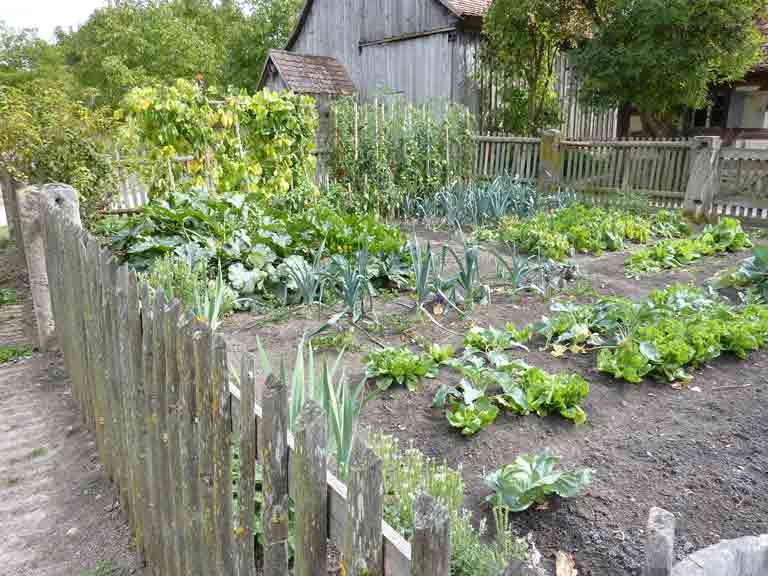
The Garden Path: Thinking of starting a vegetable garden?

The list of reasons for growing your own vegetables seems to get longer every day. Between worries about food safety, concerns over the economy, and the desire to be more environmentally responsible, many people have decided to take the plunge. Having your own vegetable garden can be fun, economical, and rewarding. Plus, it will save you embarrassment should a teacher ask your child where tomatoes come from and get an answer like: “Um, Acme?”


Here are some questions to ask to set you on the right path to a successful vegetable garden:


1. Do you have a good location?


Vegetables need sun—lots of sun. Except for lettuces and a few other greens that can squeak by with less, vegetables need at least 6 hours of sun per day at a minimum. Less than that and you will be fighting an uphill battle. A level spot will also save you a lot of grief. Yes, you can grow vegetables on a slope, but it’s a lot harder and will require more water, so why not make it easy on yourself and find a nice, sunny, flat spot? Speaking of water, you will want a source of water nearby. The first time you try lugging two full watering cans to a distant location, only to realize you’re going to have to make about 5 more trips to water the garden properly, you will realize your mistake. Plant the garden within reach of a hose.


2. Who will maintain it?


Before putting the first shovel in the ground, stop and ask this essential question. Kids (and spouses) can be very enthusiastic when it comes to studying the seed catalogs, figuring out what to plant, and imagining the joys of a freshly dug potato, but less so when it comes to weeding on a 98° day, picking off tomato hornworms, or cleaning up debris in the fall.


3. How will you keep the deer out?


In most neighborhoods in our area, deer are a constant presence. If this is the case in your yard, plan ahead to protect your harvest or you may discover you have just created a deer salad bar. Fencing is usually the best solution for a vegetable garden, which is usually more contained than a landscape garden. If you use raised beds (well worth considering) you can attach posts to the corners and wrap netting around them to discourage deer.


4. Have you tested your soil?


Before you plant, make sure you know what kind of soil you have (Penn State Extension offers soil tests with a full professional lab report for just $9) and what you need to do to make it suitable for growing vegetables. In this area, soil is often more acid than most vegetables like, so you may have to add lime (if you do, Penn State will not only tell you, but will tell you how much to add). You may also need to add other nutrients or organic matter. The time to find all this out is before you plant. You may also want to consider creating a raised bed. Raised beds are made by building a frame from wood, stone, or other materials and filling it with prepared soil. This allows you to provide good soil, rather than be stuck with what you happen to have in the ground.


5. What do you and your family like to eat?


Don’t feel you have to plant tomatoes if you don’t like tomatoes. And if you don’t absolutely adore zucchini, don’t plant more than one or two plants. Take the time to think about what you like to eat and how much of it you are willing to eat (or freeze, or can, or give away). Consider the growing season as well. Lettuce, which can be planted now and again in late summer, grows only in cool weather so you can grow something else in its place during the summer. The winter squashes, including pumpkins, require a long time to grow, so no matter how many types you plant, you will be probably harvesting them all around the same time (in the late summer or fall), so it makes sense to plant some summer squashes as well. (Unless you don’t like squash at all, and then I weep for you.)


6. Are you going overboard?


Not that you would ever do this, but some other people tend to get overly excited and start out by planting a 100’ by 100’ garden with dozens of different vegetables. They throw in all sorts of unusual ones, including vegetables they’ve never heard of, let alone tasted. They throw in plants that are tricky to grow because they like a challenge. Can you see where I’m going here? Don’t do it! Start small, choose common, easy-to-grow vegetables that your family likes, and see whether you enjoy being a vegetable gardener. Enjoy your simple, manageable garden. You can always expand next year when you’re an experienced vegetable grower!


Here’s a good resource from the Maryland Master Gardeners on starting a vegetable garden: http://www.growit.umd.edu/Gardening%20Basics/index.cfm


Learn more about gardening at the Master Gardener garden fair on April 30th 10am-3pm at the 4-H Romano Center, 1841 Horseshoe Pike (Rt. 322) in Honey Brook. There will be workshops, demonstrations, games, a plant and book sale, food, and lots more. http://chester.extension.psu.edu/horticulture/master%20gardener/mg%20edeventgardening101.pdf


Become a fan of “Chester County Master Gardeners” on Facebook!


* Nancy Sakaduski is the Chester County Master Gardener Coordinator. Master Gardeners are trained volunteers who educate the public on gardening and horticultural issues. In Chester County, they operate through the Penn State Cooperative Extension office in West Chester. Nancy lives in Pennsbury Township. She can be reached at nds13@psu.edu.


About Nancy Sakaduski

Nancy Sakaduski is a Master Gardiner with Penn State Extension of Chester County.

The Garden Path: Thinking of starting a vegetable garden? Read More »

Bits & Pieces April 21

Bits & Pieces April 21


•”For Sale” is a sign seen frequently in this economy.  Bill Bondarchuk will miss his many loyal customers, but the traffic in his store is not sufficient to maintain his business, “The Old Wooden Market and Deli.”  He is considering another business in the Chadds Ford Area.


•Life gets a little twisted on April 26 when the Philly Pretzel Co. of Chadds Ford—on Route 202—takes part in National Pretzel Day. The shop, along with the other 100 sister stores, will be giving away free pretzels. National Pretzel day was established in 1983. In 2003, former Gov. Ed Rendell re-declared the unofficial holiday.


•The Kennett Symphony is holding its second annual SymphonyScape, a symposium on gardens and design Thursday, April 28 from 10:30 a.m. – 3 p.m. in the Grand Ballroom of the Mendenhall Inn. SymphonyScape also supports the Kennett Beautification Committee, who plants and maintains the many container and garden displays throughout downtown Kennett Square. The keynote presentations will be given by Drew Becher, the newly appointed President of the Pennsylvania Horticultural Society. Tickets may be purchased by calling the Kennett Symphony office at 610-444-6363 or going to the website at www.kennettsymphony.org.


• The Delaware Museum of Natural History celebrates the spring at Spring Into Nature: Celebrate Earth on Saturday, April 30. Visitors can enjoy seasonal activities for the whole family:
· Discover the world of bees and do the “waggle dance”
· Create a worm craft to take home
· Learn about indoor composting
· Transform into a butterfly
· Taste different kinds of honey
· Meet live animals
Admission is $10 for adults, $9 seniors, $8 children (3-17), free for children 2 and younger. For more information call 302-658-9111 or visit www.delmnh.org.


•Penn State Extension Master Gardeners of Chester County will hold a garden fair on April 30, 10 a.m.-3 p.m., at the 4-H Romano Center, located at 1841 Horseshoe Pike (Route 322) in Honey Brook. The fair will offer activities, food, games, a plant and book sale, educational exhibits, and a variety of short talks on subjects such as raising vegetables, growing herbs, garden design, pruning, butterfly gardening, attracting birds, raised beds, daylilies, composting, and more. The entire event is under cover, so it will be held rain or shine. Cost is just $5 per adult and there is no charge for children.
For more information about the Penn State Extension Master Gardener program in Chester County, please contact the Penn State Extension office located at 601 Westtown Road in West Chester by calling 610-696-3500 or e-mail Nancy Sakaduski, Master Gardener Coordinator, at nds13@psu.edu. Look for “Chester County Master Gardeners” on Facebook.


Plans continue to celebrate anniversary of the oldest township inChesterCounty.August 27, 2011 is the date to join your neighbors in honoring the 325th anniversary celebration of historicBirminghamTownship. Volunteers on the township’s Recreation, Parks and Open Space Committee (RPOS) will be planning events.


Contact the group at (610) 793 – 2600 or emailbirminghamtwp@comcast.net to volunteer and to stay informed. RPOS conducts monthly meetings on the third Wednesday of each month at7 PM at theBirmingham township building located at1040 West Street Road.

About CFLive Staff

See Contributors Page https://chaddsfordlive.com/writers/

Bits & Pieces April 21 Read More »

School board Community Conversation addresses budget cuts

Unionville Chadds Ford School District Superintendent Sharon Parker told a crowd of more than 200 people, “Before the budget is approved in June, it is important for district administration and the School Board to communicate the potential cuts, answer questions, and hear community input.”


Two dozen or more residents expressed their views at a two-hour meeting held in the Unionville High School cafeteria. Comments included supporting school district bus transportation, Chester County property owners accepting a tax increase and gratitude for district administration employees who have agreed to a 2011–2012 pay freeze. School district administrators will take the freeze to help reduce the impact of potential serious budget reductions to program and staff. School district administrators also took a pay freeze in the 2010-2011 school year.


In his March 8 budget address, Gov. Tom Corbett announced state budget cuts that left UCFSD and most school districts in Pennsylvania with a revenue shortage that their preliminary budgets, due in February, could not forecast. UCFSD must make up $1.1 million in projected revenue.


Potential budget reductions have been presented to the board for their consideration. Details of $1.7 million proposed cuts are posted on the UCFSD.org webpage. Cuts are organized in the areas of fiscal restraints/adjustments, community services, facilities and operations, clerical/paraprofessional support, pupil services, curricular programs, and unspecified efficiencies.


Potential reductions total $600,000 more than the $1.1 million needed. There remain several key events and discussions ahead before reduction decisions are made and the final budget is approved in June.


School Board Director Keith Knauss said, “If the teachers were to accept a pay freeze next year, like West Chester School District teachers have done, it would minimize job cuts.”


Future public discussion of the budget will be conducted on the following dates:


April 25 7:30 pm School Board Meeting Unionville Elementary School


May 2, 2011, 7pm Public Hearing, District Office Public Meeting Room


May 3, 2011, 7pm Public Hearing (if needed), District Office Public Meeting Room


May 4, 2011, 7pm Public Hearing (if needed), District Office Public Meeting Room


May 9, 2011, 7pm Approval of Proposed Final Budget, School Board Work Session


May 31, 2011 Last Day for Public Review of Public Inspection Copy of Proposed Final Budget


The board will vote on the final budget—with possible tax increases— during its June 20 meeting.


Residents wanting to comment on the budget should send an e-mail to budget2011@ucfsd.org, or send comments through the US Postal Service to 740 Unionville Rd, Kennett Square, PA 19348 or call 610-347-0970, extension 3366.


Other business


The UCFSD.org webpage has posted a five-page update on the status of contract negotiations with the teachers union.

About Jim Phreaner

After 41 years of auditing large NYSE global corporations, former IRS Agent Jim Phreaner was looking for a project in retirement with fewer regulations and more people. He joined the staff at Chadds Ford Live more than a year ago. James Edward “Jim” Phreaner, 64, died suddenly in his Birmingham Township home on Dec.17, 2012. Jim was a devoted husband, son, father, friend, and neighbor.

School board Community Conversation addresses budget cuts Read More »

Scroll to Top