January 21, 2010

Wet paint sale


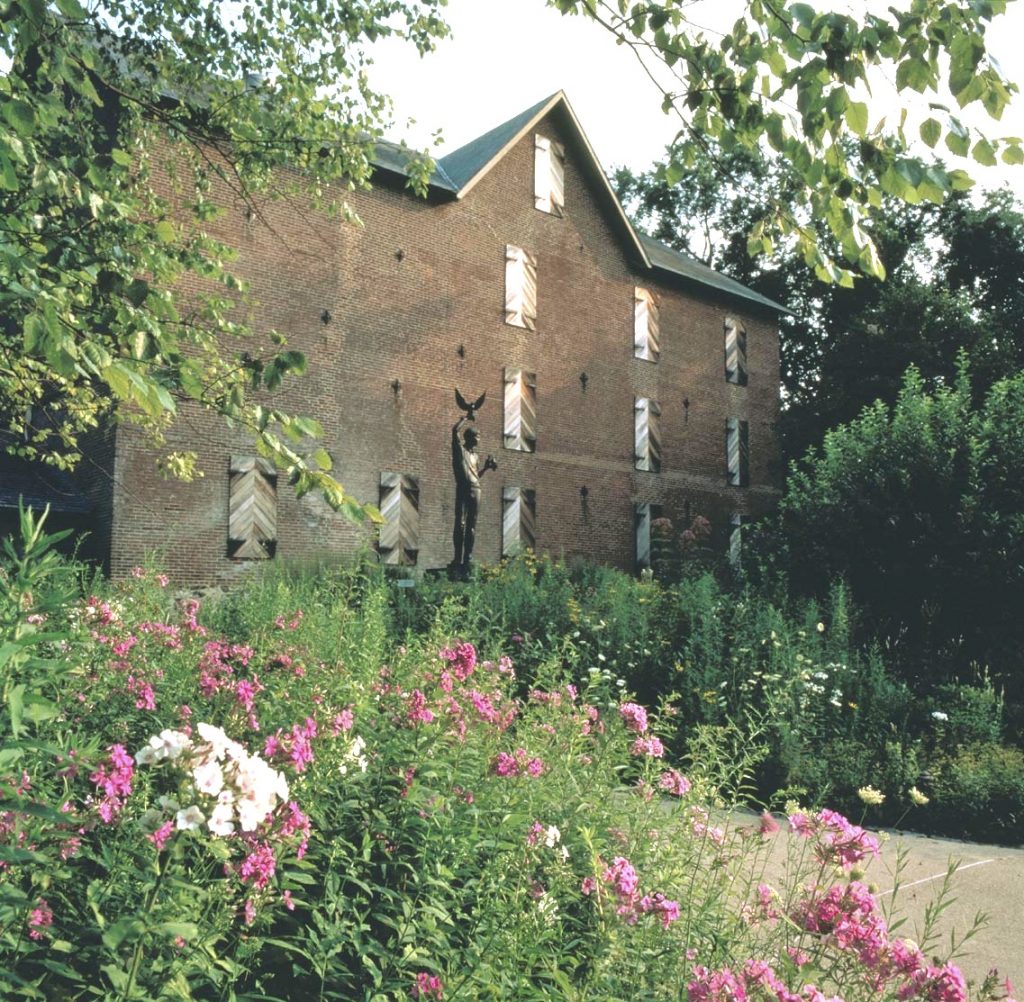
The Chadds Ford Historical Society is having a “Wet Paint”
sale, Saturday, Feb. 6 from 5 to 7 p.m. at the CFHS Barn. The sale will feature
the work of more than 30 Plein Air artists who will have been painting in the
area that day. Wine and cheese will be served. Paintings will remain on sale at
the barn through March 19. Admission is free. For more information, visit www.chaddsfordhistory.org
or call 610-388-7376.

About CFLive Staff

See Contributors Page https://chaddsfordlive.com/writers/

Wet paint sale Read More »

The Naked Winemaker

The vintage
is made and tucked away for a long winter’s nap, the frenzy of the holidays
with its heavy-duty wine and food focus is over, so what’s a winery to do
during these gloomy cold winter months?  Have fun of course! 
Outdoors we’re setting up the winter snow bar and fire pit, and inside we’re
preparing to do wine & cheese pairings in January and wine and chocolate
pairings in February….”pairing” being the operative word here.

So just what
is the secret to successful wine and food pairing?

The reality
is that some people just don’t care.  They like cheese.  They like
chocolate.  They like food.  They like wine.  Just enjoy it all,
the more the better.  But some of us foodies simply can’t let it go at
that.  We love to create exciting combinations, what I call the “one and
one is three” principle.  You have the wine.  You have the food. 
And when you taste them together, if the marriage is good, you create a totally
new entity, number three.

So just what
is the secret to successful wine and food pairing?

Let’s start
with the basics.  In the simplest view, there are really only two types of
wine made in the world.  Forget all the regions, the grape varieties and
the producers.  There are the simple light fresh fruity wines made for
consuming young.  And there are the big rich earthy wines that are more
complex and will hold up and age for a longer period.  They may be red or
white, they may be sweet or dry, but they will still fall in these two
categories.

Those who want to know why can read this paragraph, but if you’re
on a “need to know basis” and don’t care about the explanation, skip this
section!  The way light fresh fruity wines are made is to do as little
intervention as possible – the grape starts out fresh and fruity, you press off
the fresh juice, you ferment it to turn the sugar into alcohol and you put it
in a neutral, impermeable container to age a bit.  A home winemaker would
use a glass carboy; in our commercial cellars we use large stainless steel
tanks.  Nothing added, nothing gained: the wine comes out a few months
later light and fresh and fruity.  On the other hand, you can age the
wines in oak barrels where many changes occur to add depth and flavor and complexity. 
The wood breaths and the wine evaporates and thickens (read: big body). 
Oxidation occurs to change the color and flavor.  Vanillans are extracted
from the wood as are tannins, which are natural preservatives so the finished
wine holds up longer….and so on.
 

Back to
pairing.  To make the best wine and food matches, you need to think of
foods in the same terms.  Use light fresh fruity whites (example: Pinot
Grigio, Alberino, Sauvignon Blanc, Riesling) to go with light fresh foods, like
fruits and veggies, fresh pasta dishes (think Pasta Pesto and Marinara
sauces)and simple delicate seafoods, fish and  poultry recipes (like those
using lemon).  Use light reds (like Beaujolais Nouveau, Italian Chiantis
and some Pinot Noirs) with light simply prepared meat dishes like chicken
(Cacciatore?) and veal and pork, made with fresh herbs and spices.

When the
foods get more complex, when you make big rich sauces and gravies, when you
introduce textural elements like butter and cream and cheese, the wines need to
be more complex as well.  For dishes like Pasta Carbonara, try a rich
oak-aged Chardonnay or big oily Viognier.  And then there are reds! 
Big bodied, complex, full-flavored reds are my passion, both to make and to
drink.  The big bold California Cabs.  The even bolder Aussie Shiraz. 
Sinful big-ass Zins. The classic Bordeaux and Burgundy wines, though who wants
to pay those prices anymore?  Better bargains in South American Merlots
and Malbecs.  This is where you go (where I go most nights) with a big
juicy steak, Boeuf Bourguignon,  grilled lamb chops, any rich game dishes
and good ole’ greasy burgers and meat-lovers’ pizza.  Wine and food
pairing just doesn’t get any better than that!

How Can You
tell the Difference?

So how do
you know how to identify “light fresh fruity wines” from “big rich earthy”
wines – short of tasting them?  Here’s two easy methods, saving you the
time and expense of attending numerous wine classes or tastings.  (1) 
Ask the experts!  Cork dorks just love to talk about these things and
always have recommendations.  At your favorite wine shop, tell the clerk
you’re looking for a nice light fresh fruity dry white to go with your Sole
Almondine.  Or a big full-bodied red for a rich venison stew.  In
your favorite restaurant tell the Sommelier you’re having Pasta Primavera and
would like an older barrel-aged white to accompany it.  They’ll think you’re
very knowledgeable!

(2) 
Check the price!  If the wine was made in stainless steel (that lasts for
100 years and was long ago paid for), if it turns over quickly and is being
sold as a young wine (say ‘08 or ‘09), the winery doesn’t have a big investment
in it and will sell it inexpensively (say $10-$18) – and it will be the
young/fresh variety.  But, if the winery buys expensive oak casks every
year (about $1000 for a 60 gallon barrel that may be used just once or twice),
if it sits on the floor for several years and ties up the winery’s money, if it’s
released as an older wine (say ’02 to ‘07), the price will be much higher
($20-$30 & the sky’s the limit) – you can be assured these wines are in the
second category. 

The Naked Winemaker Read More »

Museum alliance offers Free Saturday on Jan 23

Museum alliance offers Free Saturday on Jan 23

The Brandywine Museums and Gardens Alliance is offering it’s second Free Saturday for people to visit eight of the Brandywine Valley’s featured tourist attractions.

Taking part in the Jan. 23 event are Brandywine River Museum, Delaware Art Museum, Delaware Center for the Contemporary Arts, Delaware Historical Society, Delaware Museum of Natural History, Hagley Museum and Library, Rockwood Museum and Winterthur Museum & Country Estate.

The event was held last January also, and according to Lora Englehart of the Brandywine River Museum people can spend the entire day visiting each of the attractions. She added that several hundred people were lined up waiting for the gates to open last year, and that the museum is looking forward to this year’s event.

“We’re excited that we’re able to do this again, that the alliance is able to do this again. We had a wonderful experience last year. People really appreciated it. They appreciated the opportunity to visit a place briefly to see if they would like it and many people said that they would be back.”

All people have to do is show up. Entrance to the attractions is free, but the gift shops still charge, she said.

Meg Marcozzi from the Hagley Museum is also the chairman of the alliance She said the idea for the Free Saturday was a group decision made in 2008 because the economy was so bad.

“People were suffering and we wondered what we could do to reach out to the community. That was the impetus of the free day, what we could do to support the community,” she said.

The alliance also has a passport program coming up for the summer months. People can purchase a one-time admission of $35 dollars and visit each of the member museums once for that single admission, from Memorial Day through Labor Day.

Those passports can be purchased at any of the member museums, Marcozzi said.

About Rich Schwartzman

Rich Schwartzman has been reporting on events in the greater Chadds Ford area since September 2001 when he became the founding editor of The Chadds Ford Post. In April 2009 he became managing editor of ChaddsFordLive. He is also an award-winning photographer.

Museum alliance offers Free Saturday on Jan 23 Read More »

Adopt-a-pet

Adopt-a-pet

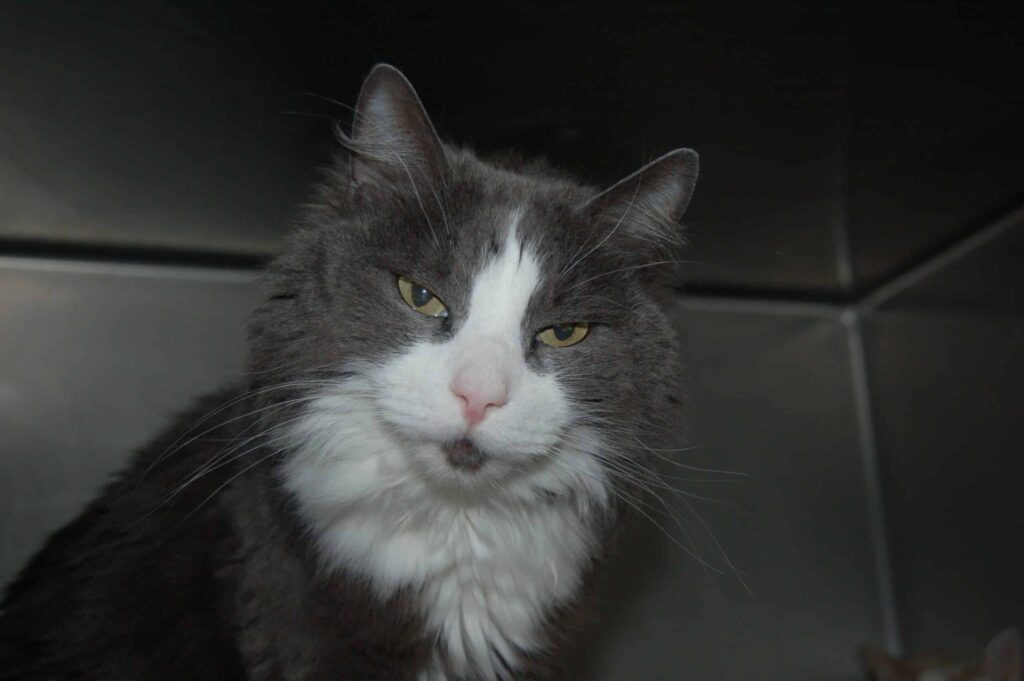
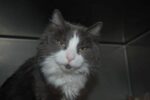
Fuzzy
is a 10-year-old neutered male domestic short hair cat that is available for adoption
through the Chester County SPCA. He came to the shelter on Nov. 27, with his
friend Jade who has recently been adopted. Now it is Fuzzy’s turn. They were
brought to the shelter because their owner has cancer and is no longer able to
care for them. Fuzzy is a great independent cat that will let you know when he
wants love and attention. He would do well in a home with older children. Fuzzy
is now looking for a responsible care giver that will give him the love and
attention he deserves. If you are able to
provide that home, visit the Chester County SPCA at 1212 Phoenixville Pike in
West Goshen or call 610-692-6113. Fuzzy’s registration number is 96797768. To
look at some of the other animals available for adoption, visit the shelter or
log onto www.ccspca.org.  

About CFLive Staff

See Contributors Page https://chaddsfordlive.com/writers/

Adopt-a-pet Read More »

Birmingham squashes request from Mercedes-Benz

Birmingham
Township supervisors, Monday, rejected a request from Mercedes-Benz of West
Chester to change the look of the Route 202 auto dealership. The ruling came
during a conditional use hearing where the applicant sought to modify
conditions from a hearing decision made in January 2001.

Ross
Unruh, the solicitor for the Township Zoning Hearing Board, represented Mercedes.
Supervisors allowed Unruh to make the case because the zoning board was not
involved, according to Supervisors’ Chairman John Conklin.

Unruh
told the board that the township Planning Commission was recommending no
changes.

At
issue were a change of façade to the south and east sides of the dealership’s
building on Route 202 and to modify a setback.

Peter
Collins, the area manager for Mercedes-Benz, and Dominic Marziani, architect,
testified that the automaker was not satisfied with its retail appearance in
the United States and was looking for something new.

“It’s
a marketing decision,” said Collins, a family look…how the brand image is to
appear.”

Marziani
said the new idea was to decrease a setback from 53 feet 3 inches to 49 feet 8
inches along a canopy that parallels Route 202 and to create a colonnade along
the same side. The Mercedes-Benz sign would be modified and moved under the
canopy. The sign is currently on the face of the existing canopy. There would
also be an exposed metal roof with a six to eight inch fascia.

“It’s
a cosmetic change only,” Marziani said.

Township
resident Henry Starr didn’t like the proposed cosmetic change, saying it would
be “ridiculous” for the township to approve. He cited the controversy
surrounding the original conditional use hearing in 2000. Starr also objected
to the fact that the design presented to the board did not show how the new
signage would look.

Supervisor
Al Bush said, “The existing design is much truer and more fitting to the
community.”

Conklin
told the applicant, “Our job is to represent the community.”

The
decision was 3-0 against.

During
the regular meeting, held Jan. 18, the board rejected a Certificate of
Appropriateness for a proposed deer fence for a residence at 1175 Birmingham
Road.

About Rich Schwartzman

Rich Schwartzman has been reporting on events in the greater Chadds Ford area since September 2001 when he became the founding editor of The Chadds Ford Post. In April 2009 he became managing editor of ChaddsFordLive. He is also an award-winning photographer.

Birmingham squashes request from Mercedes-Benz Read More »

Chadds Ford planners hear application on Concord hotel


The Chadds Ford Township Planning Commission heard a preliminary application
from Brandywine East on a proposed four-story, 125-room hotel near routes 1 and
202 in Concord Township. Chadds Ford planners need to review the plan because
the entrance, exit and a storm water management basin–in an area of less than
one acre–will be in Chadds Ford.

No decisions were made and the applicant’s engineer, Matt
Houtman, said the plans would be modified. The plan has not yet gone through
Concord’s Planning Commission.

Houtman said the plan calls for a right in and right out
only, with a traffic median prohibiting left hand turns.

Several planning commissioners expressed an interest in
seeing a secondary access to the 7.4-acre site that’s roughly 1,100 feet south
of Route 1.

New Planning Commission chairman Craig Huffman said
secondary access from Route 1 would take the pressure off the traffic along
Route 202. Houtman agreed that would be advantageous and that there are talks
going on with other property owners for an easement.

The commission reorganized for 2010 prior to hearing the application.
Huffman and two other newcomers, Bill Gross and Mike Ashmore assumed their
roles with Gross voted in as vice chairman.

Gone from the commission are Paul Vernon, Maurice Todd and
Bill Mock. Todd had been vice chairman.

Remaining on the commission as a member is former Chariman
Bill Taylor. Taylor has been on the commission for close to 30 years and was
chairman for about 12 years, he said.

About Rich Schwartzman

Rich Schwartzman has been reporting on events in the greater Chadds Ford area since September 2001 when he became the founding editor of The Chadds Ford Post. In April 2009 he became managing editor of ChaddsFordLive. He is also an award-winning photographer.

Chadds Ford planners hear application on Concord hotel Read More »

Help for Haiti

The Birmingham Friends Meeting suggests contacting the following organizations for those who wish to support the relief effort in Haiti.


Partners in Health  http://pih.org

PIH has been working on the ground in Haiti for over 20 years. We urgently need your support to help those affected by the recent earthquake. PIH has been designated the health services coordinator for Port-au-Prince

The American Red Cross: http://www.redcross.org

You can help the victims of countless crises, like the recent earthquake in Haiti, around the world each year by making a financial gift to the American Red Cross International Response Fund, which will provide immediate relief and long-term support through supplies, technical assistance and other support to help those in need. The American Red Cross honors donor intent. If you wish to designate your donation to a specific disaster, please do so at the time of your donation by mailing your donation with the designation to the American Red Cross, P.O. Box 37243, Washington, D.C. 20013 or to your local American Red Cross chapter. Donations to the International Response Fund can be made by phone at 1-800-REDCROSS or 1-800-257-7575 (Spanish) or online at http://www.redcross.org

Doctors Without Borders (Medecines Sans Frontieres)  http://www.doctorswithoutborders.org

Haiti: More than 2,000 patients have been treated so far at MSF locations, and patients are pouring in. MSF teams are doing their best in terms of administering first aid, but surgery needs are huge. Major impediment have to do with blockages at the airport, challenges to moving people and freight quickly, and damage to pre-existing facilities.

The Clinton Bush Haiti Fund: Help for Haiti http://www.whitehouse.gov 

Click on “Learn what you can do”

American Friends Service Committee  http://www.afsc.org

You can support AFSC in general, or Haiti programs specifically through the website. The magnitude of the disaster prompted AFSC to immediately release $50,000 for the purchase of supplies for emergency medical stations, shelter, and other needs of survivors suffering from burns, amputations, and other serious injuries. In this first phase of response, AFSC is partnering with Handicap International in these efforts. As soon as it is logistically feasible AFSC will begin to identify additional pockets of need that are not being met by other providers. After the initial emergency phase, as resources are available, AFSC will commit our energy and resources to longer term reconstruction, recovery and healing.

Mennonite Central Committee:  http://www.mcc.org

AKRON, Pa. – As Haiti’s estimated death toll soars and images of utter devastation pour across television screens, Mennonite Central Committee

(MCC) workers are on the ground in Haiti.

MCC released an initial $100,000 (U.S.) or $103,420 (Cdn.) on Wednesday for immediate relief. Ron Flaming, director of International Programs, anticipates a multimillion dollar response over a number of years, focusing on rebuilding. MCC is appealing for donations to fund these efforts. The need for trauma care is a given, considering the overwhelming loss of life and the experience of being in a large earthquake, he said. MCC has experience providing trauma care in many places around the world, including Haiti, as recently as 2008 when the island was hit by four hurricanes in one year.MCC workers in Haiti include nine people from Colombia, the Netherlands and the United States; seven Haitian program staff members; and additional support staff. All program staff located in Port-au-Prince, the capital, are accounted for. Although the communications infrastructure in Haiti has been disrupted, staff members were able to send messages via the U.S. embassy and some on blogs.MCC’s work in Haiti over the past years has focused on reforestation and environmental education, human rights and advocacy for food security.

Donations to MCC’s response in Haiti are welcome. They should be designated Haiti Earthquake. Donations can be made

* Online at http://www.mcc.org

* By telephone toll free – 1-888-622-6337 (Canada) or 1-888-563-4676 (U.S.)

About CFLive Staff

See Contributors Page https://chaddsfordlive.com/writers/

Help for Haiti Read More »

N.C. Wyeth exhibit at BRM begins in March


Landscapes
painted in a variety of impressionist styles and other works by N.C.
Wyeth–originally exhibited at the Philadelphia Sketch Club in 1912– will be
on view at the Brandywine River Museum from March 20 through May 23, 2010.  

N.
C. Wyeth and the Philadelphia Sketch Club
brings together many of the
paintings Wyeth selected for his début exhibition and presents a fascinating
glimpse into early aspects of his artistic development.  The exhibition is
organized in conjunction with the Philadelphia Sketch Club in honor of the
150th anniversary of its founding.

Already
a successful illustrator, Wyeth began to experiment with landscape painting
techniques about 1907.  Well aware of the professional difference between
illustrators and other artists, Wyeth saw in landscape painting a pathway to
success in fine art, a field in which he aspired to “achieve real
distinction.”  For the next four years, he painted landscapes of the
Chadds Ford countryside, striving to acquire the “plain, solid, intimate
knowledge” he needed to express a creative strain illustrative work
largely denied him. Working in oil, he produced countless studies, many of
which he later painted over or destroyed.

Wyeth’s
membership in the Philadelphia Sketch Club allowed him the first public showing
of his best landscape work.  He selected 22 landscapes and 10
illustrations for an exhibition held in November 1912.  It was the largest
exhibition to date devoted solely to his work and the first to include
non-illustrative pictures.  The exhibition attracted much attention in the
Philadelphia and Wilmington press, with reviews ranging from favorable to
negative.

Although
the landscape paintings were executed in impressionistic styles that Wyeth
abandoned by 1915 or 1916, the period culminating in the exhibition was his
first concerted attempt to move away from the constraints of illustration.

To
commemorate its 150th anniversary, the Philadelphia Sketch Club Philadelphia is
coordinating exhibitions at several area museums and galleries.  For a
complete list, visit their website at www.sketchclub.org.

From
March 20 through May 23, The Brandywine River Museum is also presenting the
exhibition Drawing from a Story:
Illustrations from Selected Caldecott Medal Winners.
  First awarded in
1938, the Caldecott Medal is considered the most prestigious award for
children’s illustration.  This exhibition will feature the works of
Caldecott winners from seven decades, including Dorothy Lathrop, David Wiesner,
Paul O. Zelinsky, Leo and Diane Dillon, Robert McCloskey, and Maurice Sendak,
among many others, including the 2010 medal winner, Jerry Pinkney.

N.C. Wyeth exhibit at BRM begins in March Read More »

Mind Matters


For six days, a Haitian man keeps vigil by the rubble that
was once a bank. He staunchly believes that, trapped beneath the debris, his
wife remains alive. Eventually, he hears her faintly. She is thirsty, she says.
Her hand is pinned down, she says. Somehow, rescuers maneuver water to her
after sighting her by a camera that traverses a slight opening. Carefully, they
chip away the tonnage, hours later releasing her from concrete captivity. For
her, this tomb has become a womb—she is reborn to none too solid earth again.

What is it in the human spirit that enables us to find faith
and hope in dire circumstances such as these? This story could have had a less
auspicious ending. Nevertheless, the undaunted spirit of the husband who stood
by and the woman who kept faith that he would be there for her is the very
heart of the matter.

I find myself playing over the images such as these, where a
mother steadforthly stays by the ruins of a nursery school for days and is
finally re-united with her very frightened 2-year-old after being rescued from
the rubble. Others frantically search for their loved ones if only to recover
their bodies. Disaster teams, medical teams from all over the world converge to
help.

Why? I think it is the agony and ecstasy of living a life in
love. We are interconnected with one another and we care. We care deeply about
those closest to us but the circle continues to extend to all beings if we let
it.

I remember being in a workshop with a FEMA trainer for
disaster mental health volunteers. It was right after the Oklahoma City
bombing, and this trainer would have liked to have been with her colleagues
helping in that disaster effort. Nevertheless, Diane Meyers gave an excellent
presentation, full of heart. She remarked that even though we, as an audience,
didn’t know each other that if, in the next moment, there were a disaster, we
would most likely come to each other’s aid.

True, we as humans may often seem more petty and greedy than
altruistic. Yet, at our core, we empathically identify with the suffering of
others and instinctively want to help and be of service.

At the center of life is love and connection. Neuroscience,
genetics, all kinds of verifiable research may be able to name the biochemistry
of it all. What matters most to me is that through all the adversity, love
remains. The mother stands guard until she finds her child. The husband
faithfully waits for his wife. The brother searches valiantly for his brother.
These are close loving connections, but they stretch outward into the universe,
otherwise we wouldn’t care about anyone else’s story but our own. It is that we
see ourselves in their story that makes all the difference. I recall a
spiritual master’s remark that, 
“It is never that there ‘but for the grace of God go I.’ Instead, it is,
‘There go I.’” When we recognize how connected and related we all are, how can
we not care about what happens thousands of miles away?

Footnote: If you are wanting to give a donation for Haitian
relief, may I suggest Partners in Health (www.pih.org
). This organization has had clinics in Haiti for more than 20 years. These
clinics are staffed by Haitians in partnership with American medical teams. For
a compelling story about this organization and its founder, Paul Farmer, read “Mountains
Beyond Mountains” by Tracy Kidder.

* Kayta Curzie Gajdos holds a doctorate in counseling
psychology and is in private practice in Chadds Ford, Pennsylvania. She
welcomes comments at MindMatters@DrGajdos.com
or 610-388-2888. Past columns are posted to www.drgajdos.com.

About Kayta Gajdos

Dr. Kathleen Curzie Gajdos ("Kayta") is a licensed psychologist (Pennsylvania and Delaware) who has worked with individuals, couples, and families with a spectrum of problems. She has experience and training in the fields of alcohol and drug addictions, hypnosis, family therapy, Jungian theory, Gestalt therapy, EMDR, and bereavement. Dr. Gajdos developed a private practice in the Pittsburgh area, and was affiliated with the Family Therapy Institute of Western Psychiatric Institute and Clinic, having written numerous articles for the Family Therapy Newsletter there. She has published in the American Psychological Association Bulletin, the Family Psychologist, and in the Swedenborgian publications, Chrysalis and The Messenger. Dr. Gajdos has taught at the college level, most recently for West Chester University and Wilmington College, and has served as field faculty for Vermont College of Norwich University the Union Institute's Center for Distance Learning, Cincinnati, Ohio. She has also served as consulting psychologist to the Irene Stacy Community MH/MR Center in Western Pennsylvania where she supervised psychologists in training. Currently active in disaster relief, Dr. Gajdos serves with the American Red Cross and participated in Hurricane Katrina relief efforts as a member of teams from the Department of Health and Human Services' Substance Abuse and Mental Health Services Administration.Now living in Chadds Ford, in the Brandywine Valley of eastern Pennsylvania, Dr. Gajdos combines her private practice working with individuals, couples and families, with leading workshops on such topics as grief and healing, the impact of multigenerational grief and trauma shame, the shadow and self, Women Who Run with the Wolves, motherless daughters, and mediation and relaxation. Each year at Temenos Retreat Center in West Chester, PA she leads a griefs of birthing ritual for those who have suffered losses of procreation (abortions, miscarriages, infertility, etc.); she also holds yearly A Day of Re-Collection at Temenos.Dr. Gajdos holds Master's degrees in both philosophy and clinical psychology and received her Ph.D. in counseling at the University of Pittsburgh. Among her professional affiliations, she includes having been a founding member and board member of the C.G. Jung Educational Center of Pittsburgh, as well as being listed in Who's Who of American Women. Currently, she is a member of the American Psychological Association, The Pennsylvania Psychological Association, the Delaware Psychological Association, the American Family Therapy Academy, The Association for Death Education and Counseling, and the Delaware County Mental Health and Mental Retardation Board. Woven into her professional career are Dr. Gajdos' pursuits of dancing, singing, and writing poetry.

Mind Matters Read More »

Blogging Along the Brandywine


Last Monday evening, Jan. 11, as I finished my blog on our
cold weather, I previewed my next piece about earthquakes in Chadds Ford, never
imagining that two days later a horrific 7.0 earthquake would destroy
Port-au-Prince, Haiti, possibly killing an estimated 200,000 people.

Henze DuVert, a tall, handsome, black man with a French
accent, is the director of Building and Grounds at the Mendenhall Hotel and
Inn. He was born in Port-au-Prince. Since the earthquake on Jan. 13, he has
been unable to contact his father, stepmother or brother in Port-au-Prince.

Smaller earthquakes in the Philadelphia area are not
unknown–even in Chadds Ford.

Several years ago in the early ‘70s when I was living with
my parents on the Main Line, I awoke in the middle of the night to a deafening
roar with the whole house shaking. In my state of half-sleep I thought a
helicopter was about to land on our roof.

After what seemed an eternity, it stopped. Having lived
through such events in the mid-west, our father assured us it was an
earthquake, and walked through the house checking the walls for cracks.

Indeed, the next morning, KYW and the Philadelphia Inquirer
reported this Delaware Valley earthquake. It was considered small, a 4.2 or
something, but more than big enough for me.

But why the loud noise?

During an earthquake, when tectonic plates shift, seismic
waves, like sound waves or waves radiating outward when you throw a pebble into
a lake, travel though the earth’s crust, carrying massive amounts of energy,
causing the strong trembling and the loud noise.

Now flash forward about 12 years to Sunday, April 22, 1984.
It was Easter evening and I was now living in my own home in Chadds Ford.

About 8:36 p.m., as I was working on some lesson plans for
school, my couch, walls and floor began to shake, accompanied by a loud
rumbling noise. I initially thought the heater in the basement was going to
explode. After the shaking stopped about 15 seconds later (a very long time
when you don’t know what is happening), I ran to my front window to check to
see if some unusually large monster trunk was trying to make it up our hill for
some reason.

Seeing none, I realized I had experienced another
earthquake.

The next morning, television and newspapers reported a 4.1
earthquake with an epicenter 15 miles south of Lancaste. The quake had been
felt from Connecticut to Virginia. 
Experts termed it a “light” earthquake.

An article in the Daily Local News by Michael P. Rellahan
and UPI wire sources said: “The Chester County Department of Emergency Services
reported receiving 400 calls about the tremor within a 20 minute period after
the shaking had stopped. A spokesman there said most callers thought their
furnace had broken.”

An easily observed fault in our area is the Wissahickon
fault – massive formations of quartzite and schist, that can be observed as you
walk the rugged park trails that crisscross the dramatic Wissahickon Valley
gorge just outside of Philadelphia.

Other areas of older seismic activity in the area are the
Embreeville Thrust, the Street Road Fault and the Rosemont Fault, running
southwest from the Wissahickon fault through Chadds Ford.

So hold on and get ready to rock!

About Sally Denk Hoey

Sally Denk Hoey, is a Gemini - one part music and one part history. She holds a masters degree cum laude from the School of Music at West Chester University. She taught 14 years in both public and private school. Her CD "Bard of the Brandywine" was critically received during her almost 30 years as a folk singer. She currently cantors masses at St Agnes Church in West Chester where she also performs with the select Motet Choir. A recognized historian, Sally serves as a judge-captain for the south-east Pennsylvania regionals of the National History Day Competition. She has served as president of the Brandywine Battlefield Park Associates as well as the Sanderson Museum in Chadds Ford where she now curates the violin collection. Sally re-enacted with the 43rd Regiment of Foot and the 2nd Pennsylvania Regiment for 19 years where she interpreted the role of a campfollower at encampments in Valley Forge, Williamsburg, Va., Monmouth, N.J. and Lexington and Concord, Mass. Sally is married to her college classmate, Thomas Hoey, otherwise known as "Mr. Sousa.”


Blogging Along the Brandywine Read More »

Scroll to Top