

August 21, 2025

Volunteers Sought to Help Rebuild History at Birmingham Hill

Volunteers Sought to Help Rebuild History at Birmingham Hill

BIRMINGHAM TOWNSHIP, Pa. — Community members are being asked to roll up their sleeves Sunday, Sept. 7, at 8 a.m. to help preserve one of Chester County’s most historic landscapes: Birmingham Hill, the high ground that played a pivotal role in the 1777 Battle of Brandywine.

The township’s Recreation, Parks and Open Space Committee is seeking volunteers to repair split rail fencing and clear storm debris along the trail. Volunteers should plan to meet on Meetinghouse Road between Birmingham Road and Creek Road.

Split rail fencing—sometimes called “worm fencing”—is more than a rustic accent in the Brandywine Valley. For early settlers, these zigzagging wooden rails marked property boundaries, kept livestock in check, and could be built quickly without nails or metal hardware. During the Revolutionary War, such fences even shaped troop movements across fields and roads.

Every rail replaced and every branch cleared helps connect us to the past,” said an event organizer in announcing the work day. “By volunteering, residents aren’t just doing maintenance. They’re helping to rebuild history in a landscape that still looks much as it did in the 18th century.”

Birmingham Hill remains one of the most significant Revolutionary War sites in the region, offering views and terrain that have changed little since Gen. George Washington’s forces attempted to stop the British advance more than two centuries ago. Today, the area is open to the public, with trails and interpretive signage inviting visitors to reflect on both its natural beauty and its role in the nation’s founding.

Volunteers are encouraged to bring work gloves, sturdy shoes, and a willingness to get their hands dirty. The project is expected to last several hours, but helpers are welcome to participate for as much time as they can spare.

For more information, residents may contact the Birmingham Township Recreation, Parks and Open Space Committee through the township office.


The Editor’s Fact Box: Split Rail Fencing in the Brandywine Valley

Few sights are as closely tied to the Brandywine Valley as the zigzagging lines of split rail fencing, winding across fields and historic sites. More than decorative, these fences were once a vital part of colonial life — and they remain powerful symbols of the region’s Revolutionary heritage.

Practical Uses in Colonial Times

  • Property Boundaries: Before formal surveys, fences marked ownership and reduced disputes.

  • Livestock Control: Rails kept animals in (and out), crucial for survival in a farming economy.

  • Nail-Free Construction: Known as “worm fencing,” the design relied on stacked rails and required no hardware, making it easy for settlers with limited resources.

Built from the Land Itself
Rails were split from local timber such as oak, chestnut, and pine, allowing farmers to build fencing quickly with simple hand tools while adapting to rugged terrain.

Role in the Revolution
When the Battle of Brandywine raged in 1777, rail fences lined the roads and fields, shaping troop movements and offering cover in key skirmishes.

Today’s Symbolism
From Birmingham Hill to Sandy Hollow, split rail fences are deliberately maintained to evoke the 18th-century landscape. They remind visitors that these preserved fields were once contested ground in the fight for independence.

“Every fence rail is a reminder of both the farmers who first built this land and the soldiers who fought across it,” preservationists note.

About George Rotsch

George is the publisher of Chadds Ford LIVE along with DelawareLIVE, MilfordLIVE, and TownSquareLIVE. He is a professional communicator and marketing consultant. He has worked national brand and local non-profits and contribute to editorial strategy and as a reporter from time to time. He can be reached at george@delawarelive.com.

Volunteers Sought to Help Rebuild History at Birmingham Hill Read More »
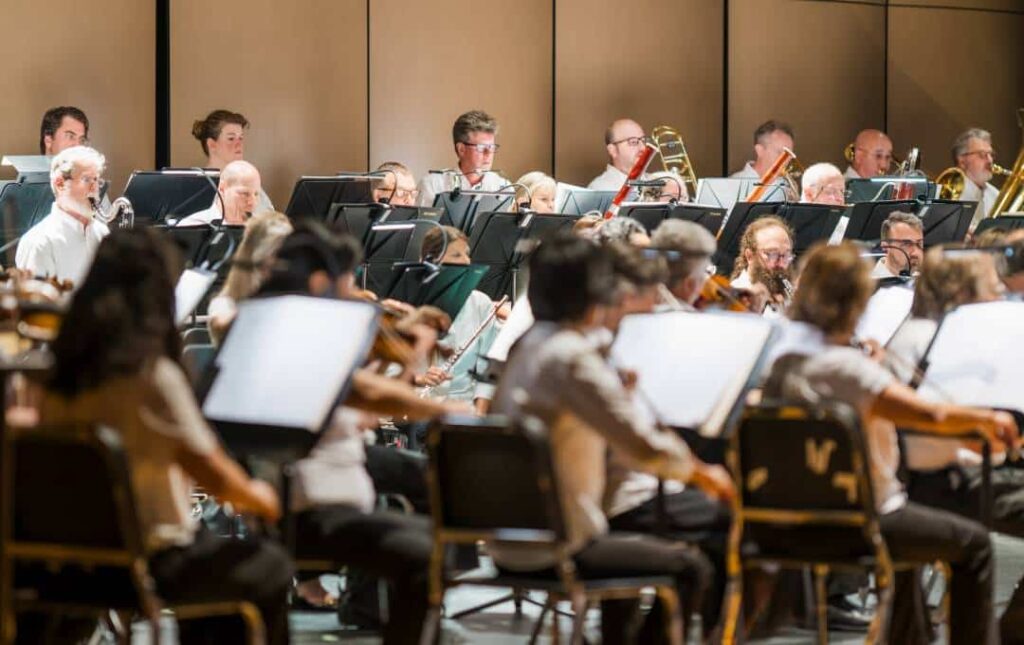
Brandywine Valley Symphony Steps Into New Era With 2025–26 Season

Brandywine Valley Symphony Steps Into New Era With 2025–26 Season

KENNETT SQUARE, Pa. — One of the region’s most enduring cultural institutions is taking on a new identity and a renewed mission. After 85 years of growth, the Kennett Symphony has officially reintroduced itself as the Brandywine Valley Symphony, signaling a bold step toward broader recognition and artistic ambition.

The new name was unveiled at the Symphony’s finale concert at Longwood Gardens this summer, capping the 2024–25 season with a moment of both reflection and anticipation. What began in 1940 as a volunteer community orchestra in Kennett Square has evolved into a fully professional ensemble under the lead


ership of Music Director Michael Hall, who has guided the orchestra since 2013.

Board President Dr. Timothy Blair, dean and professor emeritus at West Chester University’s School of Music, said the change reflects the orchestra’s expanded footprint and growing reputation.

The Brandywine Valley is a name that will be recognized across the country and deeply associated with arts and culture,” Blair said. “As an orchestra, we’ve grown into a more prominent presence with a broader audience, and we need a name that reflects that evolution.

Legacy of Growth

The Symphony’s transformation has been decades in the making. In the late 20th century, the orchestra, then known as the Kennett Symphony of Chester County, rose to prominence under the baton of Mary Woodmansee Green, the first woman appointed conductor of a professional symphony in Pennsylvania. Green’s tenure from 1988 to 2013 built both audience loyalty and artistic excellence.

Following a national search, Hall assumed the role of music director, ushering in a new era with a professional orchestra, broader programming, and outreach that spans Chester County, northern Delaware, and parts of New Jersey.

This regional growth helped set the stage for another milestone: an invitation to perform at Carnegie Hall in 2026, a moment Blair described as a “tremendous honor and testament to our journey.”

A Season of Storytelling

With the new name comes a season that celebrates both tradition and innovation. The 2025–26 Brandywine Valley Symphony season will open Oct. 5 with The Classics at Brantwyn, a chamber concert in an elegant historic setting that pairs music with a Sunday brunch atmosphere.

Other highlights include:

  • Oct. 12, 2025 — Where the River Meets the Sky: Works inspired by the Brandywine landscape and natural beauty.

  • Nov. 23, 2025 — Salon Concert: A small-scale, intimate performance showcasing soloists and ensembles.

  • Dec. 6, 2025 — Holiday Concert: Seasonal favorites and festive arrangements for all ages.

  • Feb. 28, 2026 — Family Concert: A program crafted for children and families, introducing new generations to live symphonic music.

  • Mar. 22, 2026 — Songs Without Borders: An exploration of multicultural traditions and global musical voices.

  • May 9, 2026 — Mother’s Day Concert: A springtime tribute filled with uplifting selections.

  • June 25, 2026 — Made in America: A patriotic finale spotlighting American composers and themes.

Hall said the season was designed to welcome audiences of every background.
We want listeners to feel both the power of tradition and the excitement of discovery,” he said. “There is something here for the lifelong patron and the child hearing their first orchestra concert.

Community at the Center

The Symphony’s leadership emphasizes that the Brandywine Valley name does not erase its Kennett Square roots. The orchestra remains based in the community, with its administrative office in town and an ongoing cultural partnership with the Kennett Library. Its performances at local venues—including Longwood Gardens, Unionville High School, and Brantwyn Estate—continue to connect the ensemble to its home region.

We are committed to making live symphonic music accessible, engaging, and meaningful,” Hall said. “It’s about creating unforgettable experiences and fostering connections, not just performing on stage.

In addition to concerts, the Symphony maintains education and outreach initiatives, bringing professional musicians into schools and offering family-friendly programming. The Family Concert in February underscores this mission by introducing young audiences to classical repertoire in an engaging and approachable way.

Looking Ahead

Alongside its rebranding, the Symphony has launched a refreshed logo, website, and digital platforms to reach a wider audience. Information on ticket sales, season subscriptions, and sponsorship opportunities is now available at www.bvsymphony.org, and updates will be shared regularly on social media at @bvsymphony.

As the Brandywine Valley Symphony prepares for its Carnegie Hall debut in 2026, its leaders say they see this moment not as an endpoint but as a beginning.

We’ve come a long way from our roots in Kennett Square,” Blair said. “Now we’re stepping into a future that honors that history while embracing the wider role we can play in the region and beyond. The Brandywine Valley Symphony is ready for the stage—whether that’s here in our community or at one of the world’s most prestigious concert halls.

About George Rotsch

George is the publisher of Chadds Ford LIVE along with DelawareLIVE, MilfordLIVE, and TownSquareLIVE. He is a professional communicator and marketing consultant. He has worked national brand and local non-profits and contribute to editorial strategy and as a reporter from time to time. He can be reached at george@delawarelive.com.

Brandywine Valley Symphony Steps Into New Era With 2025–26 Season Read More »

Scroll to Top