

BIRMINGHAM TOWNSHIP, Pa. — Community members are being asked to roll up their sleeves Sunday, Sept. 7, at 8 a.m. to help preserve one of Chester County’s most historic landscapes: Birmingham Hill, the high ground that played a pivotal role in the 1777 Battle of Brandywine.
The township’s Recreation, Parks and Open Space Committee is seeking volunteers to repair split rail fencing and clear storm debris along the trail. Volunteers should plan to meet on Meetinghouse Road between Birmingham Road and Creek Road.
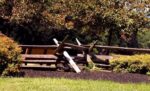
Split rail fencing—sometimes called “worm fencing”—is more than a rustic accent in the Brandywine Valley. For early settlers, these zigzagging wooden rails marked property boundaries, kept livestock in check, and could be built quickly without nails or metal hardware. During the Revolutionary War, such fences even shaped troop movements across fields and roads.
 “
“
Every rail replaced and every branch cleared helps connect us to the past,” said an event organizer in announcing the work day. “By volunteering, residents aren’t just doing maintenance. They’re helping to rebuild history in a landscape that still looks much as it did in the 18th century.”
Birmingham Hill remains one of the most significant Revolutionary War sites in the region, offering views and terrain that have changed little since Gen. George Washington’s forces attempted to stop the British advance more than two centuries ago. Today, the area is open to the public, with trails and interpretive signage inviting visitors to reflect on both its natural beauty and its role in the nation’s founding.
Volunteers are encouraged to bring work gloves, sturdy shoes, and a willingness to get their hands dirty. The project is expected to last several hours, but helpers are welcome to participate for as much time as they can spare.
For more information, residents may contact the Birmingham Township Recreation, Parks and Open Space Committee through the township office.
The Editor’s Fact Box: Split Rail Fencing in the Brandywine Valley
Few sights are as closely tied to the Brandywine Valley as the zigzagging lines of split rail fencing, winding across fields and historic sites. More than decorative, these fences were once a vital part of colonial life — and they remain powerful symbols of the region’s Revolutionary heritage.
Practical Uses in Colonial Times
-
Property Boundaries: Before formal surveys, fences marked ownership and reduced disputes.
-
Livestock Control: Rails kept animals in (and out), crucial for survival in a farming economy.
-
Nail-Free Construction: Known as “worm fencing,” the design relied on stacked rails and required no hardware, making it easy for settlers with limited resources.
Built from the Land Itself
Rails were split from local timber such as oak, chestnut, and pine, allowing farmers to build fencing quickly with simple hand tools while adapting to rugged terrain.
Role in the Revolution
When the Battle of Brandywine raged in 1777, rail fences lined the roads and fields, shaping troop movements and offering cover in key skirmishes.
Today’s Symbolism
From Birmingham Hill to Sandy Hollow, split rail fences are deliberately maintained to evoke the 18th-century landscape. They remind visitors that these preserved fields were once contested ground in the fight for independence.
“Every fence rail is a reminder of both the farmers who first built this land and the soldiers who fought across it,” preservationists note.

About George Rotsch
George is the publisher of Chadds Ford LIVE along with DelawareLIVE, MilfordLIVE, and TownSquareLIVE. He is a professional communicator and marketing consultant. He has worked national brand and local non-profits and contribute to editorial strategy and as a reporter from time to time. He can be reached at george@delawarelive.com.