
September 3, 2018

‘The life of Andrew Wyeth in bold strokes’

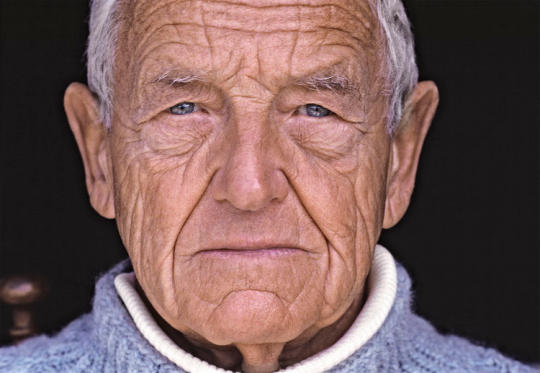
Andrew Wyeth © Peter Ralston

PBS documentary WYETH: the life of Andrew Wyeth in bold strokes airs Friday, September 7, at 10 p.m. The film opens with a close up of Andrew Wyeth’s craggy, weather worn face. As the narrator begins to speak, the camera slowly moves in until we are looking at just Andy’s eyes—crystal blue and piercing—eyes that seem to look into the world, seeing what others do not. His Superman vision sees what is hiding and waiting beneath the surface.

The documentary is the third in a four-part PBS American Masters Artists series exploring the lives of four iconic American visual artists. The Wyeth segment, which took three years to complete, moves seamlessly through Andrew Wyeth’s life, lifting up memorable moments—both tragic and triumphant. It airs on Friday, September 7 at 10 p.m. across the country and will be available to stream the following day. There are two versions of the documentary—a ninety-minute theatrical version and the sixty-minute broadcast version.

Director Glenn Holsten introduces WYETH viewing at Chaddsford Winery

WHYY members recently enjoyed a special viewing of the documentary at Chaddsford Winery with the filmmaker, Glenn Holsten, and the producer Chayne Gregg, in attendance. During a question and answer session following the film, Holsten and Gregg shared behind the scenes stories and attendees shared their special memories of our special and beloved neighbor.

WYETH tells the story of Chadds Ford’s most celebrated resident and offers a peek into his thoughts about life and painting. The film explores contradictions and comparisons throughout the artist’s life. For example, Andrew adored his father, the famed illustrator N.C. Wyeth, but did not approach painting in the same way. N.C. painted in bold colors that made his images jump off the pages of the adventure books he illustrated for Scribner’s. Andrew, meanwhile, painted his action scenes in a palette of subtle greys and browns. Subject matter differed, as well. While N.C. painted historic and literary battles full of action, Andy, according to son Jamie, “was always painting a dead crow or something that was equally intriguing.” Andrew Wyeth felt he could only paint what he knew intimately. He walked and walked around his beloved Chadds Ford studying its strong, stone buildings and around Cushing, Maine taking in its rough landscapes and seascapes. He noticed everything. For him, the world was always changing. Andy observed that the river flows constantly, yet it is never the same.

An art critic once described Wyeth as being the most overrated–and the most underrated—artist in the world. He made money while he was still alive, which was unheard of. His first exhibition at age 20 was a sellout. He was as popular as a rock star and his exhibitions routinely broke attendance records at prestigious art museums across the country. Ironically, because his work was so popular, some critics concluded that it could not be very good.

New York’s Museum of Modern Art acquired Christina’s World in 1948 amidst great controversy within the museum itself and in the art world beyond. The controversy pitted those who thought the painting was a masterpiece against those who thought it awful. People are still drawn to Christina’s World. One does not need to know the story behind Christina Olsen’s disability to understand and relate to the isolated feeling it conveys. Wyeth was not discouraged by cruel comments. His reaction to negative interpretations of his art was to keep painting, which drove his critics mad. Now, with the advantage of time, art critics, scholars of American art, and historians are reevaluating and praising his body of work.

In the documentary, the audience learns much from interviews with art professionals, family, and friends—including Helga–who discuss Wyeth and his work. The home movies and photographs of the Wyeth family provide added dimension to the famed Wyeth family. Sons Jamie and Nicholas Wyeth talk candidly about their father. The narrator explains that Betsy always encouraged her husband, even after learning early in their marriage that she would always be number 2 in his life after painting. When Andy introduced the “Helga Paintings” to her and the rest of the world in 1986, she maintained her sanity in the midst of the media storm by organizing and cataloging the huge body of studies and paintings created over fifteen years.

Andrew Wyeth painted or thought about painting all the time. Mary Landa, Andrew Wyeth collections manager reflected that, “on his deathbed, asleep with his eyes closed, Andy’s hand was moving, as if he were painting.”

WYETH: The life of Andrew Wyeth in bold strokes will be available after the broadcast through WHYY or the Brandywine River Museum of Art.

About Lora B. Englehart

Lora has a passion for art, gardening, yoga, music and dancing. She continues to research the life of locally born abolitionist and 1998 National Women's Hall of Fame inductee Mary Ann Shadd Cary. She is a dedicated community volunteer, working with the American Association of University Women, Wilmington, DE branch (programs chair), Chadds Ford Historical Society (former board member) and Brandywine Conservancy & Museum of Art. Lora lives in Birmingham Township with her husband Bill and son Brad. Daughter Erika lives in Pittsburgh with husband Bob and baby Wilhelmina. She is a former French, Spanish and ESL teacher, bilingual life insurance underwriter and public relations coordinator for Delaware Art Museum and Brandywine Conservancy & Museum of Art.

‘The life of Andrew Wyeth in bold strokes’ Read More »
How to treat a burn

How to treat a burn
You and your family are exposed to burn risks every day. Between curling irons, hot coffee, ironing clothes and cooking in the kitchen, burns are a very real possibility.

First Aid for Burns

If you or a family member suffers a burn, there are some immediate steps you can take to ensure proper care is received. First, treat every burn like a major burn until you can determine otherwise. You should calm and reassure the person who has been burned. Next you’ll want to address the following:

Remove Clothing and Accessories

Remove any clothing or tightly fitting accessories like wedding rings from the areas around the burn. If clothing is stuck in the burn, do not attempt to remove it.

Cool the Burn

If possible, run the burn under cool, not cold, water for 10 to 15 minutes. If this not possible, apply a cool, clean wet cloth to the burn. Do NOT use ice.

Assess the Burn

You should assess the burn to determine if it is superficial or more severe. You may be able to treat a superficial burn at home, but a more sever burn will require medical treatment.

Do You Need Medical Attention?

What if the burn is big? What if it’s more than red and a little swollen? How do you know when to seek medical attention? Here are four questions to help you determine if your burn requires medical treatment.

1) Where Is It Located?

Any burn to the face, eyes, ears, hands, feet or genitals should be treated in an emergency room. If the burn is more than just superficial tissue damage, you should also head to the ER.

2) How Deep Is The Burn?

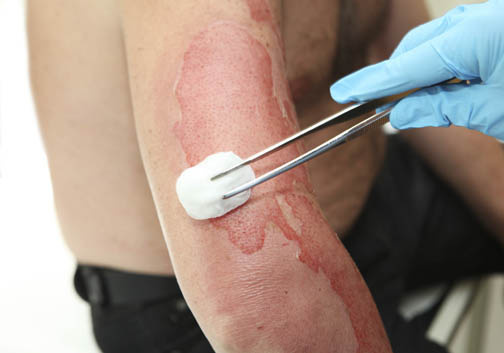
Superficial burns, like sunburns, are commonly red and painful. They’ll blister 24 hours after the initial burn. If it’s a superficial burn, immediate medical care might not be necessary. If you or your child suffers a minor burn, it will appear red, a little swollen, and it will turn white when you press on the skin. A minor burn is painful – soothe the pain by cooling the burn under cool, not cold, running water for 10 to 15 minutes. You can also apply a clean towel dampened with cool water to the burn.But if the burn is deeper, blisters will appear soon after the injury. Very deep burns are typically non-painful and cause blotchy skin discoloration that looks gray or whitish. Seek immediate medical care for this kind of burn.

3) How big is the Burn?

If your burn covers a large area of skin, a bigger area than the size of your palm, seek medical treatment. Larger burns, depending on where they’re located, can impair function. If you have a large burn on your foot and it’s preventing you from comfortably wearing shoes, don’t delay seeking treatment.

4) Are you up-to-date on your vaccinations?

All burns are tetanus prime, if you have not received a tetanus show within the last 5-10 years then you will need to get a booster and if you never have been immunized then you need to get a tetanus shot.

5) Is It Infected?

If a burn looks like it’s developing an infection, you need to go to the emergency department. The key signs of an infection include increasing pain, redness, drainage, swelling and odor.Any size burn, minor or serious, can develop an infection. Because of that, it’s important to make sure your burn is kept clean and dry as well as covered with a clean bandage or sterile dressings and antibiotic ointment.

Home Remedies for Burn

If you have a minor burn, running cool water over the burn and keeping it cool with aloe is appropriate. However, if the burn in more serious, home remedies will only delay you from receiving proper medical care for your wound, which can significantly increase your risk of infection.

Identifying Burn Severity

The severity of a burn is based on how much skin is damaged, measuring the surface area and depth of the burn. However, it can be complicated to assess whether a burn is critical and needs professional treatment.

First-Degree Burns

Small first-degree burns and sometimes second-degree burns don’t need to be treated by a healthcare provider. A first-degree burn is characterized as the least serious type of burn, involving only the outer layer of skin. This type of burn may cause pain, swelling and redness.In the event that you suffer a first-degree burn, soak the burn in cool water for about 5 minutes – this helps reduce swelling by pulling the heat away from burned skin. Then, treat the skin with Aloe Vera or antibiotic ointment and wrap it loosely in a dry gauze bandage. An over-the-counter pain relieve can also help with the pain and swelling.

Second-Degree Burns

A second-degree burn is more serious, causing red, white or splotchy skin, swelling, pain and blisters. If you suffer a small second-degree burn that is no larger than 3 inches, you can follow the same course of self-treatment, but just holding the burn in cool water for about 15 minutes. However, if the burned area is larger or covers the hands, feet, face, groin, buttocks or a major joint, treat it as a major burn and seek immediate medical treatment.

Third-Degree Burns

A third-degree burn is most serious type of burn and requires a call to 911 and immediate medical treatment. This type of burn involves all layers of skin and underlying fat, sometimes even affecting muscle and bone. Someone suffering a third-degree burn needs to go to the hospital right away. Don’t take off any clothing stuck to the burn and don’t soak the burn in water or apply ointment.The skin affected by a third-degree burn may appear dry and leathery or look black, white, brown or yellow. This skin will also swell. In some cases of third-degree burns, the victim may not feel pain because the nerve endings have been destroyed.A third-degree burn victim may also experience difficulty breathing, carbon monoxide poisoning or other toxic effects if smoke inhalation occurred in addition to the burn. These complicating factors make it even more crucial to get to the hospital right away.

About Crozer Keystone Staff

Crozer-Keystone Health System’s physicians, specialists and advanced practitioners are committed to improving the health of our community through patient-centered, quality care across a full continuum of health services. Crozer Brinton Lake is Crozer-Keystone’s comprehensive outpatient care facility in western Delaware County, offering primary care, specialty services, outpatient surgery and advanced cancer treatment. Contact us: 300 Evergreen Drive, Glen Mills, PA 19342 http://www.crozerkeystone.org/Brinton-Lake 1-855-254-7425

How to treat a burn Read More »

Adopt-a-Pet Sept. 3

Adopt-a-Pet Sept. 3

The following animals are ready to be adopted from the Brandywine Valley SPCA in West Chester.

Chappie

Chappie

Tiny ears, big heart — that’s Chappie. This 2-year-old is all about having fun, whether it’s chasing down a tennis ball or nose-diving into the kiddy pool. Chappie is also a social butterfly who loves attention from people big and small. He’s a bit unsure about interacting with other dogs, so he would like to meet them first just to be sure it’s a good match. Chappie can be adopted at a fee you name through Sunday, Sept. 9.

Fruit

Fruit

Fruit is as sweet as her namesake. She loves to snuggle and be pet, and she purrs like a car engine. She’s also got a playful side, with impressive focus when hunting down toy mice. This cutie is open to living with other pets, with a slow introduction of course. This curious kitty can be adopted at a fee you name through Sunday, Sept. 9.

For more information, go to www.bvspca.orgor phone 610-692-6113.


About CFLive Staff

See Contributors Page https://chaddsfordlive.com/writers/

Adopt-a-Pet Sept. 3 Read More »

Scroll to Top