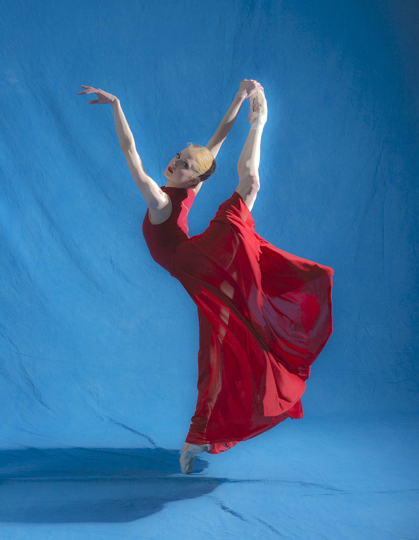
Looking for an antidote to winter’s gloom? First State Ballet Theatre—Delaware’s professional ballet company—has the just the ticket.
On Friday and Saturday, February 7 and 8 in studio 1 of Wilmington’s Baby Grand Theater, FSBT presents its wildly popular “Up Front with FSBT.” “Up Front’s” one-hour performance of the most exciting and beautiful classical and contemporary ballet highlights is followed by a Chelsea Tavern-catered reception with the company’s dancers, staff and board. The program, strictly limited to hundred patrons, has been sold out since its inception several seasons ago.
Showtimes are 7:00 p.m. Tickets—$30 adults, $20 students 18 and under—are on sale now at 1-800-37-GRAND or online at www.ticketsatthegrand.org.
Ballet tickets make great Valentine’s gifts—one size fits all. Don’t be left out.
First State Ballet Theatre Wants to See You “Up Front”
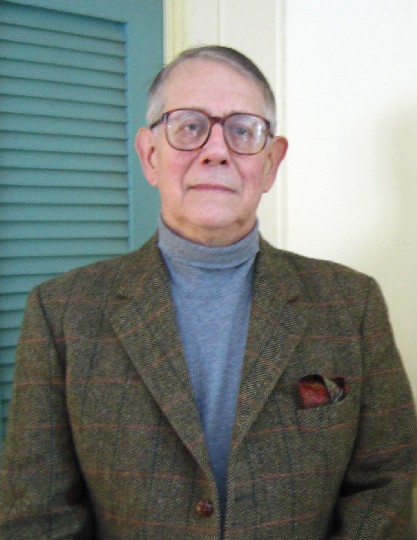
Peter S. Wells Joins First State Ballet Theatre’s Board
First State Ballet Theater is delighted to announce the election of longtime Chadds Ford resident Peter Scoville Wells to the company’s board of directors.
First State Ballet Theatre is Delaware’s professional ballet company and the resident ballet company at Wilmington’s Grand Opera House. The company performs fully staged classical ballets, including major works commissioned from internationally renowned choreographers, in Delaware’s foremost theaters in all three counties from Wilmington to the beach.
FSBT President and Executive Director Robert Grenfell said, “We’re delighted to welcome Peter—who is both a knowledgeable balletomane and an ardent FSBT fan—to our board. His professional experience, his enthusiasm for our beautiful art form and his longtime involvement in the Chadds Ford cultural scene and support for its cherished institutions will be instrumental in assisting us to grow our southern Chester County audience.”
####
First State Ballet Theatre is a 501(c)(3) corporation, founded in 2000, whose mission is to bring the beauty and excitement of professional ballet performances to audiences throughout Delaware, to provide superb ballet training and performance opportunities to aspiring Delaware dancers and to educate the Delaware dance audience of the future.
The company has written an unparalleled chapter of artistic, educational and financial achievement in Delaware dance history and is the state’s busiest, and most ubiquitous major performing arts company. More information at www.firststateballet.com
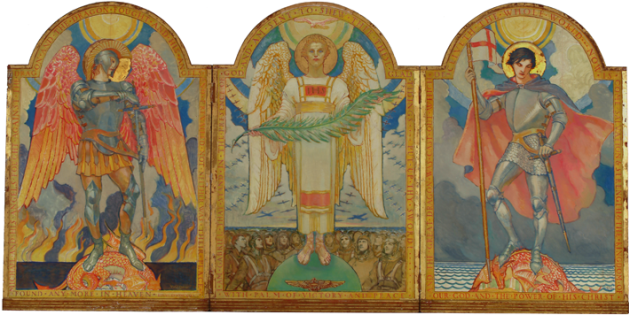
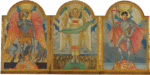
The Delaware Art Museum is pleased to present “Blessed are the Peacemakers”: Violet Oakley’s The Angel of Victory (1941), on view February 8 – May 25, 2014. Oakley’s The Angel of Victory, originally painted for Brooklyn’s Floyd Bennett Airfield and now in the Museum’s permanent collections, was the first of her 25 wartime altarpieces, completed just two weeks after the attack on Pearl Harbor. Thanks to a recent gift from the Pennsylvania Academy of the Fine Arts in Philadelphia of over a dozen preliminary drawings for The Angel of Victory, this exhibition reunites the altarpiece with its preparatory studies for the first time, allowing an exciting exploration of Oakley’s creative process.
“This opportunity to explore the creative process of an artist whose work is represented in both our American paintings and Illustration collection is truly remarkable,” explains Margaretta Frederick, Chief Curator at the Delaware Art Museum. “Despite the short amount of time she was given to complete altarpieces during the war, Oakley made almost a dozen drawings and oil studies for each of them.”
Violet Oakley (1874-1961), one of the first American women to find fame in the field of public mural painting, in addition to success as an illustrator and stained glass designer, devoted her 60-year artistic career to the quest for a just and peaceful world. During World War II, Oakley joined with the Citizens Committee of the Army and Navy to produce portable altarpieces for use on American battleships, military bases, and airfields around the world. The Angel of Victory altarpiece utilizes scenes from the Christian tradition to instill the American war effort with universal implications, depicting it as a fight not against other nations but against the forces of darkness and evil. The artist portrays the American fight as a sure victory, providing the embattled troops with hope, comfort, and confidence.
“Blessed are the Peacemakers”: Violet Oakley’s The Angel of Victory (1941) was curated by Jeffrey Richmond Moll, a PhD Candidate in Art History at the University of Delaware and the Museum’s first Alfred Appel, Jr. Curatorial Fellow. This two-month Fellowship is available for graduate students working towards a museum career.
“As a doctoral student, the Appel Fellowship provided me with an ideal career opportunity,” says Moll. “Through research, gallery layout, and development of educational materials, it challenged me to do the hard work of telling the story of Violet Oakley’s process and her wartime altarpieces through the thoughtful selection and arrangement of objects.”
The Angel of Victory Triptych, 1941
Violet Oakley, (1874-1961)
Oil on wood panel, 48 × 95 1/2 inches
Delaware Art Museum, Gift of Joseph Flom and Martin Horwitz, 1975
About Violet Oakley
Violet Oakley (1874-1961) was born into an artistic family and found her early efforts at drawing heartily encouraged. She studied at the Art Students League in New York and in Paris with noted portraitist of the day, Edmund Aman-Jean. She returned to Philadelphia and and studied at the Pennsylvania Academy of the Fine Arts and with Howard Pyle at the Drexel Institute. Pyle’s recognition of her sense of color and ability in composition caused him to push her toward stained glass design and work in a larger scale than illustration allowed. The artist herself always felt that Pyle had been one of the two main influences on her work, the other being the Pre-Raphaelites.
The first and most important commission of Violet Oakley’s career was to design and execute murals for the Governor’s Reception Room in the Capitol Building in Harrisburg, Pennsylvania in 1902. She created nine murals for the Senate Chamber and the 16 murals for the Supreme Court Room.
Oakley was also sent to Geneva, Switzerland to record the beginning of the League of Nations in 1927. She exhibited the work from this trip in prominent locations along the mid-Atlantic coast, including the Wilmington Society of the Fine Arts. Violet Oakley continued to work until the day of her death, February 25, 1961. In 1948 Drexel Institute awarded her an honorary Doctorate of Laws Degree.
The Delaware Art Museum collections now include 53 works by Violet Oakley representing all facets of her career.
Sponsors and Organizers
“Blessed are the Peacemakers”: Violet Oakley’s The Angel of Victory (1941) was organized by the Delaware Art Museum. This exhibition is made possible by the Hallie Tybout Exhibition Fund. Exhibition research funding was provided by the Alfred Appel, Jr. Curatorial Fellowship.
Additional support is provided by grants from the Delaware Division of the Arts, a state agency dedicated to nurturing and supporting the arts in Delaware, in partnership with the National Endowment for the Arts.
About the Delaware Art Museum
Founded in 1912, the Delaware Art Museum is best known for its large collection of works by Wilmington native Howard Pyle and fellow American illustrators, a major collection of British Pre-Raphaelite art, and urban landscapes by John Sloan and his circle. Visitors can also enjoy the outdoor Copeland Sculpture Garden and a number of special exhibitions throughout the year.
The Delaware Art Museum, located at 2301 Kentmere Parkway, Wilmington, DE 19806, is open Wednesday through Saturday 10:00 a.m. – 4:00 p.m. and Sunday noon – 4:00 p.m. Admission fees are charged as follows: Adults (19-59) $12, Seniors (60+) $10, Students (with valid ID) $6, Youth (7-18) $6, and Children (6 and under) free. Admission fees are waived every Sunday thanks to support from generous individuals. For more information, call 302-571-9590 or 866-232-3714 (toll free), or visit the website at delart.org.
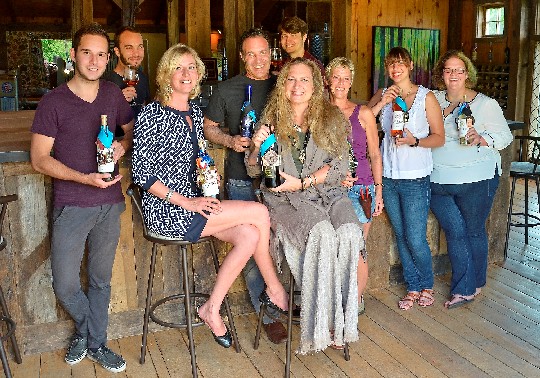
Galer Estate Vineyard and Winery was recently awarded two “Double Gold – Best in Appellation” designations from Appellation America in Napa California. Galer Estate 2010 Cabernet Franc and 2012 Pinot Gris were evaluated by a blinded panel of professional wine evaluators who assess the wines for “the best wines defined by place, and the character of each appellation (wine growing region) defined by its best wines; for this evaluation, the wine growing appellation is considered the entire state of Pennsylvania. This is an extraordinary award for this boutique winery in only it second year of selling wine produced from Chester County grapes in their state of the art winery located just behind Longwood Gardens in Kennett Square, PA.
This recognition marks the start of another great year for Galer Estate. 2013 was also a shining year for Galer, as their Cabernet Franc Dessert Wine won Double Gold and Best in Show in Sonoma, Chardonnay Reserve won another Gold medal, and Pinot Gris, Cabernet Franc, Huntress Red, Huntress White, Vidal Blanc Dessert Wine also were awarded Silver and Bronze awards from major national and international competitions; bringing their award total to over 50 awards in the last two years. In 2013, Galer Estate Winemaker was voted runner-up in the International Women’s Wine Competition in Sonoma California.
“We are so proud of our entire team, especially our winemaker Catrina North,” says Brad Galer, owner. “We are very passionate about producing Pennsylvania wines that reflect our terroir, which is why we only use grapes from our own Chester County vineyards and from other local vineyards that are carefully selected, such as Historic Hopewell Vineyard that grew our Pinot Gris grapes.”
The Appellation America wine evaluators wrote the following tasting notes about our wines:
Galer Estate Cabernet Franc 2010
A superb example of the potential for Cab Franc in this appellation. Medium-dark ruby color. Plum, rosemary and clove aromas and soft, well-formed graceful tannins. Yummy.
Galer Estate Pinot Gris 2012
Very pale appearance hints at its delicacy, but its intense femininity is a surprise. Lilac, flower shop, and white peach aromas, very fresh and elegant. Crisp but oily with very low tannin — glides across the palate with focused florality. Bright acidity, light in alcohol, but with captivating and lingering aftertaste.