Students throughout the
Unionville-Chadds Ford School District took part in a day of service on Jan. 16
to honor the legacy of Dr. Martin Luther King on the anniversary of his birth.
In a written message to the
school community, Superintendent John Sanville said, “Dr. King once said that
‘Life’s most persistent and urgent question is: What are you doing for others?’
It is a question we all need to ask ourselves every now and then — and we must
answer honestly.”
He also said that while it was
a day off for many, it was “a day on” for the district.
“UCFSD and the entire community
routinely put service above self,” said Sanville. “There are countless examples
of our children, parents, and the greater community demonstrating care and
concern for the world around them.”
Hillendale Elementary School
was turned into a mini soup kitchen as students prepared 300 bag lunches for
Safe Harbor of West Chester and 100 quarts of soup for Catholic Social
Services’ Meals on Wheels of West Grove and Avondale. They also made place mats
and Valentine’s Day cards.
Students at Pocopson Elementary
School made lap blankets to be donated to Alfred I. duPont Hospital for
Children and Philadelphia Children’s Hospital.
Third grade student Sharon
Garvey, designing quilt covers for the blankets, said it was a day to recognize
the significance of Dr. Martin Luther King.
“He had a dream that it didn’t
matter if a person is black or white,” she said.
The school district has been
holding the day of service for each of the last five years as part of its
observance of King’s birthday.
Sanville said later that participation was excellent
throughout the district.
Rich Schwartzman has been reporting on events in the greater Chadds Ford area since September 2001 when he became the founding editor of The Chadds Ford Post. In April 2009 he became managing editor of ChaddsFordLive. He is also an award-winning photographer.
It’s back to being a private
citizen for Garry Paul. Paul spent eight years as a Chadds Ford Township
supervisor, eight years longer than he even wanted. He declined to run for
re-election last year and was replaced on the board by Keith Klaver.
While a member of the Sewer
Authority, Paul was pressed into service when former Supervisor Jim Shipley
stepped down in 2003 with two years remaining in his term. Paul said he really
didn’t want the job, but neither did anyone else who the Republican Executive
Committee deemed qualified.
Two years later, when that term
was expiring, he told the party to find someone else to run for a full six-year
term. When no one wanted the job, Paul ran and won.
He said in a recent interview
that even then he knew it would be one and done.
“I was the only one willing to do it. Nobody else was showing
up and I asked [the party] to get somebody else…Everybody has to do what’s
right for them, but I’ve believed all along that, on all levels of government,
it should be one term and out,” Paul said.
He said it’s important to get
new blood and new ideas into the political mix.
There were some trying times
for him and the township during the eight years. Paul said probably the most
trying was the controversial negotiation with Toll Bros. for its development at
the old Girl Scout camp that led to the township getting a new sewer plant that
would take care of the village.
Many people opposed the plan
because it would add more than 100 homes to the area and, they believed, would
put a burden on infrastructure and lead to higher school taxes. Some also felt
that a new sewer plant would itself lead to further development.
Part of the problem, Paul said,
was that many people reacted while knowing only part of what’s going on, but as
supervisor, the job is to make decisions for the betterment of the community.
“It’s a small number of people,
but they don’t understand the whole aspect, they understand just one aspect of
what’s going on and they don’t like that. But, had they had the whole picture
they would understand why, even though they were right in that one little
picture, this was the right call,” he said.
“There were a lot of issues
that came into play. The overriding issue was our responsibility for the
health, safety and welfare of the community and [the state Department of
Environmental Protection] had dictated that we needed to do something for the
village.”
He said there couldn’t have
been a small plant just for the village. The township needed a larger one to
take care of more residences and businesses.
“We had to do what we did and
it was better than having Toll Bros. build their own separate little plant,” he
said, because that plant would still have been the township’s responsibility.
“I would say it was the single
thing that did the most net for the community,” said Paul.
In addition to what Paul called
a well-done and unobtrusive development, the project got for the township the
sewer plant, almost 60 acres of open space (still to be dedicated) and funds to
help get the township out of a financial hole.
“It was the single biggest help
to creating financial stability for the township,” the Philadelphia native
said.
One regret, he said, also
involved the sewer system, that being the second phase of the Ridings project
that led to tapping fees of $15,000. He said he wishes that had not happened
the way it did.
After eight years of dealing
with controversy, Paul said he’s learned that people are basically good.
“If you sit down and talk with
people…you find out that people all around, no matter what side of the fence they’re on, no
matter how they feel about a certain argument, if you can get down and just
talk with them, are just good people. There are exceptions, but they’re rare.”
Difficulties can arise when
people harp on a single issue, but even that can be overcome if you can open
their eyes to other things.
As for himself, Paul said he’s
learned patience over the years and that you can’t treat government like a
business because it’s not one. A business owner can act in certain ways that a
supervisor can’t.
In looking back at his eight
years and two months as supervisor, Paul said he’s proud that he was part of a
group that has brought the township to a point where it’s in good financial
shape, where there is “zero debt and a township building and sewer plant that
are bought and paid for.”
Rich Schwartzman has been reporting on events in the greater Chadds Ford area since September 2001 when he became the founding editor of The Chadds Ford Post. In April 2009 he became managing editor of ChaddsFordLive. He is also an award-winning photographer.
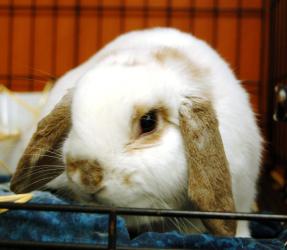
Samuel is an adult male rabbit that was found wandering
outside in December. His finder
knew that this domestic rabbit should not be out in the elements, so Samuel was
brought here in the hopes of finding a new, indoor home. Samuel is a very docile and handle-able
rabbit who would make a great pet for a new family with or without previous
rabbit experience. If you are able to provide Samuel or any of our other
animals here at the shelter a home, visit the Chester County SPCA at 1212
Phoenixville Pike in West Goshen or call 610-692-6113. Samuel’s registration number is
96806490. To meet some of our
other adoptable animals, visit the shelter or log onto www.ccspca.org.
• State police from Troop K, Media barracks, will be conducting a sobriety checkpoint in Delaware County between Jan. 20 And 22.
• Floyd Leslie Wynn, 41, of Rio
Ranch, N.M, was jailed on felony stalking and misdemeanor harassment charges
following an incident at the Staybridge Suites in Concord Township on Jan. 11.
A police report said Wynn followed a 41-year-old woman from New Mexico and left
“numerous” voicemails and Facebook posts to the victim over a four-day period.
The victim had to change her phone number twice during those same four days,
the report said. Wynn was detained at the Wawa in Downingtown and was housed at
Delaware County Prison pending an arraignment before Judge Richard Cappelli.
• State police have accused
Jeffrey Christopher Gundersen, 25, reportedly from Chadds Ford, with simple
assault, harassment, and possession of marijuana and drug paraphernalia. No
details of what led to the arrest were included in the report other than it
happened at 9:15 p.m. on Jan. 15 at a home on Rain Tree Road in Pennsbury
Township.
• Police said Sara Reese, of
Kennett Square, was arrested for DUI following a traffic stop at routes 1 and
202. A police report said the vehicle as stopped at 3:44 a.m. on Jan. 14 for
violations of the state vehicle code. Reese, the report said, displayed signs
of DUI and was arrested.
• Police said Justin Poletti,
31, of Media, was driving too fast for conditions shortly before 1 a.m., on
Jan. 17, on Smithbridge Road near Ridge Road in Chadds Ford. He swerved off the
road and struck a tree, the police report said. Poletti was uninjured, police
said.
• Birmingham Township Police Chief Thomas Nelling said his department
responded to 1,565 incidents in the month of December resulting in four
criminal arrests. There are two incidents that remain
Birmingham Township supervisors
voted 3-0 Jan. 16 to help fund a project involving the Birmingham Friends
Meeting.
The Friends want visitors to a
small Friends’ Orthodox cemetery adjacent to Birmingham Hill Park — diagonally across
Birmingham Road from the Meeting — to be able to use the park’s parking area
and that there be a gravel walkway and a gate between the two properties. The
Friends wanted the township to donate to the project.
Recreation, Park and Open Space
Committee Chairman Michael Langer said the cost of the project was estimated to
be about $4,000. RPOS, at a previous meeting agreed to support the endeavor,
offering $1,000.
RPOS also agreed to provide the
grading and gravel to the gate area and to plant shrubs, Langer said. The cost
to the township would be about $1,075, including the cost of the shrubs. The
Friends would pick up the rest of the cost.
Supervisor Bill Kirkpatrick
said he was on board with the idea so long as it was supporting the access to
the historic area, not the meeting itself.
Supervisors’ Chairman John
Conklin said township solicitor Kristin Camp agreed that the donation would not
violate any church and state separation because of the historic nature of the
small cemetery. He added that it doesn’t seem to support religion in anyway.
This would not be the first
time the township has agreed to help the Birmingham Friends with an improvement
project. It most recently contributed money for the repair of the cemetery wall
at the Meeting itself.
Other business
• At the recommendation of
township Police Chief Tom Nelling, supervisors promoted Officer Michael
O’Donnell to the rank of corporal with a pay rate of $21.50.
• Kirkpatrick said the township
needed to replace a pump at the wastewater treatment plant. The price tag is
$1,200.
Rich Schwartzman has been reporting on events in the greater Chadds Ford area since September 2001 when he became the founding editor of The Chadds Ford Post. In April 2009 he became managing editor of ChaddsFordLive. He is also an award-winning photographer.
Recent interviews with new
Chadds Ford Supervisor Keith Klaver and the man he replaced on the board, Garry
Paul bring to mind the concept of term limits.
Garry Paul, while serving a
total of eight years on the Board of Supervisors, was pretty much a
one-and-done supervisor. He chose not to seek re-election after serving one
full six-year term on his own. The other two years were from the unexpired term
of former Supervisor Jim Shipley who left the board early.
Keith Klaver, who just assumed
the position is on record as saying he will only serve one term.
Compared to other supervisors
in the area, this is a good sign. Too many continually run for office as if
they were congressmen and senators.
Both Messrs. Paul and Klaver
believe in the one and done theory for holding political office. As Mr. Paul
put it, new people with them bring fresh ideas.
We agree, though this is only
one form of term limit, one that’s self-imposed.
Another form of limiting terms
is through legislation and amendment. This is what allows the president to
serve only two terms. The same holds for most governors and mayors. Some people
like that idea and want to extend it across the board for all public elected
offices.
Perhaps, though, there is a
better way of limiting terms and one without relying on the good will of those
who seek public office or forcing limits via legislation.
If even half the people who
complain about politicians serving too long would actually honor their own vow
to “throw the bums out” and not continually re-elect the same person. This
would do the trick, too, but there is a flaw to the concept.
Some people, too many actually,
are intellectually lazy and will vote for the same person out of reflex or
habit. Despite the big talk from and about the tea party types in 2010, more
incumbents won re-election than were turned out of office. Any time you hear
the phrase “If only people would…” rest assured, they won’t.
One of the flaws with
legislated term limits is a situation where a representative is actually doing
the proper job, serving his or her constituency with dignity and respect and
while honoring the oath of office to preserve, protect and defend the
Constitution. A person such as this is deserving of being re-elected but the
public would be prohibited from voting for him because of mandated term limits.
There is another type of term
limitation program, one that should be in force but likely never will be.
Eliminate all pensions for elected office. Give representatives and senators a
fair salary for their service, but they get no pension. Don’t let them feed at
the public trough forever the way they do now. And maybe let’s make Congress
more like township boards of supervisors—turn the job back into a part time
gig.
A pipe dream? Of course it is.
So maybe it’s a good thing there are people who are willing to serve just one
term and be done with it, even if only on the township level.
• Read-Aloud Tours at the
Brandywine River Museum run Feb. 2 through March 8, 10:30 to 11:30 a.m. There
will be story time in the gallery followed by an art-making activity for
children ages 3 to 6 accompanied by an adult. Registration is requested by contacting
the education office at 610-388-8382 or education@brandywine.org.
The programs are included with regular museum admission and free for members.
•Penn State Extension Master
Gardeners of Chester County announce the creation of the first Junior Master Gardener
Program in Pennsylvania. This exciting new youth program for third-, fourth-,
and fifth-graders seeks to ignite a passion for learning, success, and service
through a unique gardening education. The hands-on program will engage
kids from the start with fun classes such as “Mud Pies,” “Out of the Sprout,”
and “Exploding Cactus.” Over time, the children will improve their gardening
skills, participate in service projects, and earn Junior Master Gardener
certificates.
A free, no-obligation information session will be held at Springton Manor Farm,
860 Glenmore Rd., Glenmore, PA on Saturday Feb. 4 from 2–3 p.m., in Carriage
House 3.
The first class series is set to begin on March 14 and end on May 30. For more
information, email nds13@psu.edu.
• The Kennett Symphony of Chester County will hold its
annual Junior Instrumental Competition on Saturday, Feb. 11, at 9 a.m. in the
auditorium of Kendal at Longwood, Kennett Square. The competition, chaired by
Deborah Rodgers, is for gifted musicians in grades four through eight who play
piano or a band or orchestral instrument.
Competitors will perform one intermediate (or higher) composition lasting no
longer than five minutes. Prizes will be awarded in two divisions; fourth
-sixth grades and seventh-eighth grades, with prizes in each category of $100,
$50, and $25.
E-mail debarodgers@hotmail.com
for an application form. Application deadline is Jan. 29. Details about the
instrumental competition and an online application are available via www.kennettsymphony.org/competitions.
This is the time of year
when the vegetable seed catalogs pour in and the gardener gets to dream of the
bounty to come. The only hard part
is deciding what to choose.
You can select
vegetables and herbs for the home garden by responding with almost Pavlovian
enthusiasm to the extravagant photographs of comely cucumbers, luscious
lettuces, and tantalizing tomatoes. Or you can do it more scientifically by
evaluating each crop’s requirement for spacing, light, water, fertility, and
maintenance. Perhaps a judicious blending of the two approaches is best.
Fortunately, the
different varieties of vegetables available today enable gardeners to grow more
types of crops in more types of spaces and situations. Gone are the days of
needing large plots to grow cucumbers to pickle or long growing seasons to grow
tasty tomatoes. Breeders are bringing more varieties to the home garden than
ever before. Whether a gardener’s limitations are dictated by a lack of space,
disease resistance, or the length of growing season, finding the right plant
for the right place has never been so easy.
The first thing to
consider is what your family will eat.
If you don’t think about this, you may find yourself anonymously leaving
zucchinis (or rutabagas, or whatever) on every doorstep in your neighborhood.
Another consideration is
timing. If you plant a crop that
must be harvested during a short period of time, you should either plant a
small amount or be prepared to preserve (freeze, dry, or can) the produce. You might also look at a calendar to
avoid having all of your tomatoes ripen, say, while you’re on vacation in South
Carolina.
You may also want to
save yourself some grief by looking for varieties that are resistant to common
diseases. This does not mean the
plants are bulletproof, but it will provide some insurance that you won’t be
totally wiped out.
A great resource is the “Pennsylvania
Vegetable Variety Recommendations” publication offered by Penn State and
available at http://pubs.cas.psu.edu/freepubs/pdfs/uj250.pdf. This publication not only lists
specific vegetable varieties that have performed well in scientific trails in
Pennsylvania, but also shows disease resistance and days to harvest, and
comments on each variety’s attributes.
A handy index keyed to the list displays catalog and online sources
where you can purchase the recommended varieties.
Another excellent tool
is the Vegetable Varieties for Gardeners database created by Cornell
University: http://vegvariety.cce.cornell.edu/main/login.php.
This web-based tool allows individual gardeners to rate specific varieties and
provide comments on taste, yield, ease of growing, and other characteristics.
By looking at the combined ratings, you can get an idea of which varieties
perform best for the average home gardener.
If herbs are of
interest, a good place to start is “Growing Herbs in the Home Garden” from West
Virginia University Extension: http://www.wvu.edu/~agexten/hortcult/herbs/ne208hrb.htm#Growing. This site provides a good overview on
all kinds of herbs, their use, and growing requirements.
So pull a comfy chair up
to the fireplace, get a cup of steaming tea, and kick back, catalogs in hand,
and get to work! This is the time
of year to dream…
* Nancy Sakaduski is the Chester
County Master Gardener Coordinator. Master Gardeners are trained
volunteers who educate the public on gardening and horticultural issues.
In Chester County, they operate through the Penn State Cooperative Extension
office in West Chester. Nancy lives in Pennsbury Township. She can
be reached at nds13@psu.edu.
Penn State Master Gardeners educate the public on best practices in
consumer horticulture and environmental stewardship. Visit the Chester County
Master Gardeners on Facebook: https://www.facebook.com/#!/ChesterCountyMasterGardeners
If you are interested in donating fresh produce from your garden, contact the
Chester County Food Bank: http://chestercountyfoodbank.org.
Bracketing
the deeper issues of our day, I give you a review of a book on the brain. If
you’re getting old (we’re all getting older, if not old), “Brain Power: Improve Your Mind as You Age” by Michael Gelb and
Kelly Howell is of special interest.
It
appears to be a well-researched read and gives credit to where credit is due:
so instead of working through various journals, research articles, and the
internet, this winter, sit by the fire with a glass of resveratrol (red wine)
and enjoy the fruits of Gelb’s and Howell’s integrative labors.
While
I am not a positive psychology adherent who eschews encounters with the dark
emotions of sadness, depression, grief, I do see the value in attending to
healthy antidotes to such feelings once the feelings themselves are honored and
accepted as part of life. As a psychologist, I perceive that we must own all
our feelings as authentic human experiences not to be dismissed or avoided.
Sometimes
pop culture, self-help books seem to demean or diminish the shadow side of life
that is so difficult to face. I facilitate a grief group for survivors of
accident and murder. The last thing these mourners want from society is to be
told, “get over it,” “what’s taking you so long?” They also don’t want their
feelings to be dismissed with a flick of the wrist to the wonders of optimism.
Optimism
is overrated. It is shallow and superficial when not understood as the other
side of the coin of the reality of suffering.
With
the caveat of “take optimism with a grain of salt,” I do recommend “Brain Power” and its optimistic
findings. There is hope for the aging brain, the authors note, because mental
abilities can improve throughout life. Neuroplasticity is the game changer. And
to boot, although some brain cells die with age, new cells can be generated.
Gelb
and Howell note that what helps keep the brain healthy is GFH: Gratitude,
Forgiveness, and Humor. To find something each day to be grateful for; to
forgive and let go of bitterness (The authors note that Oscar Wilde “quipped
that you should always forgive your enemies because that annoys them more.”);
to meet the day with humor (I recall another quote of Oscar Wilde: “Life is too
important to take seriously.”)
Beyond
GFH, Gelb and Howell recommend new learning (novelty of experience); the usual
(exercise and healthy eating); and the beautiful (nature and a stimulus-rich
environment).
So
perhaps this book can help us cope with all those daily news events without
denial after all.
* Kayta Curzie Gajdos
holds a doctorate in counseling psychology and is in private practice in Chadds
Ford, Pennsylvania. She welcomes comments at MindMatters@DrGajdos.com
or (610)388-2888.
Past columns are posted to http://www.drgajdos.com.
Dr. Kathleen Curzie Gajdos ("Kayta") is a licensed psychologist (Pennsylvania and Delaware) who has worked with individuals, couples, and families with a spectrum of problems. She has experience and training in the fields of alcohol and drug addictions, hypnosis, family therapy, Jungian theory, Gestalt therapy, EMDR, and bereavement. Dr. Gajdos developed a private practice in the Pittsburgh area, and was affiliated with the Family Therapy Institute of Western Psychiatric Institute and Clinic, having written numerous articles for the Family Therapy Newsletter there. She has published in the American Psychological Association Bulletin, the Family Psychologist, and in the Swedenborgian publications, Chrysalis and The Messenger. Dr. Gajdos has taught at the college level, most recently for West Chester University and Wilmington College, and has served as field faculty for Vermont College of Norwich University the Union Institute's Center for Distance Learning, Cincinnati, Ohio. She has also served as consulting psychologist to the Irene Stacy Community MH/MR Center in Western Pennsylvania where she supervised psychologists in training. Currently active in disaster relief, Dr. Gajdos serves with the American Red Cross and participated in Hurricane Katrina relief efforts as a member of teams from the Department of Health and Human Services' Substance Abuse and Mental Health Services Administration.Now living in Chadds Ford, in the Brandywine Valley of eastern Pennsylvania, Dr. Gajdos combines her private practice working with individuals, couples and families, with leading workshops on such topics as grief and healing, the impact of multigenerational grief and trauma shame, the shadow and self, Women Who Run with the Wolves, motherless daughters, and mediation and relaxation. Each year at Temenos Retreat Center in West Chester, PA she leads a griefs of birthing ritual for those who have suffered losses of procreation (abortions, miscarriages, infertility, etc.); she also holds yearly A Day of Re-Collection at Temenos.Dr. Gajdos holds Master's degrees in both philosophy and clinical psychology and received her Ph.D. in counseling at the University of Pittsburgh. Among her professional affiliations, she includes having been a founding member and board member of the C.G. Jung Educational Center of Pittsburgh, as well as being listed in Who's Who of American Women. Currently, she is a member of the American Psychological Association, The Pennsylvania Psychological Association, the Delaware Psychological Association, the American Family Therapy Academy, The Association for Death Education and Counseling, and the Delaware County Mental Health and Mental Retardation Board. Woven into her professional career are Dr. Gajdos' pursuits of dancing, singing, and writing poetry.