August 18, 2010

No more townships or cities if proposed bill passes

Birmingham Township supervisors, Monday, voted to oppose a state House bill that would eliminate townships as geopolitical entities. The board voted 3-0 to oppose HB 2431.

The bill, sponsored by state Rep. Thomas Caltagirone, a D-127, of Reading, calls for amending the Pennsylvania Constitution to make counties the baseline government for municipalities. If passed, the bill would make the counties responsible for local land use, personnel, law enforcement, sanitation and other areas that are now part of a municipality’s responsibilities.

“It would eliminate all local governmental units, boroughs, townships and cities,” Caltagirone said.

Birmingham Township Supervisor Bill Kirkpatrick called the idea a “transparent power grab. [It’s] more politics than good policy.”

He said Pennsylvania ranks number one or two in the number of legislators.

“[Pennsylvania] excel[s] at spending more money and having people do less. …There’s no gain for residents of this township.”

The resolution that passed Monday night says townships are “excellent fiscal stewards that have been doing more with less ever since the days of William Penn.”

It says that areas relying on consolidated county-based governments have higher tax burdens and that “no one has ever proven that bigger, centralized government is better or even more cost-effective than township government.”

The resolution is a follow-up to recommendations made by the Pennsylvania State Association of Township Supervisors.

Caltagirone said there are more than 2,500 municipal governments in the state and that makes things cumbersome for businesses.

“It’s the third highest in the country. Many of the businesses…they don’t like going through all the hoops of all the local municipalities, and that is a problem. That may be one of our detractors as far as attracting additional industries and businesses to Pennsylvania,” Caltagirone said. “

He said several reports, including one from the Brookings Institute, indicate that having many municipal governments is a disincentive for businesses to either expand or come into Pennsylvania.

Caltagirone also sees a cost savings, at least for some municipalities. He said there are places with their own police forces, but they are still paying for state police protection even though the state police don’t patrol their streets.

There would likely be an increase in property taxes paid to the county, he said, but added that would be offset by the fact there would no longer bed a need for townships and boroughs to pay for engineers and lawyers.

For any of this to go into effect, Caltagirone said, the bill would have to pass both houses of the General Assembly in two separate sessions, and then be voted on by the citizenry. It would have to pass by 51 percent of the voters before the constitution could be amended.

He said he knows it won’t go anywhere this legislative session, but said he would reintroduce the bill during the next session.

State Rep; Stephen Barrar, R-160, of Boothwyn, said the idea just trades one form of government for another.

“I think the county form of government we would get as a result of this bill would be very impersonal and I don’t think the cost savings would be anywhere near as great,” he said.

About Rich Schwartzman

Rich Schwartzman has been reporting on events in the greater Chadds Ford area since September 2001 when he became the founding editor of The Chadds Ford Post. In April 2009 he became managing editor of ChaddsFordLive. He is also an award-winning photographer.

No more townships or cities if proposed bill passes Read More »

Close, but no cigar for wine toast attempt

Close, but no cigar for wine toast attempt

It was a great try, but The Great Pennsylvania Wine Toast
apparently fell short of its intended goal.

The Pennsylvania Wine Association and 60-70 of the state’s
114 licensed wineries attempted to set a new Guinness World Record for the
largest simultaneous wine toast Saturday, Aug. 14. The current record is 17,540
set in the United Kingdom in May of 2008.

Locally, 460 people showed up at the Chaddsford Winery while
a reported 6,720 attended a wine festival at Seven Springs Mountain Resort in
the western part of the state to take part.

Race car legend Mario Andretti led the toast from the
festival and state Rep. Stephen Barrar, R-160, of Boothwyn, hoisted his glass
at the Chaddsford Winery, owned by Eric and Lee Miller.

Lee Miller said the idea was just an attempt to generate
interest and publicity for the state wineries. She is part of the publicity
group for the association.

“We’re always looking at ‘How do we let people know about
Pennsylvania wines?’ You can go out and you can start campaigns that just say
that Pennsylvania wines are great, and nobody believes you. [So] we decided the
way to get people familiar with Pennsylvania wines is just to get them out to
wineries.”

The attempt to set the Guinness record seemed like a good
way to get people out to try the local offerings, she said.

Miller said last week that she was hoping 70 or 80 of the
state’s wineries would take part with each one drawing about 200 people. The
actual attendance fell short, however. She was also anticipating an attendance
of 10,000 at the wine festival.

The toast offered by Andretti was fed via video to the
participating wineries across Pennsylvania. That toast was preceded here by one
read by Barrar that was submitted by a resident from Sewickley.

Barrar, the chairman of the state House committee on
tourism, said the Millers invited him out to be one of the official counters
for the event and to give the local toast.

“There are good ways of promoting Pennsylvania and what a
great state we are,” Barrar said.

The wine industry generates $2.3 billion into the state
economy, is the seventh largest wine producing state and is the fourth largest
wine grape producer in the country, Barrar said, adding that almost 900,000
people visit Pennsylvania wineries each year.

So far there’s been no official word on how many people took
part in Saturday’s toast, but the Pottstown Mercury is reporting the attempt to
break the record failed.

About Rich Schwartzman

Rich Schwartzman has been reporting on events in the greater Chadds Ford area since September 2001 when he became the founding editor of The Chadds Ford Post. In April 2009 he became managing editor of ChaddsFordLive. He is also an award-winning photographer.

Close, but no cigar for wine toast attempt Read More »

Adopt-a-Pet

Adopt-a-Pet

Bungie is 7-year-old neutered male akita mix that is
available for adoption through the Chester County SPCA. He
was brought to the shelter on July 16, because his previous owners were
expecting a baby and couldn’t handle having a dog and a baby. Bungie did spend
some time living outside before coming to the shelter. He will need an owner
who is familiar with housebreaking and training. He is a laid back, clam boy
with good manners.Bungie is now looking for a responsible
care giver who will give him the love and attention he deserves. If you are
able to provide that home, visit the Chester County SPCA at 1212 Phoenixville
Pike in West Goshen or call 610-692-6113. Bungie’s registration number is 96800294.
To look at some of the other animals available for adoption, visit the shelter
or log onto www.ccspca.org

About CFLive Staff

See Contributors Page https://chaddsfordlive.com/writers/

Adopt-a-Pet Read More »

School board remembers teachers and former student

The last Unionville-Chadds Ford School Board meeting before
the start of the 2010-1011 school year was held Aug. 16 at Hillendale Elementary
School. The meeting began with a
remembrance of three members of the school community. Two teachers Kenneth Kane and Jeffery Wheet died in recent
weeks. Unionville graduate of 2009
Oscar G Regalado died last week in an automobile accident.

During the public comments, former school board member Karen
Halsted asked for the total legal expenses of the district since Jan. 10 to
present. The board responded that
the information would be forth coming.
Dan Gower announced a scholarship fund to be created in memory of Oscar
Regalado to be awarded to Unionville student planning to study art. People interested in contributing are
to contact any board member.

During the general board comments, Jeffery Leiser
acknowledged some friction within community about other issues but expressed
hope that these losses would offer some perspective on differences and cohesion
about what we are here for “teaching the kids.” Many members of the audience were wearing blue UCFEA
shirts. Keith Knauss stated that
he was not going to pursue his “right to know” suit against the district after
the last ruling in favor of the district.

Scott Seidenberger introduced himself as the new student
representative on the school board.

The board approved a general obligation bond for $7,780,000
for the purpose of refinancing the 2006 bond. The existing bond carries an
interest rate of 4 percent and the new bond will have interest at 1.59
percent. The refinancing will save
$478,000 in the current fiscal year.
The district has a. AA1 rating which enables it to borrow money at a
lower interest than districts with a lower credit rating.

Brandywine CAT is scheduling groundbreaking for its new
building on Sept. 5. A walk through of the high school renovations is scheduled
for Aug. 27 from 4-7 p.m. and is open to the public.

About Emily Myers

Emily Myers has lived and worked in Chadds Ford for over thirty five years.  She founded the parent company of Chadds Ford Live, Decision Design Research, Inc., in 1982.  ChaddsFordLive.com represents the confluence of Myers' long time, deep involvement in technology and community. Myers was a founding member of the Chadds Ford Business Association and currently serves on its board of directors.  Her hobbies include bridge, golf, photography and Tai Chi. She lives with her husband, Jim Lebedda, in Chadds Ford Township.

School board remembers teachers and former student Read More »

Ending the township

Our initial reaction to HB 2431 was, “Say what?”

As reported in this week’s update of ChaddsFordLive.com, the
bill is an attempt to amend the Pennsylvania Constitution to eliminate all
levels of government below the county level. No more townships, boroughs or
even cities as geopolitical entities, according to the bill’s initial sponsor,
state Rep. Thomas Caltagirone, D-Berks County.

Should the bill pass and the constitution ultimately be
amended, the counties would take over all governance on the local level.
Counties already have a say in what the townships do. County planners review
plans that are under consideration by township planning commissions. The new
idea, however, goes beyond that. Counties would make decisions on local zoning
laws, on land use and police protection. Township supervisors would become
history.

There are many people who would truly love to see supervisors
go away, and others—some business people in particular—would like to see an end
to what they view as another level of bureaucracy. As one local business owner
said, “The fewer levels of government, the better.”

We get that. We also understand how confusing the township
model can be. Ask people in this general area where they live and they’ll
usually say they live in Chadds Ford. But press them further and one learns
they might actually live in one of six possible townships—in both Chester and
Delaware counties— all because they have a Chadds Ford mailing address.
Furthermore, there are places in Chadds Ford and Concord townships that have
Glen Mills addresses and there are homes in Chadds Ford Township that have a
West Chester mailing address.

Putting an end to townships would do away with that
confusion, but it would also do away with local control, local governance.

Should Media, Delaware County’s county seat, be making
zoning decisions for a bedroom township such as Chadds Ford and for a place
like Darby that could almost be considered a Philadelphia neighborhood?

When there’s a problem with a township street, people can
now simply phone or knock on the door of a neighbor who happens to be a
roadmaster or supervisor and get the situation resolved relatively quickly.
That won’t be the case if HB 2431 eventually passes and the constitution
changed.

Eliminating townships and boroughs still won’t streamline
government. The county governments will just grow and become as cumbersome and
as costly as Harrisburg. Township property taxes will go away, but county
property taxes will increase. Even the bill’s sponsor admits that.

Yet, all of this is moot at this time. It would take years
for this to happen. HB 2431 is still in committee and will stay there through
the current legislative session. Even if reintroduced next year (as Rep.
Caltagirone said he would) and, in the unlikely chance that it passes both
houses of the General Assembly, it would have to pass in two separate sessions
of the assembly and then be approved by at least 51 percent of the voters in an
election.

Perhaps our opinion will change in the light of new
information should there be a decent public debate over the issue, but our view
now is that this is, at best, a poorly conceived idea that should wind up in a
legislative trashcan.

Local governance is no guarantee of liberty, but a larger
and more distant source of government is even less so.

About CFLive Staff

See Contributors Page https://chaddsfordlive.com/writers/

Ending the township Read More »

Police log for Aug. 19

• One man was killed and two others injured in a one-car
crash on Chandler Road in Pennsbury Township. The accident happened at 2:29
a.m. on Aug. 13. State police reported that the car was northbound on Chandler,
near Conestoga Court, when the driver failed to negotiate a turn and struck a
tree. All three occupants, 19 years of age, were taken to Crozer Medical
Center. Oscar G. Regalado, of Kennett Square, a passenger in the back seat was
airlifted, but later died at Crozer. Police said excessive speed was the likely
cause. Alcohol impairment is not suspected, the report said.

• State police reported that an Asian male, 50-55 years,
passed a counterfeit $20 bill at the Goodwill store on Route 202. The man is a
frequent customer of the store, according to the report, and the cashiers said
he did not appear to be acting in any way out of the ordinary.

• Two men, aged 20 and 21, received injuries of unknown
severity in a one car accident on Cossart Road in Pennsbury Township. A police
report said the driver “under compensated” a left hand curve, left the road and
struck a tree head on. Neither the driver nor the passenger sere hospitalized,
police said. The accident happened 11:50 p.m., Aug. 17.

• A home on Hillendale Road in Pennsbury Township was
burglarized in broad daylight Aug. 17. A police report said someone entered the
home about 2:45 p.m., removed multiple items, then fled. No other information
was available.

About CFLive Staff

See Contributors Page https://chaddsfordlive.com/writers/

Police log for Aug. 19 Read More »

Mind Matter: Reflections on psychology

“What
do psychologists do”? Some people may wonder. Even I, as a psychologist, don’t
know all the possibilities and definitions that my own profession may include.

I’m
writing this article from California where I have just attended the 118th
annual convention of the American Psychological Association.

The
program agenda was listed in a catalog the size of a small city’s telephone
directory. It amazed me as to the breadth and depth of presentations, from neuroscientific
research on mirror neurons to climate change and its social justice
implications; child development to issues of aging; disaster response to post
traumatic stress disorder; peace psychology to military psychology.

I
believe the last time I attended an APA annual convention I had just completed
a master’s in clinical psychology and had begun my doctoral work; I even
presented a paper, the title of which I cannot recall. That was 1970-something.

This
time, although not a presenter, I was delighted to find presentations on topics
dismissed or unheard of in the 1970s. Hardly a soul discussed how mindfulness
and meditation might help emotional regulation and reduce anxiety. Hardly a
soul then discussed intergenerational trauma and its subtle (and not so subtle)
cascade of emotional and physical stressors coursing down the family tree. Few
then discussed sexual abuse—in families or otherwise. In the 70s, post Kinsey (who made no
judgment regarding incest in his vast study of sexuality but who did document
the existence of incest in families), the women’s movement opened the door for
women to have a voice regarding sexual and physical abuse. Rape crisis centers
were still practically unheard of.

What
may have been intuited by some of us 40 years ago is now being validated by
neuroscience. This is heavenly to me to know that my 40 years of educated hunch
is now “evidence-based.” Yes, John Bowlby, a British psychiatrist, documented
separation and attachment disorders in infants and children after WWII. T.
Berry Brazelton, MD, has likewise dedicated his career to infancy and
attachment bonding. However now in the age of neuroscience we find that for the
developing brains of infants and children, interaction with the environment is
crucial—that particularly translates into the caregiver (mother, father,
whoever) relationship with the child as of utmost importance.

The
mirror neurons of the caregiver interact with the mirror neurons of the child,
creating lasting bonds. (Actually, whenever we interact with one another our
mirror neurons are dancing together.) What also helps create bonds is the
chemical oxytocin, the “birthing chemical.” Now studies show that oxycontin
(pitocin) which increases in the mother during labor and delivery and during
nursing, is actually a biochemical that can promote empathy and attachment.
Studies are addressing how else oxytocin might be used to alleviate pain or
augment caring relationships.

Dr.
Seth Pollak’s research gives credence to the family therapist’s long abiding
belief that children are emotional barometers of their parents.

In
his study, children who have been abused or neglected in their families
appeared to be able to “read” anger in another’s face more rapidly than normal
children and that they also had a harder time calming down after simply
“overhearing” a simulated argument between supposed researchers (who were in
fact actors).

Another
program (which, unfortunately, I was unable to attend) highlighted the
prevalence of PTSD (post traumatic stress disorder) and TBI (traumatic brain
injury) as the long lingering effects of the protracted wars in Iraq and
Afghanistan.

My
hunch is that in terms of intergenerational trauma and the effects on children
and families, PTSD and TBI will be having an immense ripple effect on
developing brains and adult behaviors (the rise of suicides, substance abuse,
domestic violence).

Ironically,
leaving the conference in San Diego, I took a detour by train to Monterey to
visit my son. I couldn’t help but observe a very anxious woman with her
children coming up to the ticket line behind me. She was fretting and one of
her preteen children was complaining. I figured, eh, par for the course, get to
the train station in a dither, once she gets baggage taken care of, she and her
brood—somewhere between the ages of 12-16—will get some OJ or coffee at the
special free reception area (for the sleeping car passengers) and they’ll all
settle down.

Not
happening. The mother continued to be anxious worrying about when to board the
Red Cap and on and on. (I give her credit for raising socially conscious
kids—her daughter attempted to throw trash away but not use the recycling
container. When she asked what to do, the café attendant turned the blue can
around so that the recycling logo was hidden! (Child idealism down the tubes!)

Anyway,
anxious mother remained in a tizzy as she scurried to the Red Cap.

I
thought perhaps she would chill when she got settled on the train. Hours later,
I heard her talking frantically to her children about how her bag has been
stolen and now what ever will she do—everything was in that bag, oh my God, oh
my God …

Minutes
later I noticed our cabin attendant Toni with purse in hand. I asked the very
observant Toni, “What happened?” She sighed, saying that the lady really left
it herself in another car on the train. We both silently acknowledge that this
woman needed “to chill”.

Now
I don’t know what this mother’s story was and why she could not self soothe.
She and her kids were well-dressed, she didn’t appear to be economically
distressed.

She
appeared, however, to be in a constant state of emotional dysregulation. She
was “awfulizing” and “generalizing”and in “all or nothing” thinking mode.

“If
we don’t have the family bedroom on the train, we’re lost” rather than “we’ll
make it work.” “My purse has been stolen” rather than “gee I wonder where I
left it.”

I
don’t know what this woman’s history was to keep her in this hyper-vigilant
state. Perhaps it was situational and created by some immediate happenstance.
My guess is that this is her modus operandi a lot of the time.

I
wondered about her children. They seemed well behaved and actually rather
quiet. I wondered if they, as emotional barometers, were always trying to
ascertain or read mother’s next crisis. What were their emotional states like?

Surely
there was a family dynamic being created here that would have its lingering
effects.

So it
goes for the peripatetic psychologist, witnessing psychological theory in situ.

* Kayta Curzie Gajdos holds a doctorate in counseling psychology
and is in private practice in Chadds Ford, Pennsylvania. She welcomes comments
at
MindMatters@DrGajdos.com or 610-388-2888. Past columns
are posted to
www.drgajdos.com.

About Kayta Gajdos

Dr. Kathleen Curzie Gajdos ("Kayta") is a licensed psychologist (Pennsylvania and Delaware) who has worked with individuals, couples, and families with a spectrum of problems. She has experience and training in the fields of alcohol and drug addictions, hypnosis, family therapy, Jungian theory, Gestalt therapy, EMDR, and bereavement. Dr. Gajdos developed a private practice in the Pittsburgh area, and was affiliated with the Family Therapy Institute of Western Psychiatric Institute and Clinic, having written numerous articles for the Family Therapy Newsletter there. She has published in the American Psychological Association Bulletin, the Family Psychologist, and in the Swedenborgian publications, Chrysalis and The Messenger. Dr. Gajdos has taught at the college level, most recently for West Chester University and Wilmington College, and has served as field faculty for Vermont College of Norwich University the Union Institute's Center for Distance Learning, Cincinnati, Ohio. She has also served as consulting psychologist to the Irene Stacy Community MH/MR Center in Western Pennsylvania where she supervised psychologists in training. Currently active in disaster relief, Dr. Gajdos serves with the American Red Cross and participated in Hurricane Katrina relief efforts as a member of teams from the Department of Health and Human Services' Substance Abuse and Mental Health Services Administration.Now living in Chadds Ford, in the Brandywine Valley of eastern Pennsylvania, Dr. Gajdos combines her private practice working with individuals, couples and families, with leading workshops on such topics as grief and healing, the impact of multigenerational grief and trauma shame, the shadow and self, Women Who Run with the Wolves, motherless daughters, and mediation and relaxation. Each year at Temenos Retreat Center in West Chester, PA she leads a griefs of birthing ritual for those who have suffered losses of procreation (abortions, miscarriages, infertility, etc.); she also holds yearly A Day of Re-Collection at Temenos.Dr. Gajdos holds Master's degrees in both philosophy and clinical psychology and received her Ph.D. in counseling at the University of Pittsburgh. Among her professional affiliations, she includes having been a founding member and board member of the C.G. Jung Educational Center of Pittsburgh, as well as being listed in Who's Who of American Women. Currently, she is a member of the American Psychological Association, The Pennsylvania Psychological Association, the Delaware Psychological Association, the American Family Therapy Academy, The Association for Death Education and Counseling, and the Delaware County Mental Health and Mental Retardation Board. Woven into her professional career are Dr. Gajdos' pursuits of dancing, singing, and writing poetry.


Mind Matter: Reflections on psychology Read More »

The Garden Path:Fighting weeds the smart way

The Garden Path:Fighting weeds the smart way

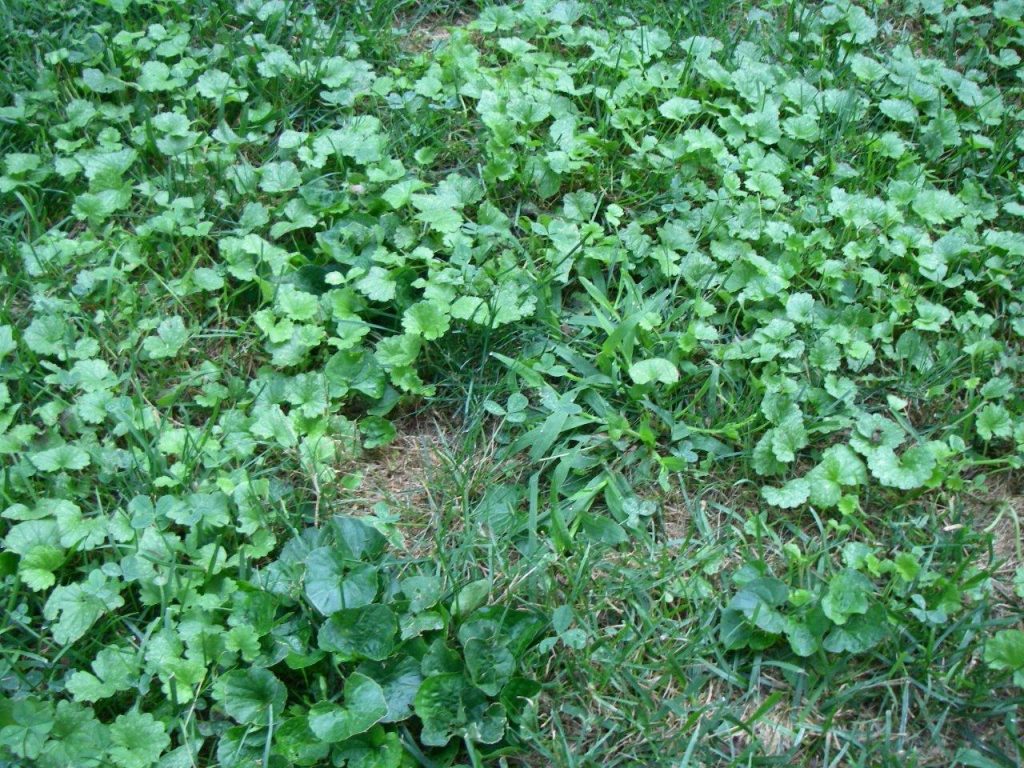
Weeds are sometimes described as “plants in the wrong place”
or “plants whose virtues have yet to be discovered.” But for we who labor over our plantings, fighting a
day-to-day battle with these enemies, it’s no laughing matter. Weeds cost gardeners time, money, and
effort. Ask for help at a box
store, and they’ll sell you a bottle.
But before you go that route, here are some ways to help prevent weeds
from winning the war.

Improve the Soil

If your lawn is overrun with weeds, chances are the soil is
acidic (low pH), compacted, low in fertility, or all of the above. Weeds are opportunistic and many thrive
in poor soil. The healthier your soil
is, the better your grass will grow and the less chance weeds will have to take
hold. The same is true in garden
beds. Get a soil test from Chester
County Cooperative Extension (610-696-3500) and then address any problems the
test identifies.

Plant Densely

Like all plants, weeds need sunlight to survive. Shade them out with shrubs, perennials
planted close together, or groundcovers, and you will make life more difficult
for them and a lot easier for yourself.
The fewer places the sun reaches bare ground, the less area you have for
weeds to proliferate.

Avoid Disturbance

I hate to be the bearer of bad news, but your soil contains
millions of weed seeds. And all
those little buggers are just lying there (they can last for years), waiting for some disturbance to
bring them to the surface, where they can get water and sunlight. Guess what happens when you pull out a
weed? That’s right—you are
bringing weed seeds to the surface.
Stop this nasty cycle by minimizing disturbance. For annual weeds, use a hoe to scrape
along the surface and decapitate them before they set seed. If you pull a weed, try to minimize
disturbing the soil around it. Don’t
till unless you are going to plant and mulch immediately (or try the new
“no-till” method of planting).

Water Carefully

If you water using a sprinkler that spews water everywhere,
you will be watering weedy areas as well as planting beds. Target the water to the plants you
want, and let the weeds fend for themselves! Soaker hoses and irrigation systems that water at the base
of the plants work even better in many locations.

Use Mulch

Mulch helps reduce weeds by minimizing the sunlight that
reaches the soil. Mulch also
improves the soil (by adding organic matter), so it’s actually a two-fer. Mulch is particularly good for reducing
annual weeds, which in order to return the following year, need to shed seed on
bare ground that receives sunlight.
Seeds shed on mulch find it difficult to root, and those that do are
easy to pull out.

Nip it in the Bud

Pull weeds when you first see them and keep weeds from spreading
or going to seed. Try taking a
half-hour stroll through your garden each morning before you start your
day. Pull a few weeds or take a
few swipes with a hoe as you meander.
You’ll have a relaxing morning and get in two to three hours of weeding
a week.

Know What You’re Dealing
With

It’s difficult to fight a battle without knowing anything
about your opponent. If you have a
serious weed problem, identify the weed or weeds involved. If you are not able to do that on your
own, Master Gardeners can help.
Email a photograph to chestermg@psu.edu along with any helpful
information (Is the weed growing in the lawn? in the woods? along
a stream?). Once you know what
weed it is, you will know whether it is an annual or a perennial, and can find
out how best to attack it.

Use Herbicides with
Restraint

If you decide to use an herbicide, read the label carefully.
Some herbicides are selective, and target only grasses or only
broad-leaved (non-grass) plants (but still kill everything in that category). Others kill anything green. Still others prevent seeds from
germinating. If you only have one
weed, there is no reason to use an herbicide that kills a wide variety of weeds
(that just means it has multiple chemicals in it, so you are adding chemicals
to the environment for no reason).
Some weeds are best attacked at certain times of the year or at certain
points in their life cycles. Some
herbicides have a residual effect (they stay in the soil), which may prevent
your lawn seed from germinating or kill desirable plants you place in that
spot.

Be sure you have exhausted all non-chemical strategies
first. In many cases, the
chemicals cause harm to the environment without solving your problem, which
does nobody any good. Pulling,
mowing, hoeing, or other mechanical methods may be more effective than that
spray bottle they want you to buy.

Have a gardening question? Ask a Master Gardener.
Send your questions to chestermg@psu.edu or call 610-696-3500. And please visit us on Facebook
(“Chester County Master Gardeners”.)

We now make house calls! If you have a difficult issue or would like on-site advice,
we will send a team of Master Gardeners to your site for a consultation for a
fee of just $75-100, depending upon whether follow up research or testing is
needed. Send an email to nds13@psu.edu
for more information.

• Nancy Sakaduski is the Chester County Master
Gardener Coordinator. Master Gardeners are trained volunteers who educate the
public on gardening and horticultural issues. In Chester County, they operate
through the Penn State Cooperative Extension office in West Chester. Nancy
lives in Pennsbury Township. She can be reached at nds13@psu.edu.

About Nancy Sakaduski

Nancy Sakaduski is a Master Gardiner with Penn State Extension of Chester County.

The Garden Path:Fighting weeds the smart way Read More »

Albert J. “Blue” Feliciani of Kennett Square

Albert J. “Blue” Feliciani, 90, of
Kennett Square died at home on Monday morning, Aug. 16, surrounded by his
loving family.

Son of the late Joseph and Carmella
Ragazzo Feliciani, he was born on March 30, 1920, in Teramo, Italy. He worked
as garden supervisor at Winterthur Museum & Country Estate for 43 years.

He is survived by three children:
daughter Barbara Lawrence of Columbus, Ohio; daughter Eugenia Lamb and her
husband David of Coatesville; and son John Feliciani and his wife Helen Waite
of Lewes Del.; three sisters, six grandchildren, and six great-grandchildren.

He was predeceased by his wife Eugenia,
with whom he shared 58 years of marriage; a sister Louise Pontarelli; and
daughter-in-law Patricia Ford Feliciani. He was a member of St. Patrick’s
Catholic Church and the Italian American Citizens League. He enjoyed cooking,
gardening, and spending time at his cabin, ‘Huggie Bear.’

A viewing will be held on Thursday
evening, Aug. 19, from 6-8 p.m., and Friday morning, Aug.ust 20, from 8:15-9:15
a.m. at the Kuzo & Grieco Funeral Home, 250 W. State Street, Kennett
Square. A Funeral Mass will be celebrated at St. Patrick’s Catholic Church, Meredith
Street, Kennett Square at 10 a.m. on Friday, Aug. 20.

Burial will be in St. Patrick’s
Cemetery .In lieu of flowers, contributions may be made in his memory to
Winterthur (designated for the Feliciani Family Centennial Fund) mailed to the
attention of Amy Hughes, Winterthur DE 19735 or to Neighborhood Hospice, 400 E.
Marshall Street, West Chester PA 19380.

Online condolences may be made by
visiting www.griecocares.com

About CFLive Staff

See Contributors Page https://chaddsfordlive.com/writers/

Albert J. “Blue” Feliciani of Kennett Square Read More »

Scroll to Top