The Brandywine Conservancy is the recent co-winner of the Quality
Vegetation Management Project Habitat award for invasive weed
management. The Chadds Ford-based conservancy shares the award with
Weeds, Inc. of Aston and was earned for invasive weed management at the
conservancy’s Waterloo Mills Preserve in Devon.
According to a press release, the QVM Project Habitat award is designed
to give recognition to organizations that demonstrate “vanguard
stewardship and ecosystem protection.”
The Waterloo Mills project was one of only 13 in the United States to
receive this award. Sherri Evans-Stanton, director of the conservancy’s Environmental Management Center, which oversees the preserve said in the release, “We are delighted to receive this acknowledgement of our work to control invasive plants.”
The 170-acre Waterloo Mills Preserve includes an 18th century village,
wildflower meadows, fertile marshes, mature woods and over a mile of
meandering creek. The property was donated to the Conservancy through
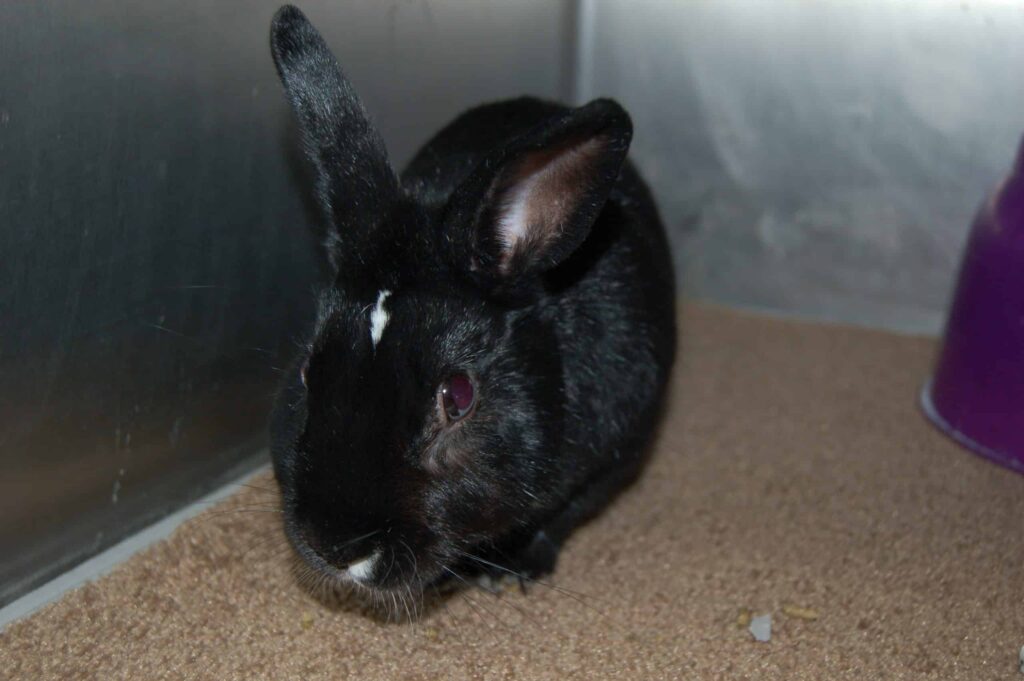
Stripe is a three year old male dwarf mix rabbit that is available for adoption through the ChesterCountySPCA. He came to the shelter on November 9, 2009 because their owner felt like they were not giving him enough attention. Stripe is a very sweet rabbit who gets a long with children and would make a great pet for a first time rabbit owner. Stripe loves his treats of carrots and lettuce. Did you know that rabbits are the third most common pet cared for by the ChesterCountySPCA? Stripe is looking for a responsible care giver who will give him the love and attention he needs. If you are able to provide that home, visit the ChesterCountySPCA at 1212 Phoenixville Pike in West Goshen or call 610-692-6113. Stripe’s registration number is 96797552. To look at some of the other animals available for adoption, visit the shelter or log onto http://www.ccspca.org
Someone stole a .40 caliber Glock 23 pistol with a full 12-round magazine from a 1999 Nissan Altima parked at the Shops at Britton Lake on March 13 between 6 and 8 p.m. Also taken was an IBM Thinkpad. A police report said the perpetrator broke through the rear passenger window to get access to the interior of the car. Anyone with information regarding this incident should contact the Pennsylvania State Police at 484-840-1000.
• A 60-year-old Concord Township man faces charges of public drunkenness and disorderly conduct after he was observed trying to open the doors of vehicles parked at the Windsor@Brandywine Apartments on Route 202 and Smithbridge Road. A police report said Dennis J McConnell, 60, was transported to Riddle Memorial Hospital with a blood alcohol level of more than 0.440 percent. The incident occurred 5:50 p.m. on March 12.
• Pennsylvania State Police arrested Demetrius Spriggs, 24, of Claymont, for DUI after a trooper noticed a car on the shoulder of Route 202 at Watkin Avenue. Spriggs was next to the car, a report said. It was determined by the trooper that Spriggs was under the influence. The arrest was made on March 6 at 2:20 a.m.
• A 19-year-old woman from Thornton was arrested after allegedly stealing $96.97 worth of merchandise from Marshall’s at the Brandywine Town Center in Concord Township. A police report said the unidentified woman stole several items from the store on March 4 at 4 p.m.
I’ve always been envious of friends whose homes look like designer showcases.
You walk in and are greeted by the exotic aroma of a Patchouli candle; their living area is inviting with nary a stray magazine nor PECO bill; their den has a computer station with not an ounce of work to be seen; their bedroom boasts a king bed, adorned with quilts topped with half a dozen carefully arranged decorator pillows; their bathrooms are spotless and opulent with spa soaps and giant bath towels; their eat-in kitchen ensconced in a sea of polished granite counter top.Does someone really live here or have they rented the place just to impress us?
About six years ago I hired a professional organizer from West Chester to help me with the micro condo. I tossed about 25 plastic trash bags of stuff, all the while asking, “What if I want to look at it five years from now?”
But now something has changed in my life.My fiancé and I bought a beautiful Colonial Cape Cod less than 10 miles north of here. Most of the property is in the woods. It’s gorgeous; it’s our dream house.
Finally, I’m getting out of the micro condo, so it’s time to discover “home staging” in an effort to expedite the sale.Home staging is more than de-cluttering, patching the walls and fixing leaky sinks.
According to Elizabeth Weintraub, member of the Sacramento Board of Realtors, “Home staging is about illusions. It’s about perfecting the art of creating moods. Staging makes your house look bigger, brighter, cleaner, warmer, and…makes home buyers want to buy it.”
This will be interesting – making the micro condo look like a 2,500 square foot home.
Surveys ofreal-estate agents show that a staged home can reduce a listing’s time on the market by one third to half, and could fetch as much as 10-15% more than an empty home or a home not properly staged.
Some suggested techniques in staging are:
“Remove personal items that might distract the buyer’s attention.”
I guess that means no more folded laundry on my Boston rocker.
“Arrange colorful and fun cookbooks on the counters.”
Does that include my bright orange c. 1969 Betty Crocker Cookbook?
“Set the dining room table with chargers, china and centerpiece.”
Hey, I don’t even have a dining room.
“Arrange sparse pieces of furniture in an appealing grouping known as a vignette”.
OK, enough already, there’s not enough room in the micro condo for a vignette.
Two sources have even suggested, “Tie ribbons, grass rope or twine around towels.”
I can guarantee that’s not going to happen.
But anyway, I’ve taken a week off from work to call repairmen and to de-clutter the condo.
I’ve been keeping the 8 X 10 color photo of the new house in front of me as I ask myself- “Do these books; Christmas cards from 2003; wine carafes; plastic Halloween decorations, box of old tape cassettes; semi-flattened basket; dozens of mini soaps and shampoos from past vacations; piles of New Port News catalogues or collection of souvenir mugs have a place in the new house?
Nine out of ten times the answer is a big “No”.
Items not trashed, will be being dispersed among a library sale, the Good Will and Pastor Dave’s church in Upper Darby.
But just in case, I’m buying some fancy spa soap and giant towels for the bathroom – wish me luck!
Sally Denk Hoey, is a Gemini - one part music and one part history. She holds a masters degree cum laude from the School of Music at West Chester University. She taught 14 years in both public and private school. Her CD "Bard of the Brandywine" was critically received during her almost 30 years as a folk singer. She currently cantors masses at St Agnes Church in West Chester where she also performs with the select Motet Choir. A recognized historian, Sally serves as a judge-captain for the south-east Pennsylvania regionals of the National History Day Competition. She has served as president of the Brandywine Battlefield Park Associates as well as the Sanderson Museum in Chadds Ford where she now curates the violin collection. Sally re-enacted with the 43rd Regiment of Foot and the 2nd Pennsylvania Regiment for 19 years where she interpreted the role of a campfollower at encampments in Valley Forge, Williamsburg, Va., Monmouth, N.J. and Lexington and Concord, Mass. Sally is married to her college classmate, Thomas Hoey, otherwise known as "Mr. Sousa.”
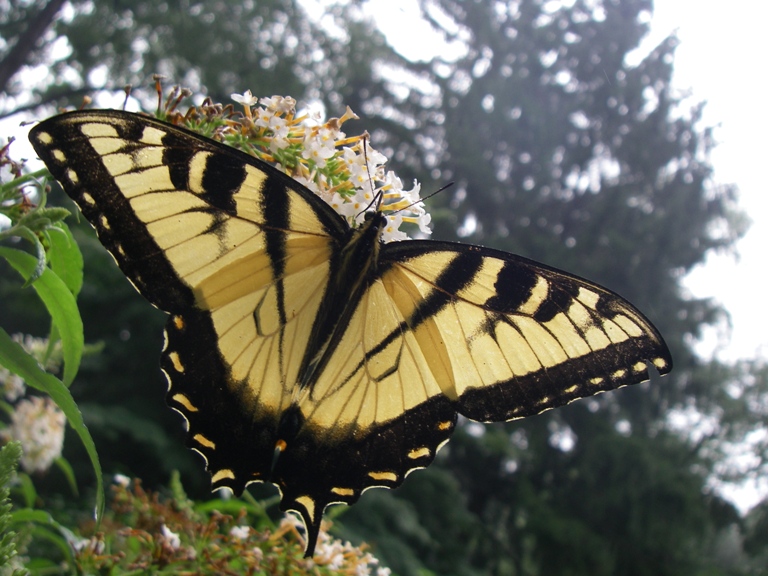
We have many species of butterflies in the Chadds Ford area. If you would like to encourage these beautiful creatures to visit your yard, consider making your garden butterfly friendly. It’s relatively easy to find plants with nectar-filled flowers that attract butterflies. But why not go a little further.
Here are some tips:
Plant in a Sunny location
Butterflies are cold blooded and need to be warm to fly and feed, so plant your garden in a sunny area sheltered from the wind. Provide shelter from windy days can batter a butterfly and tear its wings. If there is no natural shelter, plant a windscreen such as a flowering shrub that can provide both food and shelter.
Establish Host Plants
Butterflies do not eat, they only sip nectar. But in their caterpillar stage, they must eat large amounts of food for rapid growth prior to their transformation into a butterfly. Caterpillars are very particular about their food requirements, often only feeding on a single group of closely related plants. For example, monarch caterpillars only eat plants in the milkweed family (Asclepias). Planting a variety of host plants will ensure you attract a wide range of butterflies. Some common host plants include asters (pearl crescents), dill or parsley (black swallowtails), sassafras and spicebush (spicebush swallowtail), dogwood (spring azure), and willow (mourning cloak and viceroy).Offer Nectar Plants which butterflies need nectar to provide energy. Generally they prefer purple, red, yellow, orange, or pink blossoms; flat-topped or clustered flowers; and short flower tubes. Good nectar plants include ironweed, lantana, butterfly weed, pentas, coreopsis, verbena, zinnia, bee balm, coneflowers, black-eyed susans, and sunflowers. Some plants, such as butterfly weed, are both a host plant and a nectar plant. Emphasize Native Plants Many cultivated flowers have been selected for their appearance, not for their fragrance or the amount of nectar they contain. Therefore, it is often better to choose common varieties for butterfly gardens instead of fancier hybrids that may have less nectar or flower tubes that are difficult for butterflies to access.
Create Expanses of Flowers
Butterflies are more attracted to groupings of flowers than to a single plant with a few blooms, so plant swaths of flowers rather than spreading them throughout the garden.
Establish a Long season of Bloom
A well-planned butterfly garden has blooming flowers throughout spring, summer, and early autumn. This provides a continuous source of food and nectar, and provides plants of varying heights to accommodate large and small butterflies.
Don’t be too tidy
Butterflies are attracted to weedy areas, so an area left unmowed and allowed to grow will further entice butterflies into your yard. Minimize use of pesticides. Limit your use of insecticides and herbicides, if you use them at all. Insecticides don’t know the difference between beneficial insects and “pest” insects. A chemical that kills tent caterpillars, for example, will just as effectively kill monarch caterpillars. If you want butterflies, share your plants with their caterpillars and tolerate some damage.
Provide Mud and Rocks
Place a few rocks in sunny areas to give the butterflies a good place to bask. Also provide wet sand or mud. Male butterflies will often gather at wet sand patches and mud puddles. This phenomenon, called puddling, provides minerals and other nutrients that the males “gift” to females during mating.
For more information on gardening for butterflies, go to:
One of the distinguishing characteristics of statists is their inability to take responsibility for their failures. The fault always lies elsewhere. Two of the best examples of this phenomenon are the welfare state and the warfare state.
For more than a century after the founding of the Republic, Americans had lived with little or no income taxation, economic regulation, paper money, legal-tender laws, Social Security, Medicare, Medicaid, SBA loans, corporate grants, education grants, drug laws, and other forms of paternalism. Early Americans believed that freedom involved the rights to engage in economic enterprise freely, accumulate unlimited amounts of wealth, and decide what to do with their own money — e.g., invest, save, spend, or donate.
All that changed in the 20th century, thanks to the statists. In 1913, the income tax and the Federal Reserve were established, heralding a way of life in which government would wield omnipotent power to take or destroy people’s income and wealth.
Major change came again in the 1930s, when President Franklin Roosevelt built the foundation for the modern-day welfare state, a type of socialism that had originated among the socialists of Germany. Since then, the welfare state — the paternalistic state — the nanny state — the socialist state — whatever label you wish to put on it — has grown by leaps and bounds.To fund all this socialism, well, that’s where those two mechanisms that were formed in 1913 come into play — income taxation and the Federal Reserve.
Today, the welfare state is cracking apart. Everywhere you look, things are in crisis. Social Security, Medicare, Medicaid, FDIC, the dollar, the national debt, and federal spending. It’s all broke or breaking.
Just like it has in Greece, whose the welfare state has finally reached the breaking point. But what do the statists say? Oh, it’s all because of freedom and free enterprise. You know, such guilty culprits as greed, speculation, banking, deregulation, and profit. Not surprisingly, their solution to all these welfare-state woes is … you guessed it — more statism. It’s no different with the warfare state. After the fall of the Berlin Wall and the disintegration of the Soviet Union, the statists went into panic mode over fear of suffering massive reductions in welfare for the military and the military industrial complex. Desperately in search of a mission that would permit them to maintain their hold on their Cold War largess, they embarked on course of action designed to poke hornets’ nests in the Middle East, with deadly and destructive consequences. There was the Persian Gulf intervention against their old partner and ally Saddam Hussein; the intentional destruction of Iraq’s water and sewage facilities after the Pentagon confirmed that this would help spread infectious illnesses among the Iraqi people; the brutal sanctions that contributed to the deaths of hundreds of thousands of Iraqi children; U.S. Ambassador to the UN Madeleine Albright’s infamous declaration that the deaths of half-a-million Iraqi children were “worth it”; the illegal no-fly zones over Iraq, which killed more Iraqis; the stationing of U.S. troops on Islamic holy lands, knowing how insulting this would be to Muslims; and, of course, the years of unconditional financial and military support given to the Israeli government. Then came the inevitable “blowback” — the retaliation: the 1993 attack on the World Trade Center, the attack on the USS Cole, the attacks on the U.S. Embassies in Kenya and Tanzania, and 9/11.
What was the response of the statists? It’s all because of freedom! You see, according to the statists, the anger and hatred that had boiled over in the Middle East after a decade of brutal U.S. intervention, was all because Muslims hate America for its freedom, not because people were angry over all that death and destruction that came with intentionally poking those hornets’ nests.
Today, both the welfare state and the warfare are in deep crisis, and things are only getting worse by the month. Count on the statists to become angrier, more frustrated, and more fearful that people might discover the truth as to the real causes of America’s woes. Count on the statists to continue blaming freedom for America’s woes, both foreign and domestic. It’s the only hope statists have that Americans will continue following them down the road to serfdom and impoverishment.
* Jacob Hornberger is founder and president of The Future of Freedom Foundation. His blogs may be found at www.fff.org/blog/index.asp.
Who knew? That hugging and kissing is good for the brain! Good for health over all, in fact. The feel good feeling you get from a hug goes beyond the ephemeral moment.
Evidence from scientific research shows that, when stressed, we produce the biochemical cortisol, which can have a cumulative negative effect on our bodies and brains. On the other hand, the biochemical oxytocin gets produced when we hug and kiss, and this compound appears to be an antidote to cortisol’s effect.
It was known long before the recent research that oxytocin was produced in pregnant and nursing mothers. Part of what we love about babies, even when we’re not the Mom or Dad, are the warm feelings they engender when we hug them. Having visited my great nephews this weekend, I can attest to an oxytocin high—cuddling and cooing to baby and kissing the pre-schoolers. (Yes, there is the dirty diaper side of all this, but it’s my hunch that the loving glow of the oxytocin flow can help mitigate the downside.)
And we don’t stop yearning for touch just because we become adults. It appears that the slightest touch can go deeply. Just placing a hand on someone’s shoulder can turn on oxytocin production. Our skin, as the largest organ of the body, can quickly register care and connection.
While we can imagine all the ways we can reach out to each other, not only with kind words, but also with kind touch, we also can intuit that the reverse can be true as well. Unfortunately, a kiss or hug or touch can become an unwanted or intrusive act, or can be done with violence and cruelty, subverting its goodness.
Too many times, I have heard stories in my office where the touch from a parent was remembered in its horror, as physical or sexual abuse. Or perhaps the client recalls that, as a child, while there was not physical abuse, there also was no affection—no hugging, no kissing, no touch, and no loving looks and no kind words. When we grow up in such a cold and distant household, that too can be a form of neglect. As adults, we may come to understand intellectually that our parents were either ill, or depressed, or simply unable to provide that kind of connection. However, the child that we carry deep within ourselves still feels the lack of touch and affection. So, even as adults, we need to learn how to embrace ourselves (literally and figuratively) and allow ourselves to be embraced.
Now we see that science has taken touch to its cellular level. Rather than demean the importance of hugs and kisses done kindly and with good intentions, science has uplifted its necessity from the realm of those who might say it’s sentimental hogwash or “new-agey.” And when you’re lacking a hug from someone else, give yourself a hug—put your hand on your heart gently and breathe deeply for a moment or give yourself an embrace with both arms. These little movements do help to self-soothe. Then, better yet, turn to your partner and do more than dosey-do!
Kayta Curzie Gajdos holds a doctorate in counseling psychology and is in private practice in Chadds Ford, Pennsylvania. She welcomes comments at MindMatters@DrGajdos.com or (610)388-2888. Past columns are posted to www.drgajdos.com
Dr. Kathleen Curzie Gajdos ("Kayta") is a licensed psychologist (Pennsylvania and Delaware) who has worked with individuals, couples, and families with a spectrum of problems. She has experience and training in the fields of alcohol and drug addictions, hypnosis, family therapy, Jungian theory, Gestalt therapy, EMDR, and bereavement. Dr. Gajdos developed a private practice in the Pittsburgh area, and was affiliated with the Family Therapy Institute of Western Psychiatric Institute and Clinic, having written numerous articles for the Family Therapy Newsletter there. She has published in the American Psychological Association Bulletin, the Family Psychologist, and in the Swedenborgian publications, Chrysalis and The Messenger. Dr. Gajdos has taught at the college level, most recently for West Chester University and Wilmington College, and has served as field faculty for Vermont College of Norwich University the Union Institute's Center for Distance Learning, Cincinnati, Ohio. She has also served as consulting psychologist to the Irene Stacy Community MH/MR Center in Western Pennsylvania where she supervised psychologists in training. Currently active in disaster relief, Dr. Gajdos serves with the American Red Cross and participated in Hurricane Katrina relief efforts as a member of teams from the Department of Health and Human Services' Substance Abuse and Mental Health Services Administration.Now living in Chadds Ford, in the Brandywine Valley of eastern Pennsylvania, Dr. Gajdos combines her private practice working with individuals, couples and families, with leading workshops on such topics as grief and healing, the impact of multigenerational grief and trauma shame, the shadow and self, Women Who Run with the Wolves, motherless daughters, and mediation and relaxation. Each year at Temenos Retreat Center in West Chester, PA she leads a griefs of birthing ritual for those who have suffered losses of procreation (abortions, miscarriages, infertility, etc.); she also holds yearly A Day of Re-Collection at Temenos.Dr. Gajdos holds Master's degrees in both philosophy and clinical psychology and received her Ph.D. in counseling at the University of Pittsburgh. Among her professional affiliations, she includes having been a founding member and board member of the C.G. Jung Educational Center of Pittsburgh, as well as being listed in Who's Who of American Women. Currently, she is a member of the American Psychological Association, The Pennsylvania Psychological Association, the Delaware Psychological Association, the American Family Therapy Academy, The Association for Death Education and Counseling, and the Delaware County Mental Health and Mental Retardation Board. Woven into her professional career are Dr. Gajdos' pursuits of dancing, singing, and writing poetry.