Rich Schwartzman has been reporting on events in the greater Chadds Ford area since September 2001 when he became the founding editor of The Chadds Ford Post. In April 2009 he became managing editor of ChaddsFordLive. He is also an award-winning photographer.
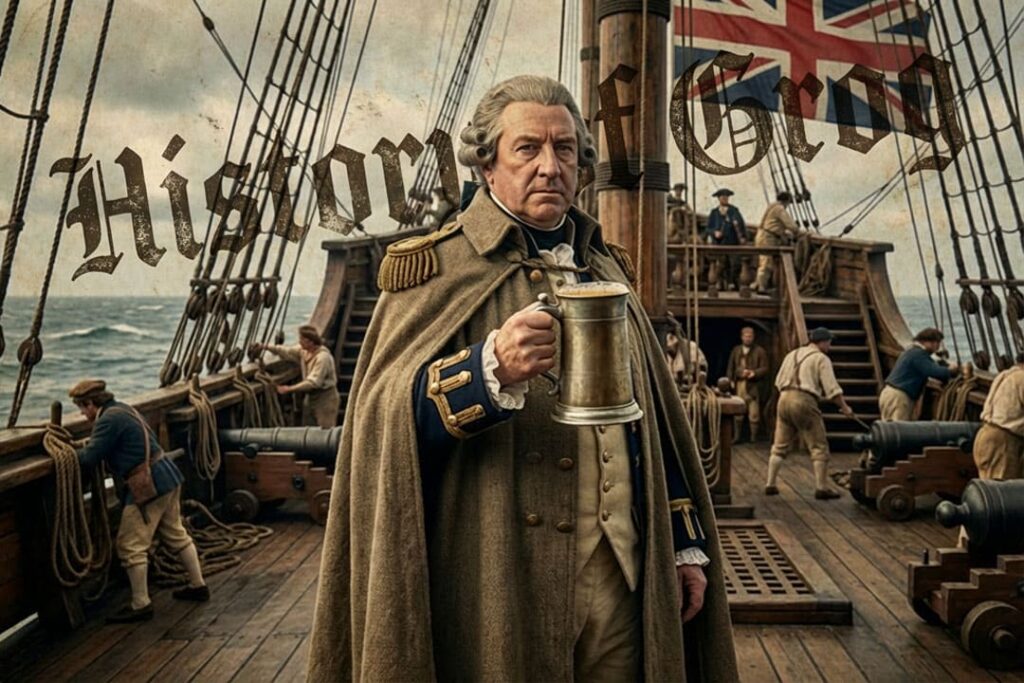
Chadds Ford — The Chadds Ford Historical Society has rescheduled its winter lecture on “Grog and George Washington” to Thursday, Feb. 26, bringing Revolutionary War reenactor and historian Tom Thurber to town for an evening that blends maritime history with the story of America’s first commander in chief. The talk begins at 7 p.m. at the society’s Barn Visitors Center, 1736 Creek Road, Chadds Ford. Admission is $10 at the door, and Chadds Ford Historical Society members are admitted free.
Thurber’s program will trace how “grog” became shorthand for a diluted rum drink—and why it mattered to sailors and soldiers in the 18th century. In the Royal Navy, grog is commonly linked to an order that diluted the daily rum ration with water in the early 1740s, a change meant to curb drunkenness and keep crews functional at sea. Later versions often included citrus and sweetener, especially as navies learned more about long-voyage health and preservation.
For residents of the Brandywine Valley, the George Washington connection lands close to home. Chadds Ford is synonymous with the 1777 Battle of the Brandywine, when Washington’s forces fought to block the British advance toward Philadelphia. Even beyond battlefield tactics, the logistics of keeping an army moving—food, clothing, and drink—shaped daily life for troops quartered across Chester County and the surrounding region.
Rum, in particular, was everywhere in colonial America. Mount Vernon’s historical encyclopedia notes that rum was a preferred drink in the era and that it sat at the intersection of commerce, politics, and wartime supply. In that context, it’s easy to see why a talk about grog can open a wider window into how Washington’s world actually operated: not just speeches and strategy, but rations, morale, medical beliefs, and the realities of water quality and transportation.
According to the historical society, Thurber—also a retired Marine Corps gunnery sergeant—will explore grog’s origins, its naval roots, and its surprising link to Washington, with samples provided as part of the program.
For anyone planning to attend, a few worthwhile questions to bring along: What was the original grog mix ratio on ships, and how did it change over time? Why did diluted spirits make practical sense aboard ships and in encampments? What evidence exists for how Washington’s army handled rum and other spirits during shortages? How did supply chains in southeastern Pennsylvania—mills, taverns, merchants, and river crossings—affect what soldiers actually received? And for the reenactment-minded: how do historians recreate period-accurate beverages while staying true to sources?
The lecture had been scheduled for Feb. 5 before being moved to Feb. 26.
Author of Aeroplane City and DangerMan's Paintball Bible. Bengal cat breeder, father of two and 30-year expert in multi-Internet disciplines from DNS, hosting administration to full front end UX/UI development, AI production and SEO.