
December 11, 2021

 A parent’s right to advocate

The question posed is this: Does a parent’s right to advocate for his or her child cross geopolitical boundaries?

For Claude Albert, who has a son at CF Patton Middle School in the Unionville-Chadds Ford District, the answer is an absolute yes. But Albert was not allowed to address the school board during the Dec. 6 meeting because he lives in New Jersey, not in the district, nor does he pay taxes to the district. But his son and ex-wife live in Chadds Ford.

Claude Albert said he wanted to address the school board directors regarding the use of masks because his 12-year-old son has been suffering under the mandate.

In an email he sent to all school board directors — including board President Jeff Hellrung — Superintendent of Schools John Sanville and to Patton Principal Steve Disinger on Nov. 15, Albert said his son “is experiencing frequent onset headaches, shortness of breath, anxiety, and decline in cognitive performance all of which are listed in the peer-reviewed study as long-term health consequences of prolonged use of face masks. He reports that if he lowers his mask when he is out of breath, he is admonished by members of your staff.”

In a telephone interview, Albert said Disinger responded “professionally” but couldn’t say the same for Hellrung or Sanville.

“Principal Dissinger sent me the exemption form and has been forthcoming and professional about everything. John Sanville and Jeff Hellrung have, in my humble opinion, been obstinate and inflexible,” Albert later added in a subsequent email. 

The district has a policy, Policy 903, regarding public comment during school board meetings. Under guidelines, it states: “The Board requires that public participants be residents or taxpayers of this district. Others may be recognized at the discretion of the presiding officer.”

Despite having the discretion to allow Albert to speak, Hellrung did not allow Albert to speak and told him in an email not to bother driving in from New Jersey. 

“I thought it best to enforce the policy as written and didn’t see a good reason to override the general policy, nor did he ask me to do that,” Hellrung said in an email to Chadds Ford Live. “I thought I was doing him a favor by letting him know in advance that he wasn’t eligible to speak at the meeting, thereby saving him a long, two-way drive if that was his main purpose in coming. He’s shown that he is very capable of communicating with us by email. We try to follow policy strictly, neither giving special favors or taking any discretionary actions against anyone.”

Hellrung was also asked if a parent’s right to advocate for his or her child stopped at a border. He said he favors a change in Policy 903 that would allow non-resident parents to speak at the meetings.

“I do favor that, and I expect to see that change proposed as part of our ongoing work revising that policy. The recent court ruling against the Pennsbury School Board on that policy needs to be taken into account in our revision. Our solicitor is advising us on that. I expect to see a proposed revision to Policy 903 soon,” he said.

Sanville has not yet responded to a request for comment.

There is good news, however, according to Albert. After getting the exemption forms from Disinger, the Alberts were able to get the exemption so their son could go to school without the mask. But despite the exemption, at least one other parent is still bothered by Albert being denied the chance to address the board.

Gabi Asendorf, of Chadds Ford, who also has a sixth-grader at Patton said, “According to the board’s own policy, if a person is not a resident, the school board officer can still allow them to speak. Why did Mr. Hellrung choose not to allow this parent to speak in public? Mr. Albert is still the parent of a child in the school district even if not a local resident. This was an opportunity to listen publicly to a father with concerns about his child and Mr. Hellrung chose to silence him instead. As a divorced parent myself, not allowing Mr. Albert to speak impacted me, compelled me to get this on the record. If I didn’t live in the same school district as my children, I would be deeply distressed being denied the right to speak publicly about my children’s welfare by a school board president.”

About Rich Schwartzman

Rich Schwartzman has been reporting on events in the greater Chadds Ford area since September 2001 when he became the founding editor of The Chadds Ford Post. In April 2009 he became managing editor of ChaddsFordLive. He is also an award-winning photographer.

 A parent’s right to advocate Read More »

Op/Ed: Civility around the holiday table

We’ve all been there: You hear that relative make a comment – insensitive, political, take your pick – and your blood pressure rises, a response builds in your mouth, it takes everything to not react. This remains an unfortunate issue many Americans face, especially around the Holiday Season. As we gather around our respective tables there will almost undoubtedly be a moment where something is said that angers, baits, or disparages another.

As a college student, this makes me wary of these usually joyous times. If I can’t enjoy a meal with my family without feeling my fight or flight activated, why do I come home? The need for decorum and respect are starkly evident at holiday tables; everyone deserves to enjoy their time together as a family.

When seated around a festively decorated table the most important things on your mind should be the excitement for the delicious food and time spent with family. If arguments abound and disruptive discussions emerge, both pieces may fall by the wayside, and you’ll wish everyone would just #ShutYourPieHole. With the pandemic in our past, present, and presumably our future, maintaining meaningful connections with our family has become increasingly difficult.

Now many families may write off this argumentation as a normal occurrence that cannot be stopped, however, there are some easy ways to mitigate the situation.

  • Maintain ground rules: respect needs to be the basis of every conversation.
  • Walk away: the most basic way to avoid a difficult conversation or situation is to simply get up and go. It may seem rude at the moment, but far better than a shouting match instead.
  • Rally some support: coordinate with an ally or two at the table who will have your back in helping you keep calm or diffuse the potential toxic situation.
  • Prepare ammunition but try not to fire: you may want to immediately sling a zinger right back at the offending party, but if it’s not correct it may only aggravate the situation further. Know your piece, but only pull it out if absolutely necessary.
  • Change the topic: a few fail-safe topics remain that can be pulled out to diffuse a tense situation.
    • How are your pets doing?
    • Isn’t this weather we’re having so (un)seasonable?
    • That sports team (insert your preferred team) they’re doing (not) well.

For those who do not see the value in enjoying a civil meal with family and would argue that exposure and debate stand as the only way to change minds: Would your mind be changed with an aggressive conversation that made others uncomfortable? Holidays impact everyone who attends, not just your relative who needs to be brought into the 21st century.

Any time gathered as a family is precious. Be sure to use it wisely.

Molly Hohner
Kennett Township
Molly Hohner is a junior at Penn State.

About CFLive Staff

See Contributors Page https://chaddsfordlive.com/writers/

Op/Ed: Civility around the holiday table Read More »

Addressing questions about Moore

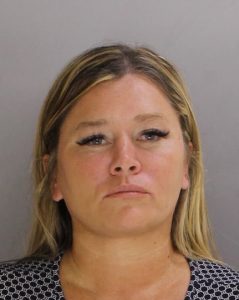
Why did Lisa Moore do it? Why didn’t the Kennett Township supervisors realize what was going on? And what has been done since?

Residents have repeatedly asked questions like those since the April 2019 discovery that Moore, the former township manager, had been embezzling what would later be identified as $3.2 million in township funds.

Those questions and others were addressed in a special Kennett Township meeting Tuesday, almost two years after the supervisors held a special meeting when Moore was first charged by the Chester County District Attorney’s office and about two months after Moore pleaded guilty in county court.

“It is some consolation to finally be able to talk … about both the enormous tragedy and mess of Lisa Moore’s crimes against Kennett Township,” Supervisor Scudder Stevens said.

Moore is currently serving 3-10 years in the State Correctional Institution at Muncy, a state penitentiary for women near Williamsport, Pa.

Questions still surround Lisa Moore’s embezzlement of more than $3.2 million from Kennett Township.

The special public meeting about Moore was held both in-person and virtually over Zoom. A transcript of the meeting will be available in a few days, according to township staff.

Supervisors’ Chairman Richard Leff said the embezzlement “plunged Kennett Township into crisis,” and explained the special meeting would address “how the township today has emerged from the depths of that financial emergency.

“A great deal has transpired since we held our first public meeting” in December 2019, when the criminal investigation into Moore was made public.

Leff recalled that day in spring 2019 when a fraud analyst at Capital One Bank called him, starting what he described as a nightmare for the township.

“It was an awful day, and it was filled with one horrible discovery after another,” Leff said. “Every day brought new lessons.”

Like the day that Stevens, an attorney as well as a supervisor, was heading home from court and received a phone call from the township police chief. The chief wanted Stevens to meet him at the bank to look at checks and then called him back to say he would bring the checks to Stevens.

“When I got to the township, I was met by both the [police] chief, a member of the district attorney’s office, and [county Detective Robert] Balchunis,” Stevens said. “They laid out in front of me a dozen different checks, and they were all signed by me. Every one of my signatures was exactly the same. It was very clear that I didn’t sign any of them, and I didn’t recognize them.”

All the checks were payable to Moore, Leff said.

Authorities searched Moore’s office and found two rubber stamps in her desk bearing Stevens’ signature.

“We had in place requirements that checks over a minimum amount had to be signed by two people,” he said. “They were signed by Lisa Moore and a rubber stamp.”

The supervisors also soon found evidence that Moore forged documents. She would use Adobe Photoshop to take signature blocks from documents and use them in other documents,” supervisors’ Vice Chairwoman Whitney Hoffman said.

“Even after we fired her, she kept stealing,” Leff said, describing automatic transfers from the township accounts into her personal accounts. One of those was for automatic charges for parking in Rehoboth Beach, Del.

“Lisa had the township credit card hooked up to a parking app that she used when she was parking her car in Rehoboth,” Hoffman said. “We initially asked for her computer back but didn’t get it back right away. We took her phone number back as well and put her phone number on another cell phone.”

With Moore’s township email and cell phone, Hoffman got access to the PayPal account Moore was using and stopped the automatic payments.

She added that even before Moore was fired, she was adept at diverting questions about finances. Hoffman said when she first started as a supervisor, she asked Moore about a forensic audit and was told it was too expensive.

“I came in to Lisa and said, ‘Hey, I think we have to look at how we’re spending money,’” Hoffman said. “She’s like, ‘You’re right and we really need to look at that, but what we really need to do is look at this which is really important.’”

Stevens encountered the same thing during his first year as a supervisor.

“There were things we tried to put into place that would have solved this problem, but she went around us,” he said, adding that a finance committee he created back then was slowly taken over by Moore.

“She was really good at distracting you,” Leff said. “In retrospect maybe there were signs, but they were so subtle and so slow that you didn’t see them … Yes, we were looking at finances, but she slowly took away all the checks we had in place. It was a hard lesson.”

Two commonalities between Moore and others who have embezzled, according to Ricardo Zayas, the forensic accountant from Marcum LLP who was hired by the township to investigate the embezzlement, were the ability to engender trust and the ability to manipulate.

“Ms. Moore was a trusted person in this township, not only by supervisors but with citizens,” Zayas said. “She was in a position to use her intelligence and relationships she had developed over the years for her own benefit. “

In Zayas’ business, the motivation to embezzle in cases like these is difficult, if not impossible, to figure out. Instead, he and his colleagues follow the evidence.

That evidence led to discoveries of things like inaccurate and omitted financial records and unauthorized payments to Moore that were funneled through different accounts. Marcum worked with the Chester County detectives to build a case against Moore, and on Dec. 10, 2019, she was formally charged with embezzlement.

Since 2019, Kennett Township has added, among other things, a new township manager, a finance director/human resources manager, and a finance department. The treasurer position is no longer held by the township manager, and segregation of duties was implemented among township staff.

In December 2019, the supervisors held a public meeting at the Red Clay Room that drew about 500 people, many of them angry and wanting answers that the board and township staff couldn’t give because it could endanger the criminal case. Tuesday’s meeting was more measured; Ratliff’s executive assistant, Gretchen Porterfield, read questions that residents had submitted either before the meeting or over the Zoom platform.

“At the meeting a couple years ago, people were quite concerned that the supervisors didn’t accept any responsibility for what happened,” resident Lynn Nathan asked at Tuesday’s meeting. “Do you accept any responsibility now? Can you say you’re sorry?”

Hoffman talked of the traumatic experience but also of the work the township has done to rebuild.

“I’m a different supervisor now than when I was then,” she said. “Yes, I’m sorry this occurred. But part of the real responsibility is rebuilding and making sure it never happens again.”

Stevens talked of the pain Moore’s embezzlement caused.

“I have absolutely no doubt that this (the embezzlement) was a pattern of behavior,” he said. “We put in auditors who were highly respected in the county and region; they didn’t catch it. The state audits our records as well. The state didn’t catch it.

“My regret is we didn’t stay close enough on it to discover it. But it takes the likes of Mr. Zayas to do that.”

Leff closed the meeting by thanking the supervisors, township staff, and consultants for their work, and the residents for their patience.

“In those terrible, early days there wasn’t a lot of trust in anyone,” Leff said. “You all stuck with us, gave us a chance to fix things. There’s still more to be done, and I believe we’re going to end up with a brighter future for Kennett Township.”

About Monica Fragale

Monica Thompson Fragale is a freelance reporter who spent her life dreaming of being in the newspaper business. That dream came true after college when she started working at The Kennett Paper and, years later The Reporter newspaper in Lansdale and other dailies. She turned to non-profit work after her first daughter was born and spent the next 13 years in that field. But while you can take the girl out of journalism, you can’t take journalism out of the girl. Offers to freelance sparked the writing bug again started her fingers happily tapping away on the keyboard. Monica lives with her husband and two children in Kennett Square.

Addressing questions about Moore Read More »

Scroll to Top