
April 2016

Conservationist, artist ‘Frolic’ Weymouth dies

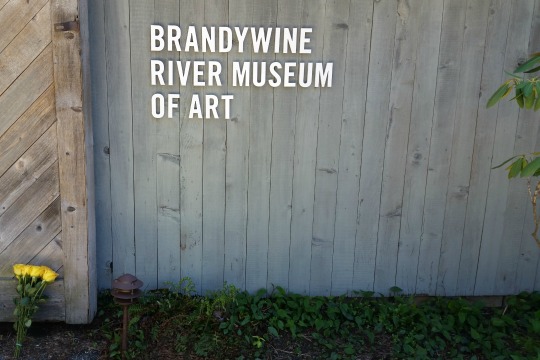
A yellow bouquet is left outside the Brandywine River Museum of Art as the staff and friends and relatives of George 'Frolic' Weymouth mourn his death on Sunday, April 24.

It is with great sadness that the trustees of the Brandywine Conservancy & Museum of Art announce the death of its founder and chairman.  George A. “Frolic” Weymouth was a visionary conservationist, philanthropist, a highly-talented artist and accomplished sportsman.

In 1967, Weymouth, along with Bill Pricket and Francis I. DuPont, purchased two parcels of land in Chadds Ford totaling 47 acres that were threatened with industrial development, thereby founding the organization that became the Brandywine Conservancy & Museum of Art. Four years later, Weymouth was instrumental in acquiring Hofmann’s Mill, a 19-century structure perched on the banks of the Brandywine River.  His founding of an organization that preserved both the natural and cultural resources of the Brandywine was visionary.

Weymouth galvanized support from all facets of the community, and his leadership and passion were instrumental in the Brandywine’s remarkable growth.  The Brandywine Conservancy is now one of the leading land trusts in the country, with 62,000 acres of land permanently protected in Pennsylvania and Delaware; the Brandywine River Museum of Art currently has a collection of 4,000 works of art and has brought international attention to the region’s artistic legacy. Betsy Wyeth, wife of Andrew Wyeth and a good friend of Frolic’s, encouraged him to purchase and convert the mill into a museum, promising him art to hang on the walls.  After extensive renovation, including the addition of a soaring lobby with three floors of floor-to-ceiling windows, the Brandywine River Museum of Art opened in 1971.

Born in 1936 in Wilmington to George and Dulcinea (neé du Pont) Weymouth, Frolic Weymouth grew up in Greenville, De. and spent the greater part of his life living in the Brandywine Valley.  The nickname “Frolic,” given to him in childhood, perfectly embodied the joy with which he lived his life and his irrepressible sense of humor.

Encouraged by his artistic mother, Weymouth began painting as a child and continued at St. Mark’s School (class of ’54) and Yale University (class of ’58). As a teenager, he was introduced to Andrew Wyeth, who became an artistic mentor and lifelong friend. It was Wyeth and his brother-in-law, Peter Hurd, who would later suggest Weymouth experiment with tempera, and he went on to master the painstaking technique with Wyeth’s encouragement in the early 1950s.

Over a six-decade career as an artist Weymouth exhibited the landscapes, flower studies and portraits for which he is known—including friends and family as well as international notables such as Luciano Pavarotti and His Royal Highness Prince Philip—in numerous exhibitions including those at the Brandywine River Museum of Art.  His paintings are in major private and museum collections such as the Metropolitan Museum of Art.

Artist Jamie Wyeth remembers Weymouth as an enduring presence in his life. “Frolic was a neighbor and family…..he and my father were dear friends.  He was an immensely talented artist and achieved so much with his work in Chadds Ford, both with land conservation and with the museum.  He was truly a force of nature that instilled his passion for art and the environment into all of his many friends, and they opened their hearts and their wallets to his causes. He was the best fund-raiser I ever met.”

For more than 40 years, Frolic was a well-known figure in coaching circles and he exhibited his four matched bay standard-bred horses and antique carriages annually in the country’s leading shows. One of only two Americans to be a member of The Coaching Club (England), he is the current president of the Four-in-Hand Club.  Weymouth coached regularly at the Devon Horse Show and permanently retired a trophy.  He founded the Vicmead Coaching Club and is past Chairman of the Board of the Brandywine Polo Club.  His annual carriaging weekend each May at The Big Bend, his home in Chadds Ford, drew participants from around the country and included a scenic drive to Winterthur, six miles away.  This custom became part of the tradition of the Point-to-Point races, initiated in 1979.

Weymouth’s passionate interest in architectural preservation is perhaps best expressed by his own home, The Big Bend, a 17th-century Swedish trading post with an 18th-century addition.  The structure had been long uninhabited until he purchased the property, and Weymouth lovingly restored it, adding extensive gardens.

Weymouth was an active member of the arts and environmental communities nationally and received numerous awards.  He was appointed by President Nixon to the Commission of Fine Arts, on which he served from 1972 to 1977.  In 1974 he served on the Visual Arts Panel of the Pennsylvania Council on the Arts.  He was the recipient of the University of Delaware’s Merit Award for Community Service (1981), the National Arts Club’s Annual Award (1990) and the Cliveden Heritage Award (1999).  In 2007 Weymouth was awarded an honorary Doctor of Humane letters from the University of Delaware and the Henry Francis du Pont Award from Winterthur Museum & Country Estate in recognition of his lifelong dedication to preserving the beauty, history and unique heritage of the Brandywine Valley.  Weymouth was also awarded a Special Citation from The Garden Club of America (2000) for his environmental vision and exemplary service, and the Lifetime Conservation Leadership Award from the Pennsylvania Land Trust Association (2014).  He is also a member of the Farmer’s Club and the Quill & Grill.

Weymouth’s father, George Tyler Weymouth, raised him by three tenets: honesty, generosity and a sense of humor.  His humor was evident in all he did.  When hosting a carriage drive featuring his technically difficult maze, he hired several very attractive nude models to pose throughout the maze to break the driver’s concentration.

When Weymouth constructed a chapel on his property, he inscribed the following words: “This chapel was built to thank God for a wonderful life filled with fun, humor, work, sport and beauty.  A close loving family; loyal and unique friends, and a fabulous son, Mac.” G.A.W. 1995

Each time he would talk to his son, Mac Weymouth, he would remind him to “look for something beautiful every day.”

George A. Weymouth is survived by his son, McCoy “Mac” duPont Weymouth and his wife, Toni Toomey-Weymouth; their children, Sophie Tyler Brown and Misha Kal Toomey-Brown; his brother, Eugene E. Weymouth, and a sister, Patricia Weymouth Hobbs.  He is also survived by Anna Brelsford McCoy, to whom he was married until 1979, and his companion, Carlton Cropper.

His family, friends and the trustees and staff of the Brandywine Conversancy & Museum of Art mourn the passing of Frolic Weymouth, celebrate his countless achievements and legacy, and express their appreciation for his dedication, generosity, warmth and inimitable sense of humor, which inspired them and infused every aspect of the organization.

A small private funeral service will be held by invitation only.  Friends and the public are invited to call at the Brandywine River Museum of Art to pay respects and see a tribute exhibition, beginning Friday, April 29. Cards for the family may be left in the care of the museum.

In lieu of flowers, the family request that memorial contributions be made to the Frolic Weymouth Endowment Fund of the Brandywine Conservancy & Museum of Art.



About CFLive Staff

See Contributors Page https://chaddsfordlive.com/writers/

Conservationist, artist ‘Frolic’ Weymouth dies Read More »
Cleanup a muddy mix of trash, resolve

Volunteers from all over the Brandywine watershed came together on Saturday, April 23, to make a difference – and to have some good old-fashioned, muddy fun – by cleaning up the creek.

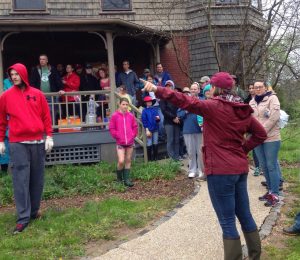
On a rain-soaked Saturday morning, volunteers await their team assignment before heading to rid the Brandywine of trash.

The Young Friends of the Brandywine Conservancy held its 23rd annual cleanup, and despite the pouring rain, nearly 70 volunteers gathered to do their part. Parents helped raincoat-clad children pull on their work gloves as the attendees were separated into teams, which would cover the entire length of the creek from the Lenape area to Delaware.

Since more than 500,000 residents in Pennsylvania and Delaware get their drinking water from the Brandywine, cleanup efforts are extremely important to the community. The effort also helps provide a healthier habitat for wildlife and a safer environment for recreational activities, according to the conservancy.

Many of the volunteers were families who have been living in the area for some time. Jim Zug, a parent and local resident, mentioned that his family used to live in Washington, D.C. and took part in similar cleanup projects for the Potomac River. “We wanted to continue what we were doing in D.C., and this was just a great opportunity for that,” said Zug.

Young Friends of the Brandywine spread out in search of trash during the 23rd annual cleanup.

When asked what debris they expected to find that afternoon, most volunteers replied that the big pollutants are cans, plastic bottles, and old tires. Jim Zug agreed, noting that they found “hundreds of tires” in the Potomac while living in D.C.

Twelve-year-old Livingston Zug, a sixth-grader at Wilmington Friends, suggested opening a store to sell the broken tires, but his amused father assured him there “wouldn’t be a very big market for that.”

Kathy Smith, who organized the event, was enthusiastic about the success they’ve had at past cleanups, and hoped that this year’s would follow suit. Smith explained that the cleanup teams typically cleared about 10 to 12 miles of river each year, and have so far removed more than 33 tons of garbage from the Brandywine.

Over the years, the conservancy has found some interesting objects submerged in the river, the most unusual being an enormous purple gorilla statue. “We call it the 500-pound gorilla,” said Smith. “It’s been something of a mascot for us for a few years.”

Virginia A. Logan, executive director of the Brandywine Conservancy and Museum of Art, called the Young Friends “a critical part” of the organization.

“They’re really ushering in the next generation of volunteers,” she said, adding that it’s a great group for both “children and the young at heart.” Moreover, their efforts make a huge difference within the community, she said.

“It’s free, it’s fun, and you’re making a difference,” said Smith. “You can’t get much better than that.”


About Morgan Carter

Morgan Carter is a creative writing student interning with Chadds Ford Live. She loves tea, long walks on beaches, and baking – provided there is a recipe on the back of the box. She lives in Chadds Ford with her parents, three siblings, and two spunky parakeets. Morgan is very excited to be a part of the Chadds Ford Live team, and hopes to pursue a career in writing after graduating from college.

Cleanup a muddy mix of trash, resolve Read More »

Boy Scouts aim to galvanize support for center

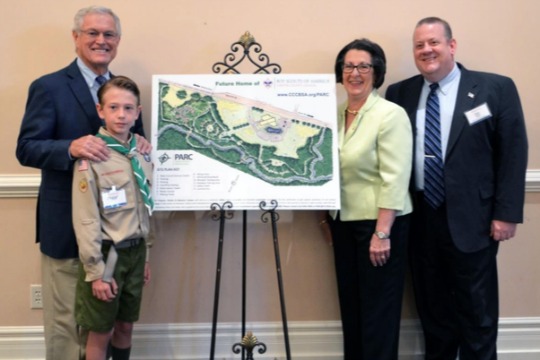
Honorary PARC Capital Campaign Chair Dick Vermeil (from left), shows off a rendering of the Boy Scout center with Scout Chase Sims, state Rep. Becky Corbin, R-155, and state Rep. Dan Truitt, R-156.

During the launch of a capital campaign for the Boy Scouts’ Chester County Council, a well-known West Chester attorney described a defining moment when he served in the Navy.

An artist's rendering shows the proposed
An artist’s rendering shows the proposed Program, Activity & Resource Campus (PARC) in Exton.

Jim McErlane, a member of the Chester County Council Advisory Board, said that during an interview for a coveted position, he was asked what set him apart from the competition. During his awkward pause, the officer looked at his application and answered for him: “You’re an Eagle Scout.”

McErlane, one of several speakers who praised the impact of the Boy Scouts, said he got the job a week later. “That position was a game-changer,” he said.

Harry Alberts, president of the Chester County Council, recalled serving as a Scoutmaster in Unionville for a troop founded in 1924 by Pierre S. du Pont, also known as the creator of Longwood Gardens. Alberts said he learned early on the value of what he termed “Scout power.” Last year, 212 boys earned Eagle Scout honors, representing 33,000 service hours, he said.

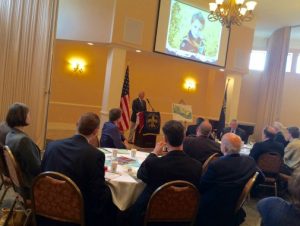
Former Eagles Coach Dick Vermeil addresses a crowd at Milestone Events in West Chester, where the Boy Scouts launched a capital campaign for a new center.
Former Eagles’ Coach Dick Vermeil addresses a crowd at Milestone Events in West Chester to  launch a capital campaign for a Boy Scout center.

“There’s nothing the youth in Chester County can’t do when they put their minds to it,” Alberts said. But he acknowledged that the Scouts could use some assistance as the Chester County Council embarks on an ambitious plan to build a new Program, Activity & Resource Campus (PARC) in Exton.

The center, which will sit on a 28-acre, donated parcel of wetlands, woodlands, streams and expansive  green space on Business Route 30, will feature environmental education, outdoor living skills development, team-building and leadership enhancement activities as well as recreational opportunities such as fishing, hiking, sports and fitness.

The 15,000-square-foot facility anchoring the campus has been conceptually designed to include a green roof, rooftop solar panels and geothermal energy as both building elements and educational features. It will house a Leadership Development Center, a Resource Center, and even a Scout Store to support the ever-evolving interests of young people.

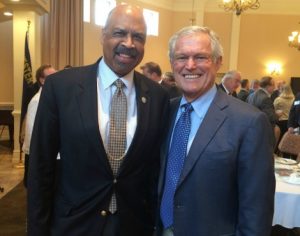
Former Eagles' Coach Dick Vermeil (right) is shown with Chester County Commissioners' Chairman Terence Farrell.
Former Eagles’ Coach Dick Vermeil (right) is shown with Chester County Commissioners’ Chairman Terence Farrell.

PARC is being designed to support advancement opportunities for Scouts, including more than 40 current merit badges, education initiatives such as STEM (science, technology, engineering and mathematics) and career education programming, according to the Chester County Council.

The project has the support of state Sen. Andy Dinniman, who said he has seen countless examples of Boy Scouts who have benefitted from the “virtues, civics, and patriotism” the organization espouses, values that have gotten lost in today’s world.

“I’ve learned how valuable, how important Scouting is,” Dinniman said.

Charlie Rogers, Scout executive of the Chester County Council, said he’s been involved in the organization since the age of 8 and believes that the new service center will ensure a productive future for Scouting. “We change lives; that’s what we do,” Rogers said.

And the cost for that ability? The same as a 30-second Super Bowl commercial: $5 million, Rogers said, adding that almost half of that amount has already been raised.

Rogers’ football reference was apt since the program’s keynote speaker was Dick Vermeil, former head coach of the Philadelphia Eagles.

Vermeil attributed his coaching success to principles he gleaned from the Boy Scouts. “You help kids learn how important it is to care about something … and provide them with good examples,” he said, adding that he worked to get his NFL players to care about the team.

“Hard work is not a form of punishment; it’s a solution,” Vermeil said. “I’ve never coached a football team that didn’t bitch.”

But letting players know that people care about them makes a positive difference, Vermeil said. And although he admitted that he doesn’t wear his Super Bowl ring much, he called it “a symbol of what people can do together.”

Vermeil has been running a golf fundraiser for the Boy Scouts for the past 24 years. He said the first year it raised $12,000, which he thought was pretty great. Now it brings in $190,000.

This year Vermeil said he’s going to enlist assistance from his former quarterback Ron Jaworski, hoping to continue the upward trend. “Ron always made me look good as a coach,” Vermeil explained.

“The future belongs to you,” Vermeil said. “Treat it with great respect.”

The audience of nearly 100 responded with a standing ovation.

For more information about the PARC project, including a narrated fly-over video of the property, visit www.CCCBSA.org/PARC. Those interested in a guided tour of the site can make a reservation through the website or by emailing PARC@CCCBSA.org.

Since 1919, the Chester County Council has been chartered by the Boy Scouts of America (BSA) to deliver the comprehensive youth development programs of Scouting through partnerships with community organizations in Chester County and in the northwestern corner of Cecil County, Md. Approximately 2,800 men and women volunteer in a variety of leadership roles so that 5,700 boys in grades 1-12 and girls in grades 9-12 can enjoy the benefits of Scouting.


About CFLive Staff

See Contributors Page https://chaddsfordlive.com/writers/

Boy Scouts aim to galvanize support for center Read More »

Brandywine Pops to celebrate spring

Since 1953, the Brandywine Pops Orchestra has been providing musical enrichment throughout the region, performing at area nursing homes, retirement centers, and assisted-living communities such as Maris Grove.

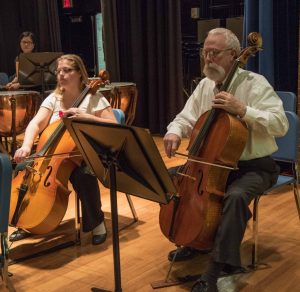
Members of the Brandywine Pops Orchestra are shown during its holiday concert.

The orchestra would like area residents to mark their calendars. On Friday, May 13, the public is invited to its spring concert, “Classical Dances and Americana.” Conducted by Michael Larkin, it will be presented at Springer Middle School, 2220 Shipley Rd. in Wilmington.

Tickets for the 7 p.m. concert are $10, $5 for seniors, and free for students. The Brandywine Pops is a nonprofit community service organization, and proceeds from the concert will assist it in purchasing music.

For the spring concert, the audience will hear orchestral dances by Brahms, Grieg, Larkin, and Beethoven; and American music by George Gershwin, Cole Porter, Clare Grundman and Richard Rodgers.

Membership in the Brandywine Pops is open, without audition, to all musicians who play an orchestral instrument and are proficient in reading music.  If you are a musician with a desire to play popular classics, pops and music from Broadway shows, consider join the group on Monday nights for rehearsals at Springer Middle School.  Particularly welcomed are home-schooled and high school students who are looking for more opportunities to perform.

For more information, visit http://brandywinepops.org.


About CFLive Staff

See Contributors Page https://chaddsfordlive.com/writers/

Brandywine Pops to celebrate spring Read More »

Fund ‘Making a Difference’ in girls’ lives

The Chester County Fund for Women and Girls (CCFWG) is inviting the public to join over 300 community leaders and individuals who want to make a difference.

On Friday, May 6, CCFWG will celebrate the inroads made in improving women’s lives at the 11th Annual Making a Difference Luncheon.

This year, the fund is highlighting women’s health, wellness, education and advocacy with its keynote speaker, T. Morgan Dixon, a co-founder of GirlTrek, a ground-breaking, national nonprofit based in Washington, D.C.

Founded three years ago, GirlTrek inspires and supports African American women and girls to live their healthiest, most fulfilled lives – simply by walking. Dixon is a relentless street-organizer, deeply inspired by her family and the philosophies of many influential women.

The luncheon also provides an opportunity to honor the fund’s Kitchen Table Award winner. The 2016 recipient will be longtime community advocate, Moira Mumma, who has demonstrated longtime leadership and has made substantive contributions through service and philanthropy to improve our community.

Mumma has a distinguished history of working to advance and improve the lives of women and girls and was an active participant in helping set the vision and tone of CCFWG as an original board member. Mumma’s passionate and dedicated involvement in a variety of nonprofit organizations has led to community betterment.

The luncheon, which regularly sells out, will be held at the Desmond Hotel and Conference Center at 1 Liberty Boulevard in Malvern. Registration begins at 10:30 a.m., followed by networking at 11 and the luncheon program at noon.

To purchase tickets, visit https://ccwomenandgirls.givezooks.com/events/11th-annual-making-a-difference-luncheon.

About CFLive Staff

See Contributors Page https://chaddsfordlive.com/writers/

Fund ‘Making a Difference’ in girls’ lives Read More »

Trying to stem flood of drugs in waterways

From cocaine and morphine to antibiotics and antihistamines, the nation’s waterways are awash in drugs.

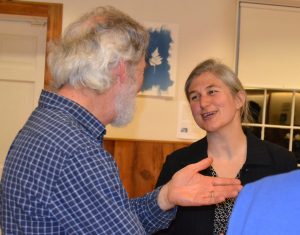
Emma Rosi-Marshall, a scientist from the Cary Institute, chats with attendees after her Stroud Water Research Center presentation entitled 'Our Rivers on Drugs.'
Emma Rosi-Marshall, a scientist from the Cary Institute, chats with attendees after her Stroud Water Research Center presentation entitled ‘Our Rivers on Drugs.’

Emma Rosi-Marshall, a scientist from the Cary Institute, discussed this disturbing discovery at the Stroud Water Research Center on Thursday, April 21. Her presentation, entitled “Our Rivers on Drugs,” was part of the center’s Science Seminar Series and attracted an appreciative audience of about 80.

David B. Arscott, Stroud’s assistant director and a research scientist, introduced Rosi-Marshall, a scientist from the Cary Institute who worked previously as an associate professor at Loyola University of Chicago. Rosi-Marshall is also heading the Baltimore Ecosystem Study, a long-term ecological research project.

Rosi-Marshall, who described herself as an aquatic ecologist, said she was thrilled to be visiting Stroud for the first time. She said he hoped the local audience realized how significant the Stroud Water Research Center is to freshwater ecology.

She used a 1962 quote from Rachel Carson, the author of “Silent Spring,” to set the stage for her lecture: “The chemicals to which life is asked to make its adjustments are no longer merely the calcium and silica and copper and all the rest of the minerals washed out of the rocks and carried in rivers to the sea; they are the synthetic creations of man’s inventive mind, brewed in his laboratories, and having no counterparts in nature.”

Rosi-Marshall suggested that Carson’s admonitions are truer today, and she acknowledged that the research she and her team have been conducting raises more questions than answers. What is known, she said, is that the 1,467 pharmaceuticals and an infinite number of chemical-laden, personal-care products, collectively known as PPCP, take many pathways into the water.

Some are discharged from drug manufacturing plants while others are released through human waste. “Wastewater treatment plants were not designed to remove pharmaceuticals,” she said, adding that the plants represent an ailing infrastructure in need of a $300 billion overhaul.

Another way that drugs infiltrate the freshwater system occurs through improper disposal, Rosi-Marshall said, explaining that when unused medications are flushed down the toilet or thrown in the trash, they eventually end up in streams and rivers.

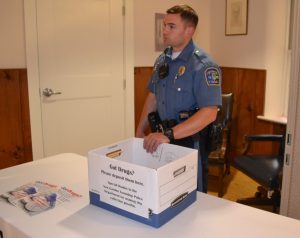
New Garden Township Police Officer Matthew Jones offers a safe way to dispose of unwanted medication.

Rosi-Marshall said that out of the many dozens of times that she’s spoken on this topic, the Stroud Water Research Center was the only venue to offer an opportunity for attendees to dispose of unwanted medications safely.

“That’s so awesome,” she said, referring to the presence of New Garden Township Officer Matthew Jones, who had a collection box at the back of the room.

Rosi-Marshall said she and her researchers have created artificial waterways with concentrations of PPCPs that mimic what’s occurring in nature. She said experiments to put algae on drugs and bugs on drugs have begged numerous questions that will require further investigation.

For example, Benadryl, a common antihistamine, affects algae more than other drugs do, but scientists do not yet know why. Changes have occurred in bug populations, but the effects on mortality and growth have yet to be determined, Rosi-Marshall said.

The Environmental Protection Agency regulates sewage, but not PPCPs, and the Food and Drug Administration monitors the safety of drugs, but not their effects on the environment, Rosi-Marshall said, adding that cosmetics are totally unregulated.

She said one good place for people to start fixing the problem is to reduce the use of chemicals and lobby lawmakers to maintain and upgrade the sewage infrastructure. After the 45-minute presentation, Rosi-Marshall took questions from the audience and then stayed to chat with attendees.

Joan Fenza of Landenberg said that the recent problems in Flint, Mi., have made water “a hot topic” and that she learned a lot from the lecture.

Tony Buck of Coatesville agreed. “It’s a huge problem,” he said. “Every drug is in the water.”

Buck suggested that the country desperately needs to focus on its aging sewage infrastructure. “I think water and soil and climate change will define the next 100 years,” he said.

Kelly Dillon traveled from Elverson to attend the presentation with her eighth-grade daughter, Eva. As a home-schooling mother who works as a program coordinator for Open Connections, a home-schooling resource, Dillon said she’s very familiar with the educational programs that Stroud offers.

Dillon said she appreciated Rosi-Marshall’s candor in stressing that many unknowns exist about the effects of drugs on waterways. And although she found that revelation depressing, Dillon said she felt inspired to do her part to minimize the impact.

“I had no idea this was happening,” her daughter added. “I learned a lot.”

The Stroud Water Research Center began in 1967, five years before the birth of the Environmental Protection Agency. It resulted from the foresight and vision of W.B. Dixon Stroud, his wife, Joan M. Stroud, and Ruth Patrick, a water scientist at the Academy of Natural Sciences. They joined forces to establish a location in Avondale along a branch of the White Clay Creek that could be studied by teams of scientists during a time when the nation’s waterways were severely imperiled.

Since then, the center has expanded, continuing its commitment to environmental advocacy. Its Moorhead Environmental Complex received LEED platinum certification in 2013, the highest honor for green buildings. For more information on the center and its many programs, visit http://www.stroudcenter.org.

About CFLive Staff

See Contributors Page https://chaddsfordlive.com/writers/

Trying to stem flood of drugs in waterways Read More »

Mind Matters: The path to healthy boundaries

Well, it happened again. A young man walking with, presumably his girl friend at Longwood, has his arm around her neck. She looks uncomfortable and is protesting. Finally, after some time, he gets the message and removes his arm from this “wrestling” hold. No, not the first time I’ve witnessed this kind of display of boundary crossing.

The boyfriend, in this scene, invaded the young woman’s personal space; she did not want to be touched in this way. Whether what he was doing was physically hurting her or not was not the crux of the matter. At root is the notion that a person’s body—infant, child, or adult—is their space, sacred if you will, not to be dominated or intruded upon by another.

Defining boundaries as a line that marks a limit, what about healthy boundaries in relationships? When do we intrude upon another’s space? Unhealthy boundaries and intrusiveness can occur between couples, parents and children, employer and employee, and friends. Anywhere people are!

Simplistically re-interpreting the eighteenth century philosopher Immanuel Kant, one person’s freedom ends where another person’s freedom begins. Hopefully, we readily see that physical abuse or sexual abuse are egregious boundary violations. However, other intrusive and unwanted behavior inflicted on another need to be included on the spectrum of such violations.

Fossum and Mason in their book “Facing Shame” discuss the development of healthy versus unhealthy physical boundaries in families. Healthy physical boundaries, they say, “require a clear sense of physical space. Those with defined boundaries can intuit distance comfort and discomfort and can move away or toward someone…They have grown up with people respectful of their physical space and have had appropriate recognition of their developmental needs regarding modesty and openness.”

While physical boundaries are necessary, so are emotional and intellectual boundaries. Most assuredly, in families, they intersect. According to Fossum and Mason, intellectual boundary violations include criticizing, blaming, mind reading, prying. These inappropriate behaviors can be acted out by parents to a child, or by an adult to an adult. There are also speech boundary violations: talking over the other, interrupting, raising voices, correcting, completing sentences.

In addition, emotional boundary blurring can occur in families where generational boundaries are lost: that is, where one parent fuses with a child for his or her emotional support. This is not to be confused with healthy loving relationships. The child, in this case, doesn’t know where his or her feelings begin or end, having become an emotional sponge for the needy parent, thus mirroring the parent’s roller coaster of emotions.

All this reflection on boundaries from one scene on a garden path. My guess is that if that couple is to have a flowery future, they will need to take heed of healthy boundaries — as do we all.

* Kayta Curzie Gajdos holds a doctorate in counseling psychology and is in private practice in Chadds Ford, Pennsylvania. She welcomes comments at MindMatters@DrGajdos.com or 610-388-2888. Past columns are posted to www.drgajdos.com. See book.quietwisdom-loudtimes.com for information about her book, “Quiet Wisdom in Loud Times: The Rise of the Wounded Feminine.”

** The opinions expressed are those of the author and do not necessarily reflect those of the ownership or management of Chadds Ford Live. We welcome opposing viewpoints. Readers may comment in the comments section or they may submit a Letter to the Editor to: editor@chaddsfordlive.com


About Kayta Gajdos

Dr. Kathleen Curzie Gajdos ("Kayta") is a licensed psychologist (Pennsylvania and Delaware) who has worked with individuals, couples, and families with a spectrum of problems. She has experience and training in the fields of alcohol and drug addictions, hypnosis, family therapy, Jungian theory, Gestalt therapy, EMDR, and bereavement. Dr. Gajdos developed a private practice in the Pittsburgh area, and was affiliated with the Family Therapy Institute of Western Psychiatric Institute and Clinic, having written numerous articles for the Family Therapy Newsletter there. She has published in the American Psychological Association Bulletin, the Family Psychologist, and in the Swedenborgian publications, Chrysalis and The Messenger. Dr. Gajdos has taught at the college level, most recently for West Chester University and Wilmington College, and has served as field faculty for Vermont College of Norwich University the Union Institute's Center for Distance Learning, Cincinnati, Ohio. She has also served as consulting psychologist to the Irene Stacy Community MH/MR Center in Western Pennsylvania where she supervised psychologists in training. Currently active in disaster relief, Dr. Gajdos serves with the American Red Cross and participated in Hurricane Katrina relief efforts as a member of teams from the Department of Health and Human Services' Substance Abuse and Mental Health Services Administration.Now living in Chadds Ford, in the Brandywine Valley of eastern Pennsylvania, Dr. Gajdos combines her private practice working with individuals, couples and families, with leading workshops on such topics as grief and healing, the impact of multigenerational grief and trauma shame, the shadow and self, Women Who Run with the Wolves, motherless daughters, and mediation and relaxation. Each year at Temenos Retreat Center in West Chester, PA she leads a griefs of birthing ritual for those who have suffered losses of procreation (abortions, miscarriages, infertility, etc.); she also holds yearly A Day of Re-Collection at Temenos.Dr. Gajdos holds Master's degrees in both philosophy and clinical psychology and received her Ph.D. in counseling at the University of Pittsburgh. Among her professional affiliations, she includes having been a founding member and board member of the C.G. Jung Educational Center of Pittsburgh, as well as being listed in Who's Who of American Women. Currently, she is a member of the American Psychological Association, The Pennsylvania Psychological Association, the Delaware Psychological Association, the American Family Therapy Academy, The Association for Death Education and Counseling, and the Delaware County Mental Health and Mental Retardation Board. Woven into her professional career are Dr. Gajdos' pursuits of dancing, singing, and writing poetry.

Mind Matters: The path to healthy boundaries Read More »

Democrats challenge Republican’s residency

The race for the state House seat in the 158th Legislative District — specifically for the Republican Party nomination — continues to be controversial.

The state House Democratic Campaign Committee has challenged the legitimacy of a Republican’s eligibility for state representative based on the candidate’s residency.

The committee issued a release on April 21 that said Eric M. Roe, who is running a write-in campaign for the GOP nomination, does not meet the residency requirements to run for the office. The Republicans say it just isn’t so.

State law requires candidates for state representative to be residents of the state for four years and to be an inhabitant of their respective districts for one year before the election. By law, Roe should have been a legal resident of Pennsylvania since November 2012 and of the district since November 2015.

In the release, Nathan Davidson, executive director of the Pennsylvania HDCC, cited Roe’s LinkedIn profile page, saying that page “casts doubts” on his eligibility to run for the seat. The committee said Roe graduated from American University in 2010, then went to work for the Republican National Committee in Washington D.C. and that the RNC reported that he lived in Washington.

Roe continued to live in D.C. until November 2012, listing his residence as Washington while working for Let Freedom Ring, the release said, and that Roe then left the country for a year to study at University College London.

“Roe did not plant roots in Pennsylvania and establish his residency here until he joined the John Jay Institute in August 2014,” according to the release.

Val DiGiorgio, the chairman of the Republican Committee of Chester County, said in an email: “This is a pathetic attempt by the Democrat [sic] Party to confuse voters just days before a primary election in hopes that their Democrat candidate wins the Republican Primary.”

(State law does not allow a candidate for state House to cross-file, but candidates from one party may mount a write-in campaign on another party’s ballot. Rzucidlo said she is running such a campaign in Tuesday’s primary.)

DiGiorgio said Roe has been a resident of the district for 25 years, adding that Roe’s tax returns, driver’s license, car and voter’s registration show he’s been a resident since he was 18.

“This is all public record and indisputable,” DiGiorgio wrote.

He claimed that the Democratic Party candidate, Susan Rzucidlo, has “spent the last two months trying to mislead Republicans, hoping they will vote for her in the Republican Primary. Now, she is propagating blatant lies and should be ashamed of herself. She is a three-time loser, and in her fourth attempt for this office, she knows her only hope for election is underhanded tricks and political games.”

Rzucidlo said she knew nothing about the HDCC press release until after it was issued. She also said DiGrigorio is just trying to blame her for his problems in the GOP.

The 158th Legislative District has been involved with political controversy for the last two years. Republican Chris Ross has been the representative for 20 years, but two years ago he wanted to retire.

The Chester County GOP endorsed Cuyler Walker to run in 2014, but Walker withdrew at the last minute for reasons never made public. Ross then ran for, and won, another term.

Earlier this year Roe, Perry Bentley and Lenny Rivera sought the GOP nomination. The party endorsed Rivera, but he withdrew his name because of irregularities regarding signatures gathered on his ballot petition.

However, Rivera decided to run a write-in campaign, but changed his mind. Bentley then announced a write-in campaign, and Roe followed suit after the party chose to endorse him over Bentley.

Whoever gets the Republican nomination in Tuesday’s primary will face Rzucidlo in November.

The 158th comprises London Britain, New Garden, East Marlborough, West Marlborough, Newlin, East Bradford, West Bradford and parts of West Goshen townships and Avondale Borough.

About Rich Schwartzman

Rich Schwartzman has been reporting on events in the greater Chadds Ford area since September 2001 when he became the founding editor of The Chadds Ford Post. In April 2009 he became managing editor of ChaddsFordLive. He is also an award-winning photographer.

Democrats challenge Republican’s residency Read More »

UHS ranked 8th in state

U.S. News & World Report has ranked Unionville High School number 8 in the state and number 530 in the country.

According to school Principal Jimmy Conley, that’s not just an acknowledgement of how well UHS does. He said it shows how good all the district schools are and how much effort the community puts into education.

“It’s an honor to be ranked eighth in the state, and it’s an honor we share with the entire community. It’s exciting,” Conley said.

He also said that while getting the ranking is “wonderful, the kids are more than just a number.” He said it’s not just about curriculum, but how the district supports students afterward.

Conley acknowledged the irony that it was the U.S. News & World Report’s listing of the top-ranked colleges and universities that led to the recent controversy over whether or not student decile rankings should be included when a student applies to colleges.

But, he said even that controversy was a good sign.

“I loved how the community came together to discuss this. Everyone was respectful. That type of thoughtful, educated discourse is why we’re successful.”

Conley also noted that the school was ranked 14th in the country by another reporting agency in November 2014. He said he has to take all reporting with a grain of salt since different agencies look at different areas.

Regional schools ranking ahead off UHS in the report are Conestoga, third; Lower Merion, fourth; and Strath Haven, seventh.

Other regional schools ranked in the top 20 are Renaissance Academy Charter School, Radnor High School, Central Bucks High School-West, Wissahickon High, Council Rock High School-North and Great Valley High School.

About Rich Schwartzman

Rich Schwartzman has been reporting on events in the greater Chadds Ford area since September 2001 when he became the founding editor of The Chadds Ford Post. In April 2009 he became managing editor of ChaddsFordLive. He is also an award-winning photographer.

UHS ranked 8th in state Read More »

Roadwork for week of April 23

PennDOT has announced the following road projects, which are weather-dependent and could affect residents in the greater Chadds Ford area during the week of April 23 through April 30. Motorists are urged to allow extra time if they are traveling through one of the construction zones.

Creek Road is scheduled to close between Brintons Bridge Road and Route 1 in Birmingham Township on Monday, April 25, and Tuesday, April 26. Crews will be working on resurfacing from 9 a.m. to 3 p.m. During construction, Creek Road through traffic will be detoured over Routes 1 and 202 and Brintons Bridge Road. Local access will be maintained up to the construction zone.

Route 202 in both directions in West Goshen, East Whiteland and Tredyffrin townships will have to accommodate a slow-moving operation to paint traffic lines on Monday, April 25. Crews are scheduled to work from 9 a.m. to 3 p.m.

Route 322 in Concord, Bethel, and Upper Chichester townships will be the site of patching on Tuesday, April 26. Lane closures will be needed between Baltimore Pike and I-95 from 9 a.m. to 3 p.m.

Route 1 in Concord Township will be the site of utility installation through Sept. 1. Lane shifts will be needed on weekdays from 9 a.m. to 3 p.m. between Brinton Lake Road and Applied Card Way.

Lane restrictions will continue to be needed on Gay Street in West Chester Borough between North Worthington and Montgomery Street for sidewalk installation. Crews are scheduled to work from 9 a.m. to 3 p.m. through Monday, May 2.

Work is continuing on the project to widen Route 202, which is scheduled for completion in August 2016.  Motorists should expect delays for traffic pattern shifts in Tredyffrin and East Whiteland townships.

Work will also continue on the Speakman Covered Bridge in East Fallowfield and West Marlborough townships. Frog Hollow Road between Concord Bridge and Strasburg roads will be closed and detoured until the estimated completion date of Sept. 20.

Burnt Mill Road in Kennett Township remains closed and detoured between Norway and Spring Mill roads while advance work continues on repairs to the Burnt Mill Bridge, which was closed on April 24, 2014. PennDOT reported progress last week on scheduling the work.

Work is continuing on the Birmingham Road Bridge in Birmingham Township, which closed in September due to structural damage. Posted 24-hour detours will be in effect between Lambourne Road and Stoney Run Drive through Aug. 31.

Daylong lane closures will be in place on Route 100 in Uwchlan and West Whiteland townships from 7 a.m. to 5 p.m. for the installation of aerial fiber optic lines through Friday, April 29. The northbound right lane will be closed from Ship Road to Sheree Boulevard, and the southbound right lane will be closed from Marchwood Road to Sunrise Drive.  An additional lane closure also may occur, if needed, weekdays from 9 a.m. to 3 p.m.

Lane restrictions are scheduled on Saturday, April 23, on Interstates 76 and 95 in Philadelphia for patching. From 6 a.m. to 2 p.m., the right lane is scheduled to close on eastbound and westbound I-76 between City Avenue and Passyunk Avenue. Lane restrictions are scheduled on northbound and southbound I-95 between Broad Street and Academy Road.

Lane restrictions will also occur next week on I-76 and Market Street in Philadelphia for sign installations, bridge inspections, deck repairs, and surveys. The work will be done in sections from 8:30 a.m. to 3 p.m. on Tuesday, April 26, Wednesday, April 27, Saturday, April 30, and Sunday, May 1.

If you want to report potholes and other roadway maintenance concerns on state roads, call 610-566-0972 in Delaware County or 484-340-3200 in Chester County, or visit www.dot.state.pa.us and click on “submit feedback.”


About CFLive Staff

See Contributors Page https://chaddsfordlive.com/writers/

Roadwork for week of April 23 Read More »

Scroll to Top