November 24, 2010

Adopt-a-Pet Nov. 25

Adopt-a-Pet Nov. 25

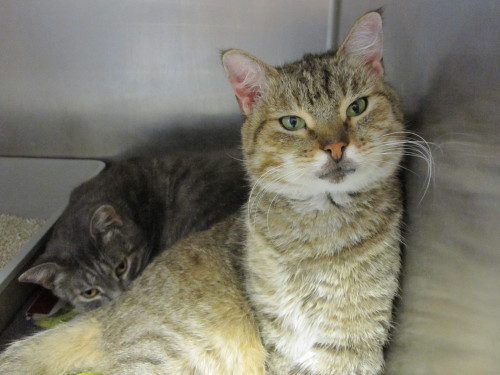
Sabrina is an adult spayed female domestic short hair cat
who is currently available for adoption at the Chester County SPCA. Sabrina came to the shelter with her
sister, Sugar, as well as almost 60 other cats that were living in poor
conditions. Don’t be fooled,
though, Sabrina’s struggles have only made her appreciate the finer things even
more! Sabrina is a very sweet and
affectionate cat. She is also very
bonded with her sister, Sugar, so we are trying very hard to find these two
girls a home together. Sabrina and
Sugar are eligible for our Eagles Purrfect Play for Cats adoption incentive
program. This special program, made possible through a gift from the
Philadelphia Eagles Treating Animals With Kindness (TAWK) program, allows the
Chester County SPCA to offer a discounted adoption fee of only $25 for all
special needs cats or cats over the age of 5! If you are able to provide Sabrina and Sugar a home, visit
the Chester County SPCA at 1212 Phoenixville Pike in West Goshen or call
610-692-6113. Sabrina’s registration number is 96799446. To meet some of the
other animals available for adoption, visit the shelter or log onto www.ccspca.org.

About CFLive Staff

See Contributors Page https://chaddsfordlive.com/writers/

Adopt-a-Pet Nov. 25 Read More »

Hunters get their first marching orders

Hunters wanting to take part in
the planned deer management hunt in Chadds Ford Township received their first
briefing from Deer Management Officer Tim Smail. One of the things they were
told goes against everything they’ve been taught in the past: Harvest the does
first.

The hunt—promoted by a Lyme
disease task force of the Chadds Ford Civic Association—is designed to reduce
the deer population in the township from 144 per square acre down to 10. With a
smaller deer population, there would be fewer ticks spreading Lyme and other
tick-borne illnesses.

The township funded a U.S.
Department of Agriculture study last year that determined the size of the deer
population. The Civic Association also conducted a survey that showed 43
percent of respondents have had Lyme disease.

Smail, who also spoke to
homeowners the night before, said hunters have been taught to go for the bucks
instead of the does, but that results in an increased number of the deer.

Deer in Pennsylvania were hunted
almost to extinction by 1900, Smail said. Taking the trophy buck, not the
females, led to the large number of deer today.

“Most of us are not deer
hunters. We’re buck hunters,” Smail said.

But that mindset needs to change
if the program is to work.

“We don’t want a hunter who will
take that big buck the first day, then not come back,” he said.

The idea, as it stands now,
calls for a minimum of seven does to be harvested before a buck could be taken.

All hunting would be with bow
and arrow and hunters must use tree stands so the shooting angle is downward.

Property rights and landowner wishes must be adhered to. A
hunter’s responsibilities parallel those of the landowner’s that Smail
mentioned during the homeowners’ meeting the night before.

Property boundaries must be
indentified as would specific “no hunting” areas on the property. Landowner and
hunter should would the property together and the hunter should get property rules
and permissions in writing.

Hunters must also abide by state
Game Commission rules and regulations. They were also told to act as a hunter’s
townwatch group by reporting poaching or any other illegal hunting violations.

Hunters are also required to get
a qualification certificate by first going through more sessions with Smail,
and they are required to treat the property owners as employers.

The hunt would begin next year,
but Smail is not yet sure if it would start before the current hunting season ends
in January or in the middle of next September when the 2011 hunting season
begins.

He also said he doesn’t want 100
hunters knocking on doors to get permission to hunt a property.

According to Peter Jesson, who
heads the Civic Association task force, the township would contact the
landowners first to see whether they’re interested in taking part in the
program, then hunters and landowners would be introduced.

He added that the township
solicitor is drafting the formal program permission slip. All regulations will
be posted on the association’s Web site http://the.chaddsfordcivicassn.org/

Jesson, Smail and the township
supervisors all believe that a hunt is the best method of controlling the deer
population. They anticipate a successful program—which could take up to three
years to work smoothly— would result in fewer incidents of Lyme disease, fewer
traffic accidents caused by deer and less property damage caused by deer eating
vegetation.

About Rich Schwartzman

Rich Schwartzman has been reporting on events in the greater Chadds Ford area since September 2001 when he became the founding editor of The Chadds Ford Post. In April 2009 he became managing editor of ChaddsFordLive. He is also an award-winning photographer.


Hunters get their first marching orders Read More »

Deer hunt planned for Chadds Ford Township

Chadds Ford Township landowners learned their options and
responsibilities for a managed deer hunt being planned to reduce the frequency
of Lyme disease.

A Civic Association task force, chaired by resident Peter
Jesson—and with Supervisor Garry Paul as supervisors’ liaison—held a public
meeting for landowners featuring Tim Smail, the township deer control officer
who is also a conservationist and wildlife biologist.

Residents were given a survey sheet asking whether they, or
any members of their families had Lyme, whether they would allow hunting on
their property or whether they would be a hunter.

Smail said hunting the properties would be up to the
landowners and various homeowners associations if the properties were in
developments, and that landowners would control hunters’ access to properties.

Those who allow hunting should identify property boundaries,
identify “no hunting” areas and they should walk hunters around the boundaries,
Smail said. Property owners should also develop deer and hunter management
plans and provide written rules and permission. It would be a landowner/hunter
partnership.

The plan, so far, breaks the township down to 12 zones.
Hunters—using bows only—would be required to abide by state Game Commission
rules with some minor exceptions.

Smail said hunters, once they get permission from the
owners, should begin by harvesting does. They should buy seven permits for
antlerless deer, then take those deer before taking a buck. That would be the
most effective means of reducing the deer and tick population.

He also said homeowners could allow for a smaller safety
zone on their properties. The current safety zone is 50 yards from an occupied
structure for bow hunting. Homeowners may reduce that if they see fit.

Smail added that there was “no one-and-done” solution and
that it could take up to three years for the plan to be worked out fully.

A previous survey, the results of which were announced last
January, indicated that 43 percent of township respondents have had Lyme
disease. At the time, Jesson said that Lyme was “epidemic” in the township.

Lyme is a debilitating tick-borne disease. Ticks first
become infected in their younger stages by feeding off the blood of infected
rodents. As adults, the ticks feed off the deer. They then drop off and, if
they find a human host, infect the person.

The task force determined that a hunt was the best method
for controlling the tick population.

Smail reaffirmed the idea during the Nov. 22 meeting.

He said contraception methods and using insecticides are
costly and inefficient.

Paul said the township paid for a study that found 144 deer
per square mile in the township.

“That’s worse than we thought,” Paul said.

He said 10 deer per square mile is preferred, but definitely
no more than 30 per square mile.

Paul said the plan would start next year. It was not clear,
however, whether the managed hunt would begin in January or have to wait until
September when the next hunting season begins.

Deer season begins in mid September and runs through
January.

A meeting for hunters was held Nov. 23.

About Rich Schwartzman

Rich Schwartzman has been reporting on events in the greater Chadds Ford area since September 2001 when he became the founding editor of The Chadds Ford Post. In April 2009 he became managing editor of ChaddsFordLive. He is also an award-winning photographer.
Deer hunt planned for Chadds Ford Township Read More »

Bits & Pieces for Nov. 25

• Candlelight Christmas, Chadds Ford Historical Society’s
annual holiday house tour takes place Saturday, Dec. 4 from 1 to 6 p.m. Advance
tickets for the 25th annual tour are $16, $20 for adults the day of the event.

• On the first two weekends in December, Saturday and
Sunday, December 4 and 5 and 11 and 12, from noon until 6 p.m., the Chaddsford Winery will host a Holiday Open
Houses
, a once-a-year opportunity to visit the winery and enjoy
complimentary tastings and holiday treats. Guests are invited to explore the
winery, where gifts will be displayed and available for purchase and live
strolling carolers will set a festive atmosphere. Chaddsford wine educators
will be on hand, pouring tastes of their latest vintages and offering helpful
advice and pairings, along with tasty holiday sweets. For more information on their annual
Holiday Open Houses, other upcoming events or the wines of Chaddsford, please
call 610-388-6221.

The Belin House Organic Café at Hagley will be serving holiday
brunches Saturdays and Sundays, Nov. 27 through Jan. 2. Enjoy this delicious
addition to a festive holiday tour of Hagley! The café will be open 11 a.m. to
3 p.m. No reservations necessary.
The special holiday brunch menu is prepared using farm-fresh, locally grown,
sustainable and organic products. Featured specialties are à la carte and include
made-to-order omelets, pumpkin leek soup, open-faced roasted turkey sandwiches,
Maryland crab cakes, warm apple cider, and more. The Belin House Organic Café is
self-service with self-seating.

About CFLive Staff

See Contributors Page https://chaddsfordlive.com/writers/

Bits & Pieces for Nov. 25 Read More »

Crozer gets $1.92 million grant for family medicine residency expansion

Crozer-Chester Medical Center was recently awarded a
five-year, $1.92 million grant from the U.S. Department of Health and Human
Services’ Health Resources and Services Administration that will help Crozer’s
Family Medicine Residency Program to expand from seven residents a year to nine
residents a year.

The grant Crozer received is part of $320 million in grants
under the Affordable Care Act that are aimed at strengthening the health care
workforce. Of those grants, $253 million will go to improve and expand the
primary care workforce under the Prevention and Public Health Fund of the
Affordable Care Act. Another $67 million in Health Profession Opportunity
Grants will provide low-income individuals with education, training and
supportive services that will help them prepare to enter and advance in careers
in the health care sector.

Crozer was one of only six institutions in Pennsylvania that
received grants for primary care residency expansion.

“We’re thrilled to receive this grant. We’re proud to play a
role in working to reverse the national primary care physician workforce
shortage,” says William Warning II, M.D., FAAFP. “The nation needs more primary
care physicians, particularly as we work toward a new model of care that
focuses on the concept of providing patients with a ‘medical home.’”

Crozer’s Family Medicine Residency Program currently has
seven residents per class, for a total of 21 residents in the program. The
grant, along with additional funding by Crozer, will help the program expand to
nine residents for each class.

“Crozer-Keystone Health System has truly demonstrated a
commitment to our program, and to expanding its primary care base. Many of our
former residents have been hired by the Crozer-Keystone Health Network after
completing our program,” Warning says.

The Center for Family Health practice in Springfield, which
serves as the residency program’s main clinical site for outpatient teaching,
is one of two CKHS primary care practices that have earned recognition from the
National Committee for Quality Assurance’s Physician Practice Connections-Patient
Centered Medical Home Program. Crozer Medical Associates is the other practice
that has earned this recognition.

At the Center for Family Health, residents use a fully
functional electronic medical record, which provides a paperless approach to
quality patient care and practice-based research. Residents work with a
multi-disciplinary team that includes a behavioral psychologist, nurse
practitioner, clinical pharmacists, nurse care manager, medical assistants and
several specialist physicians. Residents also train at Crozer-Keystone
hospitals as well as the Center for Family Health in Upper Darby.

Crozer’s Family Medicine Residency has a progressive
full-time faculty with advanced training in sports medicine, medical
informatics, obstetrics, women’s health, geriatrics and faculty development.
Faculty members regularly make presentations and host workshops at both the
regional and national level as well as collaborate with the residents for
research and scholarly activities.

For more information about Crozer’s Family Medicine
Residency, or about any of Crozer-Keystone’s other residency and fellowship
programs, visit http://residency.crozer.org.

Crozer gets $1.92 million grant for family medicine residency expansion Read More »

Delaware Art Museum receives national funding awards

The Delaware Art Museum is pleased to announce that it is
the recent recipient of five grants from national foundations and organizations
totaling approximately $250,000. The five separate awards were given to
fund unique functions of the Museum – including research, fundraising,
marketing, the archival collection, and the Museum’s upcoming Centennial
exhibition, Howard Pyle: American Master Rediscovered.

Museum Executive Director Dr. Danielle Rice said she is
pleased with the Museum’s recent funding successes, which she calls an
“impressive feat in this economy.”

“Although funding opportunities for the arts have
become more competitive in recent years, it’s clear that the Museum’s tireless
efforts to engage the community with our collections, exhibitions, archives,
and exciting programs have paid off,” Dr. Rice said. “I’m proud
that so many national funders are recognizing our outstanding work.”

The Henry Luce Foundation-sponsored Luce Fund in American
Art awarded the Museum $100,000. This award will support the curatorial
work of the Howard Pyle: American Master Rediscovered exhibition, which opens
in November of 2011 under the direction of Chief Curator Dr. Margaretta Frederick
to commemorate the Museum’s Centennial. The Luce Fund supports scholarly
exhibitions and their related publications that contribute significantly to the
study of American art. Intellectual merit and potential contribution to
scholarship are the most important criteria for evaluating proposals.
The Museum also recently received funding from two other significant arts
foundations.

The Andy Warhol Foundation for the Visual Arts awarded the
Museum $11,000 to support curatorial research by Heather Campbell Coyle,
Curator of American Art. The Warhol Foundation’s funds will help support
an exhibition and publication about Scott Heiser (1949-1993), a distinctive
fashion photographer from Wilmington who appeared regularly in Interview and
Paper magazines. The Museum also previously received a grant of
$75,000 for conservation and research related to the Howard Pyle exhibition
from the Wyeth Foundation for American Art and a generous individual gift from
Howard Pyle Brokaw.

Additional awards to the Museum include a $10,000 gift from
the Gladys Krieble Delmas Foundation to support the exhibition and publicity of
the recently acquired M. G. Sawyer Collection of Decorative Bindings in the
Museum’s Helen Farr Sloan Library & Archives; a $50,000 award from the Jessie
Ball duPont Fund to help the Museum launch a 1:1 matching fundraising
challenge; and an in-kind gift from Google Grants to assist the Museum with
website promotion and visibility.

Delaware Art Museum receives national funding awards Read More »

The Naked Winemaker:‘Tis the season to eat, drink & be merry

Now that the 2010 harvest is
over – and what a magnificent vintage it was in the Brandywine Valley – I can
go back to obsessing about wine and food, my favorite subject. Especially this time of year when
thoughts turn to big family feasts for the upcoming holidays. Many people seem to get super stressed
this time of year, but selecting the right wines to go with your favorite foods
does not have to be difficult if you follow a few simple tips. For the locavores among you, I’ve
included a few suggestions from my own portfolio!

If you’re serving BEEF:
Best bets for beef, steak or any
big red meats are the rich flavorful Cabernet family of wines, like Cabernet
Sauvignon, Cabernet Franc, Merlot and Malbec. Some of my favorites are classic Bordeaux, California Cabs,
Cab Francs from Long Island, and the Malbecs from Argentina. Or try a rich robust Shiraz from
Argentina. In my own cellar at
Chaddsford Winery, I recommend our Cabernet Sauvignon, Rubino (Cabernet and
Sangiovese blend) or the “Portfolio Collection” Merican blend (Cabernet
Sauvignon, Merlot and Cabernet Franc).

If you’re serving TURKEY:
Turkey can go both ways, red or
white, depending on the preparation. You can never go wrong with
Chardonnay! If the side dishes are
light veggies and salads, go for the light (non-barrel aged) ones like those from
New Zealand or my own fresh “Naked Chardonnay.” With rich sauces and gravies, try the
bigger, barrel-aged types, most notably from California and Australia, or a big
Montrachet or Meursault from Burgundy.
If dinner isn’t dinner without a red, a light Pinot Noir is the way to
go. The elegant red Burgundies are
always wonderful, and my new favorites are the Pinots from Oregon – I love them
all! With sweet additions like candied yams, I recommend Chaddsford’s slightly
sweet Sunset Blush, or other blush wines like White Zinfandel.

If you’re serving SEAFOOD:
For light delicate fish dishes
and shellfish I recommend crisp fresh whites like Pinot Grigio from Italy,
Sauvignon Blanc from New Zealand, a Muscadet from the Loire Valley of France,
the Proprietors Reserve White from Chaddsford, or my current favorite, a
delightful Albarino from Spain.
With rich (butter and cream) sauces and steak-ier fishes, I’d definitely
go with a Chardonnay, and for a truly classic pairing, have Pinot Noir with
Salmon.

What to serve with DESSERT:
No question here, sweet wines are
the only choice! For light
desserts, pick a German Riesling or perhaps an Italian Muscato. For richer, more decadent treats, go
for a wickedly sweet late harvest dessert wine, or even an ice-wine. The most classic choice is a Sauterne
from France, but there are some real beauties coming out of the Niagara
Peninsulaof Ontario that are worth trying. Up the road at your local watering hole, my choice would be
our sweet and grapey Niagara that works wonders with fruit based desserts and
cheesecake, or, for something unique, try hot mulled Spiced Apple Wine.

For your BUFFET:
Many people do buffets for big
holiday gatherings, and you might want to consider a “wine buffet” as
well. A large crowd means a lot of
different likes and dislikes, so offering a selection of wines can make
everyone happy. At our house, I
try to offer many different wine types and styles to make everyone happy: one
light fresh fruity white, one fuller-bodied white, one lighter style red like a
Beaujolais or Chianti, one or two big rich earthy reds, and a few dessert
wines, maybe even a Port to finish off the evening. Letting people choose is a lot of fun and makes for great
conversation!

The Naked Winemaker:‘Tis the season to eat, drink & be merry Read More »

Free Your Space: Trim the tree and the clutter at the same time

The holidays can bring so much extra into the home: extra
people, extra food, extra mail, extra décor… all sorts of extra stuff. Deciding
beforehand how to handle all the excess is a way to set yourself up for
easy-flowing and stress-free entertaining.

Begin with cleaning. This is a great opportunity to really
get down to the nitty-gritty!
Start with your main entertaining rooms – living room, kitchen, family
room, dining room and common bathroom.
Dust & polish from top to bottom (fan blades, windows & sills,
pictures, woodwork, and furniture), then vacuum thoroughly. Bring out your boxes of holiday decorations
and begin to unpack.

As you add decorations around each room, remove regular
daily decorations. The idea of
“replacing” is the key to making a quick and seamless transition. As you move from room to room, remove
items that are non-essential and add your holiday décor.

In your living and family rooms, replace statues, pillows,
and candleholders – even pictures on the wall – with festive holiday
decorations. Put out an empty
holiday basket or box to hold incoming greeting cards. Bring out holiday music, books and
videos. Houseplants and poinsettias that are in plastic containers can be
dropped into seasonal planters or baskets. Cover the top with foil or fake holly or moss to hide the
plastic insert.

For the kitchen, you may have holiday oven mitts,
dishtowels, mugs and dishes, a cookie jar, appliances and bake ware that is all
only used at this time of year. Do
the same as in the previous rooms: remove the ordinary or non-essentials and
add the holiday items. In the
dining room, a holiday vase can replace a flowery one that sits atop your
dining room credenza; plain serving dishes and utensils are exchanged for
holiday service ware.

Don’t forget to adorn your bathroom with holiday soap and
hand towels, and a holiday candle to replace a plain bathroom candle. Remember, other family members &
guests don’t need to use (or see) your toiletries so keep them off the
countertops.

Now that you’ve removed your everyday items, all of your
seasonal decorations should be fitting in beautifully without any
overflow. You may even find that
there is a little extra room!

So now, what do you do about all the stuff you’ve
removed? Simple. Pack it into the holiday boxes! You already have them out and ready to
pack and they presumably have a storage place to go back to, from which they
were removed.

Begin each holiday or season by using this system of
switching things out. Then, at the
end of each of these time periods, you can start by gathering everything
related to that season: mugs (including new ones you received this year),
books, plates, towels, pillows, videos and decor and then storing them for next
year. This will prevent your home
from feeling over-stuffed and cluttered and keep your everyday
“working-storage” spaces fully functional in any season. Yes, I know you love
that holiday throw, but sipping hot cider from your favorite Christmas mug
while watching It’s a Wonderful Life! is a treat that’s worth the wait!

I wish you the Peace, Joy and Love you deserve this holiday
season.

* To contact Annette
Reyman for organizing work or speaking engagements in the Greater Philadelphia
area call (908) 361-7105 or email her at annettereyman@gmail.com. Reyman is a member of the National
Association of Professional Organizers (NAPO®) and Board Member of it’s
Philadelphia Chapter. Visit her
blog, http://www.areyofhope.blogspot.com
or her website at www.allrightorganizing.com
or follow All Right Organizing on Facebook.

Free Your Space: Trim the tree and the clutter at the same time Read More »

The Appraising Eye: Light up your room with art

Daylight savings has arrived
and homes are in need of more light. With many different choices to illuminate
interior spaces, the Tiffany lamp has always been a desirable addition to any
living space.

The name of these lamps
originate with Louis Comfort Tiffany, the eldest son of Charles Louis Tiffany,
founder of Tiffany’s, the renown silver and jewelry company. Instead of
following in the family business, Louis chose to pursue his passion for art. He
pursued an illustrious career demonstrating a multitude of talents as a
painter, photographer and craftsman, but is best known for his work in stained
glass.

In the 1870s, he began his
studies in glass and mosaics. By the end of the century, using opalescent glass
in varying colors and textures, the name Tiffany was synonymous with
beautifully designed stain glass creations. Initially, most of the Tiffany
Company’s production was focused on making stained glass windows. Inspired by
Thomas Edison’s new invention the incandescent filament light bulb, Tiffany
used his skills to illuminate homes with a new art form. Using colored glass,
he created beautiful electric Tiffany lamps were—and still are—recognized for
their superior design and handcrafted details.

Most of Louis Comfort Tiffany’s
lamps were made between 1895 and 1920. However, not all Tiffany lamps have the
same pattern and as a result they are grouped into different design categories.
Favrile, a French word meaning handmade, defines the first and simplest shades
made by Louis Comfort Tiffany. Favrile pieces are generally inscribed with the
mark Favrile or the founder’s initials, L.C.T. Leaded glass shades created
using shapes such as squares, triangles and circles in a mosaic design are
called geometric. Most people are familiar with the Tiffany lamps that were
inspired by nature or the transition to flowers style. Some of the most
remembered designs including Peony, Wisteria, and Daffodil.

A little known fact is that the
guiding light behind many of Tiffany’s notorious botanical lampshades was Clara
Driscoll. After graduating from Western Reserve School of Design for Women in
Ohio, Driscoll migrated to New York City seeking a career in the growing field
of industrial arts. Upon arriving in New York, she enrolled in the Metropolitan
Museum Art School and then hired on at Tiffany Studios. Inspired by nature,
Driscoll shared a similar artistic vision to Louis Comfort Tiffany resulting in
her eventual promotion as the head of the Women’s Glass Cutting Department.
Driscoll and her female team designed and executed many of Tiffany’s
nature-inspired themes including the famous Dragonfly design.

Tiffany lamps became so popular
that many Tiffany-style lamps or reproductions were created. As a result, it is
often difficult for the untrained eye to detect differences that set apart
authentic Tiffany Lamps. In some cases, an unsigned Tiffany shade that is a
reproduction is coupled with the base of the signed Tiffany lamp and passed on
as being an authentic Tiffany. Buyers be wary, as the price between a signed
Tiffany lamp and a reproduction varies significantly. For example, a Tiffany
table lamp with a daffodil shade recently sold at auction for over $40,000,
while a table lamp in the style of Tiffany sold for $200. Quality and
craftsmanship differentiate an authentic Tiffany lamp from its reproduced
counterparts. Each piece of stained glass in a Tiffany lamp shade is hand
crafted with unique colors, shapes and sizes classifying the lighting device as
a true work of art.

• Colleen Boyle is an appraisal consultant for
Freeman’s, America’s oldest auction and appraisal company. She holds advanced
degrees in Art History and a diploma in French fine and Decorative Arts from
Christie’s, Paris. She has appraised art and antiques for private collectors
and corporations throughout the U.S. and regularly publishes articles about art
and collecting. (610) 470-5340 phone,
cbfineart@gmail.com,www.freemansauction.com

The Appraising Eye: Light up your room with art Read More »

Scroll to Top