
Scenes from Around the Town Nov. 18.


Scenes from Around the Town Nov. 18. Read More »


Scenes from Around the Town Nov. 18. Read More »
• Last week’s editorial in ChaddsFordLive.com, “The Flat
Earth of American Politics,” went national. It was picked up by the Future of
Freedom Foundation and the link to the editorial was included in the foundation’s
daily update to its 6,500 subscribers. The foundation also includes links for
articles, editorials, op-ed pieces and essays from The New York Times,
Washington Times, Washington Post, Cato Institute, Reason Magazine and other
national publications and think tanks.
• The Board of Directors of Friends of the Brandywine
Battlefield has elected officers for 2011. The president is Richard Bowers; the
vice president is John Michoychok; the second vice president is Bryan Thorpe;
and the secretary is Judy Thorpe. Bowers is also the interim treasurer.
• Holiday critters are returning to the Brandywine River
Museum. The handmade ornaments and decorations—environmentally friendly and
artistic— go on sale Dec. 4 and 5, 9:30 a.m. to 4:30 p.m. at the museum.
Critters are made with plant materials found in nature in the likenesses
of animals, ballerinas, Santas, angels, snowmen and athletes engaged in a
multitude of sports. To honor the 80th Radnor Hunt Races held earlier this
year, jumping and prancing horses, jockeys, foxes, hounds, carriages, ladies
with flowered hats and men with top hats will be available for purchase. Prices
range from $5 to $45. Specialty items start at $50.
• The annual Christmas in Miniature Show at the Chadds Ford Gallery begins Wednesday, Dec. 1.
• A Christmas fantasy awaits guests to Longwood Gardens near
Kennett Square, Nov.25, through Jan. 9. Dazzling floral displays, stunning
trees, holiday music, 500,000 outdoor lights, and dancing fountains under the
stars are just a few of the highlights of the popular display A Longwood
Gardens Christmas. Timed Tickets are advised, with tickets issued for
specific dates and times. Timed tickets are available now and can be purchased
online at www.longwoodgardens.org,
or in person at Longwood.
• The Friends of the Rachel Kohl Library are sponsoring a
holiday greens sale Saturday, Dec. 4, from 10 a.m.-3 p.m. The greens will be
sold in the library’s foyer.
A variety of freshly cut locally grown greens including holly, magnolia and
various evergreens will be available. Patrons can purchase bouquets that
include a pre-mixed variety or can mix and match to suit their own needs.
There will also be a traditional tree lighting ceremony and library open house
Sunday, Dec 5, from 5:30-7 p.m. As part of our tree lighting we want to collect
biodegradable ornaments to display on the tree.
The Rachel Kohl Community Library is located at 687 Smithbridge Road in Glen
Mills, PA and serves the communities of Bethel, Chadds Ford, Chester Heights,
Concord, and Thornbury.
• Chadds Ford Historical Society’s Candlelight Christmas is
Saturday, Dec 4, from 1 to 6 p.m. This is the 25th year for the event. Several
private homes from the Chadds Ford area will be on display along with the
Barns-Brinton House. Advance tickets for the tour are $16, tickets are $20 the
day of the event. For more information on all our events, call 610-388-7376 or
visit our website www.chaddsfordhistory.org/
• The curators of the Brandywine River Museum have changed
the works displayed in the Andrew Wyeth Gallery. There are now 38 works on
view. Among the works on display are Big Room and Demolished June, 1995, which
are rarely on view to the public. Blizzard Study (1966) and
several studies for the tempera painting 747 have only been exhibited
in Japan. Also on view are “old friends” such as Snow Hill and Spring
Fed.
Most of the works in the gallery are from the collection of Andrew and Betsy
Wyeth.
Admission is $10 for adults; $6 for senior citizens, students and children
6-12; free for children under 6 and Brandywine Conservancy members.
For more information call 610-388-2700 or visit www.brandywinemuseum.org
Bits & Pieces for Nov. 18 Read More »


Residents made a plea to keep school transportation in-house
while Unionville-Chadds Ford School Board members disputed the validity of a
study request to evaluate efficiency of in-house school busing.
U-CF board members voted 7-2, Nov. 15, to fund a $15,000
study to evaluate the efficiency of the district’s transportation department.
The vote came despite a challenge by board member Paul Price that the request
didn’t specify the study also look at the possibility of outsourcing busing.
“Until we determine the comparative costs on a long term
basis we cannot rationally make a decision on the potential savings versus the
intangible benefits of maintaining the current system,” Price said in a
prepared statement.
He said he was shocked that the original Request for Proposal
did not specifically ask for a comparison of costs between outsourcing and
district-owned busing. He called it “a deliberate slight.”
Price and fellow board member Holly Manzone voted against
granting the study contract to Transportation Advisory Services at a maximum
cost of $15,160.
Manzone said the current system is solid and there’s no need
to spend money on the study.
Board member Keith Knauss said, “It’s a good idea to get
outside expertise.” He added that he didn’t like Price’s characterization
saying the comment was “a sorry state coming from a member of this board.”
Jeff Hellrung, another board member, said transportation was
a $4 million budget item and the study was worth the $15,000. He also said
there was nothing to prevent the board from seeking bids for outsourcing once
the board knows what it can or can’t do to reduce costs based on the study.
During a public comment period prior to the discussion and
vote, two parents expressed strong desires to keep the current system of
transportation.
Both said they felt safer for their children with bus
drivers that were school district employees. “They’re our first line of
defense,” one said.
Other business
• John Sanville, director of secondary education, and James
Fulginiti, director of student life, gave a presentation on participation fees.
Sanville said discussions on added fees began in April as a
way to raise money with a budget that’s “pinched.”
The cost for activities and sports comes to $885,737 while
participation fees total $87,920. Booster clubs raise $28, 980 and donations
come to $35,590. Parent support brings a total of $281,773.
Almost 4,000 students currently pay fees. Many students are
involved in more than one activity or sport that require fees. The rough
average is $75 per student for
each activity or sport based on student and booster club fees.
Sannville said the 15 groups he’s contacted said they all
see value in sports and activities and are willing to pay a “reasonable
increase” in fees so long as participation does not drop. He added, though,
that what is “reasonable” has not yet been determined.
Board member Jeff Leiser said the board should have a good
fee option to consider by January.
• Board member Frank Murphy said there have been two
negotiation sessions with the teachers’ association since the last meeting.
Talks are continuing, he said.
• Board members will vote next month on the extent of child
abuse clearances volunteers will need.
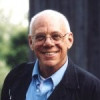
Rich Schwartzman has been reporting on events in the greater Chadds Ford area since September 2001 when he became the founding editor of The Chadds Ford Post. In April 2009 he became managing editor of ChaddsFordLive. He is also an award-winning photographer.
School board, residents bristle over transportation survey Read More »
How about having your private parts poked and groped or,
perhaps, being photographed virtually nude is preferable. If you’re an airline
traveler you may already know the drill, maybe even first hand.
Airline travelers are faced with a choice, either get a dose
of heavy radiation from a backscatter X-ray machine that will render an almost
nude photograph or get a fondled frisk.
Maybe the Transportation Safety Administration should be
renamed the Office of Touching Sensitive Areas.
It’s all in the name of safety and security, of course.
According to www.tech-faq.com:
“Backscatter X-ray machines were built specifically for airport security.
Backscatter X-ray technology can strip off a person’s clothing in the captured
image to show him or her practically naked. In the process, it will show any
contraband such as ceramic knives, liquid explosives or drugs that the person
was carrying but were previously undetectable by metal detectors or
conventional X-ray machines. The backscatter scanner can, therefore, see
through clothes and provide photo-quality views of its subject.”
It works because higher periodic table elements, such as
metals, absorb more photons and scatter less.
“It is this capability of backscatter machines to strip away
the outer clothing layers of a person which have (sic) created anxiety among
many civil liberties groups and concerned citizens who claim that such machines
will provide security people with a free peep show of airline passengers and
will thus constitute an invasion of privacy,” the site said.
There are lawsuits challenging the use of the machines on
the grounds of both privacy and safety (from radiation).
It’s also now being reported that many of the scans taken
have leaked out, meaning the images themselves got out into the public.
So far there are a reported 300 of the machines in use in
about 60 airports. The TSA wants another 500 in service by the end of the year.
No one is forced to go through the scanners, but those who
refuse get to learn first hand just how touchy-feely government can get—they
get a very personal pat down.
That leads to the case of John Tyner, a traveler who said no
to the scan and, when told the details of the pat down responded, “If you touch
my junk I’ll have you arrested.”
Mr. Tyner was told either to be scanned, get patted down or
to leave. He chose to leave and security personnel escorted him out of the
airport. Given the wisdom of the federal government, he’s now being charged
with leaving the airport.
Does anyone really believe the intrusiveness of government
will stop? How long will it take before the backscatter machines and groping
security agents will be at all government buildings, train and bus stations?
Will schools come next?
Benjamin Franklin has been quoted as saying: “Those who
would trade essential liberty for perceived security deserve neither security
or liberty.”
So if you
choose to fly and opt for either the scanner or the personal frisk, let’s hope
the operators don’t giggle. Those who don’t believe in privacy are already
snickering up their collective sleeves.
Copping a feel for authority Read More »
• A volunteer firefighter, with a degree in chemical
engineering, was killed in an explosion of homemade rocket fuel. James
McGovern, 22, of Kennett Township was a firefighter with Longwood Fire Co. and
a May graduate of the University of Delaware. He was killed in the explosion at
his home on East Hillendale Road in Kennett Township about 4:30 p.m. Saturday,
Nov. 13.
State police said McGovern, an amateur rocket enthusiast, was testing homemade
rocket fuel on his property when the blast occurred. He was testing the fuel
mixture, not launching rockets, at the time.
• An unidentified 51-year-old man from Glen Mills was
arrested for DUI following a traffic stop along Route 322 at Evergreen Drive in
Concord Township, according to police. A report said the man was stopped
shortly after 10 p.m. on Nov. 9 for multiple traffic violations.
• In the early evening of Nov. 14, a 21-year-old woman from
Westgrove had a wallet with a check card and $140 in cash stolen from her car
as it was parked in the Painter’s Crossing lot near Friendly’s Restaurant. A
police report said someone punched out the lock on the driver’s side door of
her 2003 Pontiac Grand Am.
• Sometime between 6 p.m. on Nov. 12 and 5:15 a.m. on Nov.
13, thieves broke into the 202 Knife Shop in Chadds Ford Township and stole 14
different kinds of knives valued at $519, a state police report said. The
perpetrators also smashed an alarm sensor. Value of the alarm was reported at
$275. Police are asking anyone with information to call the Media barracks at
484-840-1000.
Police log for Nov. 18 Read More »
If you are throwing away leaves, you might as well be
throwing away money. Shredded leaf mulch is the best way to retain moisture,
prevent evaporation, and enrich your soil. This year, instead of throwing away
your leaves and then having to buy compost and mulch next year, let them turn
your soil into black gold.
People treat dead leaves like toxic waste, removing them
as quickly as possible. But in nature, leaves remain on the forest floor,
decomposing and adding nutrients to the soil. Unless there are large quantities
or the leaves are huge, they will seldom do any harm just left in garden beds
where they fall. A layer of leaves helps protect perennials during the winter
and can be raked out or dug into the soil in the spring.
One thing you should never do is burn leaves. In addition to being a fire hazard,
burning leaves produce carbon monoxide and hydrocarbons, which contain toxic,
irritant, and carcinogenic compounds.
Microscopic particles from burning leaves can reach the deepest regions
of the lung and remain there for months or even years. Smoke from burning
leaves can increase the chance of respiratory infection and trigger asthma
attacks in some people. Accidently
include some poison ivy, and the smoke can be deadly.
Shredded leaves can be composted (put in a compost bin
along with kitchen scraps, frost-bitten impatiens, rotting pumpkins and gourds,
etc.), left in piles to decompose on their own, tilled into the soil, or used
like mulch around trees, shrubs, and in garden beds. If you have a vegetable garden, you can dump shredded leaves
right on top of the bed to improve the soil for next spring. They will cover the bare soil and
protect any cold-hardy vegetables still in the bed. You can even store the
leaves in bags to compost next year, when “browns” (carbon material) for the
compost bin will be harder to find.
You can shred leaves with a mulching lawnmower, a leaf
vacuum or blower with shredding capability, or a freestanding leaf shredder or
chipper. You don’t even have to
shred the leaves, especially if you plan to compost them, but it does speed up
the decomposition process and makes the leaves easier to work with. If you run
a mulching lawnmower over the leaves several times, you can leave leaves right
on the lawn.
An easy way to work with leaves is to rake them onto a
large tarp and then drag them. You can put them through a shredder or just dump
them into a wire enclosure, fenced area, or compost bin. Old pallets wired or
staked together work well also. If you have a place in your yard where you
don’t have grass, pile leaves there for the winter (wet them down to keep them
from blowing). This makes a wonderful home for small wildlife like salamanders
during the cold months. In the spring, the pile will be smaller and you can
either add it to your compost bin or use it as mulch in your garden beds.
And now, a word about lasagna.
For this lasagna you won’t need tomato sauce, noodles, or
cheese, but those shredded leaves will come in handy. Some smart (and perhaps lazy) folks realized that it really
isn’t necessary (and may even be harmful) to till, till, till to create a new
garden bed. Instead, you can pile layer upon layer of organic material on top
of whatever is there (grass, weeds, etc.): lasagna gardening!
You start by putting down a layer of brown corrugated
cardboard or multiple layers of newspaper and wetting it. This will help smother any grass and
weeds underneath. Next, you pile layers of shredded leaves and pretty much
anything else you might put in a compost pile. You can layer in more newspaper, garden trimmings, manure,
straw, peat moss, compost, and so forth, wetting it as you go, until you have a
stack about 18-24 inches high. Now
you let nature take its course. The pile will break down and get smaller over
several months and in the spring you can dig holes right into the “lasagna” to
put your plants in (no need to till). You will find the quality of the soil is
excellent, and you’ve saved a lot of labor.
So take a few moments this fall to appreciate your fallen
leaves. Whether your tastes run to growing tomatoes, nurturing salamanders,
protecting perennials, or creating lasagna, leaves can help. Don’t throw them away!
Do you enjoy gardening? Like to teach others? Want to
volunteer in your community? Consider becoming a Master Gardener! Send an email
to nds13@psu.edu for more information.
And please visit us on Facebook (“Chester County Master Gardeners”).
* Nancy Sakaduski is the Chester County Master Gardener
Coordinator. Master Gardeners are trained volunteers who educate the
public on gardening and horticultural issues. In Chester County, they operate
through the Penn State Cooperative Extension office in West Chester.
Nancy lives in Pennsbury Township. She can be reached at nds13@psu.edu.

Nancy Sakaduski is a Master Gardiner with Penn State Extension of Chester County.
Dead leaves, black gold, and a dollop of lasagna Read More »
“Why do
people consider suicide?” Not an easy topic to address, but Norman Weissberg,
Ph.D., a psychologist from New York did so recently to a group of
psychotherapists.
What he
called the “flip” answer he gave first: because these people are experiencing
intolerable psychological pain. “It hurt too much to live,” noted one survivor
of an attempt. And, further, the “flip” answer to what moves some people to
action, says Weissberg, is that they can—they have the means and the
capability.
However,
Weissberg enjoins us to look further than the quick answer. He asks why are the
people in such psychological pain. It appears, according to Thomas Joiner,
Ph.D., in his research on suicide, that two factors may drive the death wish.
One, there is a perceived burdensomeness. That is, the individual believes that
he/she is defective and flawed and therefore a burden to family and perhaps
even to country—the sense of “everyone will be better off without me.”
Two, there
is, in addition to feeling a burden, there is a sense of failed belonging. This
belief carries with it a feeling of isolation, of “standing apart from all the
people in my life.” This is not about objective reality: the individual indeed
may be a part of a club or a group, e.g., yet internally feel isolated.
According to
Weissberg’s study of the data, we do not have good predictors of suicide. Suicidal
ideation and a plan by itself are not predictors of attempts. The Substance
Abuse Mental Health Administration of our federal government notes that four
percent of the adult population of the U.S. has acknowledged suicidal thoughts
in the past year. Of those 8.3 million people, 2.3 million had made a plan, and
1.1 million had made an attempt.
The
important question for suicide prevention is what prompts a person to go beyond
the ideation and make an attempt. Our built-in resource, Weissberg reminds us, is
self-preservation: “The body tries to keep us alive.” Humans generally fear the
pain of severe self-injury. The theory is that persons can undergo experiences
to desensitize them to fear and override pain. Then exhilaration replaces fear
and risky activity can promote fearlessness.
Because a
person overcomes fear of suicide by attempting it, Weissberg reports that a
prior attempt of suicide is the simple, best predictor of completing the act.
It was
thought that cutting (the act of self-injuring, self-mutilation) was not at all
related to suicide because the cutter acts to regulate his or her emotions,
suicide not being the motivation. However, cutters, in their experience of
pain, are de-sensitizing themselves to pain, thereby habituating to
self-injury. So it is now found that there is a correlation between cutting and
suicide and, in fact, 70 percent of cutters report suicide attempts. Weissberg
notes that watching violent films (and I would add video games, etc.),
football, hockey—anything that entails pain in which we get habituated and
de-sensitized—provides the capability to override the pain of suicide.
Weissberg also reminds us that those habituated to pain and who inflict pain on
others are physicians and dentists.
Capability
includes having the means. Weissberg recommends that if there is any indication
of suicidality to remove the methods—such as medicines in a cabinet, guns in
the closet.
Fortunately,
suicide risk involves more than capability. Present research points to two
other factors that need to converge with capability: perceived burdensomeness
and failed belongingness.
Antidotes to
these three factors of suicidal risk are what are defined as buffers: the
relationships, beliefs, value systems—whatever might reinforce the will to
live. Immediate supports include friends, family, social groups, pets. Plans
for the future are also buffers, yet sometimes a person plans for the future
even in the midst of planning suicide. Weissberg remarks that suicide is most
often an ambivalent act. (Of course, this is little comfort to the grievers.)
Sometimes a
person may manifest preparatory behavior—an adolescent may start to clean up
his/her messy room and give things away; adults may do likewise.
Often,
however, there are no outward warnings; and in the aftermath of a suicide,
loved ones might blame themselves for not seeing any danger signs. Given the
ambivalence of the person in such psychological pain as to consider suicide and
given the simple, most accurate predictor of suicide is a past attempt, it is
an excruciating acknowledgement that a completed suicide is beyond our control.
So what of
suicide prevention? Consider promoting a sense of belonging and connectedness,
supporting options for relieving psychological pain other than death,
developing a caring supportive network.
Please note:
National Suicide Hotline
(800) 273-TALK (800)
273-8255
Also note:
The 12th Annual Survivor of Suicide Day Program
November 20, 2010, morning
held in both Newark, DE, and Milford, DE
(register athttp://www.deolc.org/events)
* Kayta Curzie Gajdos holds a doctorate in
counseling psychology and is in private practice in Chadds Ford, Pennsylvania.
She welcomes comments atMindMatters@DrGajdos.com or (610)388-2888. Past columns
are posted towww.drgajdos.com.
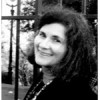
Dr. Kathleen Curzie Gajdos ("Kayta") is a licensed psychologist (Pennsylvania and Delaware) who has worked with individuals, couples, and families with a spectrum of problems. She has experience and training in the fields of alcohol and drug addictions, hypnosis, family therapy, Jungian theory, Gestalt therapy, EMDR, and bereavement. Dr. Gajdos developed a private practice in the Pittsburgh area, and was affiliated with the Family Therapy Institute of Western Psychiatric Institute and Clinic, having written numerous articles for the Family Therapy Newsletter there. She has published in the American Psychological Association Bulletin, the Family Psychologist, and in the Swedenborgian publications, Chrysalis and The Messenger. Dr. Gajdos has taught at the college level, most recently for West Chester University and Wilmington College, and has served as field faculty for Vermont College of Norwich University the Union Institute's Center for Distance Learning, Cincinnati, Ohio. She has also served as consulting psychologist to the Irene Stacy Community MH/MR Center in Western Pennsylvania where she supervised psychologists in training. Currently active in disaster relief, Dr. Gajdos serves with the American Red Cross and participated in Hurricane Katrina relief efforts as a member of teams from the Department of Health and Human Services' Substance Abuse and Mental Health Services Administration.Now living in Chadds Ford, in the Brandywine Valley of eastern Pennsylvania, Dr. Gajdos combines her private practice working with individuals, couples and families, with leading workshops on such topics as grief and healing, the impact of multigenerational grief and trauma shame, the shadow and self, Women Who Run with the Wolves, motherless daughters, and mediation and relaxation. Each year at Temenos Retreat Center in West Chester, PA she leads a griefs of birthing ritual for those who have suffered losses of procreation (abortions, miscarriages, infertility, etc.); she also holds yearly A Day of Re-Collection at Temenos.Dr. Gajdos holds Master's degrees in both philosophy and clinical psychology and received her Ph.D. in counseling at the University of Pittsburgh. Among her professional affiliations, she includes having been a founding member and board member of the C.G. Jung Educational Center of Pittsburgh, as well as being listed in Who's Who of American Women. Currently, she is a member of the American Psychological Association, The Pennsylvania Psychological Association, the Delaware Psychological Association, the American Family Therapy Academy, The Association for Death Education and Counseling, and the Delaware County Mental Health and Mental Retardation Board. Woven into her professional career are Dr. Gajdos' pursuits of dancing, singing, and writing poetry.
Mind Matters:Suicide risk factors Read More »