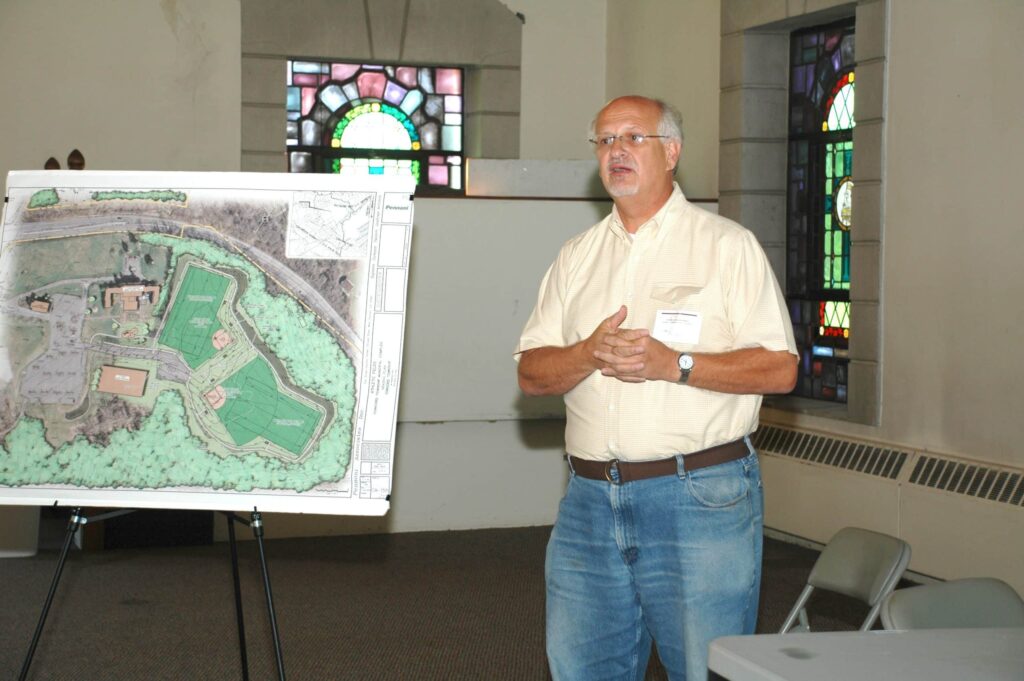
The Unionville-Chadds Ford School Board is considering a
$10,000 study whether to privatize the district’s transportation service.
Director of Transportation Gail Wolfel said during a board
work session that she’s drafting a request to find a party to perform the
study. Finding an independent, external source is needed to avoid any conflict
of interest.
The idea for the study is to find ways of saving money,
either by making the current bus fleet more efficient or by finding an outside
carrier that can do the job with less cost. Should the busing be outsourced,
the current fleet could be sold off.
The district currently spends $4 million on busing.
Director of Business and Operations Bob Cochran said the
administration is looking for an organization that does not necessarily do
contracting at this time. Rather, he said, they’re looking for “an independent
consulting organization to come in and take a look at our transportation
services, the method with we are providing them, the efficiencies or
inefficiencies that are included in that and to make recommendations on how to
improve our current system, keeping it in-house, contract out to improve the
system or some hybrid of the two…We don’t have an end result in mind.”
Wolfel added that she’s looking for any way to reduce redundancy
and increase efficiency.
Rich Schwartzman has been reporting on events in the greater Chadds Ford area since September 2001 when he became the founding editor of The Chadds Ford Post. In April 2009 he became managing editor of ChaddsFordLive. He is also an award-winning photographer.
Proposition 19 is a voter’s choice referendum in California to legalize small amounts of marijuana for personal use. The state was the first to legalize marijuana for medicinal use.
What may seem ironic is that the medical marijuana folks—those in the industry selling the drug to patients with a doctor’s prescription—are one of the two major opponents to general legalization.
The other opponent, much less ironic, is the beer industry.
Brewers don’t want any more competition for their product while the med pot people want to maintain their monopoly on the legal sale of marijuana.
There are myriad reasons—valid reasons—for not using marijuana. It is an intoxicant and some people view any form of intoxication as wrong. A full spectrum of what the drug can do to a user over the long term has not been fully studied.
But that lack of investigation has been due to the fact that the federal government doesn’t allow for any research that would indicate that marijuana is anything but evil.
Marijuana has been surrounded with disinformation for generations. It was made illegal because William Randolph Hearst didn’t want competition in paper manufacturing. (He had a vested interest in wood-pulp paper.) Chemical and pharmaceutical companies also wanted to avoid competition from products made from hemp.
Scare tactics and racism were used to make marijuana illegal. More hypocrisy followed. Farmers were forbidden from growing hemp, a related crop, until WWII when they were urged to grow as part of the war effort. There was even a film entitled “Hemp for Victory.” After the war, the ban was back in place.
We don’t advocate the use of marijuana anymore than we advocate the use of heroin, alcohol or tobacco. Use, however, should be treated as an option. At least it would be an option in a rational society.
The move in California is billed as financial. Marijuana is the state’s largest cash crop and most goes untaxed because of prohibition. It’s been estimated that between additional tax revenue and the cost reduction in not paying for enforcement of prohibition, California would have an extra $1.8 billion per year.
Legalization also removes the “forbidden fruit” allure the drug has. Telling people not to do something often makes them want to try it.
The failed war on drugs (some drugs, actually) has also been a dismal failure. Use remains up, while control is lax because drugs remain an underground and black market industry. Prohibition also increases crime. The geniuses in Washington and state capitals never learned from the first era of prohibition when alcohol was illegal.
Most importantly is that legalization is one of the steps needed to truly establish a condition of liberty. It is just one step, maybe even a small one, but necessary nonetheless.
Without choice, there is no liberty. Adult men and women must be free to make mistakes or they are not free.
Should Prop 19 pass, it would be seen as part of a nullification process, whereby states nullify federal laws by not enforcing them. That’s a good thing, especially in this situation. There is no Constitutional authority for federal prohibition of any substance, let alone a plant.
Though there are reasons for not using marijuana, they should not be considered reasons for keeping it criminal. The biggest reason for keeping marijuana illegal is that if it were legal, people would realize the government has been lying to them for a long time and they might wonder what other lies they’ve been forced to live by. Politicians can’t have that.
•
Folks wanting a Costco store closer to the area will have to wait. Concord
Township supervisors Tuesday night denied conditional use approval for a Costco
to be built on Evergreen Drive near the Shops at Brinton Lake. The vote was
5-0.
•
Birmingham Township resident Al Webber Sr. celebrated his 103rd
birthday Sunday, Oct. 10.
•
The Rachel Kohl Community Library will host a Medicare information session
Thursday, Oct. 21 at 11 a.m. in the Community Room. Kim Andrews, APRISE
Coordinator for Delaware County Senior Community Services will present
information on the various benefits and options available to area residents as
well as important changes to the program. Registration is suggested by stopping
by the library or calling at 610-358-3445.
• Jen Sykes is
the new interpretive secialist for Bellevue State Park. Jen brings seven years
of experience with programming in Delaware State Parks to her new position, a
press release said. Previously she worked at Brandywine Creek, Alapocas Run and
Wilmington State Parks. In addition, she recently completed her Master’s
of Science Education degree at Widener University.
Nick
is an adult male cockatiel that is
available for adoption through the Chester County SPCA. Nick came to the shelter on
Sept. 16. His owner originally purchased him from a yard sale and then realized
they were not ready for the responsibility. Nick loves to sing to you and
enjoys hanging out on the perch in his cage. He would do better in a home with
an experienced bird owner. Nick is looking for aresponsible care giver who will give him the love and attention he deserves.
If you are able to provide that home, visit the Chester County SPCA at 1212
Phoenixville Pike in West Goshen or call 610-692-6113. Nick’s registration
number is 96801263. To look at some of the other animals available for
adoption, visit the shelter or log onto www.ccspca.org
Candidate: End duplication, consolidate local government
Independent candidate for the 160th Legislative
District David Cleary thinks local governments in Pennsylvania should be
consolidated and that legislators are wasting money by doing things other
departments are supposed to do.
Cleary is a Concord Township resident and former Navy flight
officer, originally from North Dakota. He said he’s challenging incumbent
Republican Stephen Barrar, seeking an eighth term in office, because he thinks
legislators aren’t responsive.
“I’m not impressed with the local and state government and
the inability to interact as a citizen with officials,” Cleary said. “I
expected them to be more responsive and I wasn’t impressed.”
Cleary said he had been trying to get a response for an open
records request on a township level, but felt he was blown off by Barrar and
state Sen. Dominic Pileggi when he asked them for help.
He also thinks that the legislators are duplicating work
that various departments are set up to do. Cleary specifically referred to
Barrar’s office helping out with Pennsylvania Department of Transportation
matters that PennDOT itself should be doing.
“The legislators have staffs that provide services that
PennDOT should be doing. We’re already paying PennDOT to do drivers’ license
processing and things like that. At a maximum, all the [legislator’s] staff
should do is give the contact information.”
Cleary pointed to a brochure from Barrar’s office that said
the incumbent could help with the processing of licenses, learner’s permits and
registration.
“They’re doing things for citizens that another department
in the executive branch should be doing. And if PennDOT isn’t effectively doing
it, what I expect the legislator to do is hold PennDOT accountable,” said
Cleary.
Cutting back on such duplication would allow for less
legislative staffing which, in turn, would reduce the cost of government to the
taxpayer, he said, adding that such work by incumbents adds to their chances of
being re-elected.
“It’s a subtle way of getting people to like you and vote
for you by using the office for things it wasn’t designed for,” Cleary said. ”I
think we can save the taxpayers money. I agree that people will think he’s dong
them a favor but, overall, it’s getting people more interested in voting for
that person and using taxpayer money to do things they shouldn’t be doing.”
He also believes that consolidating the 2,500 municipalities
will result in more cost effective local government.
Cleary doesn’t necessarily think that the county should be
the lowest level of government, as suggested by state Rep. Thomas Caltagirone,
a Democrat from Reading, but sees a possibility of unifying townships based on
school district.
One reason for the consolidation, he said, is for better
police protection. Cleary said he understands that individual townships can’t
necessarily afford their own police departments, but also thinks it’s wrong for
the state police to patrol the townships.
“The model for having community policing doesn’t work if
each township has to have its own police force and now the state does what
Chadds Ford and Concord do [by] having the state police be their community
police. The concept doesn’t even make sense,” he said.
In other states, the county sheriff’s department patrol
communities too small to fund a local police force, he said. Cleary added that
the fact that other states don’t use state police to patrol communities
indicates that it doesn’t make sense.
According to Cleary, there’s already been some talk about
having the Delaware County Sheriff’s Department patrol the townships.
He recognizes that having the county be the smallest level
of government might not be the best either, since various municipalities in a
given county can be too diverse. Caltagirone’s county model would have Media
make zoning laws for Upper Darby and Chadds Ford.
“[The best way] is to consolidate the local governments…The
minimum would be to have the 500 school districts align with the local
government. The advantage is that you still keep somewhat of a local effect,”
Cleary said.
Yet, he was not sure how that would work for Chadds Ford
since the township is in Delaware County, but it’s affiliated with a Chester
County-based school district.
“There’s going to be those cases all across the state,” he
said. “You’d have to review all the cases like that because it’s going to be
unique. Those things would be little challenges. … If we’re going to save the
taxpayers money, consolidation has to happen.
Running as an independent, Cleary needed 573 signatures to
get on the ballot. He said the requirements are 2 percent of the highest vote
getter in the previous election. With Barrar running unopposed in 2008, 2
percent was more than would otherwise have been.
“This district out of the 203 was the second highest in
signature requirements in the state. With one candidate on the ballot, that one
candidate gets all the votes. With three candidates, in two years you’d
probably only need about 300 or so votes, depending on how lopsided my win is,”
he said.
Rich Schwartzman has been reporting on events in the greater Chadds Ford area since September 2001 when he became the founding editor of The Chadds Ford Post. In April 2009 he became managing editor of ChaddsFordLive. He is also an award-winning photographer.
tall case clock otherwise known as a grandfather clock
is much more than a device that tells time. Before mass production, each tall
case clock was unique and often embellished to make a grand statement for both
the owner and the clock maker. Tall case clocks were generally the most
expensive item in a household and the most technologically advanced.
During the seventeenth century, the measurement of time was
very inaccurate. While mechanical clocks had been used for centuries, they were
unreliable and had to be regularly corrected by the use of a sun dial.
Influenced by Galileo’s experiments, the Dutch Scientist Christian Huygens
designed the first pendulum clock in 1657 and with this invention punctuality
was born.
The immediate effect of a timepiece with a long pendulum was
the creation of a case to protect the swinging element. Enlisting the finest
European cabinetmakers to make cases permitted clocks to be identified as
furniture for the first time. Often one of the most valuable objects in the
home, the tall case clock was consider an object of what we might today call
conspicuous consumption, and testified to one’s social and economic status.
Never the less during the seventeenth and eighteenth centuries, England, France
and America produced some of the finest tall case clocks developing distinct
case styles.
The British quickly took to improved accuracy of time
keeping and the idea of “being on time.” Ahaseurus Fromateel, an English clockmaker
of Dutch descent, first introduced the pendulum clock to London. The English
case design during the late seventeenth century paralleled the architectural
style of the period. The cases were mostly veneered with ebony and decorated
with barley twist columns. By the end of the eighteenth century, England was
the leader in clock movement design and innovation allowing the tall case clock
to be both accurate and practical.
The visual appearance of the early French clock case
differed from the English. Although Louis XIV invited Christian Huygens to the
French court, the Monarch valued a more formal design over time precision.
Royal cabinet maker Andre-Charles Boulle used exotic woods and materials
creating luxurious parquetry designed furniture including clock cases for the
King. His name “Boulle” is often applied to this type of work. In France the
tall case clock was considered an objet d’art and secondarily a clock.
The earliest clocks in America were imported by English and
Dutch settlers who brought with them the skills of European clockmakers. During
the eighteenth century, American clock production flourished yet most of the
parts and materials were imported from England. After the Revolutionary War,
brass supply in America was limited and clock makers began designing and
constructing movements from wood. Today, American tall case clocks with wooden
movements are rare and highly coveted by collectors.
In America, tall case clock production flourished
particularly in the Philadelphia area. Abel Cottey, one of the first clock
makers in the colonies, established his workshop in Philadelphia. Like most
clock makers, Cottey made the mechanism, the dial, the pendulum, and the
weights himself; however, he left the case to be made by a joiner. These joiners
or cabinetmakers from Philadelphia were artistically talented creating many
superbly carved cases with ornamental details. A sophisticated tall case clock
signed by Philadelphia clock maker Peter Stretch holds the record for an
American clock sold at auction at $1.6 million. Historic records indicate that
Benjamin Franklin owned a tall case clock created by another Philadelphia clock
maker, Edward Duffield.
By the early 1800’s, clock making in America was becoming a
major manufacturing industry. The affects of the Industrial Revolution
permitted the production interchangeable parts at a lower cost and in larger
quantity. The demand for tall case clocks diminished as clock makers began to
mass produce mantle and wall clocks for the public.
Tall case clocks vary not only in style but also in value.
When determining value, it is best to consult a qualified appraiser. There are
several criteria appraisers consider when determining value. The first is
condition. Does the tall case clock work? Antique tall case clocks are mostly
built by skilled craftsman with the use of quality materials. However, a clock
maker’s reputation is a chief element that contributes to the value of a tall
case clock. The makers name is usually marked on the dial plate. The more famous
the maker, the higher the value. The third factor is age. Identifying the age
may be done by referencing the maker, the case design and the materials used on
the dial and movement, When a case style does not correspond with the materials
of the dial or movement, this is referred to as a marriage which dramatically
affects the value of the clock. The last criteria to consider is aesthetics.
Does the clock case have intricate rare details that stand out as a stately
timepiece?
Whether tall case clocks are haughty or humble, signed
clocks in their original cabinetry case with authentic movement mechanisms in
good working condition tend to
bring the highest value. The next time you encounter a tall
case clock consider it to be more than just a timepiece; often this type of
clock is a remarkable work of creative decorative art that makes a grand
statement testifying to social and economic status of the owner.
* Colleen Boyle is an
appraisal consultant for Freeman’s, America’s oldest auction and appraisal company.
She holds advanced degrees in Art History and a diploma in French fine and
Decorative Arts from Christie’s, Paris. She has appraised art and antiques for
private collectors and corporations throughout the U.S. and regularly publishes
articles about art and collecting. (610) 470-5340 phone, cbfineart@gmail.com,
www.freemansauction.com
• Pennsylvania State Police from Troop K, Media, charged a
Wilmington woman with theft in Concord Township. A police report said Gia
Denise Davis, 21, concealed merchandise from American Eagle Outfitters in a bag
and left the store without paying. She fled south on Route 202, according to
police, but was apprehended before crossing into Delaware. Charges of retail
theft from the Oct. 7 incident were to be filed in district court.
• Someone tried to break into a 2007 Ford Windstar parked
near Carrabbas Restaurant in Painters Crossing shopping center about 7:30 p.m. on
Oct. 7, a policed report said. The unknown suspect punched out a door lock, but
failed to gain access to the vehicle.
• An unknown male entered the Concordville Town Center Acme
shortly before 10 p.m. on Oct. 9 and stole several cases of Red Bull drink and
baby formula, a police press release said. The suspect fled in an unknown
direction. Anyone with information is asked to call the Pennsylvania State
Police at 484-840-1000.
About
75percent of child passenger safety seats inspected last month by the
Pennsylvania State Police were improperly installed, Commissioner Frank E.
Pawlowski announced recently.
“I urge all parents to check the child
safety seats in their vehicles,” Pawlowski said. “We know that these seats save lives, but only when they are
used correctly. If you are unsure about whether your child’s safety seat is
installed properly, please arrange for an inspection by our troopers.”
State police inspected 504 child safety
seats at 68 locations during National Child Passenger Safety Week, Sept. 19-25.
Pawlowski said troopers found that 378 of those seats were improperly
installed.
“A common problem is that parents don’t
always securely anchor the child seat to the vehicle’s seat,” Pawlowski said. “Anchoring
the child seat properly is critical to its performance in a crash.”
Other common problems identified during
the inspections included failing to use the child seat’s harness to hold the
child in place, facing the car seat in the wrong direction, and using a seat that
has been recalled because of a defect, Pawlowski said.
Pennsylvania law requires that children
under 4 years of age be securely fastened in an approved child passenger
restraint seat while traveling in a vehicle. Children ages 4 to 8 must use a
booster seat if they are no longer in a car seat.
Pawlowski said research shows that child
restraints provide the best protection for all children up to age 8. After that
age, seat belts provide the best protection.
Because of the potential dangers
associated with air bags deploying, state police recommend that children 12 years
of age and under always ride in a vehicle’s rear seat.
State police issued 331 occupant
protection citations and 1,505 occupant protection warnings during National
Child Passenger Safety Week traffic stops. Citations and warnings were not
issued to people who brought their seats to the voluntary inspections.
The department’s Bureau of Patrol
offered the following tips to parents:
·
Use the car’s seat belt to anchor the seat to
the car unless you are using a child safety seat with a LATCH system;
·
Read and follow the car seat manufacturer’s
instructions;
·
Fill out and return the registration card for
your seat so you’ll know if the seat has been recalled because of a problem;
·
Make sure the seat’s harness fits snugly; and
·
Use a tether strap if the seat requires it.
For more information on car seat safety
and to get a list of state police monthly car seat safety inspection locations
and dates, click on the “Public Services” link at www.psp.state.pa.us.
Businesses keep residents from bearing the full brunt of
school taxes, according to Dominc A. Pileggi, a Chadds Ford businessman and
chairman of the Concord Township Board of Supervisors.
Pileggi owns and manages Olde Ridge Village at Route 202 and Ridge Road. He told members of the Chadds Ford Business Association that the 80
percent to 20 percent breakdown of residents to businesses in Concord works
well. Chadds Ford Township is 95 percent residential, according to the township
Web site.
“We have more nonresidential assessment. It’s basic math
101. If you have more people paying real estate taxes that don’t put a burden
on schools or they don’t put a burden on the road systems as far as us having
to plow their streets, that’s better for the township government,” he said in
an interview after the CFBA meeting.
Pileggi was talking about shopping centers such as the Shops
at Brinton Lake and the Concordville Town Center that maintain their own
parking lots and interior roadways.
“It’s a boon to us. They also pay for the fire department
and they pay for open space because that’s all part of our real estate taxes,”
he added. “So, yes, there is a benefit to a municipality to having a
nonresidential tax base.”
He cited Upper Merion Township where the King of Prussia
Mall is located saying the assessment from the mall pays the township’s bills.
During the CFBA meeting, several members of the association
expressed concerns about a perceived poor business climate in Chadds Ford.
Pileggi, being a supervisor in Concord but a businessperson in Chadds Ford had
to respond wearing two hats.
He agrees that Chadds Ford’s sign ordinances are too
restrictive, even with the temporary extra sign ordinance passed by the
supervisors last year.
“I have the utmost respect for their elected officials and
their appointed boards and commissions,” Pileggi said. “I just think, putting
my business hat on, that some of their ordinances and regulations are difficult
for the small businessman to handle.”
Pileggi said that the stores in Olde Ridge are limited to
one sign of no more than 20 square feet, but Concord’s sign ordinances are
based on the size of a store front.
As an example, Pileggi said, a store in Concord with 45 feet
of frontage would be allowed signage of up to 45 square feet. The size of any
one sign is limited, but more than one sign would be permitted without a
business owner needing to get a variance.
Pileggi is a firm believer that it’s small businesses that
create most of the jobs.
“What could be better than to help the small businessman,
the moms and the pops,” he asked.
He said signage is crucial, especially for businesses along
Route 202.
“The sign is what gets you exposure,” he said. “Businesses
choose to be on Route 202 because they want to be seen.”
Pileggi said he’s had such conversations with Chadds Ford
supervisors before and those talks have been amicable. He also believes the
ideas should be revisited and thinks Chadds Ford officials would agree to
further discussion.
Concord was 4,000 people in 1995, but Pileggi thinks the
recent census will likely show about 18,000 residents. He attributes the growth
to the township sewer system and the Garnet Valley School District. Pileggi
also said the proximity to Philadelphia and Wilmington is also a benefit.
“We’re in an area where people want to be,” he said.
Rich Schwartzman has been reporting on events in the greater Chadds Ford area since September 2001 when he became the founding editor of The Chadds Ford Post. In April 2009 he became managing editor of ChaddsFordLive. He is also an award-winning photographer.