
April 14, 2010

Blogging Along the Brandywine:Contemplating jazzy Lutherans and other mysteries

Normal.dotm
0
0
1
485
2770
ChaddsFordLive.com
23
5
3401
12.0

0
false

18 pt
18 pt
0
0

false
false
false

/* Style Definitions */
table.MsoNormalTable
{mso-style-name:”Table Normal”;
mso-tstyle-rowband-size:0;
mso-tstyle-colband-size:0;
mso-style-noshow:yes;
mso-style-parent:””;
mso-padding-alt:0in 5.4pt 0in 5.4pt;
mso-para-margin:0in;
mso-para-margin-bottom:.0001pt;
mso-pagination:widow-orphan;
font-size:12.0pt;
font-family:”Times New Roman”;
mso-ascii-font-family:Cambria;
mso-ascii-theme-font:minor-latin;
mso-fareast-font-family:”Times New Roman”;
mso-fareast-theme-font:minor-fareast;
mso-hansi-font-family:Cambria;
mso-hansi-theme-font:minor-latin;
mso-bidi-font-family:”Times New Roman”;
mso-bidi-theme-font:minor-bidi;}

After attending a musical event Sunday night (read on) I
asked myself, “How does the secular become sacred?”

So I’ll ask you. When you think of powerful sacred music used
in worship, what is the first instrument you think of?

OK, are you ready for this?

The hydraulis, a large calliope-like instrument was the
predecessor of the modern pipe organ. Invented in the third century B.C., it
was soon used in Roman competitions and amphitheaters. Powered by water
pressure, this ancient instrument had a loud blaring sound. A favorite of the
Emperor Nero, they bellowed away and excited the crowds as lions made hors
d’oeuvres of some poor gladiator or unlucky Christian.

Associated with secular and profane, it was banned from
early Christian worship. However, in 757 A.D. the Emperor Constantine II sent
an organ as a gift to Pepin the Short, father of Charlemagne, and eventually
found its way into the early church.

Another case in point: Six summers ago I took a vacation to
beautiful San Antonio, Texas.

The city is best known for its five great missions (walled,
medieval-style communities) built in the 18th century along the San Antonio
River. All still hold regular Mass, save San Antonio de Valero, re-named The
Alamo during the infamous battle 1836 in which it was all but destroyed.

One Sunday afternoon as we approached Mission Concepción, I
heard the unmistakable sound of a Mariachi Band coming from the church just
like one that had serenaded us the day before along the glittering River Walk.

The rich sound of over-sized dreadnaught guitars, violins
and trumpets soared out the open windows and through the towering palm trees.

Seeing my surprise, one of my friends said, “Oh it’s just a
Mariachi Mass.”

So, last Sunday night I was invited to one of the Jazz
Vesper Services held several times a year in the Calvary Lutheran Church on
south New Street in West Chester.

Jim Sullivan, long-time professor at the School of Music at
West Chester University, heads the group of professional musicians. Sunday’s
event featured Sullivan on piano, the incomparable Denis DeBlasio on baritone
sax and flute, George Rabbai on trumpet and flugelhorn, Bob Carl on the
5-string fretless electric bass and Philadelphia’s Tony Vigilante on drums.

One of the highlights was an exciting fast-paced scat-singing
duet between DeBlasio and Rabbai. Known as “trading fours,” each performer did
a rapid 4 measures before a seamless segue to his partner. The musical
excellence left me breathless.

But despite a traditional hymn, scripture reading, the
Lord’s Prayer and brief message by Pastor Daniel J Krewson, I found myself
wondering whether this was more jazz concert or church service.

During the ’60s and ‘70s I introduced the folk music of the
day into my home church, which included both solo performances as well as
leading my junior choir in songs by Sister Miriam Theresa Winter with guitar
and tambourine. So the extent of my doubt surprised me.

What’s the answer?

Maybe Winter’s song, “Mystery,” says it best:

“It’s the song of the universe as the eons fall away,

It’s the song that the stars sing and all the planets play,

It’s a song to the Power neither you nor I can see…”

Perhaps its whatever brings your spirit higher and closer to
your God.

Amen to that!

About Sally Denk Hoey

Sally Denk Hoey, is a Gemini - one part music and one part history. She holds a masters degree cum laude from the School of Music at West Chester University. She taught 14 years in both public and private school. Her CD "Bard of the Brandywine" was critically received during her almost 30 years as a folk singer. She currently cantors masses at St Agnes Church in West Chester where she also performs with the select Motet Choir. A recognized historian, Sally serves as a judge-captain for the south-east Pennsylvania regionals of the National History Day Competition. She has served as president of the Brandywine Battlefield Park Associates as well as the Sanderson Museum in Chadds Ford where she now curates the violin collection. Sally re-enacted with the 43rd Regiment of Foot and the 2nd Pennsylvania Regiment for 19 years where she interpreted the role of a campfollower at encampments in Valley Forge, Williamsburg, Va., Monmouth, N.J. and Lexington and Concord, Mass. Sally is married to her college classmate, Thomas Hoey, otherwise known as "Mr. Sousa.”

Blogging Along the Brandywine:Contemplating jazzy Lutherans and other mysteries Read More »

Mind Matters: Comparison mind vs. compassionate mind

Normal.dotm
0
0
1
602
3432
ChaddsFordLive.com
28
6
4214
12.0

0
false

18 pt
18 pt
0
0

false
false
false

/* Style Definitions */
table.MsoNormalTable
{mso-style-name:”Table Normal”;
mso-tstyle-rowband-size:0;
mso-tstyle-colband-size:0;
mso-style-noshow:yes;
mso-style-parent:””;
mso-padding-alt:0in 5.4pt 0in 5.4pt;
mso-para-margin:0in;
mso-para-margin-bottom:.0001pt;
mso-pagination:widow-orphan;
font-size:12.0pt;
font-family:”Times New Roman”;
mso-ascii-font-family:Cambria;
mso-ascii-theme-font:minor-latin;
mso-fareast-font-family:”Times New Roman”;
mso-fareast-theme-font:minor-fareast;
mso-hansi-font-family:Cambria;
mso-hansi-theme-font:minor-latin;
mso-bidi-font-family:”Times New Roman”;
mso-bidi-theme-font:minor-bidi;}

Many, many moons ago, I remember driving in a pouring rain
through the streets of Philadelphia with a friend. There was a young woman standing,
waiting for a bus, probably, who was wearing a mini-skirt, bright purple
stockings, and white boots. I thought to myself, “How gauche!”—or some other
college form of endearment of that innocent era. (Swear words were yet to make
their debut in my life.) My friend blurted out how wonderful it was to witness
this person dressed so joyfully on a gray day. His poetic perspective left
judging behind. That moment, however, was an epiphany regarding my own
criticality.

We all carry within us a terrible and sometimes terrifying
inner critic. Regrettable as that is, it is also unfortunate that we all manage
to inflict our own internal judge on just about everyone we meet, or even just
observe.

There is a vast difference between the discernment and
judgment we as humans need to have to perceive danger. We do need to be wary of
predatory people, sociopathic types, whether they wear an Armani suit or carry
a chain saw. When the hair goes up on the nape of your neck, it’s time to
listen to your inner instinctual sage.

That necessary attention is mightily different from the
everyday judgments we make hastily about both ourselves and others. Why do we
critique someone who wears purple stockings or a fuzzy hat? Why do we harshly
judge someone for their physique, be they large or small? For one, we have no
idea what inner burdens they carry, what story is theirs, what history created
their present situation. Instead of empathetically walking in their moccasins
(or white boots), we fear the unfamiliar.

Perhaps out of such fear of the unknown other, we get caught
in comparison mind: “I’m better than you because I don’t look like that or say
that.” Other times we may mind travel to the opposite pole where our inner
dialogue is a putdown of ourselves: “I wish I could be that trim, that young,
that rich, that famous.”

Whether our comparison mind is a disdain for the other or a
disdain of ourselves, the source is the same: a lack of compassionate
acceptance.

Compassion starts with accepting ourselves for just the way
we are, our imperfections being the signature of our humanness. When we accept
ourselves in that way, we can accept others with compassion too.

This movement from comparison to compassion is a journey
without end. Even in monasteries and meditation halls, comparison mind runs
rampant. Often, when committed to a silent retreat, we can find ourselves in
comparison mind. We find the chatter between our ears drones on: “I’d like to
have a prayer shawl like hers” or “ooh, why does he make that weird sound when
he breathes in?” And on and on. In any spiritual retreat, Buddhist, Catholic,
or otherwise, the hope is that we use these comparison mind ruminations to be
grist for the mill. So we gently return to the prayer or the breath,
non-judgmental of ourselves regarding our own sorry judgments of others. “There
I go again, come back to center, dear one.”

I recall an incident when my daughter was about two years
old and kept going over to a large flower pot in the home of a friend, wanting
to throw the dirt. I would gently remove her from her target. A little while
later, she would make another attempt. Again, the gentle bringing her back to
the table and away from the plant. This repeated several times.

Well, in meditation, prayer, and in life our comparison mind
is like a two-year old, and so gently, compassionately, we bring her back.

Imagine our comparison mind being like the little toddler
who needs compassion and understanding. As we grow in compassion and
understanding for ourselves, we can grow in compassion for others.

• Kayta Curzie Gajdos holds a doctorate in counseling
psychology and is in private practice in Chadds Ford, Pennsylvania. She
welcomes comments at MindMatters@DrGajdos.com
or (610)388-2888. Past columns are posted to www.drgajdos.com.

About Kayta Gajdos

Dr. Kathleen Curzie Gajdos ("Kayta") is a licensed psychologist (Pennsylvania and Delaware) who has worked with individuals, couples, and families with a spectrum of problems. She has experience and training in the fields of alcohol and drug addictions, hypnosis, family therapy, Jungian theory, Gestalt therapy, EMDR, and bereavement. Dr. Gajdos developed a private practice in the Pittsburgh area, and was affiliated with the Family Therapy Institute of Western Psychiatric Institute and Clinic, having written numerous articles for the Family Therapy Newsletter there. She has published in the American Psychological Association Bulletin, the Family Psychologist, and in the Swedenborgian publications, Chrysalis and The Messenger. Dr. Gajdos has taught at the college level, most recently for West Chester University and Wilmington College, and has served as field faculty for Vermont College of Norwich University the Union Institute's Center for Distance Learning, Cincinnati, Ohio. She has also served as consulting psychologist to the Irene Stacy Community MH/MR Center in Western Pennsylvania where she supervised psychologists in training. Currently active in disaster relief, Dr. Gajdos serves with the American Red Cross and participated in Hurricane Katrina relief efforts as a member of teams from the Department of Health and Human Services' Substance Abuse and Mental Health Services Administration.Now living in Chadds Ford, in the Brandywine Valley of eastern Pennsylvania, Dr. Gajdos combines her private practice working with individuals, couples and families, with leading workshops on such topics as grief and healing, the impact of multigenerational grief and trauma shame, the shadow and self, Women Who Run with the Wolves, motherless daughters, and mediation and relaxation. Each year at Temenos Retreat Center in West Chester, PA she leads a griefs of birthing ritual for those who have suffered losses of procreation (abortions, miscarriages, infertility, etc.); she also holds yearly A Day of Re-Collection at Temenos.Dr. Gajdos holds Master's degrees in both philosophy and clinical psychology and received her Ph.D. in counseling at the University of Pittsburgh. Among her professional affiliations, she includes having been a founding member and board member of the C.G. Jung Educational Center of Pittsburgh, as well as being listed in Who's Who of American Women. Currently, she is a member of the American Psychological Association, The Pennsylvania Psychological Association, the Delaware Psychological Association, the American Family Therapy Academy, The Association for Death Education and Counseling, and the Delaware County Mental Health and Mental Retardation Board. Woven into her professional career are Dr. Gajdos' pursuits of dancing, singing, and writing poetry.

Mind Matters: Comparison mind vs. compassionate mind Read More »

The Garden Path: Time to plant those annuals

The Garden Path: Time to plant those annuals

Normal.dotm
0
0
1
683
3894
ChaddsFordLive.com
32
7
4782
12.0

0
false

18 pt
18 pt
0
0

false
false
false

/* Style Definitions */
table.MsoNormalTable
{mso-style-name:”Table Normal”;
mso-tstyle-rowband-size:0;
mso-tstyle-colband-size:0;
mso-style-noshow:yes;
mso-style-parent:””;
mso-padding-alt:0in 5.4pt 0in 5.4pt;
mso-para-margin:0in;
mso-para-margin-bottom:.0001pt;
mso-pagination:widow-orphan;
font-size:12.0pt;
font-family:”Times New Roman”;
mso-ascii-font-family:Cambria;
mso-ascii-theme-font:minor-latin;
mso-fareast-font-family:”Times New Roman”;
mso-fareast-theme-font:minor-fareast;
mso-hansi-font-family:Cambria;
mso-hansi-theme-font:minor-latin;
mso-bidi-font-family:”Times New Roman”;
mso-bidi-theme-font:minor-bidi;}

Many a Slip Twixt the Cup and
the Lip

We are now approaching one of the
trickiest periods on the garden calendar: that treacherous time when tender
young plants that have been nestled under lights in a warm home or greenhouse
must be carefully introduced to the cold, cruel Chadds Ford spring, with its
erratic temperatures, sudden deluges, and gusty winds. Nurseries tempt with
riotous displays of zinnias, marigolds, impatiens, and petunias, and those of
us who grow plants from seed are assessing the survivors and deciding which
ones need to come off life support.

Unlike participants in the Polar Bear
Plunge, plants grown indoors or in a greenhouse must dip a toe before jumping
in.  They should be “hardened off,”
a method for gradually introducing seedlings to the full sun, wind, and cool
nights they will find outdoors. Hardening off is a gradual process that
involves patience and a good memory (“Ackkk!  I forgot to bring the impatiens in last night!”).  Start exposing plants to outdoor
conditions in a shady protected area for several hours on mild days.  At night, bring plants indoors or put
them in a sheltered porch, shed, or garage, away from gas and engine exhaust.
Gradually, over 10 to 14 days, move plants into sunlight for increasing periods
of time each day. Do not put tender seedlings outdoors on windy days or when
temperatures are below 45°. Reduce watering to prevent lush, weak growth, but
do not allow plants to wilt.

That Tricky Timing

In Chadds Ford, the average last frost
date is April 16-30, but a safer rule of thumb is May 10.  Even then, a later frost is possible,
so you may have to cover plants on nights when frost is a possibility. Tender
plants have to wait until after the danger of frost has passed, but you can
transplant hardier plants earlier in the spring. Even so, there’s no sense in
rushing, as many annuals will not grow well until the soil warms, even if air
temperatures are no longer dangerously low.

Cloudy days are best for transplanting,
but you can also plant in late afternoon or early evening, when temperatures
are cooler and the sunlight is less intense. You can reduce transplant shock by
watering plants before transplanting and making sure the garden bed is slightly
moist (not wet). Find a spot that fits the plant’s requirements and dig holes
that are two times larger than root ball. 
Allow room between plants for them to reach their full size without
crowding. Set plants at the same depth as they were in their pots (generally,
the top of the root ball should be just under the soil surface).  After transplanting, apply a light
layer of soil or mulch to reduce water evaporation from the surrounding soil,
firm the soil, and water. 
Fertilize with a starter fertilizer solution, such as a 15-30-15, to
promote root development.

Got Pots?

For containers, do not use garden soil
alone because it compacts. Use a commercial potting mix or prepare your own
with equal amounts of soil, sphagnum peat moss, and perlite.  Before planting, moisten the medium
with warm water.  To reduce weight,
you can fill the bottom one-fourth to one-third of the container with plastic
packaging “peanuts” or empty soda cans.

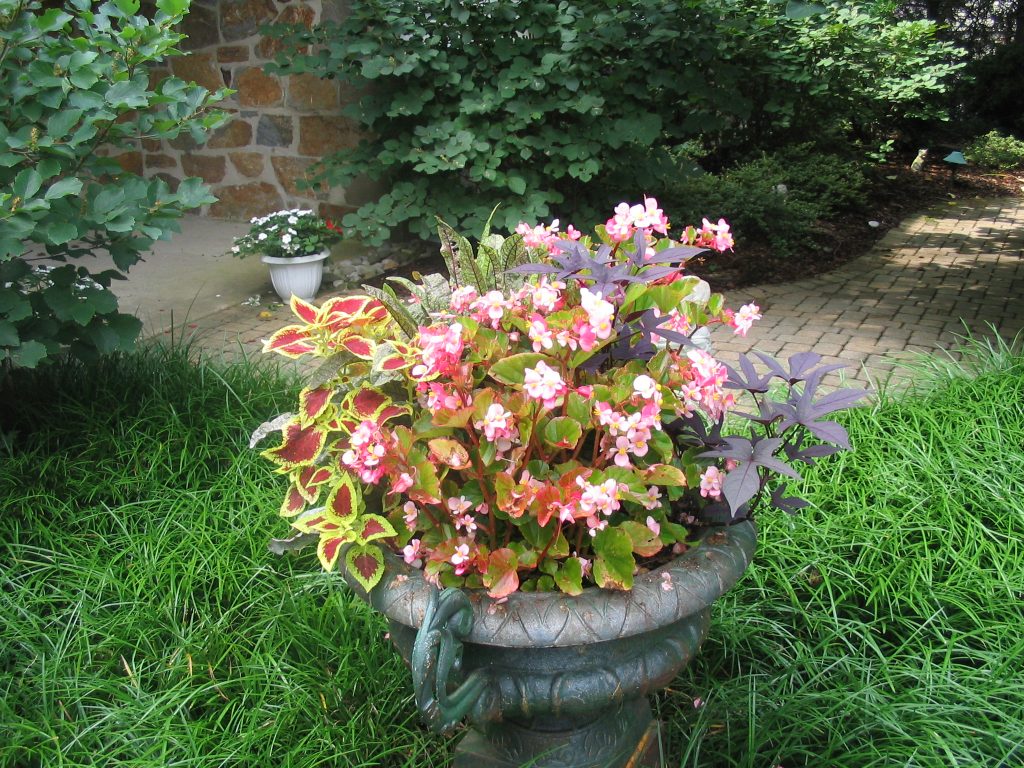
When combining different plants in one
container, choose ones that have similar light and water requirements. Plants
can be spaced more closely in containers. Set plants at the depth they were
growing in the cell pack or pot and water thoroughly. Check containers daily
for water needs.  Water until the
excess water flows out the drainage holes. Use a soluble fertilizer weekly at
one-fourth the recommended monthly rate (unless your potting mix contains fertilizer).  Then, stand back and enjoy the show.  There’s nothing like annuals for
continuous color throughout the garden season!

For more on planting annuals, go to:
http://consumerhorticulture.psu.edu/files/transplanting_annuals.pdf

Meet us at SymphonyScape, a symposium
on gardens and design that supports the Kennett Symphony, April 14, 10-3, at
the Mendenhall Inn. 
http://www.kennettsymphony.org/SymphonyScape/index.html

Have a gardening question?  Ask a Master Gardener!  Call the Master Gardener Hotline:  610-696-3500 or email ChesterMG@psu.edu.  Become a fan of Chester County Master
Gardeners on Facebook.

• Nancy Sakaduski is the
Chester County Master Gardener Coordinator.  Master Gardeners are trained volunteers who educate the
public on gardening and horticultural issues.  In Chester County, they operate through the Penn State
Cooperative Extension office in West Chester.  Nancy lives in Pennsbury Township.  She can be reached at nds13@psu.edu.

About Nancy Sakaduski

Nancy Sakaduski is a Master Gardiner with Penn State Extension of Chester County.

The Garden Path: Time to plant those annuals Read More »

A year old and looking forward

Normal.dotm
0
0
1
382
2180
ChaddsFordLive.com
18
4
2677
12.0

0
false

18 pt
18 pt
0
0

false
false
false

/* Style Definitions */
table.MsoNormalTable
{mso-style-name:”Table Normal”;
mso-tstyle-rowband-size:0;
mso-tstyle-colband-size:0;
mso-style-noshow:yes;
mso-style-parent:””;
mso-padding-alt:0in 5.4pt 0in 5.4pt;
mso-para-margin:0in;
mso-para-margin-bottom:.0001pt;
mso-pagination:widow-orphan;
font-size:12.0pt;
font-family:”Times New Roman”;
mso-ascii-font-family:Cambria;
mso-ascii-theme-font:minor-latin;
mso-fareast-font-family:”Times New Roman”;
mso-fareast-theme-font:minor-fareast;
mso-hansi-font-family:Cambria;
mso-hansi-theme-font:minor-latin;
mso-bidi-font-family:”Times New Roman”;
mso-bidi-theme-font:minor-bidi;}

ChaddsFordLive.com turned 1-year-old two weeks ago and
observant readers noticed a new tag line last week: “Building community one
story at a time.”

Publisher and editor alike knew when we started it was going
to be a slow, uphill process to build the business, working one story, one
photograph and one advertiser at a time with only two people.

But, as publisher Emily Myers said, it’s all about “knowing
and caring about our neighbors” and of setting up a virtual backyard fence,
over which neighbors can chat.

To that end, part of what we’ve done is to add some tools to
the repertoire, specifically establishing a presence on Facebook and Twitter.

“We haven’t grown into those tools yet,” the publisher said
recently, “but we’re working on that.”

She added that the greater Chadds Ford area, though made up
of more than just Chadds Ford Township, is like a small town unto itself where
many people live and work in the same place and businesses need to be treated
as neighbors, as significant members of the community.

“Businesses make our town healthier economically,” Ms. Myers
said.

In addition to Facebook and Twitter, we’re also working on
some other concepts to bring news to our readers in different ways. Some information
that people want or need is really too short for a full story, such as the
announcement that a new business is set to open on a certain date. There may
not be a full story developed at the time, but people still want that
information.

So, this week we’ve launched a new feature entitled Bits
& Pieces. It will include information that can be related in only two or
three sentences, but it’s information we think you’ll want to know.

And last week we launched Scenes from Around the Town, a
series of photos with captions only that tell a story by themselves.

ChaddsFordLive.com is, for better or worse, the only game in
town covering the routine news of the Chadds Ford area. No existing daily or
weekly newspaper covers Chadds Ford on a regular basis. ChaddsFordLive has been
doing that on a weekly basis—providing governmental, business, school and human
interest stories for the past year.

We are also part of the community with a sense of identity
within Chadds Ford. Our columnists Sally Jane Denk, Kayta Gajdos, Ellen Le and
Nancy Sakaduski are each local residents. What could be more down home?

So, one year has past since we flipped the switch and made
ChaddsFordLive.com a viable, online entity. We will continue to expand and
grow, building that online community one story at a time. We look forward to
many more years of service.

About CFLive Staff

See Contributors Page https://chaddsfordlive.com/writers/

A year old and looking forward Read More »

U-CF Pasta night benefits United Way

U-CF Pasta night benefits United Way

Normal.dotm
0
0
1
71
407
ChaddsFordLive.com
3
1
499
12.0

0
false

18 pt
18 pt
0
0

false
false
false

/* Style Definitions */
table.MsoNormalTable
{mso-style-name:”Table Normal”;
mso-tstyle-rowband-size:0;
mso-tstyle-colband-size:0;
mso-style-noshow:yes;
mso-style-parent:””;
mso-padding-alt:0in 5.4pt 0in 5.4pt;
mso-para-margin:0in;
mso-para-margin-bottom:.0001pt;
mso-pagination:widow-orphan;
font-size:12.0pt;
font-family:”Times New Roman”;
mso-ascii-font-family:Cambria;
mso-ascii-theme-font:minor-latin;
mso-fareast-font-family:”Times New Roman”;
mso-fareast-theme-font:minor-fareast;
mso-hansi-font-family:Cambria;
mso-hansi-theme-font:minor-latin;
mso-bidi-font-family:”Times New Roman”;
mso-bidi-theme-font:minor-bidi;}

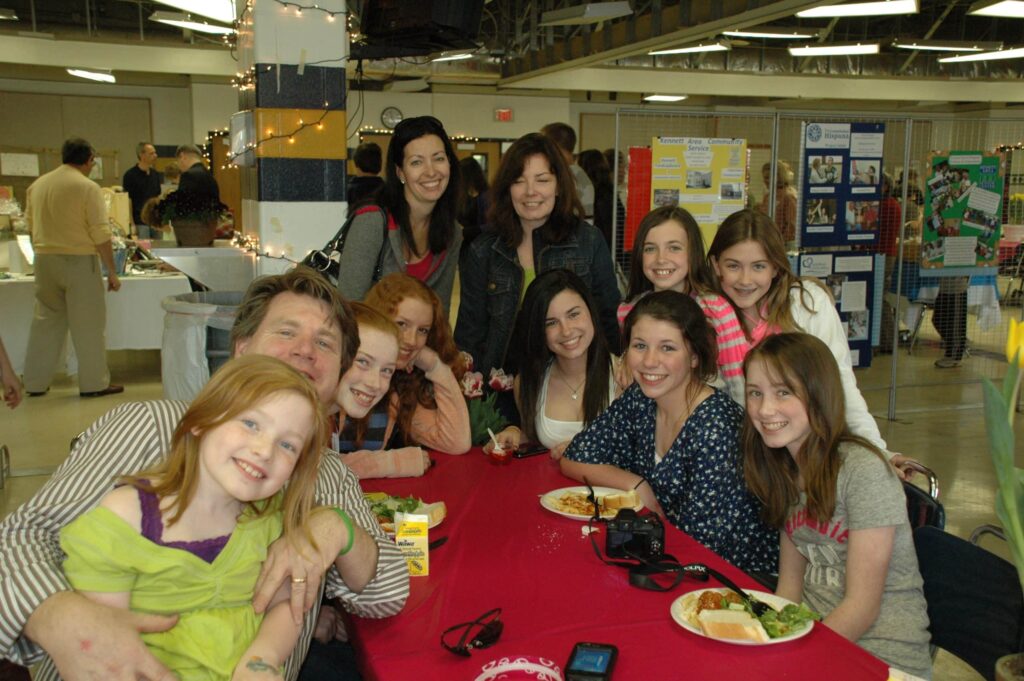
The Unionville-Chadds Ford School District gave a boost to
the United Way of Southern Chester County last weekend. The district donated to
the United Way all the money it raised during a Family pasta Night held at the
high school Saturday, April 10.

Aside from food and a silent auction, there was also
entertainment. The Juggling Hoffmans juggled and joked, and Rhonda Kirby—from
the Kennett Area YMCA—gave a zumba demonstration and class. Zumba is a danced
exercise done to Latin rhythms.

About Rich Schwartzman

Rich Schwartzman has been reporting on events in the greater Chadds Ford area since September 2001 when he became the founding editor of The Chadds Ford Post. In April 2009 he became managing editor of ChaddsFordLive. He is also an award-winning photographer.

U-CF Pasta night benefits United Way Read More »

Scroll to Top