
‘The life of Andrew Wyeth in bold strokes’
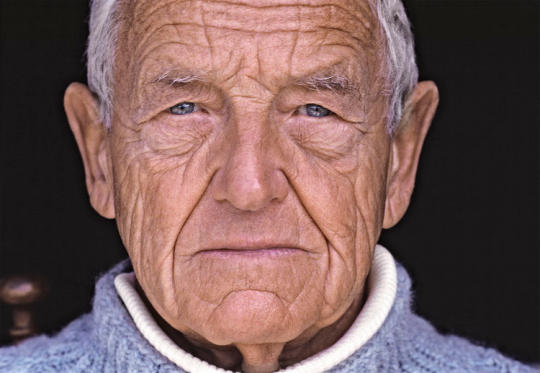
PBS documentary WYETH: the life of Andrew Wyeth in bold strokes airs Friday, September 7, at 10 p.m. The film opens with a close up of Andrew Wyeth’s craggy, weather worn face. As the narrator begins to speak, the camera slowly moves in until we are looking at just Andy’s eyes—crystal blue and piercing—eyes that seem to look into the world, seeing what others do not. His Superman vision sees what is hiding and waiting beneath the surface.
The documentary is the third in a four-part PBS American Masters Artists series exploring the lives of four iconic American visual artists. The Wyeth segment, which took three years to complete, moves seamlessly through Andrew Wyeth’s life, lifting up memorable moments—both tragic and triumphant. It airs on Friday, September 7 at 10 p.m. across the country and will be available to stream the following day. There are two versions of the documentary—a ninety-minute theatrical version and the sixty-minute broadcast version.
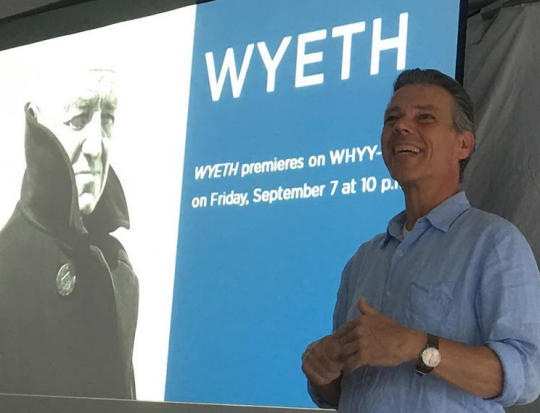
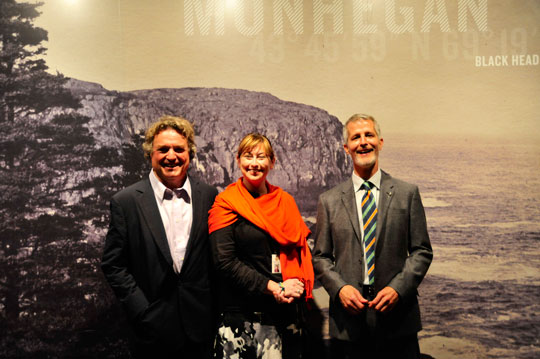
WHYY members recently enjoyed a special viewing of the documentary at Chaddsford Winery with the filmmaker, Glenn Holsten, and the producer Chayne Gregg, in attendance. During a question and answer session following the film, Holsten and Gregg shared behind the scenes stories and attendees shared their special memories of our special and beloved neighbor.
WYETH tells the story of Chadds Ford’s most celebrated resident and offers a peek into his thoughts about life and painting. The film explores contradictions and comparisons throughout the artist’s life. For example, Andrew adored his father, the famed illustrator N.C. Wyeth, but did not approach painting in the same way. N.C. painted in bold colors that made his images jump off the pages of the adventure books he illustrated for Scribner’s. Andrew, meanwhile, painted his action scenes in a palette of subtle greys and browns. Subject matter differed, as well. While N.C. painted historic and literary battles full of action, Andy, according to son Jamie, “was always painting a dead crow or something that was equally intriguing.” Andrew Wyeth felt he could only paint what he knew intimately. He walked and walked around his beloved Chadds Ford studying its strong, stone buildings and around Cushing, Maine taking in its rough landscapes and seascapes. He noticed everything. For him, the world was always changing. Andy observed that the river flows constantly, yet it is never the same.
An art critic once described Wyeth as being the most overrated–and the most underrated—artist in the world. He made money while he was still alive, which was unheard of. His first exhibition at age 20 was a sellout. He was as popular as a rock star and his exhibitions routinely broke attendance records at prestigious art museums across the country. Ironically, because his work was so popular, some critics concluded that it could not be very good.
New York’s Museum of Modern Art acquired Christina’s World in 1948 amidst great controversy within the museum itself and in the art world beyond. The controversy pitted those who thought the painting was a masterpiece against those who thought it awful. People are still drawn to Christina’s World. One does not need to know the story behind Christina Olsen’s disability to understand and relate to the isolated feeling it conveys. Wyeth was not discouraged by cruel comments. His reaction to negative interpretations of his art was to keep painting, which drove his critics mad. Now, with the advantage of time, art critics, scholars of American art, and historians are reevaluating and praising his body of work.
In the documentary, the audience learns much from interviews with art professionals, family, and friends—including Helga–who discuss Wyeth and his work. The home movies and photographs of the Wyeth family provide added dimension to the famed Wyeth family. Sons Jamie and Nicholas Wyeth talk candidly about their father. The narrator explains that Betsy always encouraged her husband, even after learning early in their marriage that she would always be number 2 in his life after painting. When Andy introduced the “Helga Paintings” to her and the rest of the world in 1986, she maintained her sanity in the midst of the media storm by organizing and cataloging the huge body of studies and paintings created over fifteen years.
Andrew Wyeth painted or thought about painting all the time. Mary Landa, Andrew Wyeth collections manager reflected that, “on his deathbed, asleep with his eyes closed, Andy’s hand was moving, as if he were painting.”
WYETH: The life of Andrew Wyeth in bold strokes will be available after the broadcast through WHYY or the Brandywine River Museum of Art.
‘The life of Andrew Wyeth in bold strokes’ Read More »