
March 10, 2026

Bank to Bend Garden Walk Kicks Off Start of Winterthur’s 75th Anniversary Season

Bank to Bend Garden Walk Kicks Off Start of Winterthur’s 75th Anniversary Season
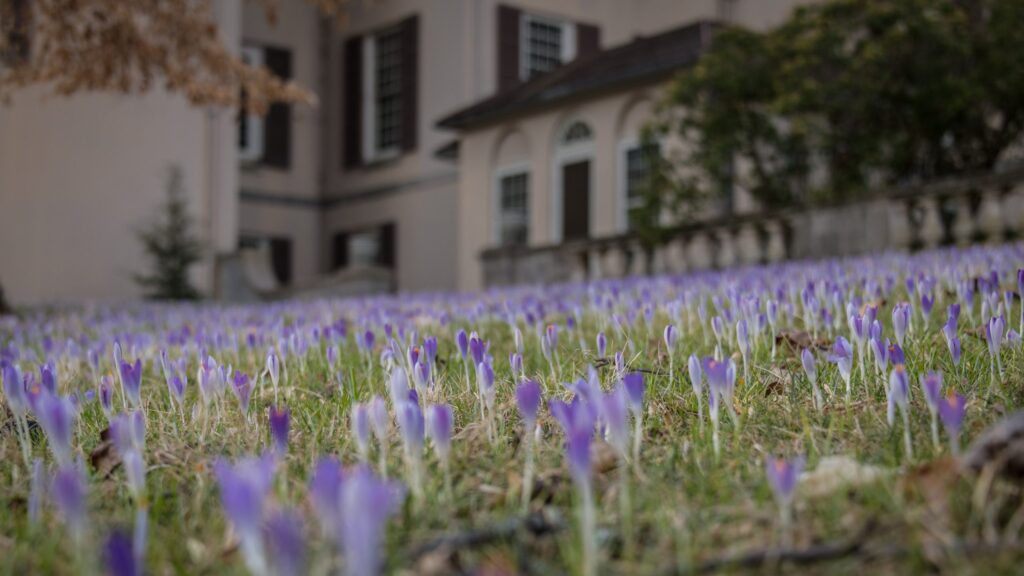
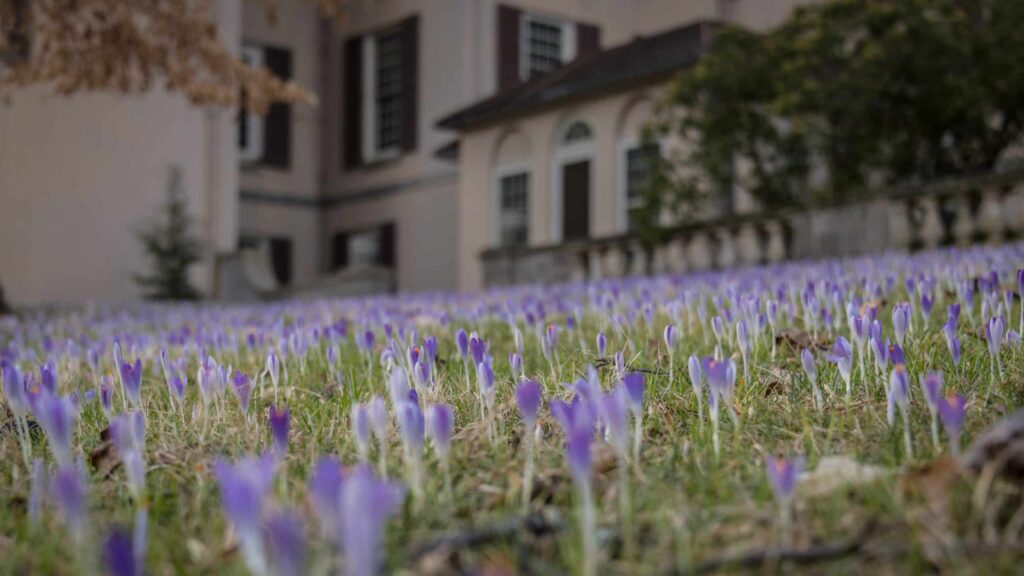
Tommy crocuses on the East Terrace lawn Courtesy Winterthur Museum Garden and Library scaled 1

Tommy crocuses bloom across the East Terrace lawn at Winterthur, signaling the arrival of early spring in the historic gardens. Photo courtesy Winterthur Museum, Garden and Library.

Winterthur’s 75th Anniversary Season Kicks Off with Bank to Bend Garden Walk

The arrival of early spring will be celebrated on March 14 with Bank to Bend, an annual garden event that invites visitors to experience the first waves of seasonal color across the historic March Bank landscape.

Held from 10 a.m. to 3 p.m., the event marks the beginning of the 2026 season and the start of the museum’s 75th anniversary year. The day includes guided and self-guided garden walks, a plant sale, a clivia exhibit, a library open house, and a lecture by local author and horticulturist Rick Darke.

The event takes its name from a tradition established by Winterthur founder Henry Francis du Pont, who encouraged family members to walk the path along the March Bank to Magnolia Bend each year to observe and report the first flowers of the season emerging in the garden.

The March Bank is one of the best-known examples of the wild garden concept promoted by British gardener and writer William Robinson. In his 1870 book The Wild Garden, Robinson advocated planting hardy native and exotic plants in groupings that resemble natural landscapes rather than arranging them in rigid patterns.

Robinson challenged traditional English gardening practices by encouraging gardeners to allow plants to naturalize and establish themselves in self-sustaining communities. The approach was intended to create landscapes that were both resilient and visually dynamic.

Du Pont embraced Robinson’s philosophy when developing the March Bank, beginning plantings in 1902 when he was 22 years old. What started with a few thousand bulbs planted beneath a canopy of woodland trees eventually expanded into a sweeping naturalistic display that now includes millions of late-winter and early-spring-flowering bulbs.

The display begins to evolve in late January and continues through early May. The first blooms typically include white giant snowdrops, followed by yellow Amur adonis and winter aconite. As the season progresses, the landscape transitions to carpets of lavender-blue glory-of-the-snow and royal-blue squills.

Drifts of yellow daffodils appear next, followed by purple-and-white Dutch hybrid crocus and white bloodroot. By late March, the bank fills with emerging Virginia bluebells, Italian windflowers, and other naturalized plants.

Visitors attending Bank to Bend can explore the garden paths on their own or join scheduled activities throughout the day. A plant sale will offer cyclamens, perennials and unusual snowdrops, and guests can also attend a Director’s Garden and Estate Walk led by Winterthur CEO Chris Strand.

The Winterthur Library will also host a special collection open house in the afternoon.

For an additional $10, visitors can attend a lecture by Landenberg-based author and garden designer Rick Darke from 11 a.m. to noon in Copeland Lecture Hall. The talk, titled The Wild Garden in Our Time, will explore how naturalistic garden design continues to influence modern landscapes.

Darke is known for combining ecology, horticulture, and cultural geography in his work on the design of public gardens, parks, and residential landscapes.

Maintaining the historic garden remains an important responsibility for Winterthur’s horticulture team. One of the last remaining 20th-century wild gardens in the United States, the landscape is carefully managed to preserve the natural appearance envisioned by du Pont.

“Color is the thing that really counts more than any other,” du Pont once said of the garden he designed, grew and maintained for nearly 70 years.

“It’s a meticulous process that requires an understanding of the original design intent and keen observations to preserve its character,” said Linda Eirhart, Alice Cary Brown Director of Garden at Winterthur. “The wild garden style requires continuous care to maintain its desired appearance.”

Garden staff maintains historic plant combinations and seasonal views while also encouraging natural spreading of plants across the March Bank. Garden Manager Carol Long distributes seeds from certain spring bulbs to help expand the display, a process she calls “Johnny Appleseeding.”

Additional information about the March 14 event is available at
https://www.winterthur.org/event/bank-to-bend/

Staff Writer

Delaware LIVE collaborates with a network of professional journalists to cover a diverse range of stories across various fields.  Staff Writers include experienced journalists and young professionals.  If you have questions, please feel free to contact editor@delawarelive.com or our publisher, George D. Rotsch, at George@Delawarelive.com

This post was originally published on Delaware LIVE

Bank to Bend Garden Walk Kicks Off Start of Winterthur’s 75th Anniversary Season Read More »
New Director Appointed to Lead Wilmington VA Medical Center

New Director Appointed to Lead Wilmington VA Medical Center
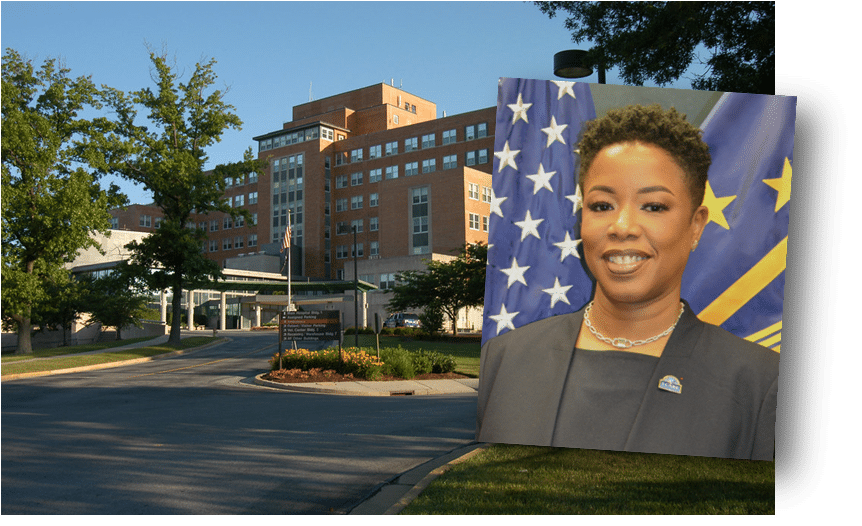
VA Hospital and new Admin

The Wilmington VA Medical Center plays a central role in the region’s health care system and veteran community. More than 1,300 employees provide care to over 47,000 veterans each year.

Thandiwe Nelson-Brooks brings more than two decades of health care leadership experience to a facility serving more than 47,000 veterans across Delaware and South Jersey.

WILMINGTON, Del. — The U.S. Department of Veterans Affairs has appointed Thandiwe Nelson-Brooks as the new executive director of the Wilmington VA Medical Center, effective March 8, according to an announcement from Veterans Integrated Service Network (VISN) 4.

Nelson-Brooks had been serving in the role on an interim basis since January. She succeeds Vamsee Potluri, who transferred to another VA facility within the network in September 2025.

VISN-4 Interim Director Jennifer Harkins said Nelson-Brooks brings strong leadership experience to the position.

“We are very excited to appoint Ms. Nelson-Brooks to this role permanently,” Harkins said in a statement. “I am grateful for her experience and leadership that she brings to Wilmington.”

Nelson-Brooks previously served as interim director of the VA Pacific Islands Health Care System in Honolulu after being appointed deputy medical center director there in December 2023. She brings more than 20 years of experience in clinical and administrative health care leadership.

She began her VA career in 2010 as a clinical nurse consultant and Health Promotion Disease Prevention program manager at the VA New Jersey Health Care System in East Orange, New Jersey.

“Our veterans are the ‘why’ behind everything we do,” Nelson-Brooks said. “There is no greater professional honor than dedicating this next chapter to serving those who have served our nation. As I step into this new role, I welcome opportunities to connect with our veterans and their caregivers, hear their stories, and better understand how we can continue improving the care and services they deserve.”

The Wilmington VA Medical Center plays a central role in the region’s health care system and veteran community. More than 1,300 employees provide care to over 47,000 veterans each year at the Wilmington hospital and its five outpatient clinics located throughout Delaware and southern New Jersey.

Beyond being a medical facility, the Wilmington VA serves as a critical anchor for veterans’ health services across the region. The center provides specialized care tailored to military service, including treatment for post-traumatic stress disorder, traumatic brain injury, service-related hearing and vision loss, and exposure-related conditions such as those linked to Agent Orange and burn pits.

The hospital is also an important resource for Delaware’s aging veteran population, offering primary care, memory and dementia support, home-based care programs, and social services for caregivers. Many older veterans rely on the VA as their primary source of consistent medical care.

The medical center also plays a key role in supporting mental health services across the region, offering PTSD treatment programs, substance-use disorder services, suicide-prevention resources, and peer support networks.

In addition to its health care mission, the Wilmington VA serves as a major employer and economic driver in the city. The facility supports hundreds of medical professionals and staff while bringing federal health care funding into the region and partnering with local universities to train future doctors and nurses.

By providing care for tens of thousands of veterans annually, the Wilmington VA also helps reduce strain on local hospital systems by handling complex chronic conditions and specialty care unique to military service.

With deep military roots across Wilmington and New Castle County, the VA medical center remains one of the region’s most trusted institutions for veterans and their families.

Nelson-Brooks said strengthening those connections with veterans and caregivers will be a priority as she begins her tenure leading the Wilmington facility.

Staff Writer

Delaware LIVE collaborates with a network of professional journalists to cover a diverse range of stories across various fields.  Staff Writers include experienced journalists and young professionals.  If you have questions, please feel free to contact editor@delawarelive.com or our publisher, George D. Rotsch, at George@Delawarelive.com

This post was originally published on Delaware LIVE

New Director Appointed to Lead Wilmington VA Medical Center Read More »

Alzheimer’s Association and American Cancer Society push for biomarker testing coverage in Delaware

Alzheimer’s Association and American Cancer Society push for biomarker testing coverage in Delaware
Spiro Alzheimers

Sen. Spiros Mantzavinos of Elsmere and leaders from the Alzheimer’s Association of Delaware and the American Cancer Society worked today to build support for SB120 which will help more people gain access to moderm medical technology to fight Alzheimer’s and Cancer.

Biomarker testing is not yet covered by insurance despite evidence that testing provides for earlier care, improves health outcomes, and reduces health care costs.

DOVER, Del. — Leaders from the Alzheimer’s Association and the American Cancer Society Cancer Action Network met with lawmakers from both political parties Tuesday morning at Legislative Hall to advocate for broader access to modern diagnostic technology, including biomarker testing, for Delaware patients.

The meetings focused on building support for Senate Bill 120, legislation sponsored by Senator Spiros Mantzavinos and Representative William Bush, which would require many Delaware health insurance plans to cover biomarker testing when supported by medical and scientific evidence.

Biomarker testing opens the door to personalized medicine, including targeted therapies that can improve health outcomes and reduce costs.  Biomarker testing is also supported by the American Lung Association, the Michael J. Fox Foundation, and the two organizations that organized the briefing today.

Advocates say the bill would help ensure patients across the state can access new diagnostic tools that are rapidly transforming care for diseases such as Alzheimer’s and cancer.

What Senate Bill 120 would do

Senate Bill 120, introduced during Delaware’s 153rd General Assembly, would require coverage of biomarker testing under a wide range of health insurance plans, including:

  • Individual health insurance plans
  • Employer group plans
  • State employee health plans
  • Public-assistance health plans connected to Medicaid

The coverage requirement would apply to policies issued, renewed, or modified after Dec. 31, 2026.  Funding for the Bill was included in Governor Meyer’s FY2027 budget.

Biomarker testing includes laboratory and molecular diagnostic tests that identify biological signals in the body — such as proteins, genes, or other markers — that can help doctors diagnose disease and determine the most effective treatments.

The bill is currently assigned to the Senate Banking, Business, Insurance & Technology Committee, where lawmakers are expected to hear testimony from medical professionals, patient advocates, and insurance providers.

Why advocates say biomarker testing matters

Health advocates, including Glen Gray for the Alzheimer’s Association of Delaware, say biomarker testing has become a cornerstone of “precision medicine,” allowing physicians to diagnose Alzheimer’s care much earlier, before traditional symptoms are noticed.

For Alzheimer’s patients, new biomarker tests — including blood-based diagnostics — can detect disease-related changes in the brain earlier than traditional methods and help determine whether patients qualify for newly approved treatments.

For cancer patients, biomarkers can identify genetic or molecular features of tumors that determine which therapies are likely to work.

Supporters argue that insurance coverage has not kept pace with advances in medical science.

Without coverage mandates, advocates say patients may face thousands of dollars in out-of-pocket costs or have claims denied if insurers classify the tests as experimental.

Advocates also argue the technology could help reduce overall health care costs.

Studies show that diagnosing dementia based only on symptoms can lead to misdiagnosis rates of as high as 30% to 40%, often resulting in unnecessary medications, repeated specialist visits, and expensive imaging tests. Biomarker testing can confirm the underlying disease earlier and more accurately, helping physicians distinguish between Alzheimer’s disease and other forms of dementia that require different care approaches. Supporters say that clarity can prevent years of costly trial-and-error treatment, reduce unnecessary prescriptions, and limit repeated diagnostic procedures.

They also note that newer blood-based biomarker tests are far less expensive than traditional diagnostic tools. Until recently, confirming Alzheimer’s disease often required a PET scan costing between $3,000 and $7,000 or an invasive spinal tap. Blood tests can provide similar diagnostic insight at a fraction of the cost and can often be ordered by primary-care physicians, reducing the need for specialist referrals. Advocates say earlier and more accurate diagnosis can also help prevent emergency hospital visits, reduce crisis-driven care decisions, and ensure that expensive new Alzheimer’s treatments are prescribed only to patients who are most likely to benefit.

A growing policy discussion in Delaware

The push for SB 120 reflects a broader national conversation about how state insurance policies should adapt to rapidly evolving medical technologies.

If enacted, Delaware would join a growing number of states that have adopted laws requiring insurance coverage for biomarker testing tied to evidence-based medical guidelines.

Advocates from both organizations said they plan to continue meeting with lawmakers in the coming months as the bill moves through the legislative process.

They argue that ensuring access to biomarker testing is essential to bringing modern, personalized medicine to patients across Delaware.

Staff Writer

Delaware LIVE collaborates with a network of professional journalists to cover a diverse range of stories across various fields.  Staff Writers include experienced journalists and young professionals.  If you have questions, please feel free to contact editor@delawarelive.com or our publisher, George D. Rotsch, at George@Delawarelive.com

This post was originally published on Delaware LIVE

Alzheimer’s Association and American Cancer Society push for biomarker testing coverage in Delaware Read More »

Helen’s Sausage House to open Lewes location this fall

Helen’s Sausage House to open Lewes location this fall
Helens Smyrna exterior 2

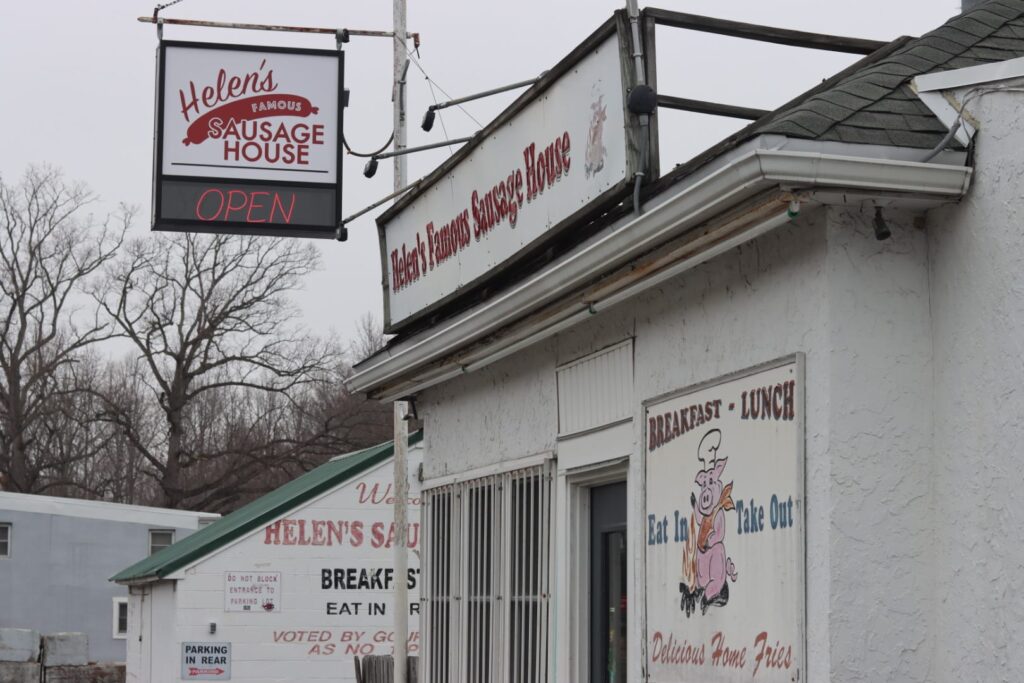
Helen’s Sausage House expanding to third Delaware restaurant near Route 1 and Route 9

A well-known Delaware breakfast spot is expanding to the beach, with Helen’s Sausage House planning to open a new restaurant in Lewes later this year.

The family-owned eatery announced it will open its third location at The Vineyards, 21431 Zinfandel Lane, near the intersection of Del. Route 1 and U.S. Route 9. Construction is expected to begin this spring.

The Lewes restaurant will join existing locations in Smyrna and Newark. After opening the Newark location in 2023, third-generation co-owners Clifford J. Murphy III and Zack Hunter said the Delaware beaches were a natural next step for the business.

“The beach has always been a special place to Helen and all of our family,” said Hunter, a Long Neck homeowner just like Helen was. “Finding a location that could serve the community year round was important to us.”

Hunter has been managing the original Smyrna location since 2023 and will oversee both the Smyrna and Lewes restaurants with assistance from General Manager Samantha Jamison, daughter of longtime Smyrna employee Tina Jamison.

“So many people stop at the Smyrna store on their way to the beach, we’re excited to become a real part of the community there and be more accessible to visitors coming from all over,” Hunter said.

The Lewes restaurant will offer the same menu as other Helen’s locations, including its well-known sausage and scrapple breakfast sandwiches.

“Helen used to take us to the water park right down the road when I was a kid. I know she would be proud to see us expanding her legacy,” Murphy said.

Helen’s Sausage House was founded in 1983 by Helen Achenbach and has been known for its breakfast offerings, particularly sausage sandwiches. Clifford “Butch” Murphy II operated the restaurant from the early 1990s until 2022, when ownership passed to his son, Clifford J. Murphy III, Helen’s grandson.

Today, the original Smyrna location at 4866 N. Dupont Highway is open from 4 a.m. to noon daily except Sunday, while the Newark location at 145 E. Main St. is open from 6 a.m. to 2 p.m. seven days a week.

Staff Writer

Delaware LIVE collaborates with a network of professional journalists to cover a diverse range of stories across various fields.  Staff Writers include experienced journalists and young professionals.  If you have questions, please feel free to contact editor@delawarelive.com or our publisher, George D. Rotsch, at George@Delawarelive.com

This post was originally published on Delaware LIVE

Helen’s Sausage House to open Lewes location this fall Read More »

New plan for UCF middle school

he Unionville-Chadds Ford School Board is reviewing an updated plan for the proposed new middle school, and the price will be going up. The new estimate for just the school is now believed to be about $153.3 million, with a completion date of May 2034.

In January, it was announced that the projected cost of a new middle school was estimated at $139.5 million, $19 million more than what was presented after the feasibility study, but roughly $8 million less than after the preliminary schematic design. School Superintendent Tim Hoffman said at that time that the timeline might have to be adjusted, and that’s what was presented during the March 9 work session.

 The new plan involves an adjusted timeline for the project as well as the project scope and funding. That plan “incorporates the middle school project into the larger Secondary School Plan,” Hoffman said as he moved into the presentation.

“There were things that were wrapped into the overall project scope that we feel would be a major benefit to our community to do them as soon as possible.”

Hoffman said several severable aspects of the schematic design remain close to original estimates, but that other costs, such as site work, demolition, and construction estimates, were higher than expected.

He added that there is greater flexibility to incorporate the new middle school into a secondary campus plan once the high school debt drops off in 2031. That would be the reason for the adjusted timeline. That change, Hoffman said, would allow the district to move forward with other related projects before construction begins on the school itself.

Among those projects are moving the tennis courts, adding one more court, and also reconfiguring parking and traffic flow. That would cost about $5.02 million and be finished by August 20028, according to Director of Facilities James Whitesel.

The second project would involve moving the middle school baseball and softball fields at a cost of $2.587 million. That project would be completed by October 2029.

“This centralizes our athletic activities to the north end of the campus and provides the space needed to construct a possible new middle school,” Whitesel said. That new school, he said, would be in the area of the existing ball fields.

However, the change in the estimated cost is significant.

“The scope of the project is basically the same as what we reviewed back in January; however, the budget has increased primarily due to pushing the project back approximately five years to better fit within our debt service and under Act 1,” Whitesel said.

If the board approves the update plan, construction of the new middle school would begin in September of 2031 (moved from mid-2027) and be completed by May of 2034. Demolition of the old school would start in June of 2034 and be finished a year later.

The total cost for all phases is currently estimated at $166.377 million.

Joe Deady, the director of finance, said the demand for construction material and labor could drive inflation higher than estimates. Deady added the idea is a 30-year payment term, meaning the cost would be spread out over a 30-year period.

Hoffman wrapped up that portion of the presentation, saying that roof repair and restoration would continue at the middle school and that the district would continue to budget for routine maintenance until the project is finished.

A vote is currently scheduled for next week.

Other business

• The board will be considering the installation of a native garden at Unionville High School at a cost of $9,930. This garden, according to board documents, will provide both a backdrop to the school’s Longhorn statue at the entrance of to the school and provide a visual barrier for some current back-of-house operations. The garden includes 4 trees, 38 shrubs, and 102 perennials that are native to the Pennsylvania region. The project would go to Green Ridge landscaping.

• Directors will also vote on whether to spend $33,350 on replacement water fountain/hydration stations at Chadds Ford and Unionville Elementary schools, and at CF Paton Middle School. That job is scheduled for Hajoca Corporation.

New plan for UCF middle school Read More »

Carley Razzi Leads Penns Woods Winery with Vision, Tradition, and Stewardship

Carley Razzi Leads Penns Woods Winery with Vision, Tradition, and Stewardship
Carley Razzi with father Gino Razzi

Carley Razzi stands with her father, Gino Razzi, founder of Penns Woods Winery, inside the winery’s production facility in Chadds Ford. Photo credit: Erin Ingraffia Photography.

With Vision, Tradition, and Stewardship, Carley Razzi Leads Penns Woods Winery

Carley Razzi represents a new generation of leadership in regional winemaking. As co owner and president of Penns Woods Winery in nearby Chadds Ford, she helps guide the strategic direction, marketing and daily operations of one of the Brandywine Valley’s established estate wineries.

Penns Woods Winery was founded in 2001 by her father, Gino Razzi, an Italian immigrant and United States Marine Corps veteran who spent decades as a wine importer before turning his focus to producing wine in the Brandywine Valley. After acquiring and restoring a historic farmhouse and vineyard property in Chadds Ford, he began developing estate grown wines rooted in European winemaking traditions and Pennsylvania terroir.

Razzi grew up immersed in the wine business. As a child, she spent time working alongside her father at WinesU, his wine import company, gaining early exposure to the global wine industry. She later earned a degree in business management and marketing from Colorado State University before officially joining Penns Woods Winery in 2009. Over time, she assumed increasing leadership responsibilities and now serves as co owner and president, helping shape the winery’s long term growth and brand presence.

In her role, Razzi oversees overall business strategy while guiding marketing and brand development. She also works closely with the winery’s hospitality team, tasting room staff and vineyard partners to support production and visitor experiences. Her leadership includes event programming, community partnerships and oversight of vineyard sites across Chester County that contribute fruit to the winery’s portfolio.

Penns Woods Winery focuses on estate driven wines crafted from Pennsylvania grown grapes. Vineyard management and regenerative farming practices remain central to the winery’s philosophy.

“Making wine is a balance of science and love, and if you don’t have both, it’s not going to happen. It starts in the vineyard. You can’t make wine any better than the grapes you grow, which is why we prioritize regenerative farming. When you take care of the land, it takes care of your fruit. When you have the best fruit, you make the best wine.”

Beyond production, Penns Woods Winery has become a destination for visitors from across the Brandywine Valley and surrounding region seeking both wine education and a connection to the local agricultural landscape. The tasting room and grounds host seasonal events, private gatherings and public programming that highlight food, music and the arts. Under Razzi’s leadership, hospitality remains a core part of the experience, with an emphasis on welcoming longtime supporters and first time guests alike.

Razzi is also active within the broader Pennsylvania wine community. She currently serves as a member of the Wine Marketing and Research Board and previously served as marketing chair of the Pennsylvania Wine Association. She has also represented the Brandywine Valley Wine Trail and served on the board of the Vintage Atlantic Wine Region, helping promote greater recognition for wines produced throughout Pennsylvania.

Her passion for the industry extends beyond the winery itself. Razzi has traveled extensively to vineyards throughout Italy, Spain and across the United States, building her knowledge and perspective on winemaking traditions from around the world.

Today she continues to balance leadership at Penns Woods Winery with family life, living in the suburbs of Philadelphia with her two children, Olivia and Miles. Outside the winery, she enjoys spending time outdoors hiking with her children and exploring national parks. She is also a fan of live music and attends concerts whenever her schedule allows.

Through a blend of family tradition, global perspective and regional pride, Razzi is helping guide Penns Woods Winery into its next chapter while strengthening the visibility of Pennsylvania wines across the Brandywine Valley.

For more information and to make reservations visit:
https://www.pennswoodswinery.com/

This post was originally published on TownSquareDelaware

Carley Razzi Leads Penns Woods Winery with Vision, Tradition, and Stewardship Read More »

Bank to Bend Garden Walk Kicks Off Start of Winterthur’s 75th Anniversary Season

Bank to Bend Garden Walk Kicks Off Start of Winterthur’s 75th Anniversary Season
Tommy crocuses on the East Terrace lawn Courtesy Winterthur Museum Garden and Library

Tommy crocuses bloom across the East Terrace lawn at Winterthur, signaling the arrival of early spring in the historic gardens. Photo courtesy Winterthur Museum, Garden and Library.

Winterthur’s 75th Anniversary Season Kicks Off with Bank to Bend Garden Walk

The arrival of early spring will be celebrated March 14 with Bank to Bend, an annual garden event that invites visitors to experience the first waves of seasonal color across the historic March Bank landscape.

Held from 10 a.m. to 3 p.m., the event marks the beginning of the 2026 season and the start of the museum’s 75th anniversary year. The day includes guided and self guided garden walks, a plant sale, a clivia exhibit, a library open house, and a lecture by local author and horticulturist Rick Darke.

The event takes its name from a tradition established by Winterthur founder Henry Francis du Pont, who encouraged family members to walk the path along the March Bank to Magnolia Bend each year to observe and report the first flowers of the season emerging in the garden.

The March Bank is one of the best known examples of the wild garden concept promoted by British gardener and writer William Robinson. In his 1870 book The Wild Garden, Robinson advocated planting hardy native and exotic plants in groupings that resemble natural landscapes rather than arranging them in rigid patterns.

Robinson challenged traditional English gardening practices by encouraging gardeners to allow plants to naturalize and establish themselves in self sustaining communities. The approach was intended to create landscapes that were both resilient and visually dynamic.

Du Pont embraced Robinson’s philosophy when developing the March Bank, beginning plantings in 1902 when he was 22 years old. What started with a few thousand bulbs planted beneath a canopy of woodland trees eventually expanded into a sweeping naturalistic display that now includes millions of late winter and early spring flowering bulbs.

The display begins to evolve in late January and continues through early May. The first blooms typically include white giant snowdrops, followed by yellow Amur adonis and winter aconite. As the season progresses, the landscape transitions to carpets of lavender blue glory of the snow and royal blue squills.

Drifts of yellow daffodils appear next, followed by purple and white Dutch hybrid crocus and white bloodroot. By late March, the bank fills with emerging Virginia bluebells, Italian windflowers, and other naturalized plants.

Visitors attending Bank to Bend can explore the garden paths on their own or join scheduled activities throughout the day. A plant sale will offer cyclamens, perennials and unusual snowdrops, and guests can also attend a Director’s Garden and Estate Walk led by Winterthur CEO Chris Strand.

The Winterthur Library will also host a special collection open house in the afternoon.

For an additional $10, visitors can attend a lecture by Landenberg based author and garden designer Rick Darke from 11 a.m. to noon in Copeland Lecture Hall. The talk, titled The Wild Garden in Our Time, will explore how naturalistic garden design continues to influence modern landscapes.

Darke is known for combining ecology, horticulture and cultural geography in his work designing public gardens, parks and residential landscapes.

Maintaining the historic garden remains an important responsibility for Winterthur’s horticulture team. One of the last remaining 20th century wild gardens in the United States, the landscape is carefully managed to preserve the natural appearance envisioned by du Pont.

“Color is the thing that really counts more than any other,” du Pont once said of the garden he designed, grew and maintained for nearly 70 years.

“It’s a meticulous process that requires an understanding of the original design intent and keen observations to preserve its character,” said Linda Eirhart, Alice Cary Brown Director of Garden at Winterthur. “The wild garden style requires continuous care to maintain its desired appearance.”

Garden staff maintain historic plant combinations and seasonal views while also encouraging natural spreading of plants across the March Bank. Garden Manager Carol Long distributes seeds from certain spring bulbs to help expand the display in a process she refers to as “Johhny Appleseeding.”

Additional information about the March 14 event is available at
https://www.winterthur.org/event/bank-to-bend/

This post was originally published on TownSquareDelaware

Bank to Bend Garden Walk Kicks Off Start of Winterthur’s 75th Anniversary Season Read More »

Scroll to Top