Longwood will hold a class on making floral cupcakes on Feb. 23.
•Care for some floral cupcakes? How about making them? Join floral designer Chad Wlazelek at Longwood Gardens for a fun spin on the cupcake as he demonstrates how to create a floral design inspired by this beloved sweet treat and create your own to take home and proudly display. He will also share a cupcake recipe for you to try at home. The in-person class is Thursday, Feb. 23 at 6 p.m. The cost is $109. Register here.
•Brandywine Battlefield Park is bringing back its Summer History Camp this year. The park is planning to update the camping program and is conducting a survey to learn the opinions of parents of elementary and middle school students. The survey can be found here.
Learn about the U.S. Colored Troops during the Civil War at the Chester County History Center.
•U.S. Colored Troops, formed in 1863, played an important role in the Union Army during the Civil War. A new exhibit opening Feb. 10 at the Chester County History Center features the stories and images of a few from the Mid-Atlantic region. A photo album owned by Capt. William A. Prickitt contained 2-inch photographic images of 17 men of the 25th USCT, all of whom trained near Philadelphia. Shayne Davidson, a professional illustrator, created enlarged color versions of these black-and-white photos and compiled bibliographic information. The exhibit will be on view through July 1.
•The critically acclaimed Opera Philadelphia Chorus and Orchestra take center stage at the Academy of Music on Feb. 3 and 5 for a performance of Carl Orff’s Carmina Burana and Margaret Bonds’ Credo, pairing one of classical music’s most recognizable choral works with a rarely performed masterpiece. The concert marks both the Philadelphia premiere of Credo and the company debut of a rising star, conductor Lina González-Granados. Go here for ticket information.
•United Way of Chester County will have a special fundraising concert featuring national recording artist Alexandra Kay, taking place on Saturday, March 25 at 8:30 p.m. at the Uptown! Knauer Performing Arts Center in West Chester. This event, presented by PECO and Brandywine Valley Heating & Air Conditioning, will bring together music fans and supporters of the United Way for an unforgettable evening of entertainment, all while raising funds for the organization’s Community Impact and Innovation Fund. General admission reserved seats will be $50 and limited VIP tickets will be available for $100. VIP tickets include premium seating as well as a special pre-concert reception with an artist appearance, heavy hors d’oeuvres, and a cash bar. Tickets will go on sale Friday, Jan. 20, and can be purchased here.
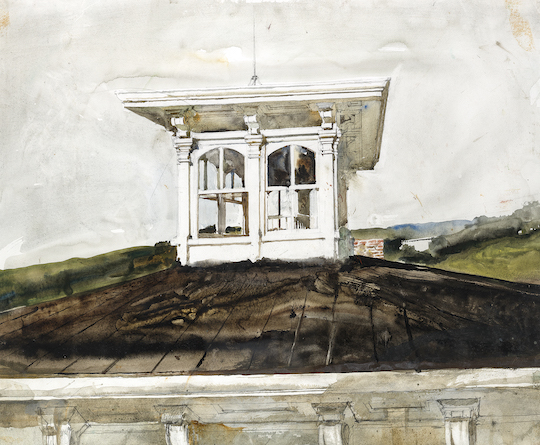
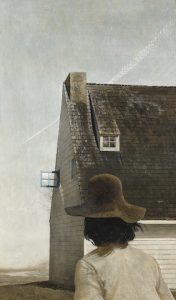
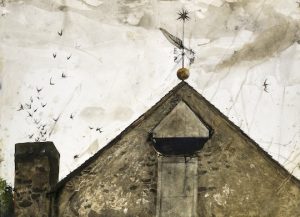
There is no discussion of art in the Brandywine Valley without Andrew Wyeth. From Christina’s World to Maine, from Chadds Ford to Peanuts (Snoopy has a Wyeth on his doghouse wall!), his influence goes far beyond gallery rooms. Andrew Wyeth: Home Places at the Brandywine Museum of Art celebrates not only his work but the sites which inspired him over and over throughout his long career. On view from Feb. 4 through July 13, the exhibition includes artwork never before available to the public from the Andrew and Betsy Wyeth Collection of the Wyeth Foundation for American Art.
Andrew Wyeth: Home Places is the first exhibition curated by the inaugural Wyeth Foundation Curator and Director of the Andrew & Betsy Wyeth Study Center, Dr. William L. Coleman. “It’s an incredible privilege to be entrusted with this newly created role overseeing the 7,000 object Andrew & Betsy Wyeth Collection and the exhibition, research, and outreach efforts of the Wyeth Study Center across its two locations, at the Brandywine and on the campus of the Farnsworth Art Museum in Maine,” says Coleman.
A body of work from an artist who worked over so many decades provides information and inspiration for scholars and artists alike. “This collection is a resource for understanding the creative process like no other, including everything from the most preliminary pencil drawings to some of the most iconic tempera paintings Wyeth ever produced,” Coleman said. “Initial delving into the collection has revealed many surprises and untold stories, not least of them the unrecognized role that Betsy James Wyeth played as a key creative partner, that we’ll be eager to bring to light in future projects.”
Finding somewhere to start in this enormous archive was a challenge in itself, but Coleman found a throughline in the landscapes Wyeth called home. “Through decades of living in this changing landscape, Andrew Wyeth came to know particular buildings deeply and returned to them repeatedly, always finding new pictorial possibilities when he did,” said Coleman. “He was fascinated by history and the people and events these old buildings had witnessed and tried to draw out these stories through a wide range of artistic approaches.”
Visitors to the exhibition will see these sights evolve both in terms of age and artistry. “The works on view in Home Places show an artistic practice of uncommon focus over an extended timescale: a kind of slow-looking that is really fascinating,” Coleman said. “As I began to explore the collection alongside my knowledgeable Wyeth Study Center colleague Karen Baumgartner, I was fascinated to find a prominent thread throughout Wyeth’s work of depictions of buildings that give inanimate architecture the compositional weight and sensitivity of depiction more commonly reserved to paintings of human beings.”
That long-term focus expands upon the usual familiar sights of Wyeth’s artworks. “While other exhibitions have focused on individual structures that inspired Wyeth, most famously the Olson house in Maine and the Kuerner house in Chadds Ford, I wanted to zoom out to show this as a wider pattern in his work of looking beneath the surface of ordinary places to the layers of association, emotion, and history they contain,” Coleman said.
“Brick House, Study for Tenant Farmer of 1961, last seen in public way back in 1967, is a standout that helped to crystallize the whole show. It is an unexpected Andrew Wyeth painting, a house painted alternately minutely and freely against a stark white background, startlingly austere, with a fascinating drawing practice that related to it that we also show in the exhibition.” The piece shows a different perspective, which Coleman hopes “people will see from works like this one that Wyeth was neither anti-modernist or merely realist: he was an American original who used the means necessary to achieve his artistic goals.”
There is a lot more to expect in the future from this foundation. “The core challenge and opportunity of my role is that the work is divided between Pennsylvania and Maine, like the lives and work of Andrew and Betsy Wyeth themselves,” Coleman says. “We’re building great plans for the Farnsworth side of things and look forward to sharing more of the Maine work in Pennsylvania, where it is much less familiar.”
Betsy Wyeth, the longtime wife, partner, critic, editor, and promoter of Andrew, has been acknowledged as a vital factor in Wyeth’s success. Her prominence in this collection showcases her impact. “The incredible Betsy James Wyeth built a strong foundation for this project of which we’re the beneficiaries, with meticulous archival methods that make our work in bringing it across the finish line much easier,” Coleman said, when asked about the task of creating a catalogue raisonné for Wyeth, an eventual goal of the Foundation and Study Center. “The core challenges that remain are determining format and ordering logic: this incredibly productive artistic career resulted in so much work in a variety of media that it’s not instantly apparent which piece of the larger whole should be published first, but we are approaching consensus rapidly in close dialogue with colleagues at the Wyeth Foundation for American Art.”
Those of us lucky enough to pass by the landscapes which inspired Wyeth, among so many other artists, on our daily travels may sometimes overlook the striking views. Coleman, having dived into the monumental collection, has discovered new stories to be told: “The effect of living with this body of work for me has been becoming more attuned to the stories beneath the ordinary places around us.” For audiences, there is more than just what lies in the paintings themselves. As Coleman says, “I hope that Home Places will encourage others to travel our highways and byways with eyes wide open to the layers in the landscape.”
Andrew Wyeth: Home Places is on view at the Brandywine Museum of Art from Feb. 4 through July 13. Virtual tours conducted by Dr. William L. Coleman, the Museum’s inaugural Wyeth Foundation Curator and Director of the Andrew and Betsy Wyeth Study Center, will be held periodically throughout the exhibition. More information can be found online at Brandywine.org/Museum.
Victoria Rose (she/her) is an editor, writer, avid reader, self-described geek, and fan of all things creative. Her passion for words has led to her current career as a freelance editor, and she is the owner of Flickering Words, an editing service. When not wielding a red pen (or cursor), she loves reading books of all genres, playing video, board, and word games, baking ridiculous creations to show off on the internet, or enjoying the gorgeous outdoors. She is a board member of the West Chester Film Festival and part of the Thirsty Monsters, a team of streamers from around the world who fundraise for various charities supporting LGBTQIA+ and accessibility rights. She can be found online @WordsFlickering or the Brandywine Art Guide @BrandywineArtGuide.