
October 15, 2020

Marijuana dispensary eyes Chadds Ford
Marijuana dispensary eyes Chadds Ford

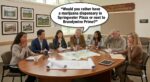
What started as a simple discussion about a possible zoning text change turned into an hour-long conversation about marijuana. During that conversation, members of the Chadds Ford Planning Commission learned that a medical marijuana dispensary wants to open up in Springwater Plaza in Chadds Ford.

The exchange happened during the commission’s Oct. 14 meeting. According to township and commission solicitor Mike Maddren, at issue was a proposed text amendment that would allow for pharmaceutical sales in the PBC Zoning District. Currently, such sales are only permitted in the B-Business District.

“Specifically, it would add businesses that provide either medications or other pharmaceuticals by doctors’ prescription or order into the PBC,” Maddren said.

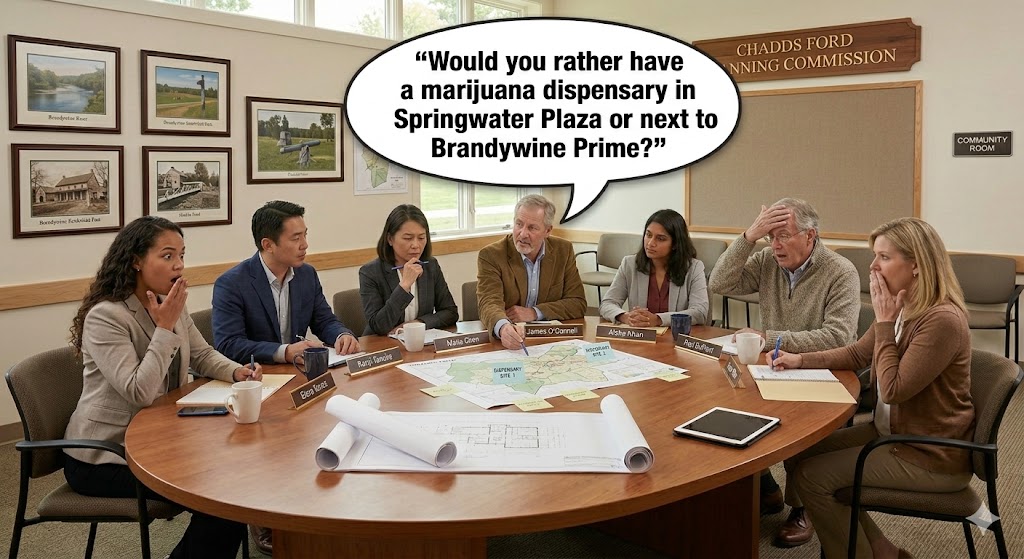
From that point, the conversation ultimately led Commission Chairman Craig Huffman to ask a rhetorical question: “Would you rather have a marijuana dispensary in Springwater Plaza or next to Brandywine Prime?”

The PBC District includes Springwater Plaza, Painters Crossing shopping center, a portion of the ground at Oakland Road at Route 202, a portion of the township at Brintons Bridge Road and 202, Olde Ridge Village, Keystone Plaza, and Brandywine Summit.
A medical marijuana dispensary company, PharmaCann, is looking to open shop in Chadds Ford.

“Basically, it’s parcels that are mostly, if not entirely, along Route 202 in the business corridor,” Huffman said.

The current B District includes portions of the village area.

Marijuana dispensaries quickly became part of a wide-ranging conversation when newly appointed Commission member Kathleen Goodier asked if the change would allow for such dispensaries.

Maddren said yes because the medicinal use of cannabis is legal in Pennsylvania with a doctor’s order. Recreational marijuana — currently illegal in the state — is a different issue, he added. Maddren then briefly explained some of the regulations the state has established on where the dispensaries can be located, distances from schools, daycares, and houses of worship.

“It’s 1,000 yards from any of those,” he said. He later said he might have been wrong about the actual distance, that it might be 1,000 feet.

Commission member Jay Patel said Goodier’s point should be taken seriously because, “Those dispensaries will stretch the law and that will create some issues in the township or neighborhood…Is there any way wording could be added to say it’s only for the pharmaceutical?”

Maddren explained that since medical marijuana is a legal use in Pennsylvania, municipalities must have provisions in their zoning codes for them. He also said there’s a difference in the wording of the proposed change that includes the phrase “anything with a doctor’s order.” The wording in the text for the B District talks only about prescriptions.

“It’s a little bit broader here when you have that ‘doctor’s order.’ I think that’s done with the intent of incorporating this use somewhere,” said Maddren

(As was discussed in Concord Township when a dispensary was looking to move in there, if provisions and regulations for location aren’t set forth in the municipality’s code, the dispensaries could locate wherever they wanted to.)

Huffman said that fact has to be part of the discussion and decision:

“If you allow pharmaceutical sales, which by definition includes marijuana dispensaries, in more places in the township, then, in the event a marijuana dispensary comes to Chadds Ford Township, do we have greater discretion in terms of where it actually goes when it’s allowed in multiple places?”

The discussion meandered to include questions about methadone maintenance, and whether the township actually wants or needs a new regular pharmacy. Commission member Timotha Trigg questioned how often a request comes from a company wanting to open a drug store outside of the B zones.

“Is our B adequate or do we need more,” she asked.

Huffman said he had no answer to the question but said the idea for the amendment came from the Board of Supervisors.

“I guess my answer is the supervisors must feel the need to have expanded opportunities for the sale of pharmaceuticals within the township,” Huffman said.

He later went on to reiterate that since medical marijuana dispensaries are legal, it’s up to the township to decide where they can go.

“If it’s legal and there’s a demand for it, we have to have a place to put it,” he said.

Wayne Megill, the owner of Springwater Plaza, was allowed into the Zoom meeting and, after explaining why he thought allowing pharmaceutical sales along the Route 202 corridor was a good idea, he told the commission members that he has a signed lease from a dispensary company, PharmaCann, that wants to move into one of the storefronts there. Nothing can happen, though, unless and until the text change goes through.

That ultimately led Huffman to the rhetorical question of whether people would want a dispensary at Springwater Plaza or in the village.

Commission members took no vote on the issue during the Oct.14 Zoom meeting. Instead, they will try to get more information and resume the discussion in the November meeting. That meeting will be on Tuesday, Nov. 10 at 7 p.m. The meeting date was moved up a day in honor of Veterans’ Day.

For the text change to happen, the supervisors will need to hold a hearing on the matter.
About Rich Schwartzman

Rich Schwartzman has been reporting on events in the greater Chadds Ford area since September 2001 when he became the founding editor of The Chadds Ford Post. In April 2009 he became managing editor of ChaddsFordLive. He is also an award-winning photographer.

Marijuana dispensary eyes Chadds Ford Read More »
Williams running to serve

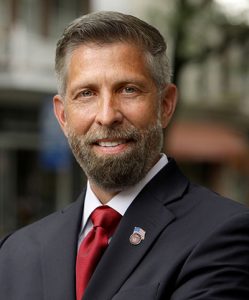
For Craig Williams, running for state representative is just an extension of his decades-long desire to serve. He retired as a full colonel from the Marine Corps after 28 years, having served as a weapons officer on F-18s during the Gulf War, and attended law school at the University of Florida while still in the Marines.

After retiring, he became a federal prosecutor with the Department of Justice, prosecuting a host of crimes, including illegal gun possession, drug distribution conspiracies, and fraud. He was a prosecutor for the Joint Terrorism Task Force. Locally, he’s been a Boy Scout leader and a football and baseball coach.

“I’ve spent my entire adult life in service to my country and my community, and that’s what this is for me. I’m not stepping forward to be a state representative because there’s fame and fortune that follows with it. It’s part of the essence that is me,” he said.

A Republican, Williams, 55, is running against Democrat Anton Andrew to represent the 160th Legislative District. Steve Barrar currently holds that office but is retiring at the end of this session.

Craig Williams

Williams has several top tier issues. One is school funding. He referred to himself as an advocate for spending more money on education. Still, he said the state needs to change the apportioning formula that allows school district budgets to remain constant even if the population drops.

He said a school district with a diminishing school population should have its state funding cut, that the dollars allocated to a district should be based on the number of students in that district. “Funding should be proportional to the population,” Williams said.

And, as others before him have said, he wants to stop using property taxes to pay for schools.

“I hope that we can get away from that formula. I’ve knocked on countless doors of seniors who say that’s their number one issue. As you can imagine, being on a fixed income, even with the house being paid off, based on the value of their home they still have a $10,000 to $12,000 tax bill. I have one senior who calls me every month to make sure I remember that’s her number one issue,” he said. “She’s worried that she’s going to lose her home because she can’t bear that expense.”

He’s hoping to change funding education from property taxes to extractions taxes.

“I’m not proposing the entirety of the extraction tax to go to education because there’s a bit of dependency. You don’t want to draw on the extraction of shale gas because when that natural resource starts to dry up over time, you don’t want to end up with an education void down the line.”

He understands the property rights issue but also sees those natural resources belong to the people. He specifically mentioned how Alaska — where he’s from originally — treats its natural gas reserves as belonging to the residents, so there is no state income tax.

“And I feel that way about Marcellus Shale,” he said, adding that “This isn’t a popular Republican opinion, but I think we should all benefit from the exploration of that resource.”

Williams also wants to see reduced costs for health insurance premiums. He said one way to do that — in addition to using some of the extraction tax for that purpose — is “to start being transparent about those costs” so patients can see an itemized breakdown of all the costs involved. With that breakdown, he said, people would see exactly what they’re paying for, and that, in turn, would bring pressure to lower the cost of insurance and healthcare.

He then drew an analogy. “If someone repairs my water heater and they give me an $800 bill for the repair, and I don’t get to see all the itemized costs, I won’t know if I paid fair market value for that. What I want is for the patients to see what all those costs are. That will lead to a natural downward pressure from the transparency that will translate to cheaper healthcare costs.”

Other issues

The war on drugs

Williams has an emotional reaction to the drug war, especially regarding what’s been called the opioid epidemic. He said many people have been unaware of how addicting some of today’s drugs — pharmaceutical and black market — can be. But he added that addiction should not be treated as a crime. “One thing I know that does not work is incarceration.”

He mentioned a criminal case when he was a federal prosecutor in Colorado where a woman had violated her parole three times by using methamphetamines…The only time she was ever clean was when she was in prison. But that wasn’t the way to help her clean up her life.”

Williams opened up during the interview, saying he lost a brother to addiction this summer.

“He struggled with it since high school, and that’s part of the narrative for me about marijuana legalization because that’s where it all started. His consumption of marijuana in high school was such that it completely derailed his schooling and career…This is an area where I’m particularly concerned.”

And while he’s uncomfortable with the possibility of adult use of cannabis being legalized in Pennsylvania, he wants to keep an open mind, despite seeing marijuana as a gateway drug based on what happened to his brother.

“All I can rely on now is my instinct and my personal experience, but I want to hold that conversation [about legalization] open for now.”

He added that while he still opposes recreational use, he thinks legitimate medical uses go beyond what the state currently allows.

Criminal justice reform

Williams said he sees civil asset forfeiture as a violation of constitutionally guaranteed rights.

“That is a huge due process problem,” he said. “I believe that asset forfeiture absolutely ought to be tied to criminal convictions.” Even though the governments take in billions of dollars through civil asset forfeiture, “that doesn’t justify taking somebody’s property before they’re convicted of a crime.”

His view on qualified immunity is slightly different. He thinks police should have qualified immunity or, as he put it, “the protection of the Constitution.” He explained that the immunity is qualified, not general, that police can be held liable if they break a law or knowingly violate the rights of another.

“There has to be a clear violation of the Constitution for them to be denied qualified immunity.”

Williams is married, has four children, and lives in Concord Township.

About Rich Schwartzman

Rich Schwartzman has been reporting on events in the greater Chadds Ford area since September 2001 when he became the founding editor of The Chadds Ford Post. In April 2009 he became managing editor of ChaddsFordLive. He is also an award-winning photographer.

Williams running to serve Read More »

Around Town Oct. 15

Around Town Oct. 15

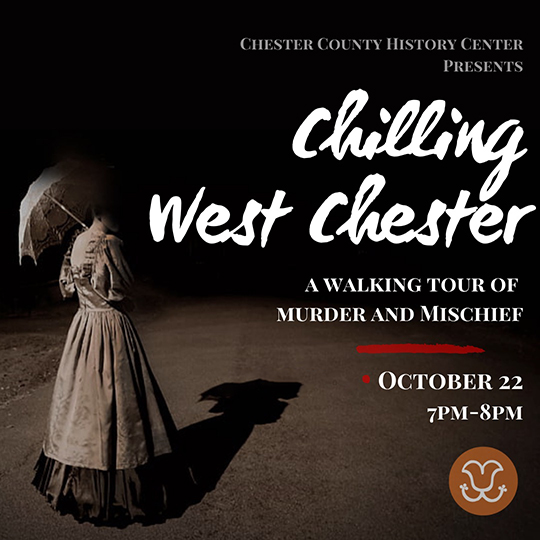
Join the staff of Chester County History Center on Oct. 22 at 7 p.m. as they explore the dark history of West Chester, including true tales of murder, mischief, and misadventure. Guests will hear five macabre stories from West Chester’s history while visiting some notable downtown landmarks. **Due to the graphic nature of the content, this program is not suitable for children.** The cost is $15. Go here for tickets and more information.

On Saturday, Oct. 24, at 2 p.m., English food historian Marc Meltonville will log on remotely from the UK to present “Brewing at Newlin: An English Ale in an American Kitchen.” He will be discussing an experimental project that has been running over the last few years to brew household beer in the kitchen at Newlin Grist Mill. Find out how they made the beer happen, the process of putting together the 18th-century equipment, and a little bit of beer history thrown in. Register for “Brewing at Newlin” at https://zoom.us/meeting/register/tJYkf-igqz0pHtFX6PjiMrh7ykxaXIc3iqun.

Drove-By Pie

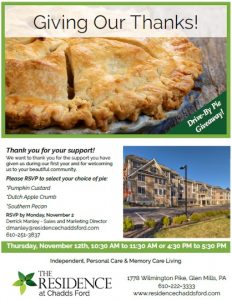
The Residence at Chadds Ford is holding a Drive-By Pie Giveaway on Thursday, Nov. 12. There will be two drive-by sessions, one from 10:30 to 11:30 a.m. and another from 4:30 to 5:30 p.m. It’s the Residence’s way of thanking the community for all its support in welcoming the memory care facility to Chadds Ford. There will be pumpkin custard, Dutch apple crumb, and Southern pecan. RSVP by Nov. 2 by contacting Derrick Manley, the sales and marketing director, at dmanley@residencechaddsford.com, or by phoning 610-251-3837. The Residence at Chadds Ford is located at 1778 Wilmington Pike.

The Bethesda Project is offering a virtual evening with Victoria Wyeth on Nov. 19 at 7 p.m. The granddaughter of Andrew Wyeth will discuss the life and work of her famous artist grandfather. The event, held as a part of Bethesda Project’s programs for National Hunger and Homelessness Awareness Week, will be held virtually and will cost $100 per device. People can buy tickets for the event at www.bethesdaproject.org/2020-hhaweek. The Bethesda Project is a local nonprofit that provides emergency shelter, permanent housing, and case management for more than 1,400 individuals experiencing homelessness each year.


About CFLive Staff

See Contributors Page https://chaddsfordlive.com/writers/

Around Town Oct. 15 Read More »

Scroll to Top