
December 10, 2014

The Rabbi’s Study: Religion and the language of music

There is a wonderful story in a collection of teachings by Rabbi Moshe Hayyim Efrayim (1748-1800). In this story, the rabbi describes a village musician of such prodigious talent that whenever he enters into the town square, picks up his instrument and begins to play, anyone within earshot is immediately inspired to dance with joy, jumping into the air and spinning exuberantly in the Hasidic tradition of simcha dancing.

One day, a deaf man wanders into the midst of one such impromptu celebration. He is unable to hear the music, but he can’t help but witness the joy filling the air. According to the story, the man’s first thought is that he must have stumbled into a hamlet of madmen. But then he looks again and he realizes that he has a choice; he can either dismiss the revelers around him as irrational, or he can join them in their celebration, trusting that they are being moved by something beyond his perception and welcoming the opportunity to experience this joy for himself.

There are as many ways to describe religious experience as there are varieties of religious endeavor, but so often in this hyper rational world, we start with what we can control and understand. Every year there are more and more books written arguing for and against all of the world’s major religious traditions and other books seeking to characterize each spiritual path in ways that they have not been portrayed before. And each such work seems to be based on the premise that before we can explore our spirituality, we must first understand it.

And sometimes, that’s the way that spirituality works.

But not always. Sometimes we start with music, with the experience of feeling a part of something that is bigger than we are and which we can sense around us even if it’s not something that we can understand. Rabbi Abraham Joshua Heschel writes: “The only language that seems to be compatible with the wonder and mystery of being is the language of music. Music is more than just expressiveness. It is rather a reaching out toward a realm that lies beyond the reach of verbal propositions. . . . music is a refutation of human finality.”

Prayer is difficult. Fixed prayer as it is preserved in the prayer books of our tradition is crafted in language that expresses ancient ideas, first articulated thousands of years ago. How can we not get tripped up in the challenge of delivering these ancient lines as our own in our aspirations to enter into communication with God? How can we not pause when the words on the page imply a world view that is more alienating than inviting?

For many of us, the answer is to start with music. I find that the wonderful paradox of communal prayer is the way that losing myself in a chorus of others enables me to offer my deepest and most personal supplications into that rich and many faceted spiritual cry. In my most inspiring prayer experiences, it feels to me as if I am able to open my own mouth and to sing with the voices of everyone assembled.

And what’s more, the experiential and irrational experience of sacred music is not confined to any one faith or tradition. Acknowledging the potent spiritual power of music prepares us to be moved not only by the melodies and modalities with which we have been raised, but also to reach an understanding and respect for other traditions as well.

But, like the man who wanders into the revelry in Rav Moshe’s story, the first step is to allow ourselves to be opened and moved by that which we cannot understand.

About Rabbi Eric M. Rosin

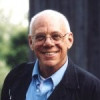
Rabbi Eric Rosin began his professional career as an attorney in Los Angeles serving the entertainment industry, but discovered he needed to be doing something he was passionate about. He left the practice of law and began studying for ordination at the Ziegler School of Rabbinic Studies in Los Angeles. After ordination, Rabbi Rosin served for two years as the assistant rabbi of Temple Beth-El in Richmond, Va., then assumed the pulpit at Kesher Israel Congregation in West Chester, Pa. in 2004.

The Rabbi’s Study: Religion and the language of music Read More »

Mind Matters: The challenge and the hope

A friend noted to me recently how Charles Manson, Timothy McVeigh, John Hinckley Jr., to name a few, were all murderers who were taken into custody by the police. These white men were not killed; they were not even wounded. My friend is African American, but that should not matter. His point is well taken. How is it that these white men were arrested, but lived to be found guilty of murder, while African American men and boys seem to be flagrantly killed for less than a misdemeanor?

I couldn’t bear to watch the footage of Eric Garner, who was choked to death by a Staten Island policeman. He was selling cigarettes unlawfully; and, for this, he dies? Meanwhile, white-collar crimes by mostly white males on Wall Street continue without so much as a slap on the wrist.

This state of affairs can create an atmosphere of hopelessness and despair, especially in minority communities. There may also be, in the country, a sense of hopelessness about other news, for example, the kidnappings and killings abroad, or the rapes occurring on college campuses here, and the rapes on public transportation reported in India.

A great message of hope in a time that seems hopeless is the Mexican proverb (paraphrased): They thought they buried us; they didn’t know we were seeds.

Sometimes the dark times of a seeming burial of the good is the hibernation and germination of new growth. Besides, what sometimes looks like the “good times” is simply denial of a darker truth.

We may long for the simpler days of “I Love Lucy” or “Lawrence Welk,” while forgetting the meanness of those times. Racial prejudice was a blatant given; rape, whether it be at the hands of a stranger, or an uncle, or a father, was not only not discussed, it was often the victim who was blamed.

We are still grappling with the destructive power of prejudice and the violence of power whether it be toward women or minorities. However, what was in the “good ol’ days” (good for whom?) accepted as the norm is now being questioned openly and publicly. This challenge of the dominant and dominating status quo is what is hopeful.

Indeed, what was buried and left for dead can be the sprouting of the seeds of change. This is after all, the season of hope.

* Kayta Curzie Gajdos holds a doctorate in counseling psychology and is in private practice in Chadds Ford, Pennsylvania. She welcomes comments at MindMatters@DrGajdos.com or 610-388-2888. Past columns are posted to www.drgajdos.com.


About Kayta Gajdos

Dr. Kathleen Curzie Gajdos ("Kayta") is a licensed psychologist (Pennsylvania and Delaware) who has worked with individuals, couples, and families with a spectrum of problems. She has experience and training in the fields of alcohol and drug addictions, hypnosis, family therapy, Jungian theory, Gestalt therapy, EMDR, and bereavement. Dr. Gajdos developed a private practice in the Pittsburgh area, and was affiliated with the Family Therapy Institute of Western Psychiatric Institute and Clinic, having written numerous articles for the Family Therapy Newsletter there. She has published in the American Psychological Association Bulletin, the Family Psychologist, and in the Swedenborgian publications, Chrysalis and The Messenger. Dr. Gajdos has taught at the college level, most recently for West Chester University and Wilmington College, and has served as field faculty for Vermont College of Norwich University the Union Institute's Center for Distance Learning, Cincinnati, Ohio. She has also served as consulting psychologist to the Irene Stacy Community MH/MR Center in Western Pennsylvania where she supervised psychologists in training. Currently active in disaster relief, Dr. Gajdos serves with the American Red Cross and participated in Hurricane Katrina relief efforts as a member of teams from the Department of Health and Human Services' Substance Abuse and Mental Health Services Administration.Now living in Chadds Ford, in the Brandywine Valley of eastern Pennsylvania, Dr. Gajdos combines her private practice working with individuals, couples and families, with leading workshops on such topics as grief and healing, the impact of multigenerational grief and trauma shame, the shadow and self, Women Who Run with the Wolves, motherless daughters, and mediation and relaxation. Each year at Temenos Retreat Center in West Chester, PA she leads a griefs of birthing ritual for those who have suffered losses of procreation (abortions, miscarriages, infertility, etc.); she also holds yearly A Day of Re-Collection at Temenos.Dr. Gajdos holds Master's degrees in both philosophy and clinical psychology and received her Ph.D. in counseling at the University of Pittsburgh. Among her professional affiliations, she includes having been a founding member and board member of the C.G. Jung Educational Center of Pittsburgh, as well as being listed in Who's Who of American Women. Currently, she is a member of the American Psychological Association, The Pennsylvania Psychological Association, the Delaware Psychological Association, the American Family Therapy Academy, The Association for Death Education and Counseling, and the Delaware County Mental Health and Mental Retardation Board. Woven into her professional career are Dr. Gajdos' pursuits of dancing, singing, and writing poetry.

Mind Matters: The challenge and the hope Read More »

PECO offers tip on holiday lighting safety

The holiday season is upon us, bringing decorations, festivities, holiday cheer – and tips from PECO to get in the holiday spirit while staying safe.

Holiday Lighting Safety Tips

  • Only decorate with lights approved by the Underwriter’s Laboratory (UL).
  • Follow the manufacturer’s guidelines for the number of lights that can be safely connected together.
  • Check all lights for cracked or broken plugs, loose connections, frayed insulation or exposed (bare) wires.
  • Discard damaged sets of lights.
  • Turn off all decorative lights when going to bed or leaving the house.
  • Consider using energy efficient light-emitting diode (LED) lighting products. These products produce about 75 percent less heat, and are safer to operate than traditional incandescent bulbs.

 Outdoor Lighting Safety Tips

  • Ensure decorative lights used outside are approved for outdoor use.
  • Hang outdoor lights with insulated staples or hooks rather than nails or tacks.
  • Always be aware of all power lines when decorating outdoors.
  • Never work near overhead power lines or anywhere there is a possibility of contacting an overhead power line, either directly or indirectly with a ladder or other piece of equipment.
  • Do not string lights on outdoor trees that are growing into or near power lines.

Indoor Lighting Safety Tips

  • Ensure cords inside your home do not pose a tripping hazard.
  • Do not overload wall outlets and extension cords.
  • Do not place cords under rugs, furniture or other appliances. Covered cords can overheat or become frayed and can cause a fire.
  • Keep all electric cords and extension cords out of the reach of children.


PECO offers tip on holiday lighting safety Read More »

Pennsbury Township in brief

Pennsbury Township will begin 2015 with a new budget, but no new or increased taxes. Supervisors there passed the new spending plan during their Dec. 9 meeting.

The plan is balanced with revenues and expenses anticipated at slightly more than $1.56 million. Township taxes will remain at 1.49 mills. Of that amount, 0.79 mills are for the open space tax and 0.7 mills being the township property tax. A mill is a tax of $1 for every $1,000 of assessed value.

•  By a 3-0 vote, supervisors approved the Corridor Management Plan that’s part of the Brandywine Scenic Byway project. That project includes Route 52 and Creek Road and covers a total 25 miles in Pennsylvania from the border with Delaware up to West Chester.

Part of the byway would include a bikeway along Route 52. Alma Forsythe, Pennsbury’s representative on the Byway Commission, told supervisors that the bikeway is actually a Pennsylvania Department of Transportation project, but that including it in the byway plan would help keep costs down.

• The supervisors’ regular monthly meeting in January will follow the state-mandated organization meeting on Monday, Jan. 5. Those meetings begin at 7 p.m. in the township building.

About Rich Schwartzman

Rich Schwartzman has been reporting on events in the greater Chadds Ford area since September 2001 when he became the founding editor of The Chadds Ford Post. In April 2009 he became managing editor of ChaddsFordLive. He is also an award-winning photographer.

Pennsbury Township in brief Read More »

Scroll to Top