

The Brandywine Museum of Art is opening a new exhibit on Sunday, “Abundance/Excess: A Contemporary Eye on Still Life.” The exhibit takes an artistic view on bounty, accumulation, and waste in 21st-century American culture through the work of 10 contemporary artists.
There are more than 45 works that range from paintings to sculptures to mixed media and video. But the exhibit avoids the standard still life of fruit bowls and flowers in a vase by themselves and rather starts with those early standards and injects some abstract into them, such as in Kate Abercrombie’s Impressions #1. Abercrombie said she starts with the basics of still life, then layers abstraction on top.

Curating the exhibit is Kerri Bickford, the associate curator at the museum.
“Something I was really struck by was the way in which still life has always had an interest in complicated relationships with the very bounty that is represented. The morality of that bounty, the aspect to which we’re celebrating,” she said.
But the exhibit focuses not only on the abundance, but on the excessive nature of how people treat things, the waste and the decay. Kate Butler, another artist with. images in the exhibit, shows a table with food, including fish but with flies on the table in Kitchen Table Issues.
In terms of abundance, each artist explores some sort of plenty, including the hazards of wealth and how we accumulate things, and then how we discard them.
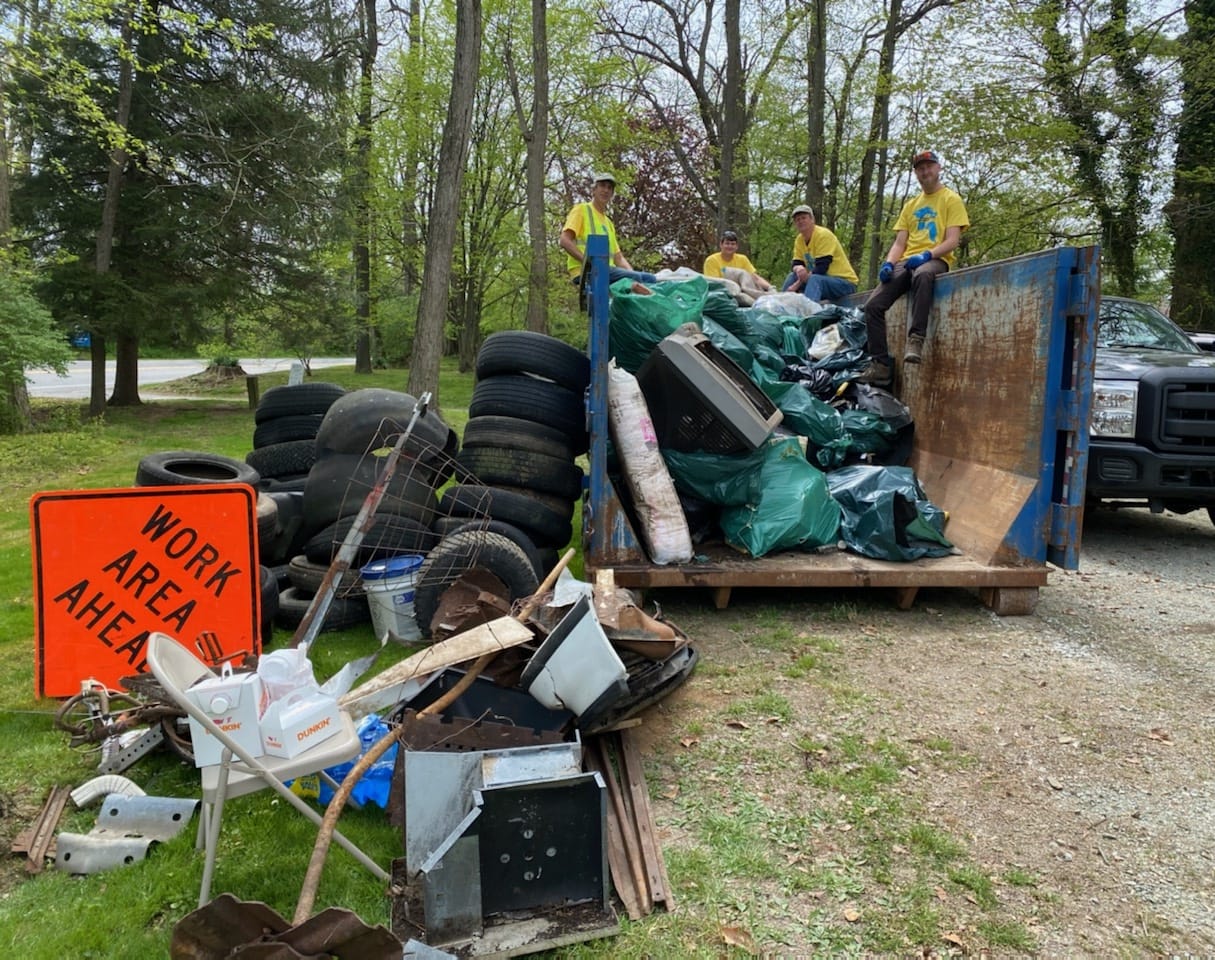
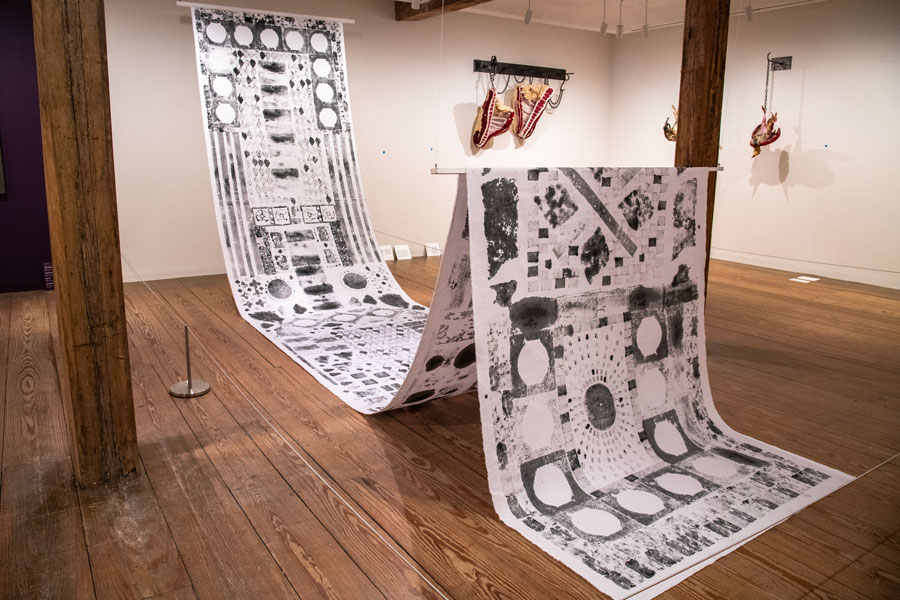
Artist Sto Len has a large piece on display, “Impressions for Coastal Constellation Alignment: Potomac River, Virginia.” Here, the artist uses a Japanese technique of monoprinting onto a large piece of fabric. What he chose to print on that fabric were pieces of trash pulled from the Potomac River.

Then there is Bound, by Tamara Kostianovsky, discarded clothing on metal hooks.
In The White Cake Series, sculptures in silicone, artist King Cobra shows cakes that are beginning to deteriorate, to rot.
According to Bickford, Cobra is making a moral point about the nature of national wealth, where it comes from, and how it was built over time. She said the deterioration in the cakes represents the diseases that European settlers brought to the New World.
But Cobra makes another point with “As the gauze in my mouth filled with blood and my limp body hit the concrete, I remembered Joyce Heth.” In that image is a skull, a pitcher, cotton, wheat, and scissors.

Bickford said Cobra is making reference to the life of Joyce Heth, a slave owned by PT Barnum during the last year of her life.
“He contracted to release her from her other owner, and he toured her around and advertised her as George Washington’s nursemaid and claimed that she was more than 150 years old,” Bickford said.
Barnum was known for creating spectacles; in this case, “He did it at the expense of the body of a very elderly woman. And this also suggests that, in order to make her look older… he claims to have pulled her teeth out. What King Cobra is referencing here is the way in which when somebody is owned in labor but also in body, there are really some consequences.”
Abundance/Excess: A Contemporary Eye on Still Life runs from March 15b through June 7.